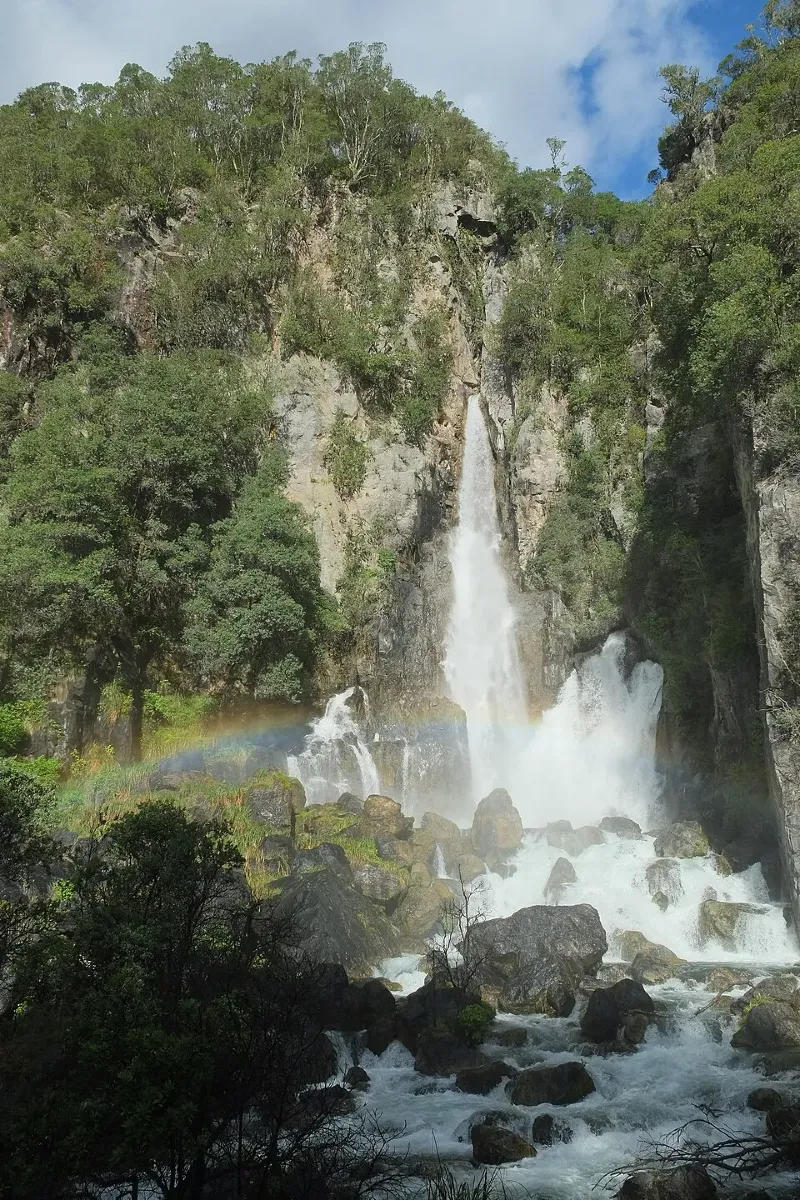
Tarawera Falls
Bay of Plenty, Kawerau
Opening hook
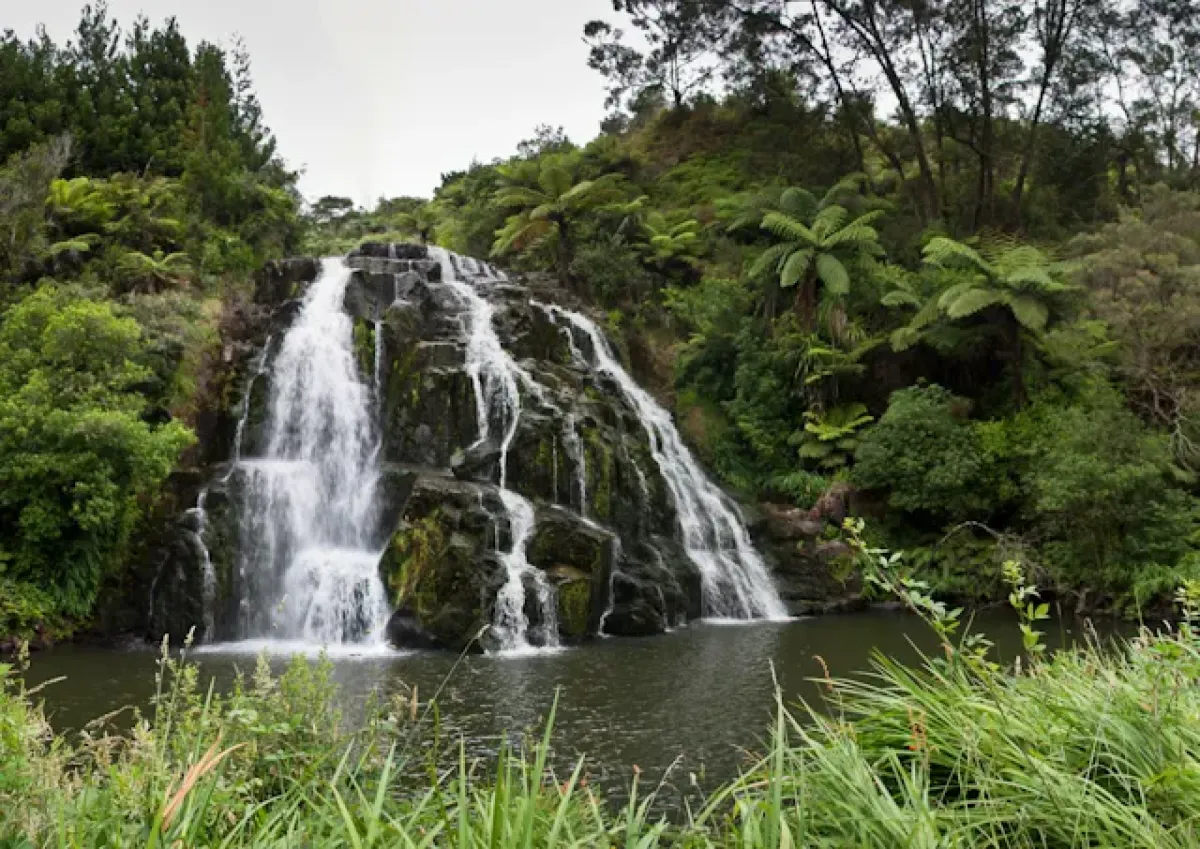
Tarawera Falls feels a little hidden, even though it’s one of the most remarkable waterfalls in the Bay of Plenty. Water surges out of fissures in a sheer cliff face, dropping into a lush native setting that feels both dramatic and quietly remote. The walk itself is short, but the setting has real presence: volcano-shaped geology, river water, and regenerated forest all meet in one place.
It’s also the sort of attraction that rewards a bit of effort and planning. You can’t just turn up any day and wander in, because access to the car park is controlled and a permit is required. Once you’ve done that, though, the reward is a quick, satisfying walk and a viewpoint that explains why so many people remember Tarawera Falls as one of the region’s best hidden gems.
What to See & Do
The main highlight is the waterfall viewpoint. DOC describes the falls as a place where water surges out of fissures in a large rock cliff face, and the short track takes you directly to a viewing area where you can take in the scene. The nearby signs explain the cultural and natural significance of the site, so it’s worth pausing rather than just snapping a photo and leaving.
If you have more time, you can also combine the falls with the longer Tarawera Outlet to Falls Track, which follows the river for several kilometres and gives you a more immersive bush-and-water experience. DOC notes that there is a popular swimming spot on that longer route where the river is wider and shallower, but you should still be cautious because of underwater currents and the nature of the water. For many visitors, though, the short falls track is enough: a quick walk, a strong viewpoint, and a forest setting that feels much more remote than the distance suggests.
- View the falls from the dedicated lookout area.
- Read the on-site interpretation about the area's natural and cultural significance.
- Combine the visit with the longer Outlet track if you want a bigger walk.
- Enjoy the native bush and river scenery around the car park and track.
History & Significance
Tarawera Falls is shaped by a landscape of volcanic change. DOC explains that the cliff face is the end of an ancient rhyolitic lava flow believed to have poured from an eruption of Mt Tarawera about 11,000 years ago. The waterfall you see today is therefore not just a scenic feature, but part of a much older geological story.
The surrounding vegetation adds another layer to that story. DOC notes that plant life in the area has developed since the 1886 Tarawera eruption, and that both pohutukawa and rata are found nearby, including hybrids between the two. That means the site isn't only interesting because of what happened in the distant past; it’s also a living example of how native ecosystems recover after major volcanic events. This blend of geology and ecology is part of what gives the falls their character.
Tarawera Falls is one of those places where the landscape tells its own story: eruption, lava, water, and regrowth all sit in the same view.
Practical Visitor Information
DOC says the Tarawera Falls Track is a 700-metre return walk and describes it as an easy short walk. The track has been re-routed because of structural damage, so you should take care and follow the marked path. The car park has toilets and a viewing area with a seat, which makes the visit relatively comfortable once you’ve arrived.
Access is the part that needs the most attention. You reach the Tarawera Falls car park from Kawerau township via private forestry roads off State Highway 30, and access is only available on Saturday, Sunday and public holidays. A permit is required, and DOC says the forest gate is closed in darkness and the road may close in summer when fire risk is high. Permits can be obtained from the Kawerau isite Visitor Information Centre, so make that part of your planning rather than leaving it until the last minute.
- Walk length: 700 metres return.
- Track type: easy short walk.
- Permit: required for car-park access.
- Road access: only Saturday, Sunday and public holidays.
- Facilities: toilets at the car park and a seat at the viewing area.
Getting There
Access starts in Kawerau, off SH 30 between Rotorua and Whakatane, and then continues along private forestry roads to the falls car park. That final leg is part of the experience, but it also means you need to check the access rules carefully before you set off. The road is not a normal public approach road, and DOC makes clear that use of the forestry road is at the discretion of the forestry owners.
If you’re coming from Rotorua or Whakatane, Kawerau is the logical base for collecting your permit and checking the latest information. Once you're through the access road and into the reserve, the walk is short and straightforward. For most visitors, the whole attraction is best treated as a half-day outing rather than a full-day commitment, unless you’re continuing on to the longer outlet track.
Tips for Visitors
Get your permit before you go and double-check whether the road is open on the day you want to visit. Because access is restricted to weekends and public holidays, Tarawera Falls is not the sort of stop you can leave to chance. If you’re planning the longer river walk, allow extra time and pack more water and snacks.
Stay behind barriers and keep children close to you near the viewpoints and cliff edges. DOC specifically warns about fall risk on sections of the track and says to keep children within sight. The river and the surrounding terrain look calm enough, but there are high drop-offs in places, so the safest way to enjoy the falls is to stick to the marked track and viewing area.
Nearby Attractions
Kawerau is the nearest town and the obvious place to base yourself for the permit and any practical stop-offs. Lake Tarawera is the wider geographic anchor for the area, while the Tarawera Outlet is a natural companion if you want a longer walk. The Tarawera River itself is part of the attraction, and the broader Bay of Plenty volcanic landscape gives the area a sense of depth beyond a single waterfall.
If you are building a Bay of Plenty itinerary, Tarawera Falls pairs well with other Rotorua and eastern Bay attractions that focus on water, forest and geothermal scenery. It’s a more specialised destination than many of the region’s easier roadside stops, but that’s part of the appeal. The controlled access, short walk and dramatic setting give it a slightly more adventurous feel without demanding a full-day tramp.
Accessibility
The main falls track is short and suitable for most visitors, but it is not fully wheelchair-accessible because of the access road, re-routed sections and natural terrain. Families can manage the walk if children are kept close, especially near cliff edges and viewing areas. The access road is the main complexity: you need a permit, and you can only drive in on certain days. If you plan the longer Tarawera Outlet walk, expect a more substantial day walk with greater exposure and river-side hazards.
Opening Hours
Varies by access permit and road conditions. DOC says access to the car park is only available on Saturday, Sunday and public holidays, the forest gate is closed in darkness, and the road may close in summer when fire risk is high.
Related Attractions
Written by
AdminApr 25, 2026