Opening a Bank Account in New Zealand: Step-by-Step for Newcomers

Opening a bank account in New Zealand is one of the first practical steps you'll take when arriving in the country, whether you're relocating for work, study, or a fresh start. Getting this sorted ear...
Sarah covers personal finance, tax, and KiwiSaver topics for Lifetimes NZ. She focuses on making money management straightforward and practical for everyday Kiwis.
Opening a bank account in New Zealand is one of the first practical steps you'll take when arriving in the country, whether you're relocating for work, study, or a fresh start. Getting this sorted early means you can receive your salary, pay bills, and manage everyday expenses without the hassle of international transfers or relying on cash. The good news? The process is straightforward once you know what documents you'll need and which banks to approach.
Why You Need a New Zealand Bank Account
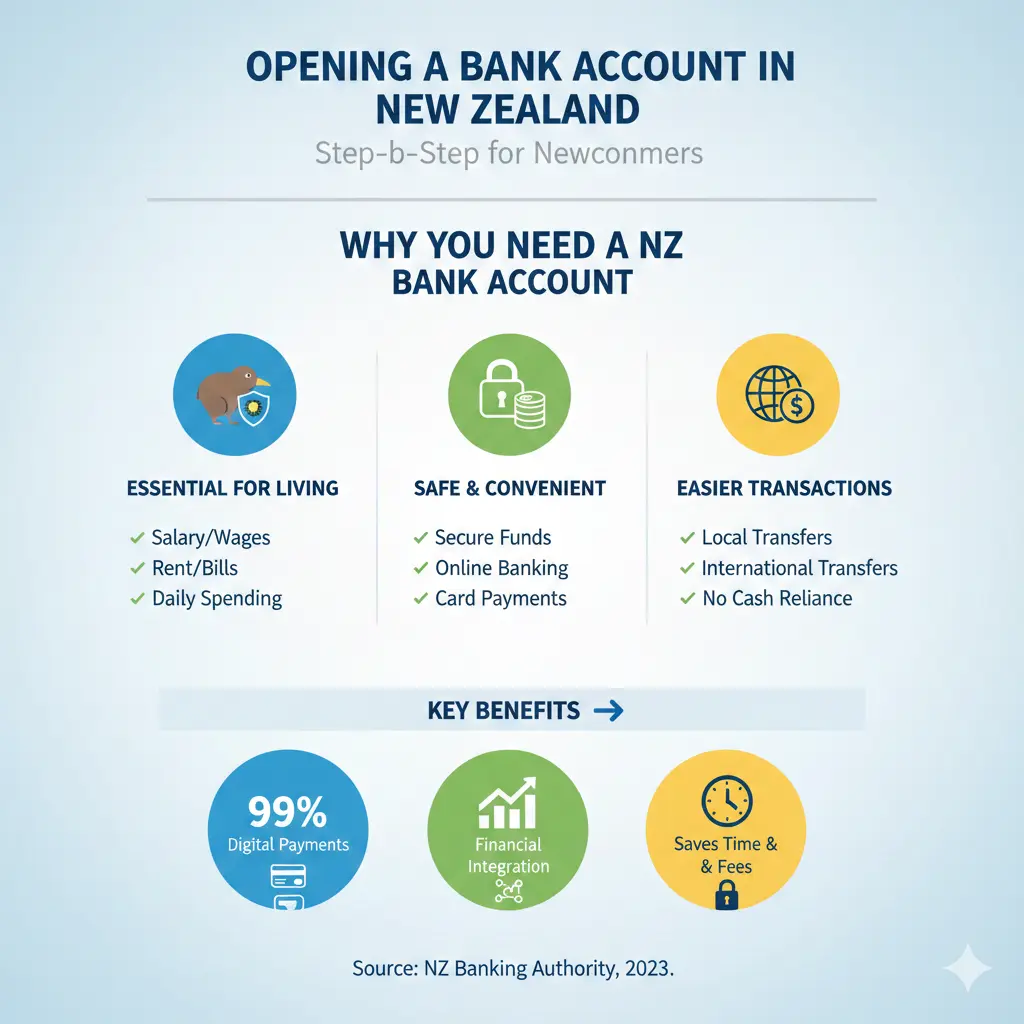
Without a local account, you'll face higher fees on international transfers, limited payment options, and delays in receiving payments from your employer. Most landlords expect rent payments from a local bank account, and many employers won't process your salary any other way. Setting up a bank account should be at the top of your post-arrival checklist.
Can You Open an Account Before You Arrive?
Yes, you can—but it depends on which bank you choose and where you're moving from.
Opening an Account Overseas
Several New Zealand banks allow you to apply for an account before arrival, typically 90 to 365 days in advance. However, you must hold a valid visa before applying.
ANZ offers the most established overseas account opening process and accepts applications from certain countries including the UK, Australia, India, and South Africa. ASB also offers a fully verified bank account application process for eligible customers prior to arrival. Westpac can set up your account up to 180 days before you migrate in some circumstances.
When you open an account from overseas, you'll typically receive a limited access account. This means you can deposit money into it, but you won't be able to withdraw funds until you've completed identity verification in person at a New Zealand branch. You'll usually be able to apply for a digital Visa Debit card to use immediately upon arrival.
Opening an Account After You Arrive
Many migrants find it easier to open an account within the first week of arrival. This way, you can bring your documents in person, ask questions, and have the account fully operational immediately. When you arrive, you'll most likely need to activate your account and verify your identity and permanent address.
Documents You'll Need
New Zealand banks follow strict "Know Your Customer" (KYC) regulations. Here's what you'll typically need:
Identification
You'll need two forms of identification:
- Primary ID: Valid passport or New Zealand driver's licence (if you've already converted yours)
- Secondary ID: Birth certificate, overseas driver's licence, or government-issued ID card
If you're not a New Zealand citizen, you'll need your foreign passport as proof of identity along with an eligible visa.
Proof of Address
You'll need to provide evidence of your residential address. When you first arrive, this can be tricky since you may not have a permanent address immediately. Check with your bank about options for your first few weeks—you might use a temporary address, hostel address, or a letter from your employer or accommodation provider.
If you're applying from overseas, you'll need proof of your current address, such as a bank statement or utility bill dated within the last 12 months.
Visa Documentation
You'll need to show proof of your visa status. This includes:
- Valid New Zealand visa
- Work visa documentation
- Student visa
- Resident visa
- Evidence of your right to be in New Zealand
Most banks require your visa to be valid for at least six months.
Tax Information
You may need an Inland Revenue (IRD) number to open an account. If you don't have one yet, you can apply for one at the same time or shortly after opening your account. You'll also need to provide your overseas tax identification number and your New Zealand resident withholding tax rate.
Step-by-Step: Opening Your Account
Step 1: Gather Your Documents
Collect your passport, visa, proof of address, and any other ID before visiting the bank. Having everything ready will speed up the process.
Step 2: Choose Your Bank
New Zealand has four major banks: ANZ, ASB, BNZ, and Westpac. All banks must be registered with the Reserve Bank of New Zealand. Most migrants choose based on location and branch access. New Zealand also has credit unions and building societies, which are supervised by the Reserve Bank and offer similar services.
Step 3: Book an Appointment
While you can walk into most branches, booking an appointment ensures you won't wait. Many banks let you book online.
Step 4: Visit the Branch
Bring all your documents and be prepared to answer questions about:
- Your employment status
- Source of funds
- Purpose of the account
- Expected account activity
These questions are part of anti-money laundering regulations—answer honestly and you'll be fine.
Step 5: Choose Your Account Type
Most newcomers start with an everyday transaction account for salary deposits, bill payments, and daily spending. You might also consider a savings account to build emergency funds.
Ask about fees—many banks offer fee-free transaction accounts if you maintain a minimum balance or have your salary paid into the account. Some banks, like ASB, offer zero monthly base or transaction fees on personal and business everyday accounts.
Special Circumstances
International Students
If you're studying at a New Zealand university, ask at any bank about their "student account". You'll need to provide your student visa and your offer of place from your university. Evidence of your current address can be provided by your International Student Support office.
Joint Accounts
Yes, you can open a joint account with your partner. Both parties will need to provide identification and sign the account opening documents.
Foreign Currency Accounts
If you're managing money between another country and New Zealand, ASB offers a Foreign Currency Account. You can hold foreign currency on-call or as a term deposit without needing to convert to New Zealand dollars until you're ready.
Getting Your IRD Number
Your Inland Revenue Department (IRD) number is essential for New Zealand's tax system. You can apply for one at the same time as opening your bank account or shortly after. Your bank can help guide you through this process, or you can apply directly through the IRD website.
Next Steps
Opening a bank account in New Zealand is straightforward once you have the right documents. Here's what to do:
- Gather your identification, visa documentation, and proof of address
- Decide whether to apply from overseas or after arrival
- Research which bank suits your needs (location, fees, services)
- Book an appointment or visit a branch
- Open your account and set up your IRD number if needed
- Apply for a debit card and set up online banking
Don't hesitate to ask questions—New Zealand bank staff are generally helpful and used to working with newcomers. Having your account set up early means you can focus on settling into your new life, managing your finances confidently, and building your financial foundation in New Zealand.
Frequently Asked Questions
Sources & References
-
1
Opening a Bank Account in New Zealand - The Migrate Hub — themigratehub.com
-
2
Open a bank account in New Zealand - New Zealand Immigration — www.new-zealand-immigration.com
-
3
Join Kiwibank — www.kiwibank.co.nz
-
4
Moving to New Zealand? How to set up a new bank account - ASB — www.asb.co.nz
-
5
Banking in New Zealand - Immigration New Zealand — www.immigration.govt.nz
-
6
Bank accounts for international students - AskOtago Service — ask.otago.ac.nz
-
7
Open a New Zealand bank account from overseas - Westpac — www.westpac.co.nz
Related Articles

Currency Conversion Hacks for NZ Travelers
Heading overseas? Nothing kills the buzz of a Kiwi holiday faster than getting slugged with hefty currency conversion fees or snagging a lousy exchange rate. With the New Zealand dollar hovering aroun...

Best NZ Banks for Small Business Owners
Running a small business in New Zealand means juggling cash flow, customers, and endless admin—choosing the right bank shouldn't add to the stress. With the Big Four banks—BNZ, ASB, ANZ, and Westpac—d...

Emergency Funds 101: How Much Cash Should a Kiwi Family Have?
Picture this: a sudden storm hits your neighbourhood in Auckland, just like the severe weather event in January 2026, leaving your home flooded and power out for days. Without an emergency fund, you'r...

Best Savings Accounts in NZ 2025 (Highest Interest Rates)
Want to make your money work harder in 2026? With inflation still biting and everyday costs rising, Kiwis are turning to high-interest savings accounts to beat the squeeze. In this guide, we round up...