Cost of Living in Wellington: Complete Breakdown

Thinking about calling Wellington home? With its stunning harbour views, vibrant arts scene, and windy charm, the capital city beckons many Kiwis and newcomers alike. But before you pack your bags, un...
The Lifetimes NZ editorial team curates, fact-checks, and updates guides on personal finance, property, health, immigration, legal, business, and lifestyle topics relevant to Lifetimes NZ readers. Articles are produced with AI assistance and reviewed by the editorial team before publication.
Thinking about calling Wellington home? With its stunning harbour views, vibrant arts scene, and windy charm, the capital city beckons many Kiwis and newcomers alike. But before you pack your bags, understanding the cost of living in Wellington in 2025 is key to budgeting smartly—especially as rents stabilise and household incomes rise.
In this complete breakdown, we'll dive into every expense you'll face, from housing to groceries, using the latest 2025-2026 data. Whether you're a single professional, couple, or family, you'll get practical tips tailored for New Zealanders, plus ways to stretch your dollars in the Windy City.
Housing Costs: Renting and Buying in Wellington
Housing remains the biggest chunk of Wellington's cost of living, but options abound depending on whether you prefer city centre buzz or quieter suburbs like Hataitai or Aro Valley.
Renting in Wellington
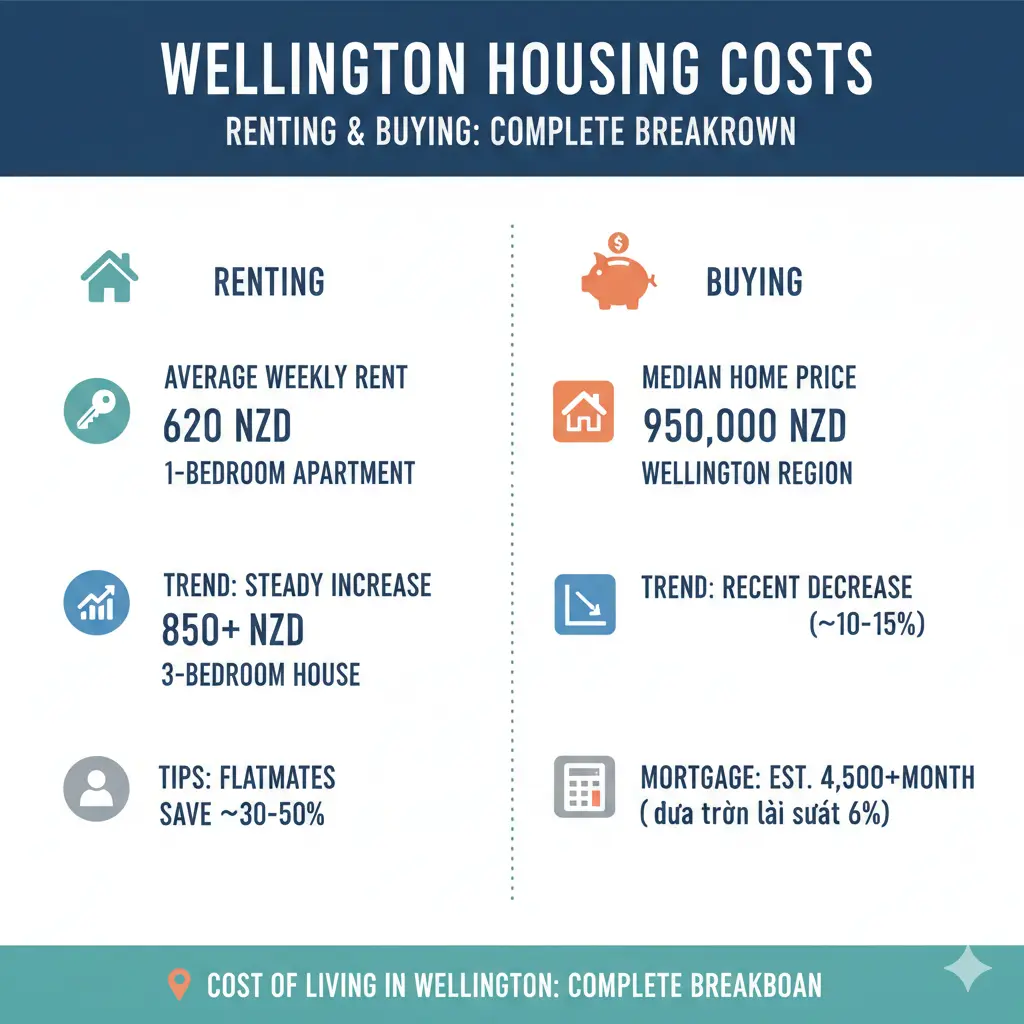
Expect to pay a median weekly rent of $650 across Greater Wellington, according to the 2024 Trade Me Rental Price Index—figures holding steady into 2025. For flats:
- 1-bedroom in city centre: NZD 1,900–2,300/month
- 1-bedroom outside centre: NZD 1,600–1,900/month
- 2-bedroom central: NZD 2,800–3,500/month
- 2-bedroom outskirts: NZD 2,300–3,000/month
- 3-bedroom central: NZD 3,500–3,700/month
- 3-bedroom house: NZD 3,200–4,500/month
Sharing cuts costs sharply—a room in a shared flat goes for $180–$330/week, with Mt Victoria at $270–$330 and Te Aro $250–$370. Check Trade Me or Flatmates Wanted for listings, and aim for suburbs like Newtown for community vibes without the premium price tag.
Buying Property
The average home price in Greater Wellington sits at $789,300, down from 2022 peaks, making 2025 a potential buyer's market. Wellington City is pricier, with Seatoun topping medians at $1,756,800. Apartments average NZD 9,714/sqm in the city centre (NZD 8,258–20,300 range) and NZD 8,084/sqm outside.
Tip: Factor in council rates (~NZD 2,572/year or $213/month), body corporate fees for apartments, and home insurance. Use the Quotable Value (QV) website or realestate.co.nz for suburb comparisons.
Utilities and Household Bills
For an 85m² apartment, basic utilities (electricity, heating, water, trash) average NZD 248.68/month, ranging NZD 141.67–408 depending on household size. In Wellington's variable weather, expect higher winter power bills—budget NZD 250–350/month for a couple.
Other ongoing costs include:
- Council rates: ~NZD 213/month
- Internet: NZD 80–100/month (fibre plans via Chorus)
- Mobile: NZD 40–60/month (Spark, Vodafone prepaid deals)
Actionable advice: Switch to low-usage tariffs with Genesis or Contact Energy, and apply for the government's Low-Income Households Electricity Rebate if eligible via Work and Income.
Groceries and Dining Out
A single person's weekly grocery shop averages NZD 126.60, cheaper than Auckland's $145 but pricier than South Island spots. Here's a 2025 snapshot of staples:
| Item | Average Price (NZD) | Range |
|---|---|---|
| Rice (1 lb) | 1.58 | 0.91–2.20 |
| Water (1.5L) | 2.03 | 1.00–4.00 |
| Wine (mid-range bottle) | 16 | 10–25 |
Dining out: Inexpensive meal $25 (NZD 20–45), mid-range 3-course for two $140 (NZD 100–160), McMeal $15. Wellington's food scene shines—hit Harbourside Market or Newtown Fruit and Vegetable Market for deals on fresh produce.
Budget hack: Shop at Pak'nSave or Countdown specials, and use the Countdown or New World apps for personalised discounts. A thrifty single can keep groceries under $100/week.
Transportation Costs
Wellington's compact size and excellent public transport keep costs low. A Metlink monthly pass (bus/rail/ferry) runs NZD 100–200, depending on zones. Single bus fares start at $2.50 with Snapper card.
Own a car? Fuel averages NZD 2.80–3.00/L, plus WOF/registration ~NZD 300/year. Parking in the city centre: $20–30/day.
- Cycle or walk: Free, with Bike Wellington networks.
- Rideshare: Uber ~NZD 15–25 for short trips.
Pro tip: Get a Snapper card for 20% off off-peak fares, and check metlink.org.nz for timetables.
Healthcare, Education, and Other Essentials
Public healthcare is free via DHB for residents, but gap fees apply for specialists (NZD 50–100). ACC covers work injuries.
Childcare: In-home $6–8/hour; kindergartens subsidised via ECE funding. School uniforms and supplies: NZD 300–500/year per child.
Entertainment: Cinema $15–20, gym membership $50–80/month. Wellington's free festivals like World of WearableArt keep leisure affordable.
Total Monthly Cost of Living Estimates for 2025
Based on recent data:
- Single person: NZD 5,227 (including rent)
- Family of four: NZD 9,123
- Excluding rent (single): NZD 1,760
| Household | Monthly Total (incl. rent) | Excl. Rent |
|---|---|---|
| Single | NZD 5,227 | NZD 1,760 |
| Couple | NZD 3,468 | NZD 2,168 |
| Family of 4 | NZD 9,123 | NZD ~4,000 |
Average Salaries and Affordability
Wellington's average household income hit NZD 148,474 by late 2024, above the national $132,588. Personal mean income: $83,095/year (~$40/hour). Tech and hospitality sectors thrive here, with 217,000 residents.
After tax (use ird.govt.nz calculator), a $80k salary covers singles comfortably, but families may need dual incomes.
Cost-Saving Tips for Wellingtonians
- Join bulk-buy clubs like Costco (if nearby) or local food co-ops.
- Use apps: Loop for receipts, Glimp for bill comparisons.
- Flat-share via Trade Me to slash rent by 50%.
- Shop markets: Harbourside, Mt Victoria for fresh deals.
- Apply for Winter Energy Payment if over 65 or on benefits.
Next Steps to Master Your Wellington Budget
Plug your numbers into Numbeo or Expatistan calculators, scout Trade Me for real-time listings, and chat with Work and Income for subsidies. Wellington's lifestyle rewards smart planners—track expenses with apps like PocketSmith (NZ-made), and you'll thrive in our capital. Ready to make the move? Start budgeting today.
Frequently Asked Questions
Sources & References
-
1
Wellington Cost of Living 2025–2026: Easy Guide to Rent & Bills — movingchamps.co.nz
-
2
Cost of Living in Wellington, New Zealand - Wise Move — www.wisemove.co.nz
-
3
Cost of Living in Wellington. Updated Prices Jan 2026 — www.expatistan.com
-
4
Cost of Living in New Zealand for Expats - Pacific Prime — www.pacificprime.com
-
5
Cost Of Living in New Zealand in 2026 — livingcostindex.com
-
6
Cost of Living in Wellington — www.numbeo.com
-
7
Cost of Living in New Zealand 2026-2027 - AECC Global — www.aeccglobal.com
-
8
Cost of Living in New Zealand for International Student 2026 — www.studies-overseas.com
-
9
Cost of living in New Zealand — www.immigration.govt.nz
Related Articles

Cost of Living in Christchurch: Complete Breakdown
Planning a move to Christchurch or just curious about making ends meet in the Garden City? With its stunning Southern Alps backdrop, vibrant arts scene, and family-friendly suburbs, Christchurch offer...

Cost of Living in Auckland: Complete Breakdown
Auckland's vibrant city life comes at a premium, but understanding the cost of living in Auckland 2025 (with 2026 updates) helps you plan smarter. Whether you're a local eyeing a move to the suburbs,...