Dangerous Dog Classifications NZ: Rules Explained
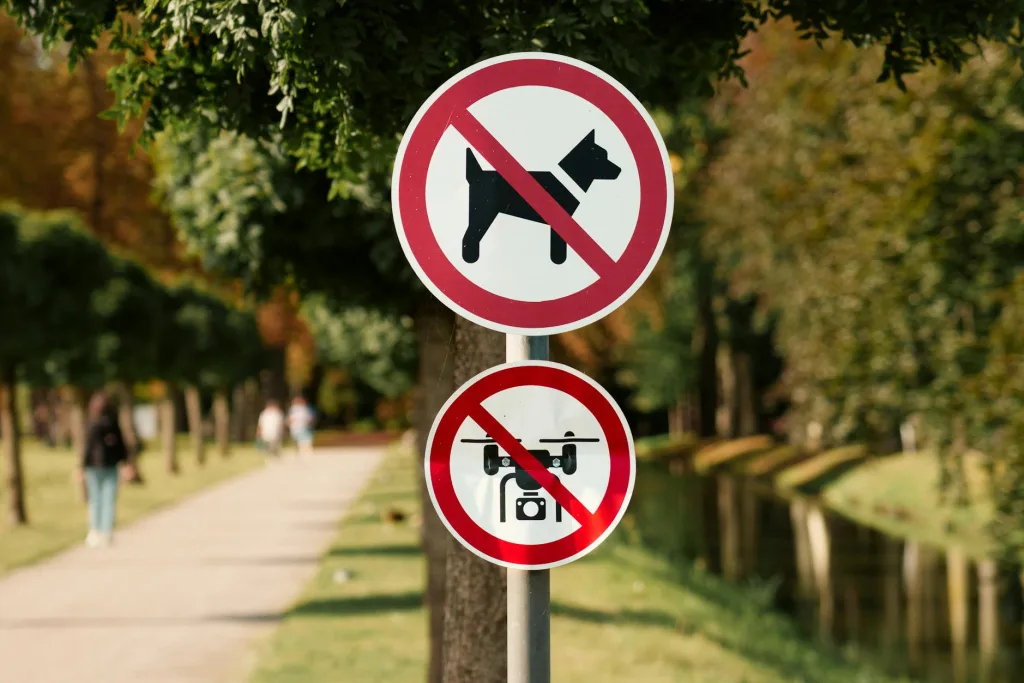
If you own a dog in New Zealand, understanding how dangerous and menacing dog classifications work could save you from hefty fines, legal trouble, or worse—losing your beloved pet. The Dog Control Act...
The Lifetimes NZ editorial team curates, fact-checks, and updates guides on personal finance, property, health, immigration, legal, business, and lifestyle topics relevant to Lifetimes NZ readers. Articles are produced with AI assistance and reviewed by the editorial team before publication.
If you own a dog in New Zealand, understanding how dangerous and menacing dog classifications work could save you from hefty fines, legal trouble, or worse—losing your beloved pet. The Dog Control Act 1996 sets out strict rules for certain breeds and individual dogs that pose a risk to the public, and councils across the country enforce these regulations seriously. Whether your dog has been flagged by your local council or you're simply wanting to stay compliant, this guide breaks down everything you need to know about dangerous dog classifications in Aotearoa.
What Are Dangerous and Menacing Dogs?
New Zealand's Dog Control Act classifies dogs into two main categories: menacing and dangerous. These aren't just labels—they come with legal obligations that affect how you can keep, register, and care for your dog.
A dog can be classified as menacing either by its breed or by its behaviour. Similarly, a dog can be classified as dangerous regardless of its breed if it shows signs of aggression or poses a genuine threat to the public.
Menacing Dogs: Breed and Behaviour Classifications
Menacing by Breed
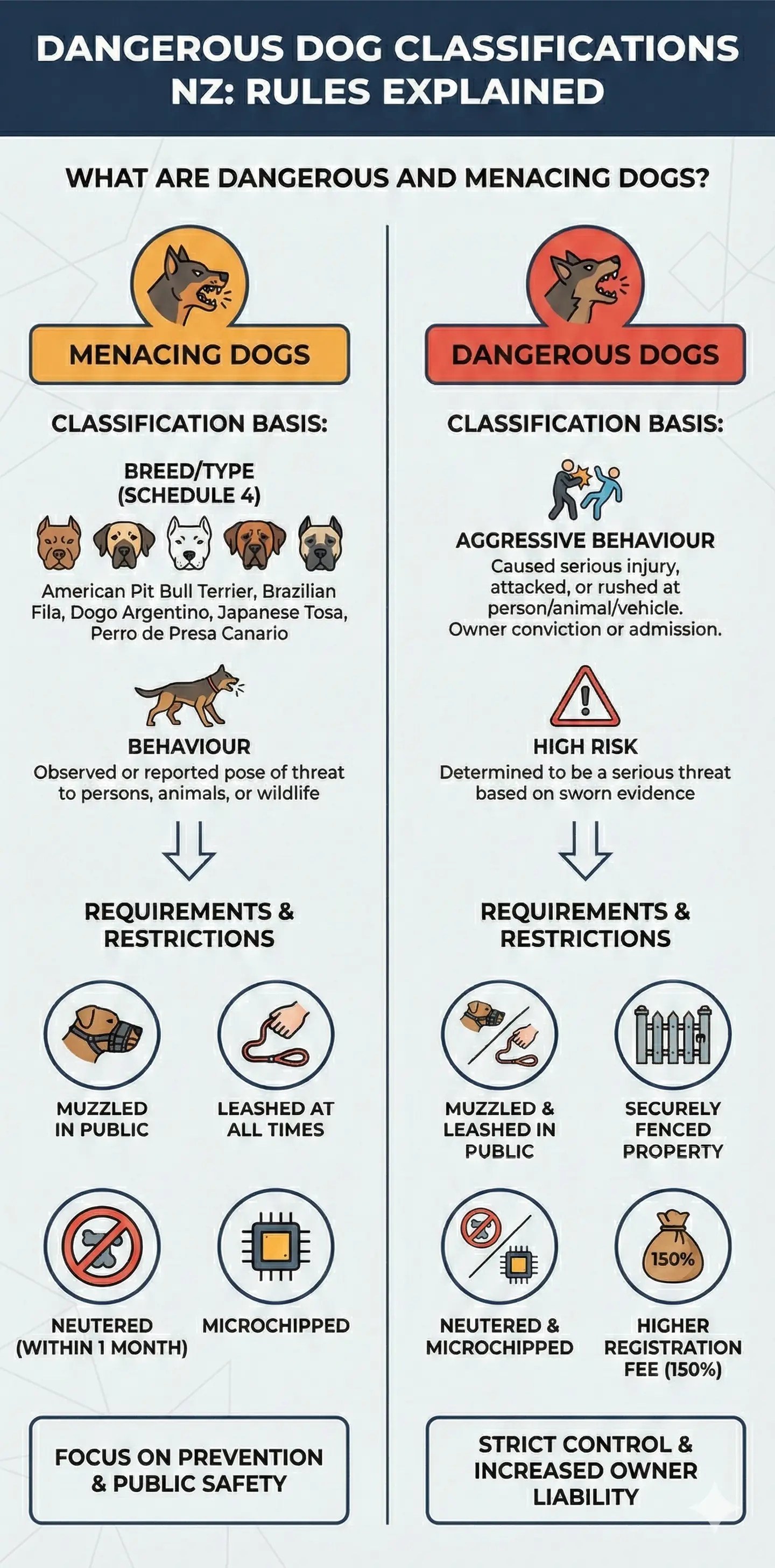
The Dog Control Act automatically classifies dogs that are wholly or predominantly of certain breeds as menacing, no matter how they behave individually. These five breeds are:
- American Pit Bull Terrier
- Brazilian Fila
- Japanese Tosa
- Dogo Argentino
- Presa Canario (Perro de Presa Canario)
If your dog is one of these breeds, it will automatically be classified as menacing by your local council when you register it.
The American Staffordshire Terrier Exception
Auckland Council recognises the American Staffordshire Terrier as a Pit Bull type of dog, but it won't be classified as menacing if you can prove your dog is predominantly an American Staffordshire Terrier. To do this, you'll need to provide one of the following:
- A certificate from Dogs New Zealand (the New Zealand Kennel Club)
- A DNA certificate showing American Staffordshire Terrier as the largest percentage of your dog's breed make-up
- A visual inspection at your local animal shelter by an approved assessor
Menacing by Behaviour
Any dog, regardless of breed, can be classified as menacing if it's been proven to be a risk to the public, other animals, or protected wildlife. This classification is based on the dog's actual behaviour rather than its breed.
What You Must Do If Your Dog Is Classified as Menacing
Once your dog is classified as menacing, you'll receive a notice from your local council outlining your legal obligations. Your dog must:
- Be muzzled in public (except when in a vehicle or cage)
- Be neutered or certified unfit to be neutered within one month
- Be microchipped within two months
These requirements aren't optional—failing to comply can result in fines and legal action.
Dangerous Dogs: Understanding the Classification
How a Dog Becomes Classified as Dangerous
A dog can be classified as dangerous, regardless of its breed, if any of the following apply:
- There's reason to believe it poses a threat to the safety of any person, animal, or protected wildlife based on evidence of aggressive behaviour
- The owner has been convicted of an offence due to the dog rushing at a person, animal, or vehicle
- The owner admits that the dog poses a threat to the safety of any person, animal, or protected wildlife
This means a dog doesn't need to have bitten someone to be classified as dangerous—aggressive behaviour or a threat assessment is enough.
Obligations for Owners of Dangerous Dogs
If your dog is classified as dangerous, you'll receive a notice from your local council. Within one month of receiving this notice, your dog must:
- Be kept in a fenced area of your property that's separate and fenced from the entry into your property
- Be neutered or certified unfit to be neutered before a specified date
- Be muzzled in public (except when in a vehicle or cage)
- Be on a leash at all times in public, except in designated dog exercise areas
Additionally, your dog's registration fee will be higher than for standard dogs, and you cannot change ownership without written consent from your council.
Key Differences Between Menacing and Dangerous Classifications
While both classifications come with restrictions, there are important differences:
| Aspect | Menacing Dogs | Dangerous Dogs |
|---|---|---|
| Neutering deadline | Within one month | Before specified date (within one month) |
| Microchipping deadline | Within two months | Not specifically mentioned, but generally required |
| Fencing requirements | No specific fencing requirement | Must be kept in a fenced area separate from property entry |
| Public restrictions | Muzzled in public | Muzzled and on leash at all times in public |
| Ownership changes | No restriction mentioned | Cannot change ownership without council consent |
What Happens If You Don't Comply?
Non-compliance with dangerous or menacing dog classifications can have serious consequences. Your local council can issue infringement notices, take legal action, and in extreme cases, order your dog to be euthanised. Additionally, if you receive three or more infringement notices within a two-year period or are convicted of an offence under the Dog Control Act, you may be classified as a probationary or disqualified dog owner, preventing you from owning a dog for up to five years.
Challenging a Classification
If you believe your dog has been incorrectly classified, you have options. For dogs that might be American Staffordshire Terriers, you can provide documentation or request a visual inspection by an approved assessor. For other classifications, you should contact your local council to discuss the evidence they've used and explore whether an appeal is possible under the Dog Control Act.
The Debate Around Breed-Specific Legislation
It's worth noting that breed-specific classifications are controversial. The SPCA New Zealand argues that dogs should be judged on their individual behaviour and temperament rather than breed, pointing out that visual assessment of breed can be "subjective and biased and inaccurate even by experienced professionals." Some experts also argue that breed-specific legislation hasn't been shown to reduce public risk effectively.
However, the current law remains in place, and as a dog owner, you're responsible for understanding and complying with it.
Practical Tips for Dog Owners
- Register your dog promptly: Ensure your dog is registered with your local council as soon as possible. This helps you stay compliant and informed about any classifications.
- Keep documentation: If you own a breed that might be misidentified, keep breed certificates or DNA test results handy to prove your dog's actual breed.
- Maintain compliance: If your dog is classified as menacing or dangerous, stick to all the rules. Non-compliance can escalate quickly.
- Contact your council: If you're unsure about your dog's classification or your obligations, reach out to your local territorial authority for clarification.
- Consider training and socialisation: Proper training and socialisation can help prevent behaviour-based classifications, especially for dogs not classified by breed.
Frequently Asked Questions
Can my dog be reclassified if it's been classified as menacing or dangerous?
Reclassification is possible in some cases, particularly if you can provide evidence that a menacing breed classification was incorrect (such as DNA proof). For behaviour-based classifications, you'd need to demonstrate that your dog no longer poses a risk, though this is typically a longer process. Contact your local council for specific guidance.
What's the difference between a menacing dog and a dangerous dog?
Menacing dogs are automatically classified by breed or have shown minor risk behaviours. Dangerous dogs have shown more serious aggressive behaviour or pose a genuine threat to public safety. Dangerous dogs face stricter restrictions, including mandatory separate fencing and stricter public access rules.
Do I have to muzzle my menacing dog everywhere?
Your menacing dog must be muzzled in public except when in a vehicle or cage. This means parks, streets, and other public areas require a muzzle, but your dog can be unmuzzled at home or in your vehicle.
What happens if my dog bites someone and it's not classified?
Even if your dog isn't classified as dangerous or menacing, a bite incident can trigger a classification. Your local council can classify your dog as dangerous based on this behaviour, leading to all the associated obligations and restrictions.
Can I appeal a dangerous dog classification?
Yes, you can challenge a classification. The process varies by council, but you should contact your local territorial authority to discuss the evidence and explore your options for appeal or reconsideration.
Are there any breeds banned entirely in New Zealand?
New Zealand doesn't ban specific breeds outright, but the Dog Control Act does ban the importation of Brazilian Fila, American Pitbull Terrier, Japanese Tosa, Dogo Argentino, and Presa Canario. Dogs already in the country before the ban remain legal but are automatically classified as menacing.
Next Steps
If you own a dog in New Zealand, take these steps to ensure you're compliant:
- Register your dog with your local council if you haven't already
- Check whether your dog's breed or behaviour might trigger a classification
- If your dog has been classified, review the specific requirements from your council and create a compliance plan
- Keep all documentation, including microchip records, neutering certificates, and any breed verification documents
- Contact your local territorial authority if you have questions or need clarification
Understanding dangerous and menacing dog classifications isn't just about following the rules—it's about keeping your dog, your community, and yourself safe and legally protected. By staying informed and compliant, you can enjoy dog ownership in New Zealand without the stress of legal complications.