How to Negotiate House Prices (NZ Edition)

Imagine spotting your dream home in Auckland's bustling market, but the asking price feels a stretch. With the right negotiation skills, you could shave off tens of thousands—many Kiwi buyers do it ev...
James writes about the New Zealand property market, renting, home ownership, and housing costs. He breaks down complex property topics into practical advice for renters and buyers.
Imagine spotting your dream home in Auckland's bustling market, but the asking price feels a stretch. With the right negotiation skills, you could shave off tens of thousands—many Kiwi buyers do it every day. In New Zealand's dynamic 2026 property scene, where median house prices hover around $850,000 in major cities, mastering how to negotiate house price NZ style can make all the difference between overpaying and securing a bargain.
Whether you're a first-home buyer dipping into KiwiSaver or an investor eyeing emerging suburbs, negotiation isn't just for the bold—it's a practical tool backed by market data and expert tactics. We'll walk you through proven strategies, from understanding sale methods to leveraging building reports, all tailored to our unique Kiwi market.
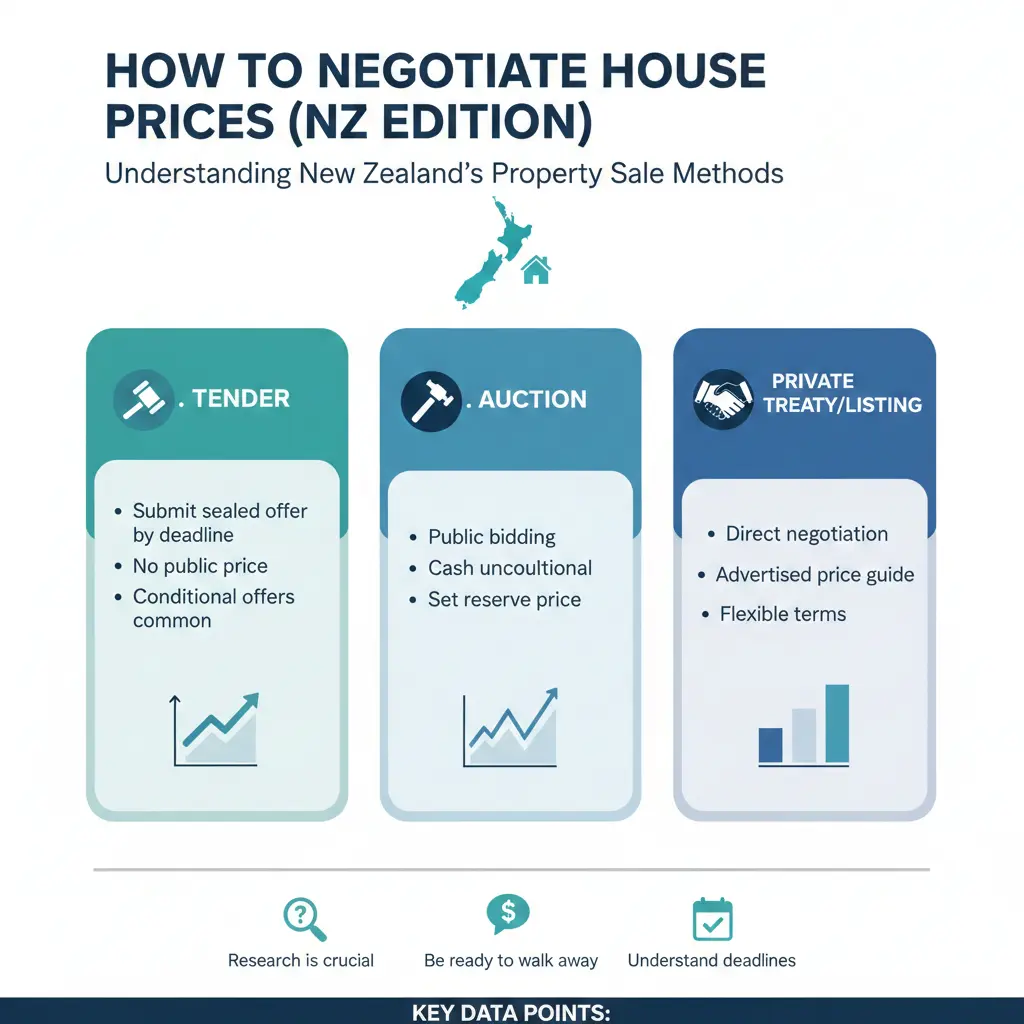
Understanding New Zealand's Property Sale Methods
In NZ, properties sell via auction, tender, negotiation, or asking price—each shapes your bargaining power differently. Knowing these upfront avoids costly mistakes, especially with pre-approval finance in hand.
Auction: High Stakes, No Room for Haggling
Auctions demand your best bid on the spot, with no conditions post-hammer fall. They're common in hot markets like Auckland, where competition drives prices up. Tip: Get fully approved finance first, as there's zero wiggle room.
Tender: Quality Over Speed
Tenders let you submit a sealed offer, often with conditions like finance or building checks. Sellers pick the best package—not always the highest bid. Prioritise fewer conditions or flexible settlements to stand out in balanced 2026 markets.
Price by Negotiation: Your Best Bet for Deals
Price by negotiation is flexible gold—make an offer, counter back and forth. Include conditions (e.g., subject to finance for 14 days), giving you leverage. Agents often hint at expectations; chat with a mortgage adviser to gauge realism.
Asking Price: Transparent Starting Point
Sellers list a price; you offer to meet, beat, or beat down. Conditions are standard, ideal for first-timers. Transparency helps, but always negotiate—sellers prioritise quick settlements or strong finance over max dollars.
Research Like a Pro Before You Offer
Knowledge is your strongest weapon. Comparable sales (comps) reveal if a property's overpriced. Use free tools like OneRoof, Homes.co.nz, or REINZ data for recent sales, trends, and suburb medians.
- Check quarterly national property index for area trends.
- Review property history via land registry for renovations or issues.
- Spot motivated sellers (e.g., job relocations, inheritances) via agent chats.
- Monitor 2026 hotspots: Emerging Auckland suburbs like Flat Bush offer value as supply grows.
Get bank pre-approval early—shows you're serious without rushing into offers. Compare multiple properties; multiple bids aren't frowned upon here.
Proven Tactics to Negotiate a Lower Price
Here's where the magic happens. Use these six battle-tested moves from NZ experts to negotiate house price NZ effectively.
1. Go Conditional to Build Leverage
Sign a conditional contract—say, 14 days for due diligence. This locks the seller in while you inspect. As the unconditional date nears, they're invested; request a reduction via your lawyer.
"I am happy to go unconditional if I get a $20,000 price reduction." — Example script from Opes Partners
2. Arm Yourself with a Building Report
Hire an independent inspector ($800–$1,200). Leaky decks or wiring issues? Negotiate fixes or price drops. "This needs work I didn't spot initially—let's adjust."
3. Use Comparable Sales and Valuations
Similar homes sold for less? Share the data. For big leverage, get a professional valuation ($600+). If it's below asking, that's your ammo.
4. Sweeten Non-Price Terms
Offer quick settlement, include/exclude chattels (e.g., curtains stay), or delay deposit until acceptance. These 'chips' balance a lower bid.
5. Counter Smartly and Stay Calm
Don't take offers personally—counter within $10,000 by splitting the difference. Understand seller motivations; flexibility wins.
6. Be Ready to Walk Away
The ultimate power move. If terms don't suit, politely withdraw. Desperate buyers overpay; cool heads score deals.
Practical Checklist for Negotiation Success
- Pre-offer prep: Finance approved, comps researched, agent briefed on motivations.
- Viewing: Stay objective—note flaws without emotion.
- Offer stage: Start 5–10% below in negotiations, justified by data.
- Due diligence: Building report, LIM (Land Information Memorandum) from council, title search.
- Lawyer involvement: Always—handles contracts, conditions.
- Closing: Confirm KiwiSaver/first-home grants via Kāinga Ora if eligible.
In 2026's softening Auckland market, prioritise emerging areas for better margins. Watch REINZ for stock rises signalling buyer power.
Legal Must-Knows and Common Pitfalls
NZ law protects buyers: Offers must be in writing via REA (Real Estate Authority) forms. Foreign buyers face OIO restrictions—stick to residency rules. Avoid pitfalls like skipping inspections (hello, weathertightness claims) or ignoring Healthy Homes standards for rentals.
Engage a conveyancing lawyer early; they're your safeguard against title defects. For first-homers, check govt.co.nz for grants up to $10,000.
FAQ
How much can I realistically negotiate off the asking price in NZ?
In 2026's balanced market, 5–10% is common via negotiation or conditional tactics, more in cooling areas. Always justify with reports.
Do I need a lawyer to negotiate?
Yes—lawyers handle contracts and reductions, keeping you protected. It's standard practice here.
What's better for negotiation: auction or asking price?
Asking price or negotiation offers most flexibility with conditions. Auctions lock you in.
Can I use KiwiSaver in negotiations?
Absolutely—maximise your deposit for stronger offers. First-home withdrawal rules apply via your provider.
Is early 2026 a good time to buy?
Yes, with rising stock and stable rates, per REINZ data—target suburbs like those in South Auckland.
What if the seller rejects my counter? Walk away if needed, or tweak terms (e.g., faster settlement). Multiple properties mean options abound.
Next Steps to Land Your Deal
Ready to negotiate? Start today: Pull comps on OneRoof, get pre-approved, and line up an inspector. Chat with a local REINZ agent for insider motivation intel. In NZ's market, preparation trumps desperation—follow these steps, and you'll not only save but buy smarter. Your future home awaits at the right price.
Sources & References
-
1
Negotiating a Real Estate Purchase in New Zealand — jarniascyril.com — www.jarniascyril.com
-
2
6 Tactics to Negotiate a Good Deal in 2026 — opespartners.co.nz — www.opespartners.co.nz
-
3
Auction, Tender, Negotiation or Asking Price? — themortgagehub.co.nz — www.themortgagehub.co.nz
-
4
How to Negotiate an Offer — realestateme.co.nz — www.realestateme.co.nz
-
5
Why Early 2026 Is a Good Time to Buy — najibrealestate.co.nz — www.najibrealestate.co.nz
- 6