Cost of Living for Expats in New Zealand

Whether you're considering a move to Aotearoa or helping friends and whānau plan their relocation, understanding the real cost of living for expats in New Zealand is crucial. The expenses can vary dra...
The Lifetimes NZ editorial team curates, fact-checks, and updates guides on personal finance, property, health, immigration, legal, business, and lifestyle topics relevant to Lifetimes NZ readers. Articles are produced with AI assistance and reviewed by the editorial team before publication.
Whether you're considering a move to Aotearoa or helping friends and whānau plan their relocation, understanding the real cost of living for expats in New Zealand is crucial. The expenses can vary dramatically depending on where you settle, your lifestyle choices, and whether you're coming alone or with family. Let's break down what you actually need to budget for in 2026.
Monthly Living Costs for Expats
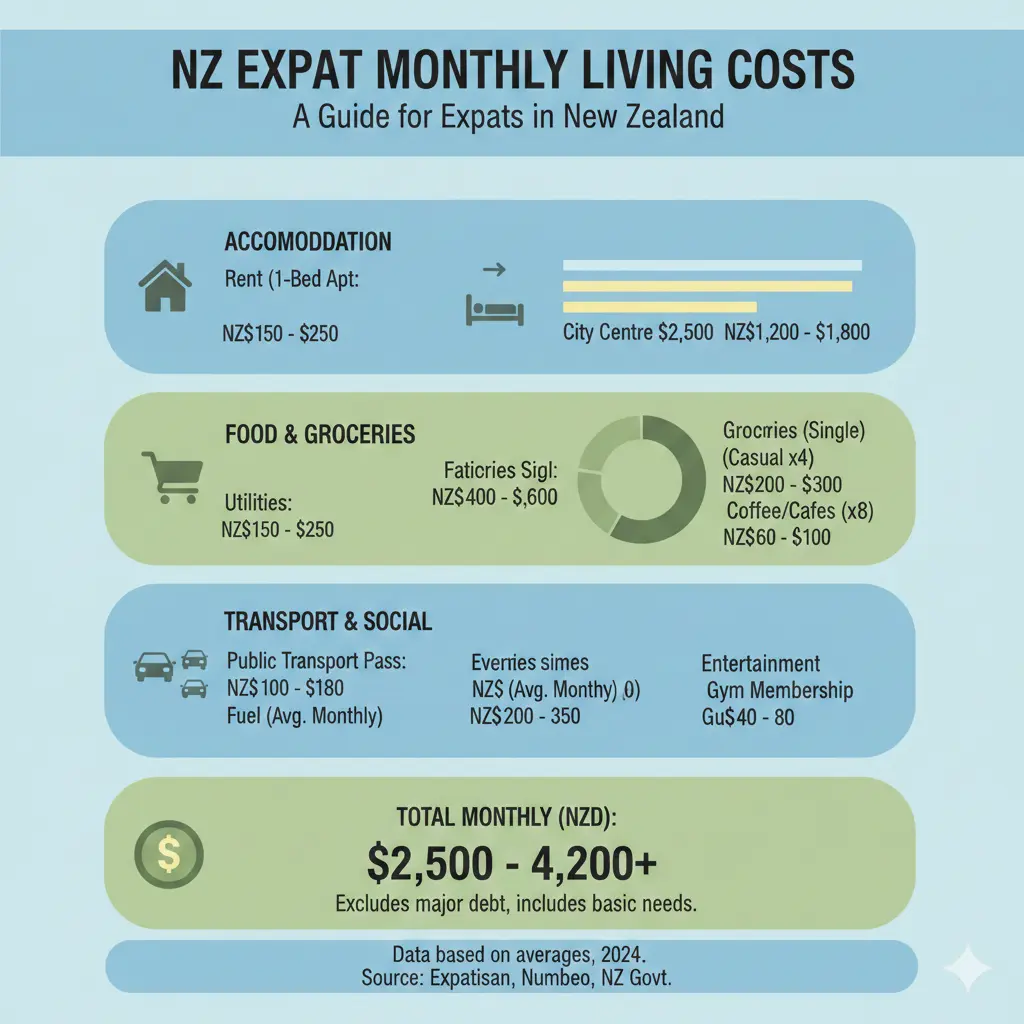
The amount you'll need depends largely on your situation and where you choose to live. For a single expat, expect to budget between NZ$3,500 to NZ$5,500 per month for a comfortable lifestyle. If you're relocating with family, you'll need around NZ$7,500 to NZ$12,000 monthly.
Breaking this down further, the average monthly cost of living for a single person across New Zealand cities is NZ$2,631 including rent, or NZ$1,331 excluding rent. For a couple, budget around NZ$3,468 monthly with rent. A family of four should plan for approximately NZ$4,781 per month including accommodation.
If you're budget-conscious, you can reduce these figures significantly. A single person managing tight finances might spend as little as NZ$1,707 monthly including rent, while those seeking a comfortable or luxury lifestyle should budget NZ$4,413 or more monthly.
Housing Costs: The Biggest Expense
Rent typically consumes the largest portion of your budget. Where you choose to settle will dramatically affect your housing costs.
Rental Prices by City (2026)
Auckland remains the most expensive, with weekly rent ranging from NZ$650–$780 for residential accommodation. That's roughly NZ$2,800–$3,380 per month. Wellington follows closely at NZ$600–$720 weekly (approximately NZ$2,600–$3,120 monthly).
If you're willing to move outside the main centres, you'll find significant savings. Christchurch offers NZ$480–$580 weekly rent (around NZ$2,070–$2,510 monthly), whilst smaller towns range from NZ$380–$500 weekly (approximately NZ$1,640–$2,160 monthly).
For a one-bedroom apartment specifically, Auckland and Wellington average NZ$2,500 to NZ$3,500 monthly, whilst Christchurch sits at NZ$1,800 to NZ$2,500. Living in smaller cities can reduce your overall costs by 20-30%.
Types of Accommodation
Your accommodation choice affects both cost and lifestyle. A room in a house share typically costs NZ$700–$900 monthly, making it the most affordable option for many expats. A private house runs NZ$1,000–$1,700 monthly, whilst luxury residences command NZ$1,800–$2,000+.
Food and Groceries
Groceries are a manageable expense if you cook at home. Budget NZ$320–$480 monthly for food shopping, though this varies based on your dietary preferences and where you shop.
Eating out, however, adds up quickly. A café breakfast costs NZ$18–$25, whilst a restaurant meal for one person runs NZ$30–$45. Takeaways range from NZ$12–$20 per meal. If you're dining out regularly, budget NZ$280–$350 monthly for mid-range eating out, or NZ$350–$450 for comfortable dining out.
Utilities and Essential Services
Beyond accommodation, you'll need to cover utilities and services. Electricity typically costs NZ$73 monthly on average, though this ranges from NZ$48–$110 depending on usage and season. Internet and mobile services run approximately NZ$100–$150 monthly.
Water and gas are usually included in rent or add a modest amount to your bills. Public transportation passes cost around NZ$120–$180 monthly, though this varies by city. If you're driving, factor in petrol costs—New Zealand's fuel prices are notably higher than many countries.
Healthcare and Insurance
As an expat, you'll want comprehensive health insurance. Budget around NZ$200 monthly for healthcare costs. Many employers offer health insurance as part of their benefits package, so check what your workplace provides.
Entertainment and Personal Expenses
Entertainment, shopping, and personal expenses add up. Budget NZ$145 monthly for movies, coffee, drinks, and social activities, plus NZ$70 monthly for clothing and accessories. Personal expenses including entertainment and books run approximately NZ$200–$300 monthly.
Sample Monthly Budget for Expats
Here's a realistic breakdown of monthly expenses for a single expat in a mid-sized city:
- Rent: NZ$1,800–$2,200
- Food (groceries and occasional dining): NZ$600–$800
- Transport: NZ$150–$200
- Utilities (electricity, water, internet): NZ$250–$350
- Healthcare/Insurance: NZ$200
- Entertainment/Personal: NZ$300–$400
- Miscellaneous: NZ$200–$300
- Total: NZ$3,500–$4,450
This aligns with the NZ$3,500–$5,500 range recommended for comfortable expat living.
Cost of Living Compared to Other Countries
New Zealand's cost of living is higher than most nations in the Pacific region but slightly more affordable than Australia. Whilst rent in Auckland and Wellington is lower than Sydney, it remains significant. Groceries and utilities are similar to Australia, though some imported goods cost more. Petrol prices are notably higher in New Zealand, increasing transportation expenses.
Ways to Save Money as an Expat
Living affordably in New Zealand is possible with smart choices:
- Choose regional areas: Moving outside Auckland and Wellington can reduce your overall costs by 20-30%
- Share accommodation: House-sharing significantly reduces rent costs
- Cook at home: Preparing meals yourself is far cheaper than eating out regularly
- Use public transport: Many cities have affordable monthly passes
- Look for employer perks: Housing allowances and other benefits can offset costs
- Shop strategically: Use local markets and supermarket specials for groceries
Government Requirements for Cost of Living
If you're applying for a student visa, Immigration New Zealand (INZ) specifies a requirement of NZ$20,000 per year for the cost of living. This translates to approximately NZ$1,667 monthly and covers accommodation, utilities, and other necessary expenditures.
Making Your Move to New Zealand
Understanding your cost of living is the first step in planning a successful move to Aotearoa. Whether you're targeting Auckland's job market or seeking a more affordable lifestyle in the regions, the key is realistic budgeting based on your circumstances.
Start by determining your income expectations in New Zealand and comparing them to these costs. Remember that your first few months may be more expensive as you establish yourself—setting up a bank account, finding permanent accommodation, and purchasing essentials all add up. Once you're settled, your monthly expenses should align with the figures outlined here.
Research the specific city or region you're considering, connect with expat communities online, and don't hesitate to reach out to local resources. Many councils and community organisations offer support for newcomers. With proper planning and realistic expectations, you can build a comfortable life in New Zealand whilst managing your finances effectively.
Frequently Asked Questions
Sources & References
-
1
Cost of Living in New Zealand for Expats — www.pacificprime.com
-
2
Cost Of Living in New Zealand in 2026 — livingcostindex.com
-
3
Cost of Living in New Zealand 2026: A Realistic Breakdown — themigratehub.com
-
4
Cost of Living in New Zealand 2026-2027 — www.aeccglobal.com
-
5
Cost of Living in New Zealand - Moving To New Zealand in 2026 — www.thebrokebackpacker.com
-
6
Cost of living in New Zealand — www.immigration.govt.nz