Starting a Side Hustle in NZ: Tax & Legal Basics

Ever dreamed of turning your weekend craft market stall into a thriving income stream, or monetising your graphic design skills on the side? In New Zealand, side hustles are booming as Kiwis seek extr...
Priya writes about immigration pathways, job searching, and building a career in New Zealand. She covers visa options, CV writing, interview preparation, and workplace culture for newcomers and locals alike.
Ever dreamed of turning your weekend craft market stall into a thriving income stream, or monetising your graphic design skills on the side? In New Zealand, side hustles are booming as Kiwis seek extra cash amid rising living costs. But before you dive in, understanding the tax and legal basics is crucial to avoid nasty surprises from Inland Revenue (IRD).
Whether you're selling handmade jewellery on Etsy, driving for a rideshare app, or freelancing as a tutor, your side gig could be classified as a business for tax purposes. Get it right from the start, and you'll keep more of your hard-earned money while staying compliant. This guide breaks down everything you need to know about side hustle tax NZ, from declaring income to GST registration and beyond, using the latest 2026 rules.
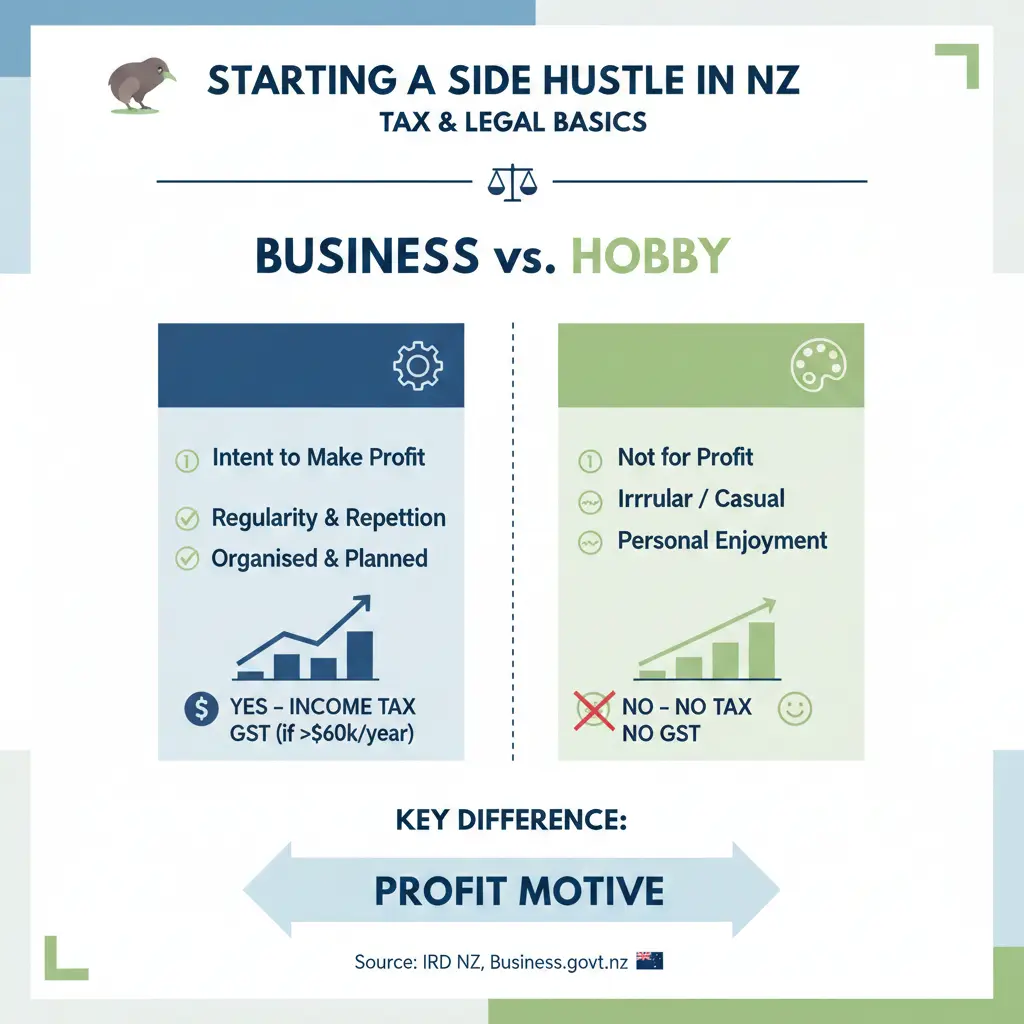
Is Your Side Hustle a Business? Know the Difference from a Hobby
IRD draws a clear line between hobbies and businesses. If you're just dabbling for fun—like baking cakes for friends occasionally—any money made isn't taxable, and you don't need records. But if you're selling goods or services regularly with the intention to make a profit, it's likely a business. Even a "side hustle" counts if there's sufficient activity.
Key signs it's a business:
- You're advertising or marketing your services/goods.
- You have repeat customers or aim for ongoing sales.
- You track expenses and profits.
- Your activity is organised, like having a website or business bank account.
For example, if you're flipping vintage clothes at Auckland's Karangahape Road markets every weekend, that's business territory. Keep detailed records from day one—receipts, invoices, mileage—to claim expenses later.
Practical Tip: Use Free Tools to Track
Start with a simple spreadsheet or apps like Xero or MYOB Essentials. They're tailored for NZ sole traders and make tax time a breeze.
Tax Obligations: Income Tax, GST, and More
All business income must be declared to IRD, no matter how small. Your net profit (income minus allowable expenses) is taxed at your marginal rate. File an IR3 return by 7 July each year (or later with an agent).
Income Tax Rates for 2026 (1 April 2025 - 31 March 2026)
Rates simplified in 2025 make budgeting easier:
| Income Bracket | Marginal Rate |
|---|---|
| 0 to $15,600 | 10.5% |
| $15,601 to $53,500 | 17.5% |
| $53,501 to $78,100 | 30% |
| $78,101 to $180,000 | 33% |
| $180,001 and over | 39% |
If your side hustle pushes you into a higher bracket, provisional tax might kick in from your second year if earnings exceed $5,000.
GST: When Do You Need to Register?
Register for GST if your annual turnover hits $60,000 (including all income sources). It's 15% on sales, which you collect from customers and pass to IRD—but you can claim back GST on business purchases like materials or software.
Voluntary registration below $60k makes sense if you're buying lots of GST-inclusive supplies. Example: Selling $200 custom T-shirts? Charge $230 GST-inclusive if registered. Use IRD's GST calculator for quotes.
Other Levies and Deductions
- ACC Levies: Pay based on your industry's risk rate—use ACC's online estimator.
- Student Loan: Repay if total income tops $24,128 (2026 threshold). Self-employed? Calculate on adjusted net income; voluntary payments spread the cost.
- KiwiSaver: Optional contributions qualify for government contributions; upcoming changes from April 2026 raise employer rates to 3.5%.
- Independent Earner Tax Credit (IETC): Up to $520/year if earning $24,000-$66,000, but side hustles might affect eligibility.
Pro tip: Pay first-year tax early (before 31 March) for a compliance discount—chat to an accountant.
Legal Basics: Contracts, Employment, and Compliance
Side hustles are legal in NZ, but check your main job contract. Some employers ban secondary work or require approval, especially if there's a conflict (e.g., consulting in your industry). No issues with job performance? You're generally fine.
Business Structure Options
Most side hustlers start as sole traders—simple, no setup costs, but personal liability for debts. Use your IRD number; get an NZBN free from business.govt.nz.
- Partnership: For hustles with a mate—shared taxes, but joint liability.
- Company: Limits liability but more admin; consider if scaling up.
Freelancers selling services? Invoice with your IRD, terms, and GST status. Platforms like Upwork handle some PAYE, but declare all earnings.
Health and Safety, Consumer Laws
Even small operations need basic health and safety plans (WorkSafe.nz). Selling products? Comply with Fair Trading Act—no misleading claims. Food hustles require council registration.
Common Side Hustle Examples and Tax Tips
Ridesharing (Uber): Declare fares minus expenses like fuel (log mileage at 79c/km 2026 rate). GST if over $60k.
Etsy Crafts: Turnover includes shipping; deduct materials, postage. Hobby? No tax; business? Full records.
Freelance Tutoring: Home-based? Claim portion of rent/power. Zoom fees deductible.
Track everything with cloud accounting—many offer free tiers for starters.
Next Steps to Launch Your Side Hustle Safely
1. Assess if it's a business—use IRD's online tool.
2. Get an NZBN and separate bank account.
3. Track income/expenses weekly.
4. Register for GST if needed via myIR.
5. Consult IRD's free seminars or a cheap accountant for your first IR3.
Starting small keeps it manageable. Scale confidently knowing you're tax-compliant—your side hustle could become your main gig. Head to ird.govt.nz/sidehustle for tailored advice.
Frequently Asked Questions
Sources & References
-
1
Should you take on a second job or side hustle in 2026? — robertwalters.co.nz — www.robertwalters.co.nz
-
2
Tax basics for sole traders — business.govt.nz — www.business.govt.nz
-
3
An update on remote working in New Zealand — deloitte.com/nz — www.deloitte.com
- 4
-
5
New Tax Bill aims to attract migrants to New Zealand — dlapiper.com — www.dlapiper.com
-
6
Is your hobby a business? — ird.govt.nz — www.ird.govt.nz
-
7
Expatriate tax - New Zealand — grantthornton.global — www.grantthornton.global
Useful Tools
Related Articles

Why Every Kiwi Should Have a "Side Hustle" in 2026
Imagine topping up your KiwiSaver, covering those rising power bills, or even saving for a deposit on your first home—all while keeping your day job. In 2026, with New Zealand's cost of living still b...

AI Tools for Small Business: How Kiwis are Automating Their Work
Imagine wrapping up your day in Auckland or Christchurch, knowing your small business emails are drafted, social posts scheduled, and customer queries handled—all without lifting a finger. That's the...

Working for Yourself: How to Register as a Sole Trader in NZ
Ever dreamed of ditching the 9-to-5 and calling the shots on your own terms? For many Kiwis, becoming a sole trader is the perfect way to turn that dream into reality—it's simple, low-cost, and lets y...

Side Hustles That Actually Work in NZ: From E-commerce to Local Services
Ever feel like your paycheck just isn't stretching far enough in today's New Zealand? With living costs climbing and Kiwis hunting for smarter ways to boost income, side hustles are more popular than...