Term Deposits vs Bond Funds: Which Pays Better?
Looking for a safe way to grow your hard-earned cash? With interest rates easing in 2026, many Kiwis are weighing up term deposits vs bonds NZ to see which delivers better returns without too much ris...
The Lifetimes NZ editorial team curates, fact-checks, and updates guides on personal finance, property, health, immigration, legal, business, and lifestyle topics relevant to Lifetimes NZ readers. Articles are produced with AI assistance and reviewed by the editorial team before publication.
Looking for a safe way to grow your hard-earned cash? With interest rates easing in 2026, many Kiwis are weighing up term deposits vs bonds NZ to see which delivers better returns without too much risk. Term deposits feel rock-solid, but bond funds might edge them out—let's break it down so you can decide what's right for your money.
What Are Term Deposits?
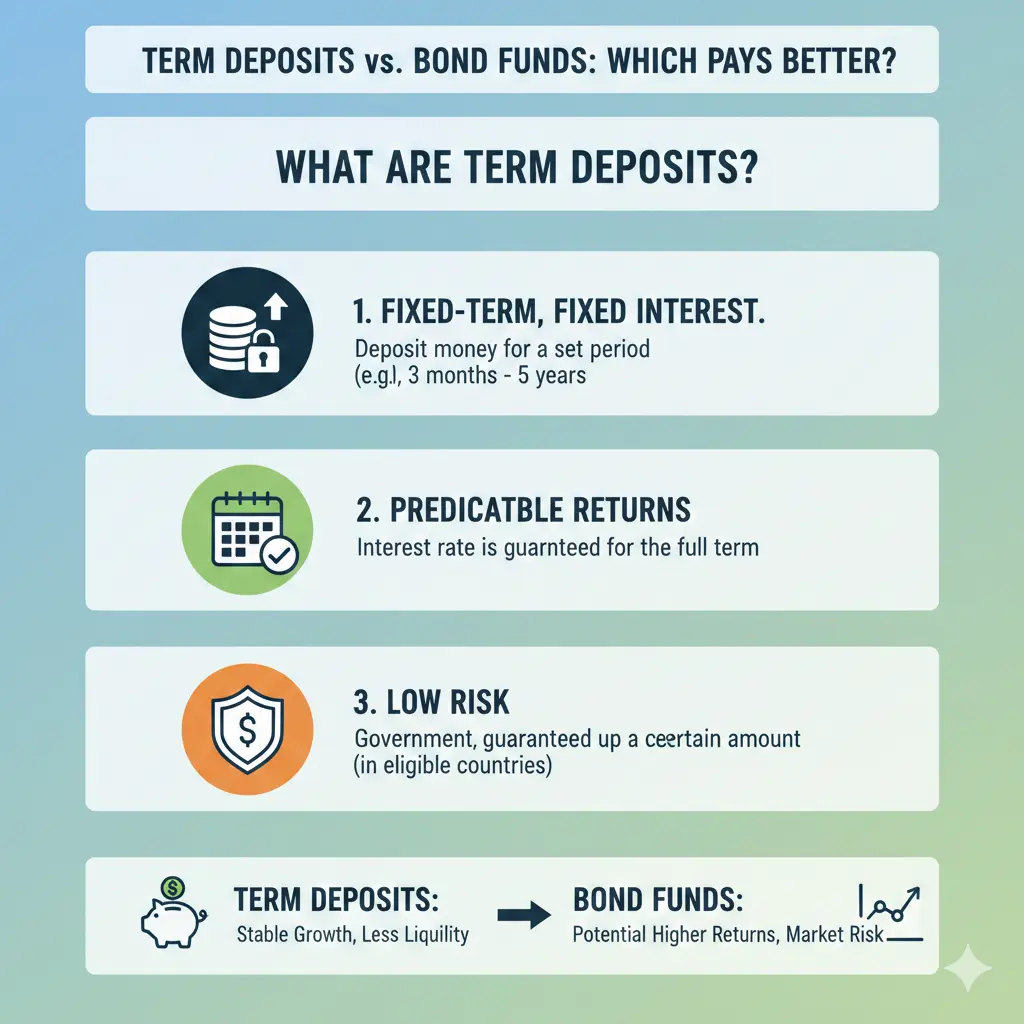
Term deposits are a Kiwi favourite for good reason. You park your money with a bank for a fixed period—from one month to five years—and get a guaranteed interest rate at the end. No nasty surprises; it's as straightforward as it gets. Right now, households have over $200 billion locked into them, showing just how much we trust this option.
Banks like ANZ, ASB, and Westpac offer competitive rates, often climbing higher the longer you commit. For instance, a one-year term might pay around 3.92% p.a., but check the latest from the Reserve Bank of New Zealand (RBNZ) for exact figures across terms. Interest is usually paid at maturity, though some let you take it periodically.
Pros and Cons of Term Deposits
- Guaranteed returns: Your principal and interest are safe up to $250,000 per depositor per bank under the government's deposit guarantee scheme (though this scheme ended in 2011, banks remain highly regulated and stable).
- Low risk: Backed by major NZ banks with excellent credit ratings.
- Tax simplicity: Resident Withholding Tax (RWT) applies, up to 39%, but some PIE term deposits cap it at 28%.
- Lock-in downside: Early withdrawal means penalties, so your money's tied up.
- Inflation risk: Recent data shows two-year terms barely beat inflation pre-tax, underperforming bond funds.
What Are Bond Funds?
Bond funds pool money to buy bonds—essentially IOUs from governments or companies promising to repay with interest. In NZ, think NZ government bonds or corporate ones managed by pros like Kernel Wealth or Forsyth Barr. Unlike individual bonds, funds offer diversification across many issuers, reducing the hit if one defaults.
These aren't single bonds; funds trade units daily, giving liquidity. Yields to maturity (YTM) for bond funds currently sit around 4.31%, often beating term deposits and cash funds. Long-term, the Bloomberg NZ Bond Index has outpaced the NZ Bank Bill Index by about 1% p.a. since 2010, though with more ups and downs.
Pros and Cons of Bond Funds
- Higher potential returns: Bonds demand more from issuers for longer terms and risks, so yields beat short-term cash.
- Liquidity: Sell units next business day, cash in your bank in 1-2 days—no maturity wait.
- Capital gains potential: When rates fall, bond prices rise, boosting your investment value.
- Tax perks: PIE structure caps tax at 28%, better than standard RWT.
- Higher risk: Credit and interest rate risks mean values can drop if rates rise or issuers struggle.
Term Deposits vs Bond Funds: Head-to-Head Comparison
So, which pays better in today's market? Here's a snapshot based on mid-2025 data (rates fluctuate, so verify current ones).
| Feature | Term Deposits | Bond Funds |
|---|---|---|
| Current YTM (approx.) | 3.92% (1-year) | 4.31% |
| Expected Returns | Beats on-call savings | Higher than cash/TDs long-term (+1% p.a.) |
| Safety | Highest, undiversified | Good, diversified across bonds |
| Tax | RWT up to 39%; some PIE at 28% | PIE max 28% |
| Access to Funds | At maturity (penalties early) | 1-2 business days |
| Risk | Interest rate risk only | Credit + interest rate risk |
Bond funds often edge out on returns because issuers pay more for long-term funding amid rate risks. But term deposits win on certainty—no market wobbles. With RBNZ rates expected to hold or dip only if the economy stumbles, 2026 looks steady for both.
Which Pays Better Right Now?
As of early 2026, bond funds show higher YTMs (4.31% vs 3.92%), and historically outperform. Yet if rates fall, bonds gain extra from price rises—term deposits don't. For conservative savers, TDs match bank bills; bonds suit those okay with mild volatility for better yields.
Key Risks to Watch
Interest Rate Risk
Both face this: rates up, you miss higher yields (TDs lock you in); bonds drop in value. But bonds rebound with capital gains if rates later fall.
Credit Risk and Safety Nets
Term deposits: Near-zero risk from solid NZ banks. Bond funds: Diversified, but corporate bonds carry default odds—stick to investment-grade. No government guarantee like the old scheme, so diversify providers.
Inflation and Opportunity Cost
TDs have struggled post-COVID; two-year rates hit 5.35% in 2023 but barely topped inflation. Bonds have historically done better against rising prices.
NZ-Specific Considerations
Our market loves TDs, but with $200b+ invested, you're not alone. Use Sorted.org.nz for tools comparing options. PIE tax rules favour funds—declare your PIR correctly via IRD.govt.nz. For bonds, platforms like Kernel Wealth or Sharesies make entry easy, starting from $500. Always check RBNZ stats for live TD rates and consult a financial adviser for personalised advice under the Financial Markets Conduct Act.
Practical Tips for Kiwi Investors
- Match your term to needs: Short-term cash? TDs or cash funds. Longer horizon? Bonds.
- Laddering TDs: Split across 6m, 1y, 2y to avoid rate-lock regret.
- Diversify bonds: Mix govvies (safest) with corporates via funds.
- Watch fees: Bond funds charge 0.5-1%—ensure yields cover it.
- Tax hack: Opt for PIE versions to cap at 28%.
- Monitor RBNZ: OCR cuts could boost bonds.
Next Steps for Your Money
Compare live rates on RBNZ or Moneyhub, run numbers on Sorted's calculator, and chat with an adviser. Whether sticking with term deposits' certainty or chasing bond funds' edge, align with your goals—safe growth beats FOMO every time. Start small, diversify, and review yearly as rates shift in 2026.
Frequently Asked Questions
Sources & References
-
1
Choosing Between Bonds, Cash and Term Deposits - Kernel Wealth — kernelwealth.co.nz
-
2
Fixed-Rate Bonds vs Term Deposits - Intelligent Investor — www.intelligentinvestor.com.au
-
3
Compare the Best Term Deposit Rates in New Zealand - Moneyhub — www.moneyhub.co.nz
-
4
The Hidden Cost of Playing It Safe with Term Deposits - Cambridge Partners — cambridgepartners.co.nz
-
5
The Prospects for Term Deposit Savers in 2026 - interest.co.nz — www.interest.co.nz
-
6
Term Deposits Alternative Strategies - Forsyth Barr — www.forsythbarr.co.nz
-
7
Types of Investments - Sorted — sorted.org.nz