What Is ACC? Complete Guide to Accident Compensation

Ever slipped on a wet deck while mowing the lawns, twisted an ankle on a tramping track, or been rear-ended in Auckland traffic? If you're a New Zealander, you're automatically covered by ACC – our no...
The Lifetimes NZ editorial team curates, fact-checks, and updates guides on personal finance, property, health, immigration, legal, business, and lifestyle topics relevant to Lifetimes NZ readers. Articles are produced with AI assistance and reviewed by the editorial team before publication.
Ever slipped on a wet deck while mowing the lawns, twisted an ankle on a tramping track, or been rear-ended in Auckland traffic? If you're a New Zealander, you're automatically covered by ACC – our no-fault accident compensation scheme that steps in when injuries strike, without the need to prove blame.
This guide breaks down everything you need to know about what is ACC NZ, from its history and coverage to how to claim and what to expect in 2026. Whether you're a worker, parent, or adventure seeker, understanding ACC can save you time, stress, and money when the unexpected happens.
What is ACC and How Does It Work?
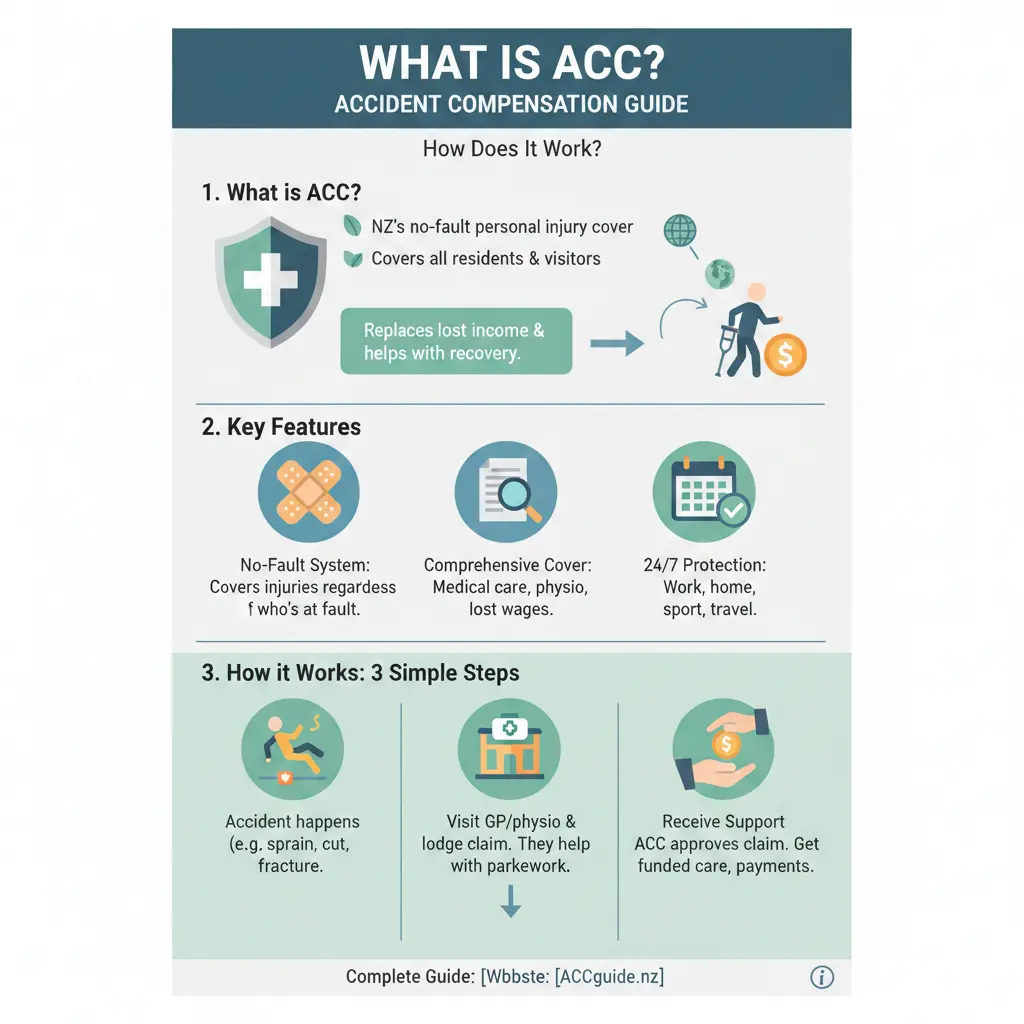
The Accident Compensation Corporation (ACC) is a Crown entity that runs New Zealand's unique no-fault personal injury cover scheme. Established under the Accident Compensation Act 2001, ACC provides financial support, rehabilitation, and injury prevention for Kiwis and visitors who suffer personal injuries.
Unlike traditional insurance where you chase someone for fault, ACC's genius is in its simplicity: if you have an 'accident', you're covered – full stop. In exchange, we give up the right to sue for personal injury damages (except exemplary damages). This keeps our courts unclogged and gets help to you faster.
The History of ACC: From Woodhouse Report to Today
ACC's roots trace back to 1967's Woodhouse Report, a Royal Commission that exposed flaws in our old workers' comp laws. It recommended a universal, no-fault system, leading to the Accident Compensation Act 1972 and ACC launching on 1 April 1974.
Originally the Accident Compensation Commission, it became a corporation in 1992 and operates under the 2001 Act today. In 2025, Scott Simpson took the ACC portfolio, overseeing its evolution amid modern challenges like work-related mental health.
Today, ACC balances three core functions: injury prevention, rehabilitation, and compensation – helping over a million claims yearly while promoting safer lives.
Who is Eligible for ACC Cover?
Pretty much everyone in Aotearoa: citizens, residents, and temporary visitors (excluding injuries on arrival/departure ships or planes). Returning Kiwis get cover for overseas injuries if you've been away less than six months (work exceptions apply).
Cover kicks in for:
- Physical injuries from accidents – sprains, breaks, cuts from falls, sports, or cars.
- Treatment injuries – harm from medical procedures.
- Work-related gradual processes – like asbestos exposure.
- Mental injuries from sexual abuse or specific work-related trauma.
Note: Not all illnesses qualify – heart attacks or strokes need proof of unusual work exertion. Chronic conditions often fall outside unless listed as occupational diseases.
Visitors and Overseas Kiwis: Key Rules
Tourists clipping a kerb in Queenstown? Covered. Cruise ship mishaps while docked? Generally yes, but not on board during transit. Expat Kiwis back from OE with a ski injury from the Alps? Lodged within six months, you're good.
What Does ACC Cover? Entitlements Explained
ACC picks up the tab to get you back on your feet, covering medical costs, lost earnings, and rehab. Here's the 2026 breakdown:
Weekly Compensation (Lost Income)
If work incapacity lasts over a week, you get up to 80% of your pre-injury earnings (capped at average weekly earnings, around $2,500+ in 2026 – check acc.co.nz for latest). Paid after seven days, retroactive if approved.
Medical and Treatment Costs
GP visits, physio, surgery, prescriptions – all covered if linked to your injury. No co-pays for approved providers.
Rehabilitation Support
- Social rehab: Aids like home mods or transport to restore independence.
- Vocational rehab: Training or job placement to return to work.
Lump Sum Payments
For permanent impairment, weekly comp for life (if 70%+ incapacity), or one-off sums assessed via the ACC Impairment Guide.
Pro Tip: Keep all receipts and tell your doctor it's an ACC injury from day one – speeds up approvals.
How to Make an ACC Claim in 2026
Claims are straightforward:
- Report promptly: Tell your doctor, employer (if work-related), or call ACC 0800 101 996.
- Fill the form: Use the ACC app, myACC portal, or paper form (download from acc.co.nz/claims).
- Wait for decision: Usually 4-6 weeks; track via myACC.
- Appeal if needed: Review within 3 months, then District Court.
In 2026, digital claims via myACC are fastest – 90% approved online. Employers: Use the Accredited Employers Programme for work claims and premium discounts (140+ firms enrolled).
Common Pitfalls to Avoid
- Delaying – cover starts from accident date, but late claims risk denial.
- Not linking to 'accident' – gradual onset needs work proof.
- Missing employer notification for work injuries.
ACC Levies: Who Pays and How Much in 2026?
It's a pay-as-you-go system: earners pay via PAYE (about 1.5% of income), employers cover work risks, car owners via rego, biz via experience-rated levies. Self-employed? Opt into CoverPlus Extra for tailored cover.
2026 rates: Check levies.co.nz – expect tweaks for sustainability amid rising claims.
Injury Prevention: ACC's Proactive Side
ACC isn't just payouts – it funds programmes like RugbySmart, Ride Forever motorcycle safety, and Home Safety Zones with Safekids. These cut serious injuries by 20-30% in targeted areas.
"We want to reduce the number and seriousness of injuries across Aotearoa."
Challenges and Criticisms of ACC
While world-leading, ACC faces flak: Accredited Employers Programme accused of claim-denying conflicts. Work-related mental health gaps persist, with narrow 'mental injury' definitions. 2026 access reporting targets Māori disparities.
ACC vs Other Insurance: Do You Need More?
ACC handles accidents, but not sickness – pair with income protection for full cover (e.g., flu or cancer). ACC is compulsory and sole for accidents; private insurers fill illness gaps.
Next Steps: Get Covered and Stay Safe
Download myACC today, know your levies, and chat to your GP about cover. For claims help, contact Community Law (communitylaw.org.nz) or ACC reviewers. Prevention first – check ACC's safety tools at acc.co.nz/preventing-injuries. When accidents happen, ACC has your back – so you can get back to living.
Frequently Asked Questions
Sources & References
-
1
The Accident Compensation Corporation - What is it? — Gibson Sheat Lawyers — www.gibsonsheat.com
-
2
Accident Compensation Corporation — Wikipedia — en.wikipedia.org
-
3
Overview of the ACC scheme — Community Law — communitylaw.org.nz
-
4
ACC Annual Scheme Access Reporting Consultation Paper — ACC — www.acc.co.nz
-
5
New Zealand's Accident Compensation Scheme: A Comprehensive Guide — Nimc — vault.nimc.gov.ng
-
6
Workers' health in New Zealand’s ACC scheme — Victoria University — ojs.victoria.ac.nz
-
7
Updated Letter of Expectations - Accident Compensation — Treasury NZ — www.treasury.govt.nz
-
8
ACC vs Income Protection Insurance — MoneyHub NZ — www.moneyhub.co.nz