Kiwifruit Is a Billion-Dollar Export Industry

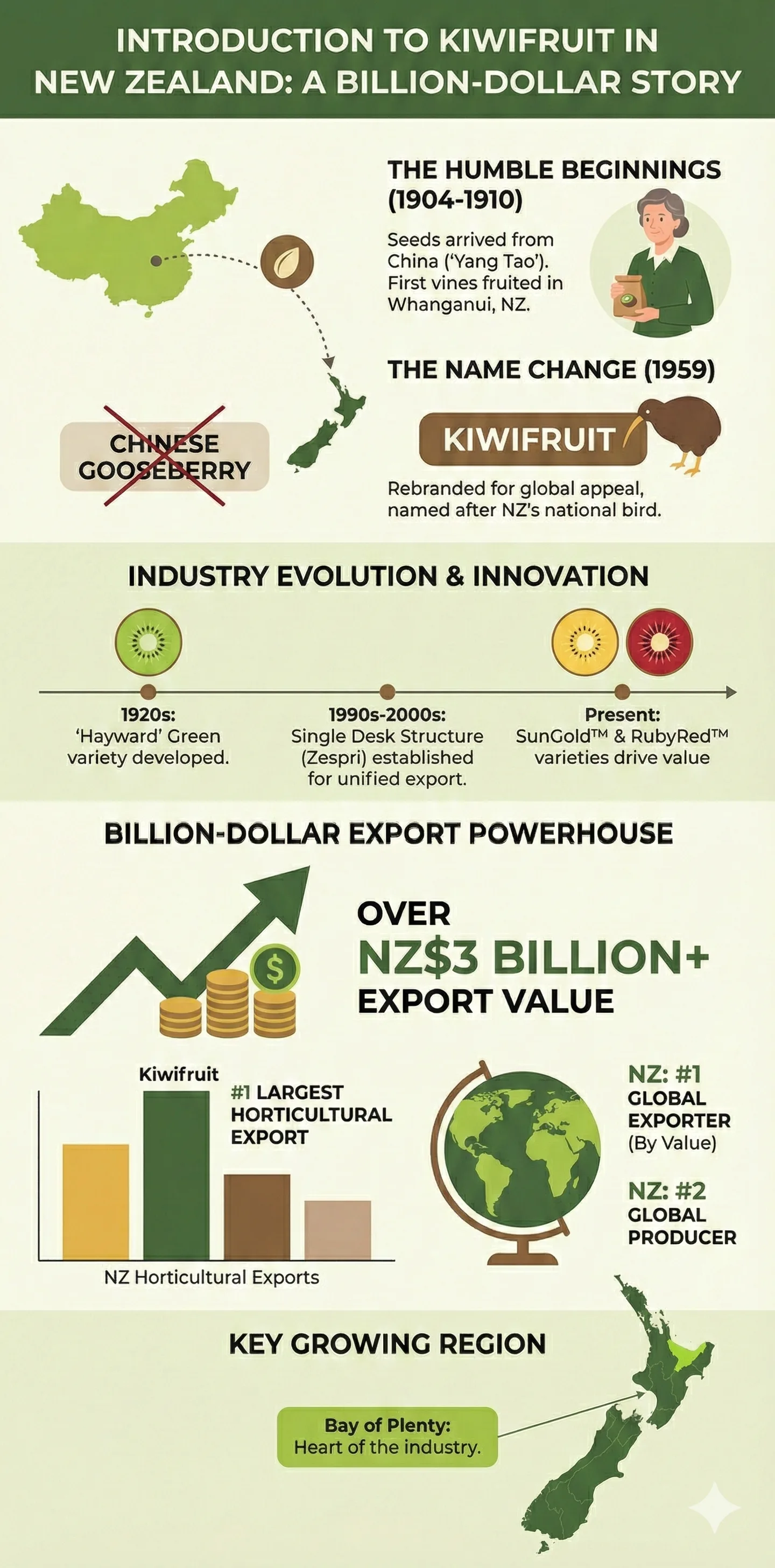
Introduction to Kiwifruit in New Zealand Kiwifruit is one of New Zealand's most successful export industries, with a value of over $1 billion annually. Th
Tom covers travel, lifestyle, and cost-of-living topics across New Zealand. He writes practical guides on transport, day trips, outdoor activities, and everyday life in Aotearoa.
Introduction to Kiwifruit in New Zealand
Kiwifruit is one of New Zealand's most successful export industries, with a value of over $1 billion annually. The kiwifruit industry has come a long way since the first commercial plantings in the 1930s. Today, New Zealand is one of the world's largest producers and exporters of kiwifruit, with the majority of the crop being exported to countries like Japan, China, and the United States. The industry provides employment for thousands of people in rural areas, particularly in the Bay of Plenty and Northland regions.
The success of the kiwifruit industry can be attributed to a combination of factors, including New Zealand's favourable climate, innovative farming practices, and a strong focus on research and development. The industry has also been supported by government initiatives and investment in infrastructure, such as coolstores and packing facilities. As a result, kiwifruit has become an important part of New Zealand's economy, with a significant contribution to the country's GDP.
If you're interested in learning more about the kiwifruit industry, or perhaps considering a career in this field, this article will provide you with an overview of the industry, its history, and the opportunities and challenges it presents. We'll also explore the benefits of kiwifruit for consumers, and provide some practical advice for growing your own kiwifruit at home.
History of the Kiwifruit Industry
The kiwifruit industry in New Zealand has a rich and fascinating history. The first kiwifruit plants were introduced to New Zealand from China in the early 20th century, and were initially grown in backyard gardens and small orchards. In the 1930s, commercial plantings began, and the industry started to grow rapidly. The name "kiwifruit" was coined in the 1950s, reportedly because of the fruit's resemblance to the kiwi bird, New Zealand's national symbol.
In the 1970s and 1980s, the kiwifruit industry experienced significant growth, driven by increasing demand from overseas markets. This growth was supported by the development of new varieties, such as the Hayward kiwifruit, which is still one of the most widely grown varieties today. The industry also invested in research and development, including the development of new packing and storage technologies, which helped to improve the quality and shelf life of the fruit.
Some key milestones in the history of the kiwifruit industry include:
- 1904: The first kiwifruit plants are introduced to New Zealand from China
- 1930s: Commercial plantings of kiwifruit begin
- 1950s: The name "kiwifruit" is coined
- 1970s and 1980s: The industry experiences significant growth, driven by increasing demand from overseas markets
- 1990s: The industry invests in research and development, including the development of new varieties and packing technologies
The Kiwifruit Industry Today
Today, the kiwifruit industry is a significant contributor to New Zealand's economy, with a value of over $1 billion annually. The industry employs thousands of people, both directly and indirectly, and provides a range of benefits to local communities. The majority of New Zealand's kiwifruit crop is exported to countries like Japan, China, and the United States, where it is prized for its unique flavour and nutritional properties.
The kiwifruit industry is also a significant user of New Zealand's natural resources, including water and land. As a result, the industry is subject to a range of environmental regulations and sustainability initiatives, aimed at reducing its impact on the environment. Some of the key environmental issues facing the kiwifruit industry include:
- Water usage: Kiwifruit is a water-intensive crop, and the industry is working to reduce its water usage through more efficient irrigation systems and water conservation measures
- Pest management: The industry is working to reduce its use of chemical pesticides and fungicides, and to develop more sustainable pest management practices
- Soil health: The industry is working to improve soil health through the use of organic fertilisers and soil conservation measures
Benefits of Kiwifruit for Consumers
Kiwifruit is a nutritious and delicious fruit, with a range of health benefits for consumers. Some of the key benefits of kiwifruit include:
- High in vitamin C: Kiwifruit is an excellent source of vitamin C, with one medium-sized fruit providing around 70% of the recommended daily intake
- Rich in antioxidants: Kiwifruit contains a range of antioxidants, including polyphenols and flavonoids, which can help to protect against cell damage and reduce the risk of chronic diseases
- Good source of fibre: Kiwifruit is a good source of dietary fibre, with one medium-sized fruit providing around 3 grams of fibre
- May help to support immune function: Kiwifruit contains a range of immune-boosting compounds, including vitamin C and beta-carotene
If you're looking to incorporate more kiwifruit into your diet, here are some tips:
- Add kiwifruit to your breakfast: Try adding sliced kiwifruit to your breakfast cereal or yogurt
- Use kiwifruit in salads: Kiwifruit is a great addition to green salads, and can be paired with a range of ingredients, including chicken, avocado, and nuts
- Make a kiwifruit smoothie: Blend kiwifruit with your favourite fruits and milk to make a delicious and healthy smoothie
Growing Your Own Kiwifruit
If you're interested in growing your own kiwifruit, here are some tips to get you started:
- Choose a sunny spot: Kiwifruit needs full sun to produce well, so choose a spot that gets plenty of sunlight
- Use a well-draining soil: Kiwifruit prefers a well-draining soil that is rich in organic matter
- Water regularly: Kiwifruit needs regular watering, especially when it's producing fruit
- Provide support: Kiwifruit is a climbing plant, so provide a trellis or other support for it to grow on
Some things to keep in mind when growing kiwifruit include:
- Kiwifruit is a deciduous plant: This means that it will lose its leaves in the winter months, and may need protection from frost
- Kiwifruit is a male and female plant: Kiwifruit plants are either male or female, and you'll need to have at least one male plant to pollinate your female plants
- Kiwifruit can be susceptible to pests and diseases: Keep an eye out for pests like aphids and whitefly, and diseases like powdery mildew and botrytis
Career Opportunities in the Kiwifruit Industry
The kiwifruit industry offers a range of career opportunities, from farming and horticulture to marketing and export. If you're interested in pursuing a career in the kiwifruit industry, here are some options to consider:
- Farming and horticulture: Consider a career as a kiwifruit farmer or orchardist, or work in a related field like horticulture or agriculture
- Marketing and export: The kiwifruit industry is a significant exporter, and there are many career opportunities in marketing and export
- Research and development: The kiwifruit industry is constantly looking for new and innovative ways to improve production and reduce its environmental impact
- Packing and logistics: The kiwifruit industry relies on a complex network of packing and logistics operations to get its product to market
Some of the key skills and qualifications you'll need to work in the kiwifruit industry include:
- A degree in horticulture or agriculture: A degree in horticulture or agriculture can provide a solid foundation for a career in the kiwifruit industry
- Experience in farming or horticulture: Practical experience in farming or horticulture can be highly valuable in the kiwifruit industry
- Marketing or business skills: If you're interested in working in marketing or export, you'll need to have strong marketing or business skills
- Attention to detail: The kiwifruit industry is a highly regulated industry, and attention to detail is essential for success
Conclusion
In conclusion, the kiwifruit industry is a significant contributor to New Zealand's economy, with a value of over $1 billion annually. The industry provides a range of benefits to consumers, including a nutritious and delicious fruit, and offers a range of career opportunities for those interested in farming, horticulture, marketing, and export. If you're interested in learning more about the kiwifruit industry, or considering a career in this field, we hope this article has provided you with a helpful overview of the industry and its opportunities.
Some key takeaways from this article include:
- The kiwifruit industry is a significant contributor to New Zealand's economy: With a value of over $1 billion annually, the kiwifruit industry is an important part of New Zealand's economy
- Kiwifruit is a nutritious and delicious fruit: Kiwifruit is an excellent source of vitamin C, and contains a range of antioxidants and other nutrients
- The kiwifruit industry offers a range of career opportunities: From farming and horticulture to marketing and export, the kiwifruit industry offers a range of career opportunities for those interested in this field
- The kiwifruit industry is committed to sustainability: The industry is working to reduce its environmental impact, through initiatives like water conservation and sustainable pest management practices.