Dash Cams: Road Safety for New Zealand Drivers
Dashboard cameras have become an essential safety tool for New Zealand drivers, offering protection on the road and peace of mind when disputes arise. Whether you're commuting through Auckland traffic...
Daniel covers technology, cybersecurity, and small business topics for Lifetimes NZ. He breaks down tech news and digital trends for a general audience.
Dashboard cameras have become an essential safety tool for New Zealand drivers, offering protection on the road and peace of mind when disputes arise. Whether you're commuting through Auckland traffic, navigating rural highways, or parking in busy car parks, a dash cam can record crucial evidence that protects you legally and financially. With new road enforcement changes coming into effect across 2026, understanding how dash cams fit into your safety strategy is more important than ever.
What Is a Dashboard Camera?
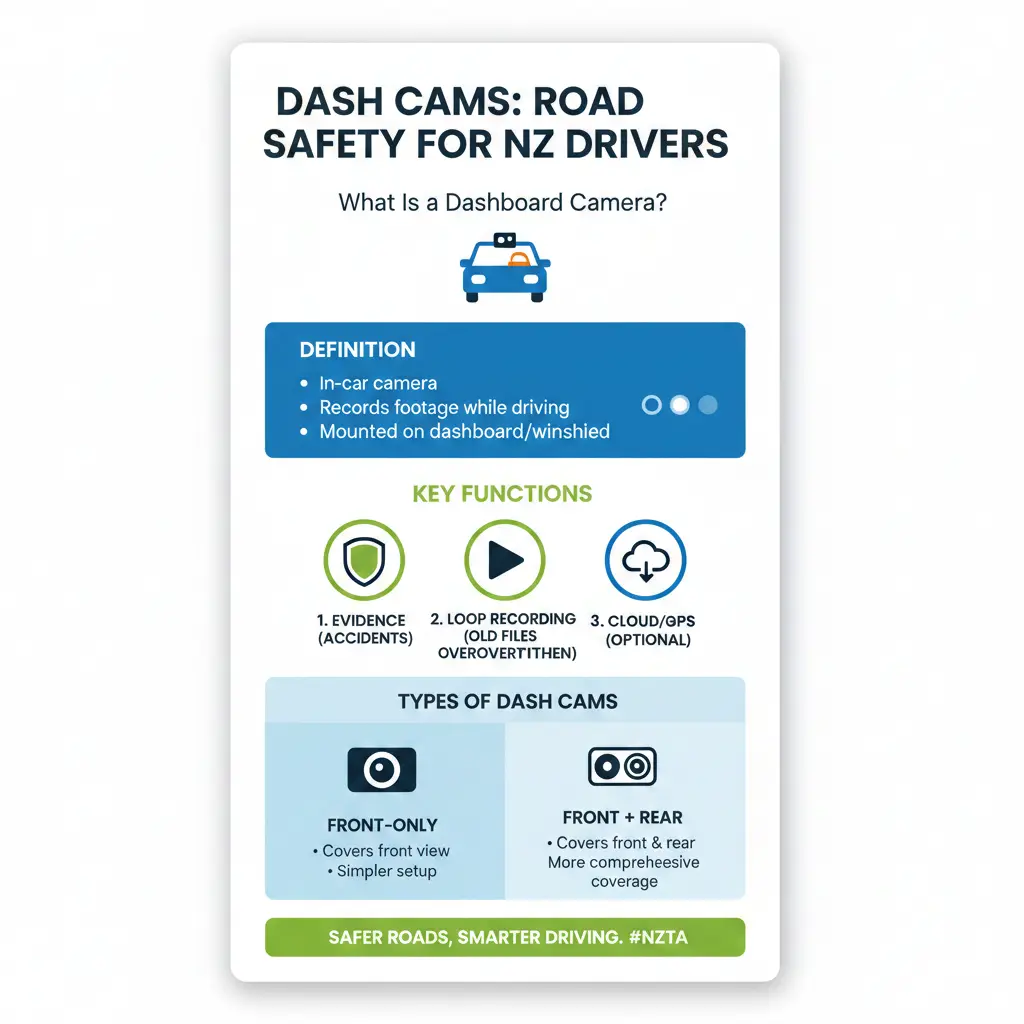
A dashboard camera (or dash cam) is a video recording device mounted on your vehicle's dashboard or windshield that continuously records the road ahead. Some advanced systems include multi-camera setups that can also record the driver's cabin or the sides of the vehicle. These cameras are powered by your vehicle's electrical system and can be manually controlled, automatically activated when you start the engine, or set to record continuously.
Dash cams are paired with sensors and can capture high-quality video footage that becomes invaluable evidence in accident situations. Unlike traditional eyewitness accounts, which can be unreliable or disputed, dash cam footage provides objective visual documentation of what actually happened on the road.
Why Dash Cams Matter for New Zealand Drivers
Legal Protection and Accident Claims
One of the biggest advantages of dash cam footage is protection against false liability claims. When accidents happen, different parties often have conflicting accounts of what occurred. Integrated camera footage is useful if other parties dispute what happened and who may be at fault. This video evidence has proved valuable in settling litigation and avoiding potentially expensive judgments.
For employed drivers, dash cams offer additional protection. When vehicle telematics record rough driving behaviour such as harsh braking or sharp acceleration, the video file can show why the driver executed these manoeuvres – for instance, to avoid an impending collision – protecting a driver's standing with their employer.
Insurance Benefits
Insurance companies and enforcement agencies in New Zealand highly regard in-vehicle cameras because they provide strong physical evidence to support claims. Many insurers offer discounts for vehicles equipped with dash cams, recognising the reduced dispute risk and clearer liability determination. Having footage can significantly speed up the claims process and increase the likelihood of a favourable outcome.
Dash Cam Legality in New Zealand
In-vehicle cameras are legal in all parts of New Zealand. However, there are important legal boundaries you must respect when using a dash cam.
Key Legal Considerations
While recording on public roads is permitted, you must be careful not to use your dash cam to film private encounters or record conversations without the consent of individuals involved. This means you cannot legally capture audio of private conversations without permission, even if the video is legal.
If you're an employer installing dash cams in company vehicles, obtaining driver consent should be part of the hiring process. This protects both you and your employees and ensures compliance with privacy laws.
Sharing Dash Cam Footage
You can share dashboard camera footage with the public and not breach privacy law, as long as videos do not identify people. This means you can upload footage to social media or share it with authorities without identifying individuals in the video. However, if the footage clearly shows someone's face or other identifying information, you'll need their consent before sharing publicly.
Dash Cams and New Zealand's 2026 Road Safety Changes
New Zealand is implementing stricter road enforcement in 2026, with wider deployment of fixed and mobile speed cameras and instant fines of $300 for speeding detected by cameras. In this environment, having your own video record becomes even more important. A dash cam can help you dispute incorrect speed camera readings or provide context for enforcement actions.
Additionally, new road rules are taking effect that can result in instant $300 infringement fines for common driving mistakes. Having dash cam footage provides documentation of your driving behaviour and can be crucial if you need to challenge a fine or prove you were driving safely.
Choosing and Installing a Dash Cam
What to Look For
- Video Quality: Look for at least 1080p resolution, with 4K options available for higher detail capture
- Wide Angle Lens: A 140-170 degree field of view captures more of the road and surrounding areas
- Night Vision: Essential for recording in low-light conditions and at night
- Loop Recording: Automatically overwrites oldest footage when storage is full
- Impact Detection: Automatically saves footage when an accident is detected
- GPS and Speed Logging: Records your location and speed, useful for accident analysis
Installation Tips
Most dash cams mount behind your windshield, powered by your vehicle's electrical system. Professional installation ensures proper wiring and positioning. Make sure your dash cam doesn't obstruct your view of the road, and position it to capture the maximum relevant area ahead of your vehicle.
Next Steps for New Zealand Drivers
If you're considering a dash cam, now is an excellent time to invest. With stricter road enforcement in 2026 and the increasing complexity of accident claims, having video evidence is a practical way to protect yourself. Start by researching dash cam options that suit your vehicle and budget, then arrange professional installation to ensure it's properly mounted and powered.
Remember that a dash cam is just one part of safe driving. It complements—but doesn't replace—defensive driving techniques, regular vehicle maintenance, and following road rules. By combining a dash cam with responsible driving habits, you're taking a comprehensive approach to road safety that protects both you and other road users.
Frequently Asked Questions
Sources & References
-
1
Vehicle Dashboard Camera Explained — www.teletracnavman.co.nz
-
2
Dashcam footage not a privacy breach — www.nzherald.co.nz
-
3
Speed Camera Fines Increase in 2026 — New Amounts Explained — www.exclusivechauffeur.co.nz
- 4
-
5
New Speed Camera Fines Could Cost Drivers $300 Instantly in 2026 — www.diltakeaways.co.nz
Related Articles

iPad Pro: Premium Tablet for Creative Professionals
If you're a creative professional in New Zealand looking for a tablet that can handle demanding work, the iPad Pro with the M5 chip might be exactly what you need. Whether you're editing videos, desig...
Handheld Vacuum Cleaners: Quick Cleanup Solutions
Handheld vacuum cleaners have become essential tools for Kiwi households, offering quick cleanup solutions without the hassle of dragging out a full-size vacuum. Whether you're dealing with crumbs on...

French Door Refrigerators in NZ: Luxury Cooling with Style
If you're looking to upgrade your kitchen with a stylish and spacious refrigerator, a French door fridge might be exactly what you need. These elegant appliances have become increasingly popular in Ne...

Chest Freezers in New Zealand: Bulk Storage for Rural Properties
If you're living on a rural property in New Zealand, a chest freezer isn't just a convenience—it's a practical investment for storing homekill, bulk meat purchases, garden produce, and fish. Whether y...