Home and Contents Insurance: What You Really Need

Home and contents insurance is one of those things many New Zealanders put off thinking about – until something goes wrong. Whether you're a first-time homeowner, a renter protecting your belongings,...
Sarah covers personal finance, tax, and KiwiSaver topics for Lifetimes NZ. She focuses on making money management straightforward and practical for everyday Kiwis.
Home and contents insurance is one of those things many New Zealanders put off thinking about – until something goes wrong. Whether you're a first-time homeowner, a renter protecting your belongings, or someone looking to review your current cover, understanding what you actually need is the first step to getting the right protection at a price that won't break the bank.
The good news? You don't need to be confused by insurance jargon or feel pressured into paying for cover you don't need. Let's break down exactly what home and contents insurance covers, what you should prioritise, and how to find a policy that works for your situation.
What's the Difference Between Home and Contents Insurance?
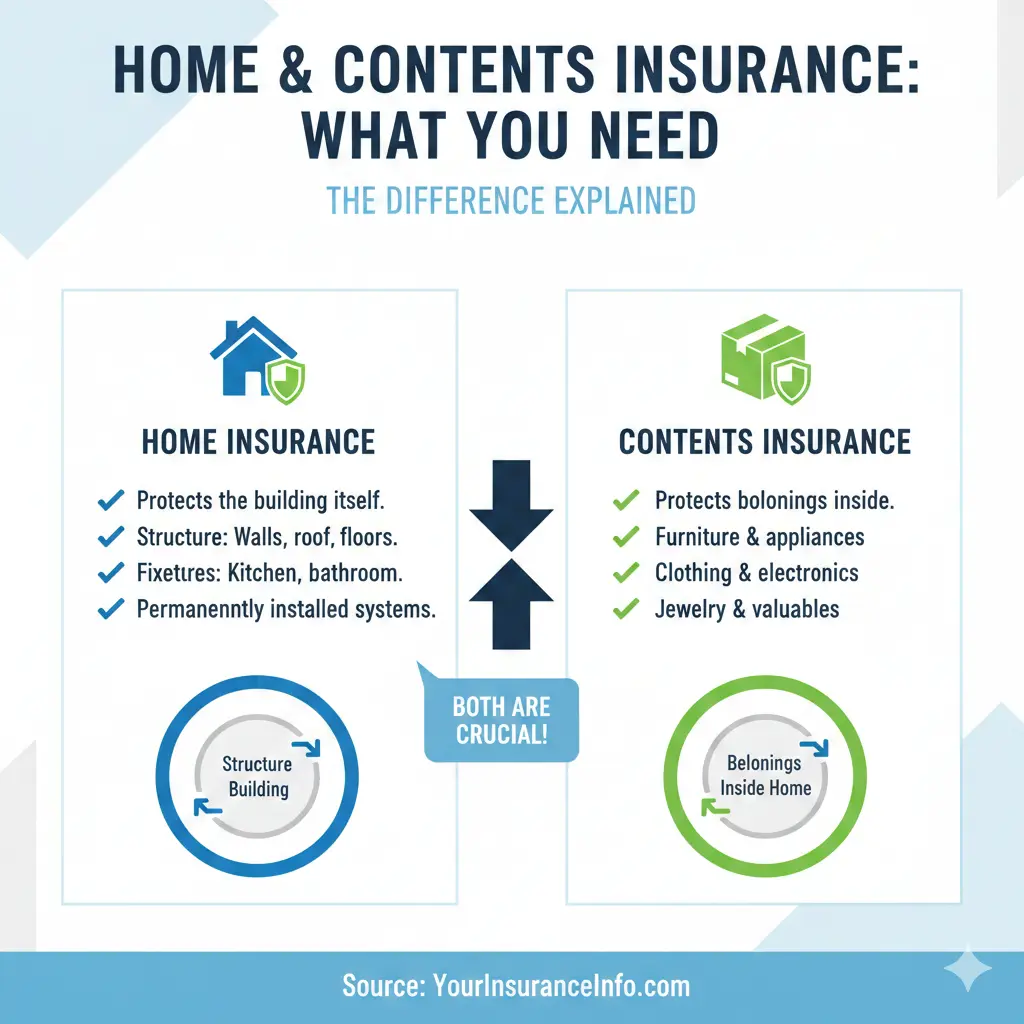
These are two separate types of cover that work together to protect different aspects of your property:
Home (or building) insurance covers the structure of your house and what's permanently attached to it. This includes your residential building, garages, other structures like garden sheds and fences, and domestic fixtures and fittings such as built-in wardrobes, kitchen cupboards, dishwashers, ovens, and flooring. Permanent structural improvements like home extensions are also covered.
Contents insurance covers your personal belongings – the things you'd take with you if you moved house. This includes furniture, beds, computers, kitchenware, electrical appliances, clothing, shoes, carpets, rugs, and portable items like bicycles, jewellery, musical instruments, and sporting equipment. Some items may require an extra premium or have limits applied.
Most insurers offer discounts if you buy both policies together from the same company, though it's not always cheaper than buying separately – it's worth comparing.
What Does Home and Contents Insurance Actually Cover?
Natural Disasters and Major Events
Home and contents insurance policies typically cover damage caused by natural disasters such as earthquakes, storms, floods, and landslides – all of which are genuine threats for New Zealand homeowners. However, coverage can vary between insurers and policies, so it's essential to check the specific details of your policy.
It's important to note that the Natural Hazards Commission (formerly EQC), now operating as NHCover, covers residential dwellings up to $300,000 (plus GST) through a levy included in your home insurance premium. However, NHCover does not cover your contents – that's where contents insurance comes in.
Other Covered Events
Beyond natural disasters, most policies cover damage from fire, theft, and accidental damage (depending on your level of cover). Some policies also cover less obvious things you might not realise are protected:
- Temporary accommodation if your home becomes unliveable after an insured event
- Pet boarding fees if you need temporary accommodation after a loss or natural disaster
- Food spoilage in your fridge or freezer due to a power cut
- Items away from home that you usually keep in your house
- Legal liability cover
- Keys and locks replacement
- Transit insurance when you're moving house
Understanding Policy Levels
Insurers typically offer two main levels of cover:
Basic policies cover major adverse events like fire, theft, or flood. For contents, they may only pay the "present value" (what your items are worth now, accounting for wear and tear) rather than replacement value.
Comprehensive policies cover major events plus accidental damage caused by you or your family. They often include additional options like carpet cover and offer a mix of present and replacement value for contents.
How Much Cover Do You Actually Need?
Home Insurance
For home insurance, you'll need to decide on a "sum insured" – the amount you'd need to rebuild your house if it were completely destroyed. This isn't based on what you could sell your home for, but on the actual cost to rebuild it. Most quotes in 2026 are based on replacement cover of around $700,000, though this varies significantly depending on your location and home size.
Contents Insurance
Contents cover is trickier because many New Zealanders either drastically undervalue or overvalue their belongings. The best approach is to do a room-by-room inventory, listing items and their replacement cost (not what you paid for them years ago).
The key thing to remember: you must itemise any high-value items to ensure they're covered. For example, with MAS contents insurance, you need to list any sports equipment, electronics, or music gear worth more than $5,000; jewellery, watches, or bikes worth more than $8,000; and individual pieces of art worth more than $25,000.
If you don't declare these items, they won't be covered if something happens to them.
Why Prices Are Rising – And How to Save
Home and contents insurance policies are becoming increasingly expensive. This has forced many homeowners to think carefully about what they really need. Some are even dropping contents cover altogether to save money, though this depends on your individual circumstances.
Here are practical ways to reduce your premiums:
- Pay annually upfront: Prepaying for 12 months can usually save 10-20% compared to monthly payments
- Adjust your excess: A higher excess (the amount you pay towards a claim) can lower your premium, but make sure it's an amount you can actually afford if you need to claim
- Improve home security: Better locks, alarms, and security features can reduce your premium
- Compare regularly: Taking just 3-6 minutes to compare quotes across different insurers could save you significant money
- Bundle policies: Getting home and contents from the same insurer often includes a discount
- Check membership discounts: Trade Me members, for example, can get a 15% discount with Trade Me Insurance
Important Things to Know About Your Policy
The One Excess Rule
For most policies, if a single event (like a fire, earthquake, or flood) causes damage to both your home and contents, you'll only pay one excess, not two.
Lifetime Guarantees on Repairs
Most policies offer a lifetime guarantee on home repairs. If your insurer repairs or rebuilds your home, they guarantee the quality of materials and workmanship for the lifetime of your home while you own it. Any defects will be rectified by the insurer at no extra cost.
The NHCover Levy
The levy to pay for NHCover is included in your home insurance premium. Currently, the levy is set at 16 cents for every $100 insured, up to $300,000, meaning the maximum you'll pay annually is $480. This will drop from July 2026, and for residential homes, the maximum fee will decrease from $119.50 to $107.40 annually.
Pre-Existing Defects
Most insurers won't pay for pre-existing defects such as water leaks from cracked tiles or rusted gutters. This is why it's important to maintain your home properly.
Do You Really Need Contents Insurance?
This is a personal decision. If you own valuable items – furniture, electronics, artwork, or jewellery – contents insurance protects your investment. However, if you're renting or have minimal possessions, you might decide the cost isn't worth it.
Consider contents insurance essential if you have:
- Significant furniture and furnishings
- High-value electronics or appliances
- Jewellery, watches, or art
- Sporting equipment, bikes, or musical instruments
- Items you'd struggle to replace financially
Getting Started: Your Next Steps
Ready to sort out your home and contents insurance? Here's what to do:
- Work out your home's replacement cost (the amount needed to rebuild it, not its market value)
- Do a room-by-room inventory of your contents and their replacement value
- List any high-value items that need to be declared separately
- Decide what level of cover you need – basic or comprehensive
- Compare quotes from multiple insurers (aim for at least three)
- Check for available discounts (membership, bundling, paying annually)
- Review your policy annually and compare again
Getting the right home and contents insurance doesn't have to be complicated. By understanding what you're actually protecting and comparing your options, you can find cover that gives you peace of mind without unnecessary cost. The few minutes you spend now could save you thousands later – and more importantly, it means you're genuinely protected when things go wrong.
Frequently Asked Questions
Sources & References
-
1
Best Home & Contents Insurance NZ 2026: Compare Quotes & Save — MoneyHub — www.moneyhub.co.nz
-
2
How to get the best house and contents insurance - guide — Consumer NZ — www.consumer.org.nz
-
3
Brief Guide to Home & Contents Insurance — Insurance Adviser Network — insuranceadvisernet.co.nz
- 4
-
5
How much contents insurance do I need? — MAS — www.mas.co.nz
-
6
Best Value Home & Contents Insurance Awards — Canstar — www.canstar.co.nz
-
7
Compare Contents Insurance - The Definitive NZ Guide — MoneyHub — www.moneyhub.co.nz
-
8
House insurance - Sorted — Sorted — sorted.org.nz