Lawn Care NZ: Seasonal Maintenance Guide

Nothing beats the satisfaction of a lush, green lawn that thrives through New Zealand's ever-changing seasons. Whether you're in Auckland's humid north or Christchurch's cooler south, proper lawn care...
The Lifetimes NZ editorial team curates, fact-checks, and updates guides on personal finance, property, health, immigration, legal, business, and lifestyle topics relevant to Lifetimes NZ readers. Articles are produced with AI assistance and reviewed by the editorial team before publication.
Nothing beats the satisfaction of a lush, green lawn that thrives through New Zealand's ever-changing seasons. Whether you're in Auckland's humid north or Christchurch's cooler south, proper lawn care NZ means working with our unique climate—from wet winters to scorching summers. This seasonal maintenance guide gives you practical steps to keep your backyard looking pristine all year round, saving time, money, and effort.
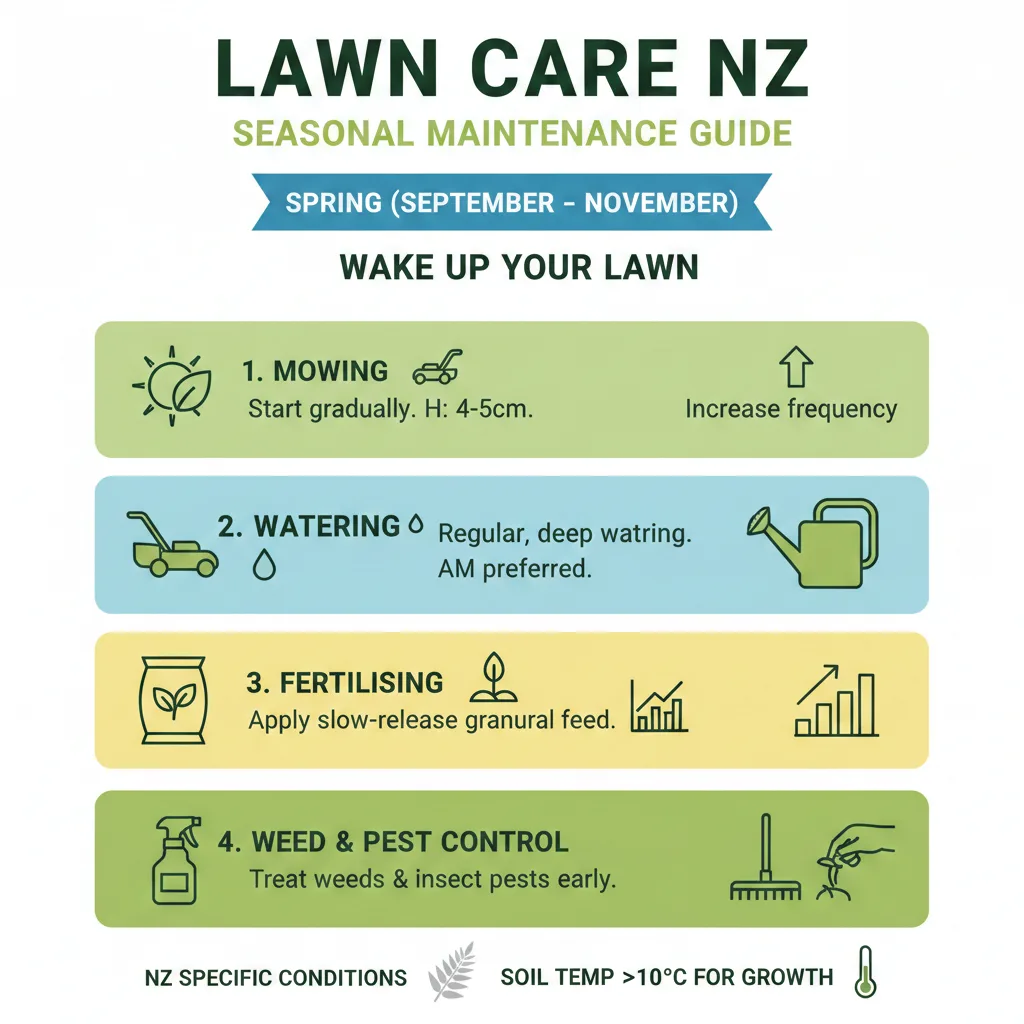
Spring Lawn Care (September – November): Wake Up Your Lawn
Spring signals growth time across Aotearoa, with warmer soils and longer days coaxing your grass back to life. Focus on cleanup, feeding, and repair to set a strong foundation for summer.
Key Spring Tasks
- Clean up and rake thatch: Vigorously rake away leaves, twigs, and dead grass (thatch) to let light reach new shoots. Thatch buildup suffocates roots and blocks water.
- Aerate the soil: Poke holes in compacted areas using a garden fork or aerator. This boosts air, water, and nutrient flow—essential after winter foot traffic.
- Fertilise for growth: Apply a balanced, slow-release fertiliser like one with nitrogen, phosphorus, and potassium. If you only feed once a year, do it now to power into summer.
- Overseed bare spots: Scatter matching grass seed on thin patches, rake lightly, and keep moist. Spring's mild weather helps new grass establish quickly.
- Start mowing: Mow regularly as growth ramps up, but never cut more than one-third of the blade at once. Gradually lower height to 25-40mm.
Regional Tips
In wetter areas like the West Coast, watch for moss in shaded spots—improve drainage with aeration. Wellington lawns might need grass grub treatment early September.
Summer Lawn Care (December – February): Beat the Heat
New Zealand summers bring hot, dry spells that stress lawns, especially in regions like Hawke's Bay or Marlborough. Deep watering and smart mowing keep things green without wasting water.
Essential Summer Steps
- Water wisely: Water deeply (25-30mm per session) but infrequently, early morning to minimise evaporation and fungal risks. Late evening watering traps humidity overnight.
- Raise mower height: Set blades higher (40-50mm) for shade and moisture retention. Mow little and often during peaks like January.
- Fertilise mid-season: Apply slow-release feed three months after spring—around early December—to sustain colour without burn risk.
- Pest and weed patrol: Check for grubs, caterpillars, or weeds. Hand-pull or use targeted treatments; summer heat amps up invasions.
- Edge neatly: Use shears for crisp borders, enhancing that Kiwi pride in a tidy section.
Water Restrictions Note
Many councils enforce summer water bans—check your local rules via council websites or apps. Mulch garden beds nearby to cut overall water use.
Autumn Lawn Care (March – May): Strengthen for Winter
Autumn's cooling temps and rain make it prime for root work. Prepare your lawn to withstand frosts and wet spells ahead.
Autumn Action Plan
- Rake leaves regularly: Clear debris to prevent smothering and fungal issues, especially in humid spots like Rotorua.
- Aerate again: Relieve summer compaction for better drainage before winter rains hit.
- Autumn fertilise: Use high-potassium, slow-release types like Scotts Lawn Builder All Purpose to toughen roots against cold.
- Overseed repairs: Cooler air and moisture ideal for thickening worn areas from summer barbecues.
- Reduce mowing: Growth slows, so mow less and keep height moderate (30-40mm).
May's the last feed before winter—build those roots!
Winter Lawn Care (June – August): Protect and Plan
Winter dormancy means low maintenance, but don't neglect basics. Kiwi winters vary—frosty South Island nights versus milder Northland chills.
Winter Essentials
- Minimise traffic: Stay off wet or frozen grass to avoid compaction and ruts.
- Clear debris: Rake leaves and branches promptly to dodge mould in damp conditions.
- Light fertilise: A winter feed greens up early spring and fights frost damage—use all-purpose blends.
- Monitor wetness: Windy or rainy spells dry lawns too; water if needed, but sparingly.
- Sharpen tools: Service mower and plan spring buys during quiet months.
Pro Tip for Frost-Prone Areas
In places like Central Otago, higher mowing protects crowns from ice.
General Lawn Care Tips for Kiwis
Beyond seasons, these habits ensure long-term success:
- Choose right grass: Tall fescue or ryegrass suits most NZ lawns—drought-tolerant and quick-growing.
- Soil test annually: Check pH (ideal 6.0-7.0) via kits from garden centres.
- Sustainable practices: Use organic fertilisers where possible; collect clippings for compost to recycle nutrients.
- Tools checklist: Invest in a quality mower, aerator, and spreader for efficiency.
FAQ: Common Lawn Care Questions for New Zealand
1. How often should I mow my lawn in summer?
Mow weekly or as needed, never removing more than one-third of the blade. Raise height to shade soil.
2. What's the best fertiliser for NZ lawns?
Slow-release with NPK balance for spring/summer; potassium-rich for autumn/winter. Brands like Scotts work well locally.
3. How do I fix a patchy lawn?
Rake, overseed in spring/autumn, fertilise, and water consistently. Match seed to existing grass.
4. Can I water my lawn during restrictions?
Check council rules—often hand-held hoses allowed certain days/times. Deep, infrequent watering saves H2O.
5. How to prevent lawn pests?
Monitor for grubs in spring/summer; treat early with baits or nematodes. Healthy lawns resist better.
6. Is aeration necessary every year?
Yes, annually for compacted clay soils common in NZ. Do it spring and autumn for best results.
Next Steps for Your Perfect Lawn
Grab your mower and get started this weekend—spring's just around the corner if you're reading in late winter. Track progress with a garden journal, and connect with local Mitre 10 or Bunnings staff for region-specific advice. A well-maintained lawn boosts your home's curb appeal and creates a cracking space for family kai and cricket. Happy mowing, Kiwis!