WOF & Rego: Everything You Need to Know

Ever driven down the motorway only to spot that telltale WOF sticker peeling off your windscreen, or worse, realised your rego has lapsed right before a road trip? You're not alone—keeping on top of y...
The Lifetimes NZ editorial team curates, fact-checks, and updates guides on personal finance, property, health, immigration, legal, business, and lifestyle topics relevant to Lifetimes NZ readers. Articles are produced with AI assistance and reviewed by the editorial team before publication.
Ever driven down the motorway only to spot that telltale WOF sticker peeling off your windscreen, or worse, realised your rego has lapsed right before a road trip? You're not alone—keeping on top of your WOF rego NZ requirements is a juggling act for many Kiwis, but it's crucial for staying safe and legal on our roads. With potential changes on the horizon in 2026, here's your complete guide to everything you need to know about Warrants of Fitness (WOF) and vehicle registration (rego) in New Zealand.
What is a Warrant of Fitness (WOF)?
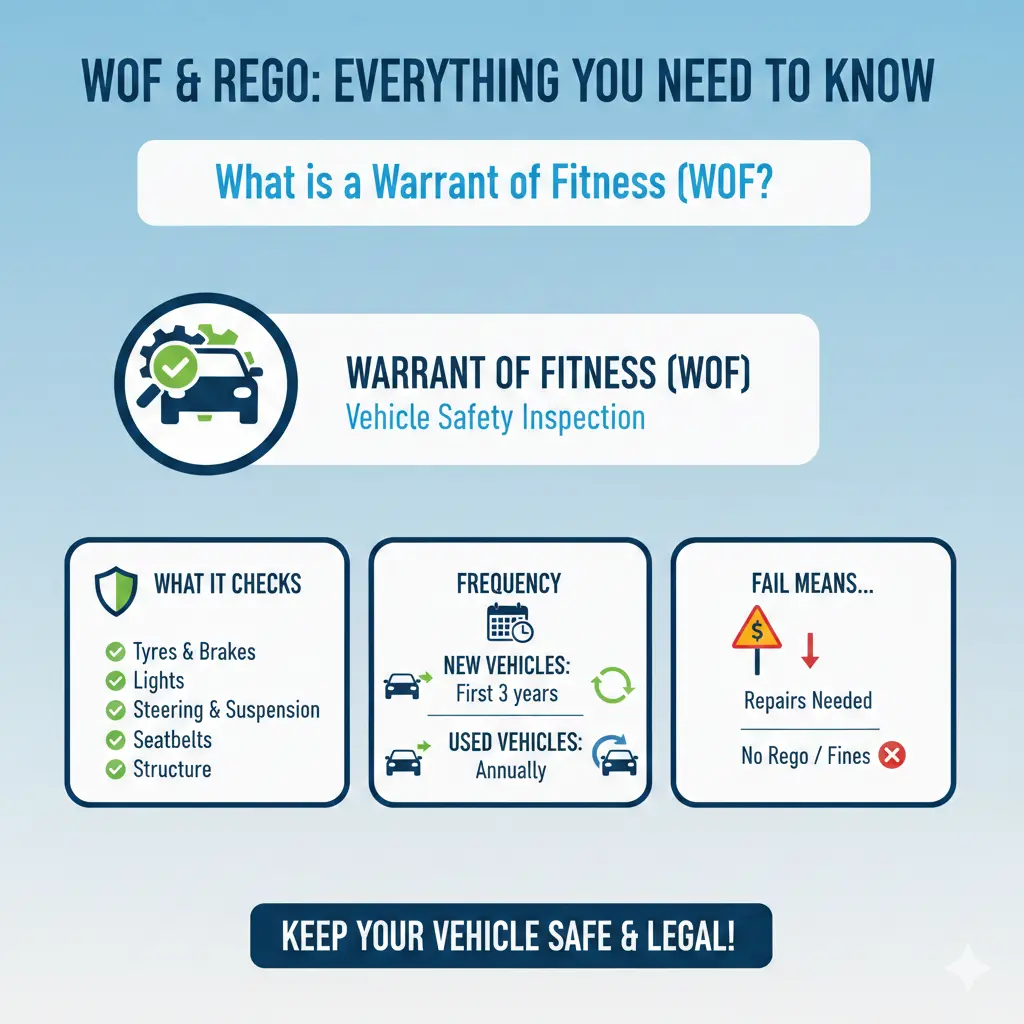
A Warrant of Fitness (WOF) is an official certification that your light motor vehicle meets New Zealand's safety and roadworthiness standards. It's administered by the New Zealand Transport Agency (Waka Kotahi NZTA) and required for most vehicles under 3,500kg gross mass used on public roads.
Think of it as your car's regular health check. Without a current WOF, you can't legally renew your rego or drive on the road—unless your vehicle is exempt, like certain mopeds.
What Does a WOF Check?
During a WOF inspection, authorised stations examine key areas to ensure your vehicle is safe. Common checks include:
- Tyres and tread depth
- Brakes and steering
- Lights and indicators
- Windscreen, wipers, and washers
- Structural condition, doors, and seat belts
- Airbags (if fitted), speedometer, suspension, exhaust, and fuel system
Even modified vehicles need Low Volume Vehicle (LVV) certification plates verified during the inspection—fake plates mean an automatic fail.
WOF Frequencies: Current Rules (as of 2026)
The interval depends on your vehicle's age and registration date:
- New vehicles: First WOF valid for three years from registration, then annually.
- Vehicles first registered on/after 1 January 2000: Annual WOF.
- Pre-2000 vehicles: Every six months until their 40th anniversary, then annual.
Heavy vehicles, taxis, buses, shuttles, and rental cars require a Certificate of Fitness (CoF) every six months instead—though eligible private motorhomes with a toilet fitted can go to 12 months.
Note: A current WOF doesn't guarantee police won't deem your vehicle unroadworthy on the spot. Driving without a valid WOF sticker risks a $200 fine, and parking wardens can issue them too.
Vehicle Registration (Rego): The Basics
Rego, or vehicle licensing, is your annual (or multi-year) permit to use public roads. You need a current WOF or CoF before renewing, plus vehicle registration for number plates and a valid driver licence.
Rego covers light vehicles via licence fees, while diesel or non-petrol heavies pay Road User Charges (RUC) separately. Renew online via the NZTA website or apps—it's quick and often cheaper for multi-year options.
How to Renew Your Rego
- Check your WOF is current (use the NZTA Vehicle Inspection Portal).
- Gather your plate number, RealMe login, and payment details.
- Renew online at NZTA's site or at an AA centre.
- Display your new rego label—digital versions are now legal via the government app, verified by RealMe.
Pro tip: Set calendar reminders six weeks before expiry to avoid lapses.
Upcoming Changes to WOF and CoF in 2026
Big news for Kiwi drivers: NZTA proposed reforms in 2025 to ease costs and align with global standards, with feedback closing December 17, 2025. As of early 2026, these are under review, but here's what's on the table:
| Vehicle Age | Proposed WOF Interval |
|---|---|
| New (first WOF) | 4 years |
| 4-10 years old | Every 2 years |
| Over 10 years | Annual |
For CoF, light rental vehicles under five years might shift to annual checks. Inspections could also cover Advanced Driver Assistance Systems (ADAS). Associate Transport Minister James Meager noted NZ's regime is among the world's most frequent, citing Europe's two-year checks.
Check NZTA's consultation page for updates—these could save you time and money if implemented.
Costs: What to Expect in 2026
WOF fees vary by station but average $60-80 for light vehicles. Rego starts at around $150-200 annually for cars, depending on weight and type—exact rates on NZTA's site. Multi-year rego discounts apply.
Proposed changes aim to cut unnecessary visits, potentially saving hundreds over a vehicle's life. Budget for repairs too—common fails like worn brakes or tyres can add $200-500.
Practical Tips for Passing Your WOF First Time
Don't wait until expiry. Here's how to prep:
- Check tyres (minimum 1.5mm tread depth legally, but aim higher).
- Test all lights, brakes, and wipers yourself.
- Fix rust, loose panels, or exhaust issues early.
- Book at quieter stations like local garages—many are authorised.
- Use electronic check sheets at modern stations for faster service.
If you fail, get repairs done promptly and re-inspect—it's cheaper than fines or towing.
Exemptions and Special Cases
Not all vehicles need a WOF: mopeds under certain specs, farm vehicles off-road, or exempt classics. Download NZTA's list of exemptions (PDF). Commercial rentals stick to CoF, but private motorhomes qualify for relaxed rules if fitted with a toilet and not under TSL.
Next Steps: Stay Road-Ready
Check your vehicle's status today on the NZTA portal. Book your next WOF, renew rego early, and keep an eye on 2026 reforms. Safe driving saves lives—yours and others'. If in doubt, contact NZTA at 0800 699 000.
Frequently Asked Questions
Sources & References
- 1
-
2
Warrant of Fitness — Wikipedia — en.wikipedia.org
- 3
-
4
2025 NZ WOF Changes: Complete Guide — tyredispatch.co.nz — www.tyredispatch.co.nz
-
5
Warrant of Fitness Consultation — motortraders.govt.nz — www.motortraders.govt.nz
-
6
Warrant of Fitness: Everything You Need to Know — onlycars.co.nz — www.onlycars.co.nz
-
7
Your Car's Health Check: Navigating the Warrant of Fitness — oreateai.com — www.oreateai.com
-
8
Warrants and certificates — NZ Transport Agency Waka Kotahi — www.nzta.govt.nz
-
9
NZ Car Ownership Rules: WoF, RUC, Safety Ratings — daveallenmotors.co.nz — www.daveallenmotors.co.nz
Related Articles

Registering to Vote in New Zealand
Ever wondered if your voice is truly heard in shaping New Zealand's future? With the 2026 general election set for 7 November, now's the perfect time to ensure you're registered and ready to vote[7][2...

Public Transport Options by City in NZ
Whether you're dodging Auckland's peak-hour traffic or exploring Wellington's windy streets, public transport in our cities makes getting around easier, greener, and often cheaper. With the City Rail...

Grocery Shopping on a Budget in New Zealand
With grocery prices in New Zealand still climbing—up 4% annually to December 2025—stretching your grocery budget NZ has never felt more urgent.[7] Whether you're feeding a family in Auckland or keepin...

Best Internet & Phone Plans in NZ (2025 Comparison)
Finding the right internet and phone plan in New Zealand doesn't have to be complicated. Whether you're after blazing-fast fibre speeds, budget-friendly wireless options, or bundled deals that save yo...