Visiting New Zealand in Winter (Jun–Aug): Ski, Snow, Hot Pools and Clear Skies
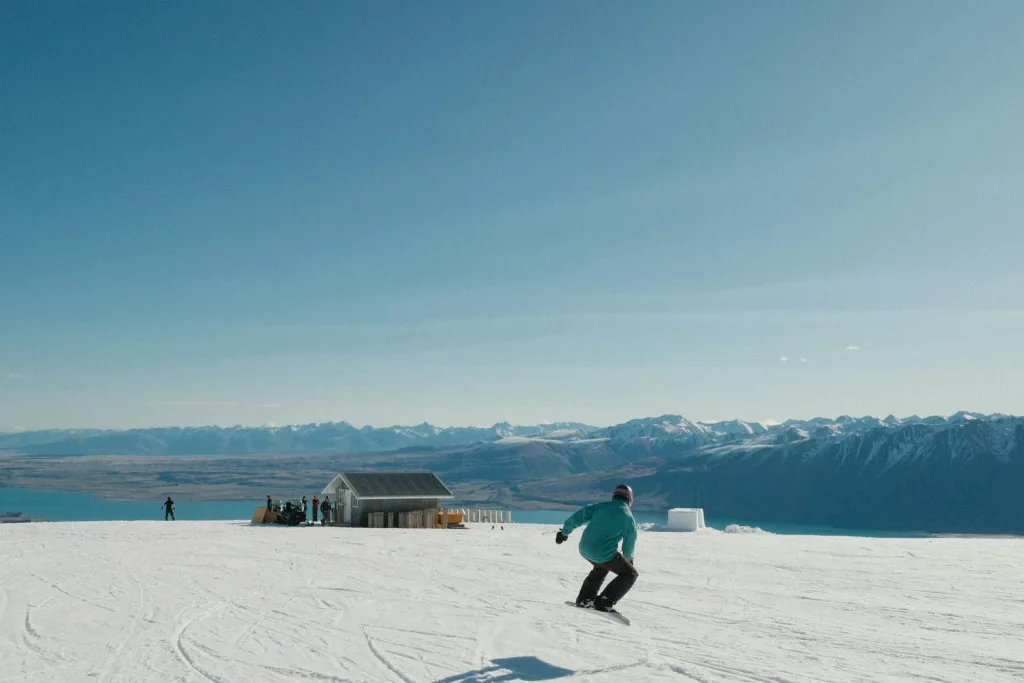
New Zealand's winter months (June to August) transform the country into a snow-dusted wonderland, offering everything from world-class skiing to steaming geothermal pools and starlit nights. Whether y...
The Lifetimes NZ editorial team curates, fact-checks, and updates guides on personal finance, property, health, immigration, legal, business, and lifestyle topics relevant to Lifetimes NZ readers. Articles are produced with AI assistance and reviewed by the editorial team before publication.
New Zealand's winter months (June to August) transform the country into a snow-dusted wonderland, offering everything from world-class skiing to steaming geothermal pools and starlit nights. Whether you're chasing powder on the slopes or seeking a peaceful escape in nature, winter is when Aotearoa reveals its most dramatic and intimate beauty—with fewer crowds and crisp, clear skies that make every experience feel special.
Why Winter is the Perfect Time to Visit New Zealand
June marks the beginning of winter in the Southern Hemisphere, and it's a transformative time for New Zealand. Unlike the busy summer months, winter brings a quieter, more intimate experience with far fewer tourists crowding popular attractions. This means shorter queues at ski fields, more peaceful boat rides through Milford Sound, and a genuine sense of solitude in some of the world's most stunning landscapes.
The winter season also brings practical advantages. Snow blankets the higher elevations, particularly in the South Island's ski fields, creating dramatic scenery that's perfect for photography and adventure. Winter clarity often improves visibility, giving you unobstructed views of snow-capped mountains and alpine terrain. Plus, many attractions offer special winter experiences you simply can't get during other seasons.
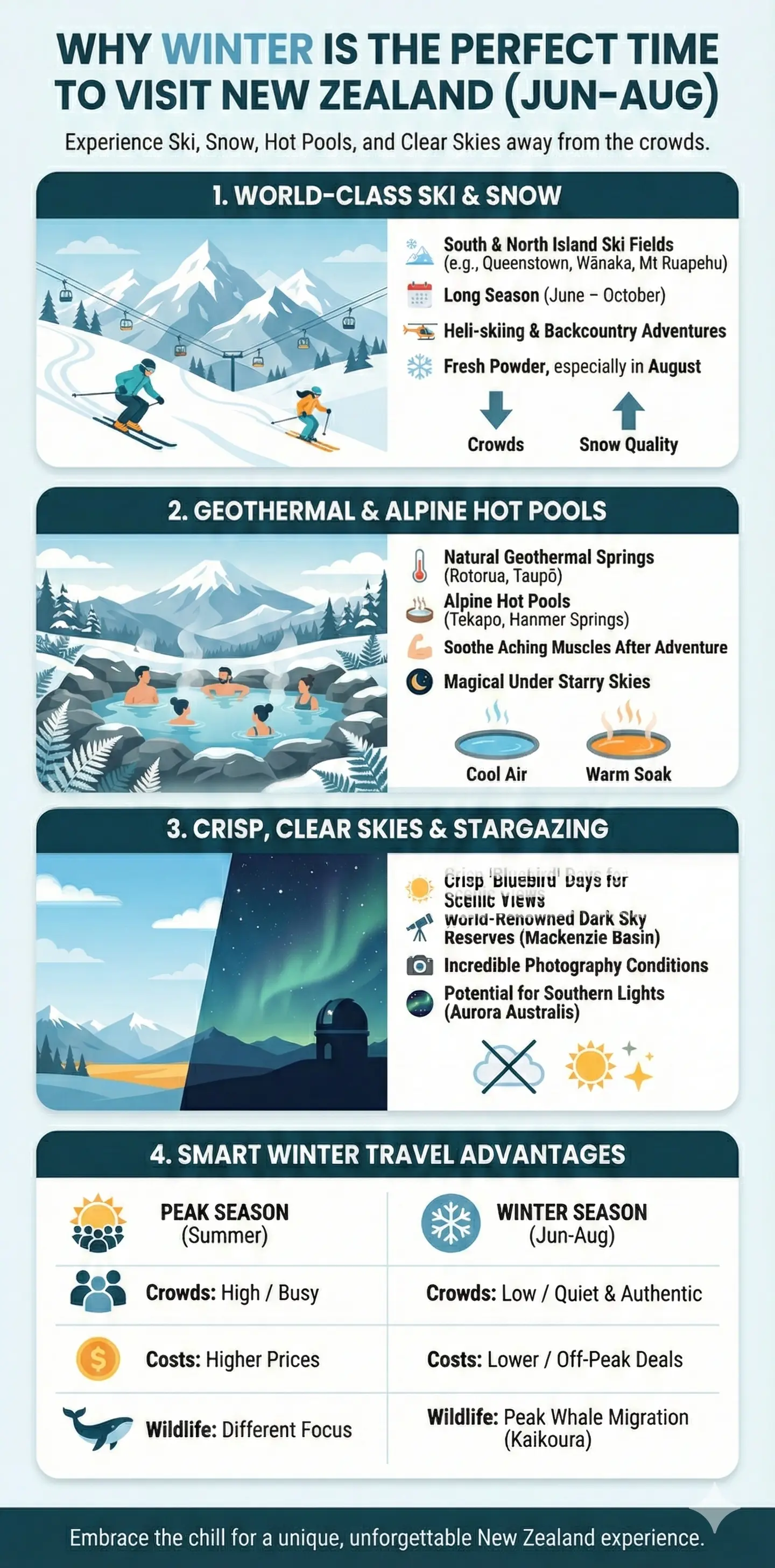
Winter Weather: What to Expect
New Zealand's winter weather varies significantly depending on where you are. The North Island experiences cooler days, with temperatures ranging between 10°C to 15°C, while the South Island gets much colder. In places like Queenstown, temperatures can dip as low as 0°C, and higher elevations see regular snowfall.
Expect short days and varied conditions across the country:
- North Island: Mild but cool, with more rainfall and shorter daylight hours
- South Island: Significantly colder and drier, with snow at higher elevations and ski fields
- Mountain regions: Freezing temperatures with regular snowfall, especially in Aoraki/Mount Cook and the Coronet Peak ski field
Pack layers, waterproof jackets, and warm clothing. If you're heading to the mountains or ski fields, bring proper winter gear including thermal underwear, insulated jackets, and waterproof boots.
Winter Sports: Skiing and Snow Adventures
Skiing in Queenstown
June kicks off the ski season in Queenstown, with Coronet Peak being one of the first ski fields to open. The Queenstown Winter Festival, usually held at the end of June, marks the start of the season with celebrations and events, making this the perfect time to hit the slopes and embrace the winter spirit. Queenstown's variety of slopes caters to all skill levels, from beginners to seasoned skiers, and the town's vibrant après-ski scene ensures the fun continues long after you've finished on the mountain.
If you're planning a ski trip, book accommodation and lift passes well in advance, especially for the opening weeks of the season when conditions are at their best.
Glacier Hiking and Alpine Adventures
For those who prefer exploring on foot, winter glacier hikes offer an unforgettable experience. You can hike near Franz Josef Glacier, exploring a shimmering world of ice and rock surrounded by glistening peaks and crisp mountain air. The Kepler Track, one of New Zealand's Great Walks, is another stunning option where you can traverse frost-tipped ridgelines and beech forests, with every turn revealing the serene beauty of Fiordland in winter.
Walking beneath snow-capped peaks in Aoraki/Mount Cook National Park or wandering through snow-dusted valleys in Mount Aspiring National Park offers a truly alpine wonderland experience. These tracks require good fitness levels and proper preparation, so consider hiring a local guide or joining a guided tour if you're not experienced with winter tramping.
Scenic Experiences and Natural Wonders
Milford Sound: Winter's Most Dramatic Fjord
Milford Sound's winter charm lies in its snow-covered peaks and increased waterfall activity. June wraps this stunning fjord in a mystical ambiance, with snow-dusted peaks and roaring waterfalls bringing a sense of awe to every moment. Fewer tourists at this time create a more serene experience, allowing for peaceful boat rides and uninterrupted photo opportunities.
You might also catch a glimpse of the rare Fiordland crested penguins, often more active during the colder months. The cooler weather enhances the fjord's dramatic beauty, with mist and fog adding to its ethereal charm. Every corner feels untouched, creating a deep connection to nature's raw power and elegance.
The TranzAlpine Train Journey
The TranzAlpine train journey in June provides panoramic views of the snow-draped Southern Alps. Heated carriages make it a cosy, scenic trip, allowing you to marvel at breathtaking landscapes as the train weaves through one of New Zealand's most dramatic routes. Passing through alpine forests, deep gorges, and glacial rivers, the ride is as much an adventure as it is a journey, with winter clarity often improving visibility for unobstructed mountain views.
Lake Matheson and Glacial Lakes
Gaze into the glassy surface of Lake Matheson, one of New Zealand's most photographed lakes, where reflections of Aoraki and the Southern Alps glow against the still winter light. On calm days, the peaks are perfectly reflected on the surface, creating Instagram-worthy moments. Nearby Lake Gault offers another stunning glacial lake experience surrounded by vegetation.
Thermal Pools and Geothermal Experiences
Rotorua's Hot Springs
Rotorua's geothermal hot springs are a warm retreat from the cold, and they're even more enjoyable in winter's crisp air. Surrounded by winter's natural beauty, these steaming pools offer a perfect way to unwind and relax after exploring the rugged outdoors. The bubbling mud pools and steaming vents add to Rotorua's otherworldly landscape, making each soak a unique experience.
Visitors can indulge in mineral-rich waters known for their healing properties, leaving you rejuvenated after a long day in the cold. Many thermal pools and spas operate year-round, and winter is actually an ideal time to visit when you can enjoy the contrast between hot water and cool air.
Planning Your Winter Trip
Best Time to Visit
While June, July, and August all offer excellent winter experiences, each month has its advantages. June marks the season's beginning with fresh snow and the excitement of opening ski fields. July is typically the coldest and snowiest month, ideal for serious skiers and those seeking dramatic snow-covered landscapes. August sees conditions warming slightly and longer daylight hours, making it better for hiking and outdoor activities.
Accommodation and Bookings
Winter is peak season for ski resorts and popular attractions, so book accommodation well in advance—especially for Queenstown, Wanaka, and the West Coast. Consider staying in smaller towns and taking day trips to major attractions to find better value and quieter experiences.
Getting Around
Winter driving conditions can be challenging in mountainous regions. Check the New Zealand Transport Agency's website for current road conditions, and consider hiring a vehicle with winter tyres or booking guided tours that handle transportation. Many scenic drives, like those through the Southern Alps, are spectacular in winter but require careful driving.
Frequently Asked Questions
Is it safe to visit New Zealand in winter?
Yes, winter is safe for visitors who prepare properly. Roads are regularly maintained, and major attractions remain accessible. However, mountain passes can close due to snow, and driving conditions require extra caution. Check road conditions before travelling and ensure your vehicle has appropriate tyres.
What should I pack for a New Zealand winter?
Pack warm layers including thermal underwear, insulated jackets, waterproof outer layers, warm hats, gloves, and sturdy waterproof boots. Even if you're not skiing, these items are essential for comfort during outdoor activities. The weather can change quickly, so layering is your best strategy.
Can I visit Milford Sound in winter?
Yes, Milford Sound is open year-round, and winter offers a unique experience with fewer crowds and dramatic snow-covered peaks. However, weather can be unpredictable, and some activities may be affected by conditions. Check with local operators for current conditions before visiting.
How much does a ski trip to Queenstown cost?
Costs vary widely depending on accommodation, lift passes, and equipment rental. Budget for accommodation (NZ$100–300+ per night), daily lift passes (typically NZ$100–150), and equipment rental (NZ$50–100 per day). Package deals and multi-day passes offer better value.
What's the best way to see Milford Sound?
A guided boat cruise is the most popular option, offering commentary and access to viewpoints. Sunrise cruises are particularly special, offering calm waters and stunning light for photography. Book in advance, especially during peak winter weeks.
Are geothermal pools open in winter?
Yes, Rotorua's thermal pools and spas operate year-round. Winter is actually an excellent time to visit, as soaking in warm geothermal water while surrounded by cool air is a uniquely enjoyable experience.
Ready for Your Winter Adventure?
New Zealand's winter offers something truly special—dramatic landscapes, world-class skiing, peaceful fjords, and the warmth of geothermal pools all waiting to be explored. Whether you're an adrenaline seeker hitting the slopes or a nature lover seeking solitude in stunning scenery, the winter months deliver unforgettable experiences with fewer crowds and crisp, clear skies.
Start planning your winter getaway now. Book your accommodation and activities in advance, check road conditions before travelling, and pack properly for the cooler climate. Whether you're exploring Milford Sound, skiing in Queenstown, or soaking in Rotorua's hot springs, New Zealand in winter is calling—and it's an adventure you won't forget.
Related Articles
Visiting New Zealand in Summer (Dec–Feb): Crowds, Prices and Best Beach Spots
Summer in New Zealand means long days, balmy evenings, and beaches calling your name—but if you're a Kiwi planning a getaway from December to February, you'll want to navigate the crowds and price spi...
Major Festivals and Events in New Zealand: Wine, Food, Culture and Sports Calendar
Whether you're a Kiwi chasing the next big thrill or planning a weekend getaway, New Zealand's calendar bursts with major festivals and events celebrating our world-class **wine**, mouthwatering **foo...
When to Visit New Zealand for Specific Experiences: Skiing, Hiking, LOTR, Wildlife and Glow‑Worms
New Zealand's diverse landscapes offer something magical year-round, whether you're chasing powder on the slopes, summiting epic tracks, reliving The Lord of the Rings moments, spotting wildlife, or m...
Winter in New Zealand: 10‑Day Ski and Snow Road Trip (Queenstown & Wanaka Focus)
Imagine carving fresh tracks down powder-covered slopes with Lake Wanaka's turquoise waters sparkling below, then warming up with a flat white in Queenstown's vibrant après-ski scene. Winter in New Ze...