Ultimate First-Timer’s Guide to Visiting New Zealand (Visas, Routes, Budget & FAQs)

Planning your first trip to New Zealand? Whether you're a Kiwi returning home or visiting for the first time, understanding visa requirements, entry procedures, and travel logistics is essential befor...
Sarah covers personal finance, tax, and KiwiSaver topics for Lifetimes NZ. She focuses on making money management straightforward and practical for everyday Kiwis.
Planning your first trip to New Zealand? Whether you're a Kiwi returning home or visiting for the first time, understanding visa requirements, entry procedures, and travel logistics is essential before you book that flight. This guide walks you through everything you need to know to arrive smoothly and make the most of your time in Aotearoa.
Do You Need a Visa or NZeTA?
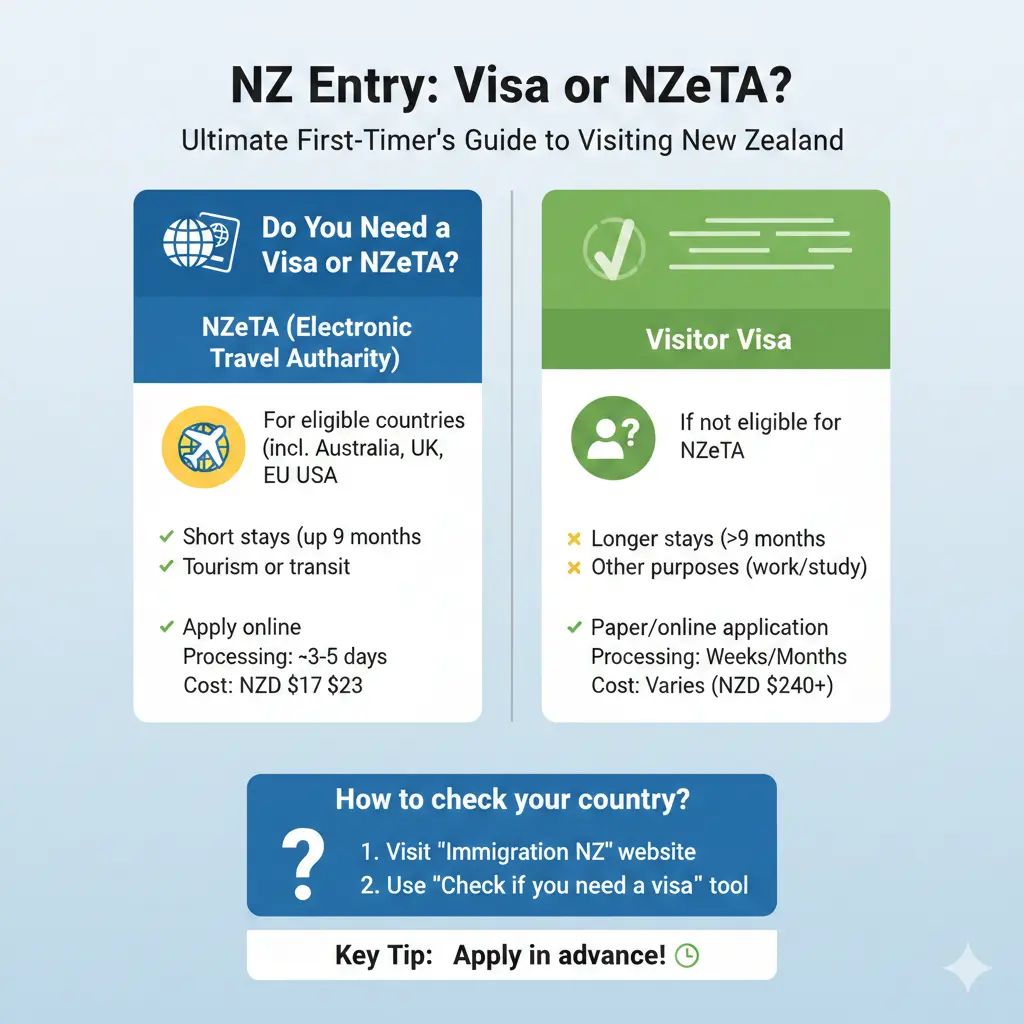
The first question every visitor asks is: do I need a visa? The answer depends on your passport and how long you're staying. Most visitors to New Zealand need either a visa or a New Zealand Electronic Travel Authority (NZeTA). However, the requirements vary significantly based on your nationality.
Understanding the NZeTA
If you're a citizen of a country with a visa waiver agreement with New Zealand, you won't need a traditional visitor visa. Instead, you'll need to apply for an NZeTA online before arrival. The NZeTA is valid for up to 2 years and allows multiple entries into New Zealand. You'll also need to pay the International Visitor Conservation and Tourism Levy when you request your NZeTA.
The application process is straightforward: you can complete your NZeTA request online, and Immigration New Zealand aims to process 80% of applications within 3.5 weeks. However, it's wise to apply well in advance of your travel dates.
Visitor Visas for Non-Waiver Countries
If your passport is from a country not included on the visa waiver list, you'll need to apply for a formal Visitor Visa. The cost starts from NZD $441, and you can stay for either 6 or 9 months depending on your circumstances.
Immigration New Zealand recommends applying for a visitor visa at least 12 weeks before your intended travel date. This gives you plenty of time for processing and means you won't need to book non-refundable travel until after your visa is approved.
Special Cases: Australian Citizens and Others
Australian citizens travelling on an Australian passport don't need either a visa or an NZeTA. If you hold a passport from China or a Pacific Islands Forum country and have an eligible Australian visa, you may be able to travel to New Zealand from Australia on an NZeTA instead of applying for a full visitor visa.
Essential Entry Requirements
Beyond your visa or NZeTA, you'll need to tick several other boxes before you can enter New Zealand:
- Valid passport: Your passport must be valid for at least three months beyond your intended departure date from New Zealand
- Return or onward ticket: You'll need proof that you have a ticket leaving New Zealand
- Proof of funds: You must demonstrate you have enough money to support yourself during your stay
- Health and character requirements: You'll need to meet New Zealand's health and character standards
- Supporting documentation: Bring evidence of your accommodation bookings, tour confirmations, or invitation letters from family and friends
The New Zealand Traveller Declaration (NZTD)
Before you board your flight to New Zealand, you must complete a digital traveller declaration. This applies to all visitors, including New Zealand citizens and residents, children, and infants. You can submit your declaration as early as 24 hours before you start your trip, and you must complete it by the time you reach passport control in New Zealand.
You can complete the NZTD via the official website or through the NZTD mobile application. This step is mandatory and takes just a few minutes online.
Biosecurity and Customs
New Zealand has strict biosecurity rules designed to protect our unique environment. When you arrive, you'll need to declare any food, plant material, animal products, or soil in your luggage. Be honest about what you're bringing in—fines for undeclared items can be substantial. You'll answer questions about biosecurity and customs when you arrive at the border.
Working and Studying While in New Zealand
If you're planning to work, note that standard visitor visas don't allow employment in New Zealand unless you're working remotely for an overseas employer or client. However, new visa conditions now allow digital nomads to work remotely for up to 90 days.
You can study for up to 3 months on a visitor visa without needing a separate student visa. If you're planning longer-term study, you'll need to apply for a Student Visa instead.
Special Considerations: Transiting Through Australia
If your route to New Zealand takes you through Australia, check whether you need an Australian Transit Visa. If you'll be in Australia for less than 8 hours and aren't leaving the airport, you may be eligible to transit without a visa. However, failure to obtain a required transit visa in advance could prevent you from boarding your aircraft, so verify this before you travel.
Budget Considerations for Your First Visit
Beyond your visa costs, here's what to budget for:
- NZeTA or Visitor Visa: NZD $441+ for a visitor visa, or less for an NZeTA (exact cost varies by nationality)
- International Visitor Conservation and Tourism Levy: Payable when you request your NZeTA or apply for a visa
- Accommodation: Budget NZD $80–200+ per night depending on location and type
- Transport: Domestic flights, rental cars, or bus passes vary widely
- Activities: Many outdoor activities are free or low-cost; adventure activities (bungy jumping, hiking tours) range from NZD $50–300+
Your Next Steps
Ready to plan your first New Zealand adventure? Start by checking whether you need an NZeTA or visitor visa using Immigration New Zealand's online tool. Once you've sorted your visa, book your accommodation and transport, then complete your traveller declaration 24 hours before departure. Don't forget to pack appropriately for our variable weather and respect our biosecurity rules when you arrive. Welcome to Aotearoa—we can't wait to show you around.
Frequently Asked Questions
Sources & References
-
1
Visa and Entry Requirements for New Zealand | Intrepid Travel CA — www.intrepidtravel.com
-
2
Visiting New Zealand - CliC OSC 2026 — clic2026.com
-
3
Travel advice and advisories for New Zealand - Travel.gc.ca — travel.gc.ca
-
4
Visitor Visa - Immigration New Zealand — www.immigration.govt.nz
-
5
Visitor visas and the NZeTA | New Zealand Government — www.govt.nz
-
6
Visa and entry requirements to New Zealand — www.newzealand.com
-
7
What you need to visit New Zealand - Immigration New Zealand — www.immigration.govt.nz
Useful Tools
Related Articles
New Zealand vs Australia for Your Next Trip: Key Differences in Cost, Nature and Culture
Planning your next trip across the ditch? Whether you're dreaming of rugged fjords or sun-soaked reefs, comparing New Zealand vs Australia helps Kiwis like us make the smartest choice for cost, nature...

Packing List for New Zealand: What to Bring for All Four Seasons in One Day
Ever stepped out in Auckland under clear blue skies, only to be caught in a sudden downpour by lunchtime, then shivering in the evening chill? That's the classic Kiwi experience of four seasons in one...
New Zealand SIM Cards, eSIMs and Wi‑Fi: Staying Connected on Your Trip
Whether you're road-tripping the North Island or exploring the fjords of the South, staying connected keeps your Kiwi adventure seamless—from sharing snaps of Milford Sound to navigating with Google M...
Comparing North Island vs South Island: Which Suits Your Travel Style?
Whether you're a Kiwi craving a weekend getaway or planning a longer adventure across our own backyard, deciding between the North Island and South Island can feel like choosing between two favourite...