Cat vs Dog: Which Pet Suits Your Lifestyle NZ

Ever wondered if a purring cat curled up on your lap or a wagging-tailed dog bounding through the backyard is the right companion for your Kiwi lifestyle? With nearly two-thirds of New Zealand househo...
The Lifetimes NZ editorial team curates, fact-checks, and updates guides on personal finance, property, health, immigration, legal, business, and lifestyle topics relevant to Lifetimes NZ readers. Articles are produced with AI assistance and reviewed by the editorial team before publication.
Ever wondered if a purring cat curled up on your lap or a wagging-tailed dog bounding through the backyard is the right companion for your Kiwi lifestyle? With nearly two-thirds of New Zealand households (63%) sharing their home with a pet, choosing between a cat or dog is a big decision that can shape your daily routine, budget, and even your health. Cats top the charts as our most popular pet in 40% of homes, with 1.26 million felines nationwide, while dogs follow closely in 31% of households, numbering around 830,000. This guide breaks down the Cat vs Dog: Which Pet Suits Your Lifestyle NZ question, tailored to our unique Kiwi way of life—from rental rules to regional council regs and those all-important costs.
Pet Ownership in Aotearoa: Why Cats and Dogs Dominate Kiwi Homes
New Zealanders have an unbreakable bond with our pets, with pet ownership holding steady at 63% of households over the past decade despite rising costs and housing challenges. Cats edge out dogs in popularity, but both offer companionship that's deeply woven into our culture. Over 60% of non-pet owners want one in the future, often citing love, affection, and exercise as top reasons.
Households with kids are even more likely to have pets (66-71%), especially dogs for families with older children, while cat ownership peaks among 45-64-year-olds. Aucklanders lag behind other regions in pet ownership, possibly due to urban living and rental restrictions. Whether you're in a bustling city flat or a rural section, understanding local laws is key—councils require dogs to be registered annually, and microchipping is now common (89% for dogs, 72% for cats).
Legal Must-Knows for Kiwi Pet Owners
- Dogs: Must be registered with your local council every year (e.g., $100-$300 in Auckland depending on desexing and behaviour). Follow the Dog Control Act 1996: no roaming, leashes in public, and microchipping for traceability.
- Cats: No national registration, but many councils encourage microchipping and desexing. The Animal Welfare Amendment Act (2015, with 2026 updates) pushes for better management to protect native birds.
- Both: 96% of cats and 85% of dogs are desexed, a smart move to cut costs and roaming. Check SPCA.nz for welfare standards.
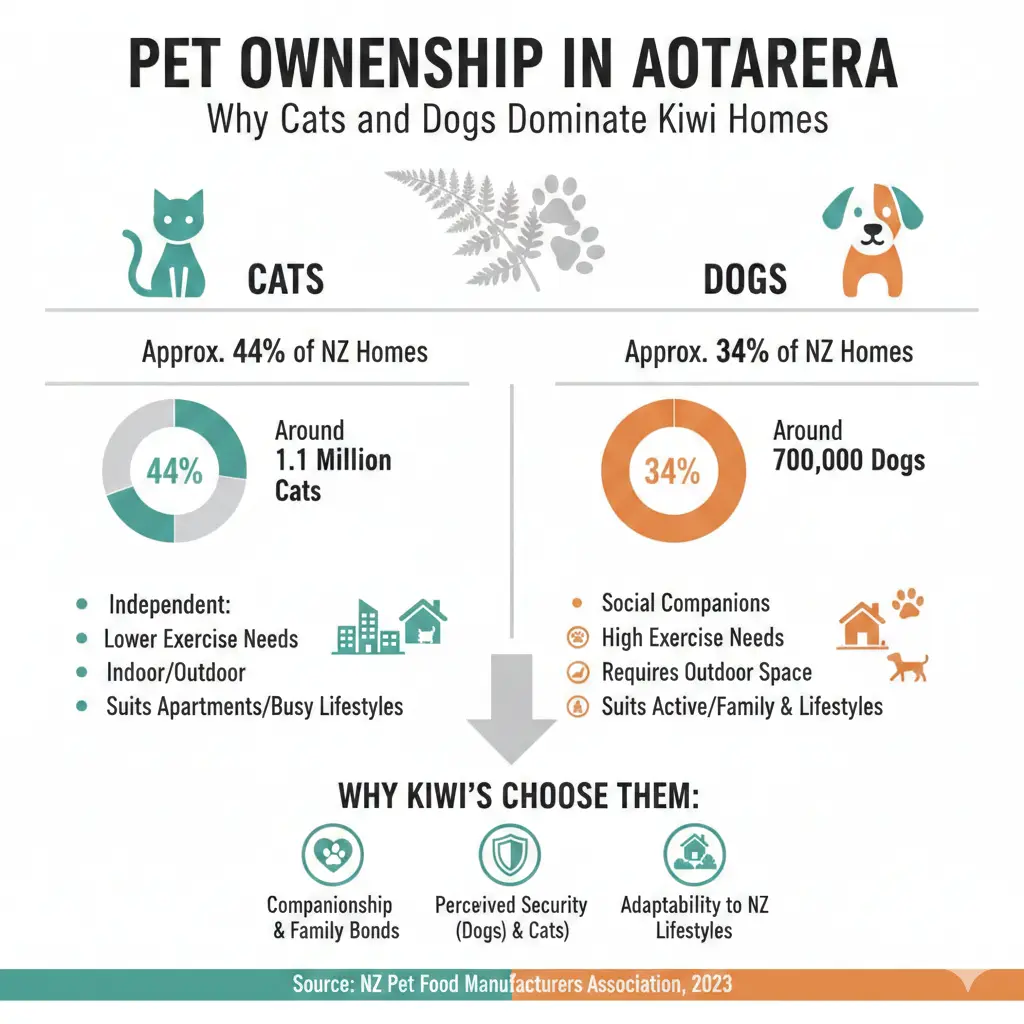
Lifestyle Match: Cats for the Independent Kiwi, Dogs for the Active Whānau
Your lifestyle dictates the best fit. Busy professionals or solo renters often thrive with low-maintenance cats, while active families or rural dwellers suit energetic dogs. Here's a head-to-head on daily life in NZ.
Space and Housing: Flatting in the City vs Section Living
In rental-heavy Auckland or Wellington, where pet-friendly flats are scarce, cats win for their indoor adaptability—no yard needed. Dogs demand space for exercise; think daily walks around Mission Bay or the Hutt River trails. If you're in a body corporate or renting, confirm pet clauses—many landlords ban dogs but allow cats.
| Factor | Cats | Dogs |
|---|---|---|
| Ideal Space | Small apartment or indoor-only | Backyard or nearby parks |
| Rental Friendly | High (litter tray solves it) | Low (noise, mess concerns) |
| Exercise Needs | Minimal (toys, climbing tree) | High (30-60 min walks daily) |
Time Commitment: Solo Workers vs Shifties
Cats suit night owls or remote workers—they sleep 12-16 hours and entertain themselves. Dogs crave routine: expect 1-2 hours daily for walks, play, and training, perfect for tradies or families hitting the beach. If you're on fly-in-fly-out jobs, a cat won't pine like a dog might.
Family Dynamics: Kids, Flatmates, and Elderly
Families with tamariki love dogs for teaching responsibility and outdoor fun, but supervise young kids—cats prefer gentle pats. Empty-nesters or over-65s lean cat for easier care, as ownership dips in older age groups. Multi-pet homes? 37.5% own both, blending cat independence with dog loyalty.
Costs Breakdown: Budgeting for Your Furry Mate in 2026
Pets aren't cheap—SPCA estimates dogs cost $1,680 annually, cats $670. Factor in inflation; vet bills and food have risen with living costs. Over 80% of Kiwis say expense affects pet healthcare, so plan ahead.
Upfront Costs: Adoption vs Breeder
Get cats from SPCA or rescues (most common), dogs from breeders. Expect $200-500 for a kitten/puppy, plus microchip ($50-100) and initial vet ($300+).
Ongoing Expenses: Food, Vet, and Kiwi Extras
| Category | Cat (Annual) | Dog (Annual) |
|---|---|---|
| Food | $400-600 | $800-1,200 |
| Vet/ Vaccinations | $200-400 | $400-700 |
| Registration/ Microchip | $0-50 | $100-300 (Auckland) |
| Extras (Litter, Toys, Grooming) | $150-300 | $300-500 (daycare, training) |
| Total | $670 avg | $1,680 avg |
Pet insurance covers accidents (PD Insurance notes generational differences—Gen Z prioritises it). Desexing saves long-term (reduces cancer risks).
Health, Care, and Welfare: Keeping Your Pet Thriving
Kiwi commitment shines: high desexing and microchipping rates. Cats need litter training and flea control; dogs require heartworm checks and socialisation classes via NZKC.
- Vet Visits: Annual for both; dogs need more for joints/hips.
- Exercise & Mental Stimulation: Cats: scratching posts; Dogs: agility parks in Christchurch or agility clubs.
- Grooming: Short-haired breeds suit both, but labs shed everywhere.
Protect native wildlife—keep cats indoors at night per MPI guidelines.
Cat vs Dog: Side-by-Side Comparison for NZ Lifestyles
| Lifestyle Fit | Best for Cats | Best for Dogs |
|---|---|---|
| Busy Urban Professional | Low maintenance, independent | Too time-intensive |
| Active Family with Kids | Good, but fragile | Ideal for play and walks |
| Rural or Section Owner | Fine, hunts pests | Perfect for space and herding |
| Budget-Conscious Renter | Cheaper, stealthier | Costly registration hurdles |
| Senior or Low-Energy | Companion without demands | Needs walker help |
FAQ: Common Questions on Cats vs Dogs in NZ
1. Are cats cheaper than dogs in New Zealand?
Yes, averaging $670/year for cats vs $1,680 for dogs, mainly due to no registration and less food/exercise needs.
2. Can I keep a dog in a rental property?
Possible but check tenancy agreements—many allow small dogs, but cats are easier. Bond lodgement via Tenancy Services covers pet damage.
3. What's the best age to desex my pet?
Cats: 4-6 months; Dogs: 6-12 months. 96% of cats and 85% of dogs are desexed nationally.
4. How do I find a pet-friendly rental in NZ?
Use Trade Me or FB Marketplace filters; Trade Me Property lists pet-friendly. Councils like Wellington City have mediation services.
5. Do cats or dogs live longer?
Indoor cats: 15+ years; Dogs: 10-13 years depending on breed. Vet care boosts both.
6. Where should I adopt in NZ?
SPCA for cats, breeders/NZKC for dogs. Check CompanionAnimals.nz for ethical sources.
Next Steps: Find Your Perfect Pet Match
Assess your space, time, budget, and whānau needs—cats for chill vibes, dogs for adventure. Visit your local SPCA, chat with vets, or use CANZ tools to test the fit. Whichever you choose, commit to the companionship New Zealanders cherish. Head to spca.nz or companionanimals.nz today to start your journey.