Choosing Subjects for NCEA: A Strategic Guide
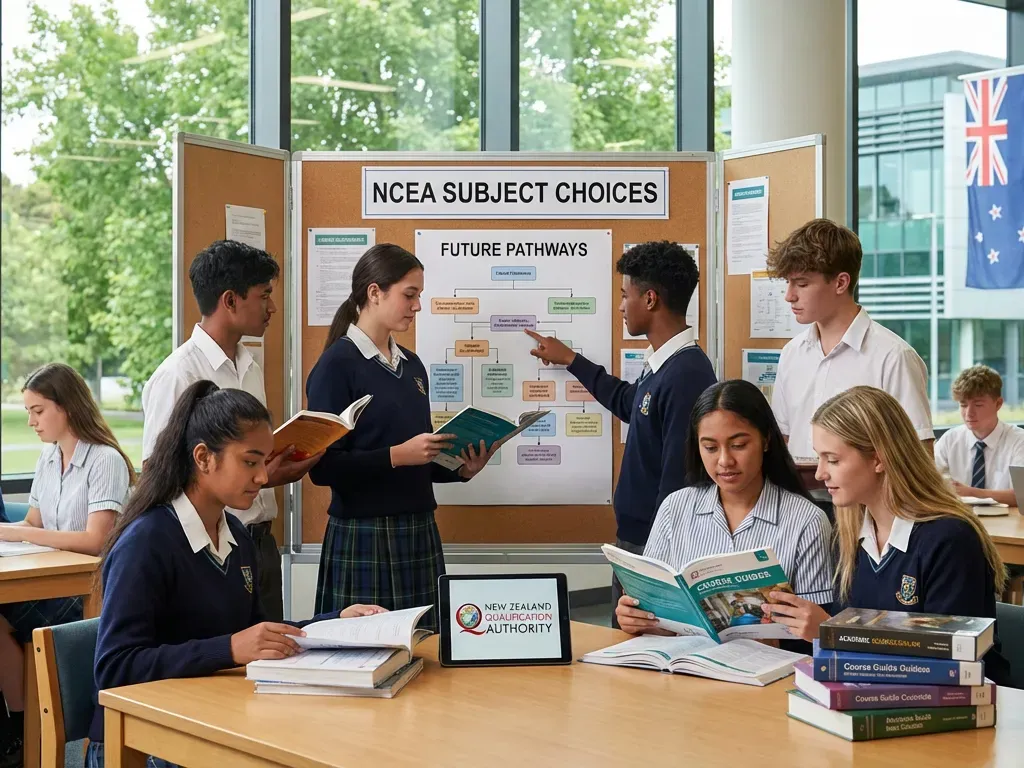
Selecting the right subjects for NCEA can feel overwhelming, but it's one of the most exciting decisions you'll make in secondary school. Whether you're dreaming of uni, trades, or something else enti...
The Lifetimes NZ editorial team curates, fact-checks, and updates guides on personal finance, property, health, immigration, legal, business, and lifestyle topics relevant to Lifetimes NZ readers. Articles are produced with AI assistance and reviewed by the editorial team before publication.
Selecting the right subjects for NCEA can feel overwhelming, but it's one of the most exciting decisions you'll make in secondary school. Whether you're dreaming of uni, trades, or something else entirely, smart choices now open doors to your future in Aotearoa.
With NCEA Levels 1, 2, and 3 structured around earning 60 credits per level (plus literacy and numeracy requirements), your subject picks shape not just your qualifications but your skills and passions. This guide breaks it down step-by-step, with practical tips tailored for Kiwi students in 2026.
Understanding NCEA Basics and Requirements
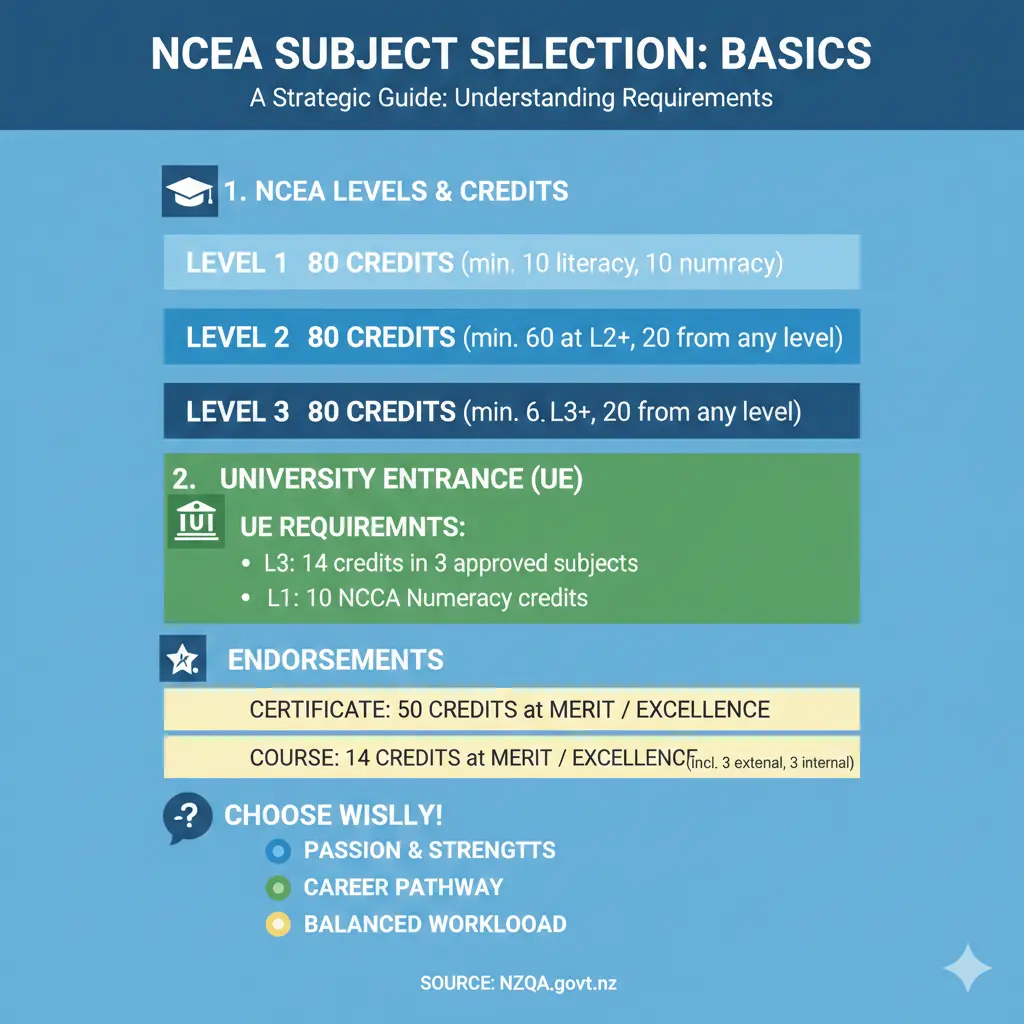
NCEA, New Zealand's main secondary qualification, lets you build credits over years through achievement standards in subjects you choose. Here's what you need for each level:
- Level 1 (usually Year 11): 60 credits from Level 1 or above, plus 10 literacy credits and 10 numeracy credits.
- Level 2 (Year 12): 60 credits at Level 2 or above, with Level 1 literacy and numeracy met.
- Level 3 (Year 13): 60 credits at Level 3 or above.
Note: NCEA Level 2 rolls out fully by 2028, and Level 3 by 2029, so check your school's timeline for new standards. Many schools require six subjects in Years 11-12 and five in Year 13.
University Entrance (UE) Essentials
Aiming for uni? You'll need NCEA Level 3 with three subjects from the approved UE list (at least 14 credits each at Level 3), plus 10 literacy credits (5 reading, 5 writing at Level 2+) and 10 numeracy credits (Level 1+). The approved list is on NZQA's UE page—think English, sciences, maths, and more. Always cross-check with Universities NZ or specific unis like Auckland or Otago for course prereqs.
Key Factors in NCEA Subject Selection
Don't pick blindly. Balance enjoyment, strengths, and future goals for the best results.
1. Play to Your Strengths and Interests
Choose subjects you enjoy and excel in—your success rates skyrocket. Sampled them in Years 9-10? Great. Unsure? Chat to teachers or whānau. Schools like St Matthews offer English, maths, and science as core in Year 11, plus three options from arts, tech, or languages.
2. Align with Career or Study Pathways
Think ahead: Medicine? Prioritise chemistry, physics, biology. Trades or defence? Tech subjects or vocational pathways shine. Vocational Pathways link NCEA to industries like primary sectors (agriculture, vet services) or services (chef, journalist).
| Interest Area | Recommended Subjects | Example Careers |
|---|---|---|
| Health/Science | Biology, Chemistry, Physics | Doctor, Nurse, Vet |
| Trades/Creative | Technology, Design & Visual Arts | Mechanic, Graphic Designer |
| Business/Social | Economics, Geography, Psychology | Accountant, Social Worker |
3. Breadth vs Depth
Year 11: Go broad across learning areas to keep options open—King's College urges variety here. Years 12-13: Specialise. Avoid narrowing too early unless committed, like picking sciences for engineering.
4. Literacy, Numeracy, and Te Reo Requirements
These are co-requisites now. English covers literacy; maths handles numeracy. Te reo matatini and pāngarau options support Māori-medium learners. Most schools bundle them into core subjects.
Subject Options by Year Level
Year 11 (NCEA Level 1)
Build foundations. Compulsory: English, maths, science (e.g., St Matthews' Science 101 covers biology, chemistry, physics with internals like microorganisms and chemical reactions). Add three options: Health/PE, arts, social sciences, tech, or languages. Aim for 60 credits + 10 lit/num.
Pro Tip: If uni-bound, pick UE-approved subjects early.
Year 12 (NCEA Level 2)
Four options plus English (five for top students). Deepen choices: Physics, economics, or media studies at King's. Ensure Level 1 lit/num met. Vocational focus? Pathways award for industry-aligned credits.
Year 13 (NCEA Level 3)
Five subjects, targeting UE. Examples: Marine Science, Psychology, or Te Reo Māori. Check school handbooks like Napier Boys' for tailored options.
Practical Tips for Selecting NCEA Subjects
- Research School Offerings: Download your school's 2026 booklet (e.g., FDMC or Queens High). List interests first, then match to NCEA or alternatives like Cambridge.
- Talk it Out: Whānau hui, careers advisor, or subject teachers. Queen's High says consider strengths and enjoyment.
- Check Prereqs: Level 2 physics often needs Level 1 science.
- Use Tools: NZQA's course chooser or StudyLink for funding insights. Fees? Most state schools are free, but check extras.
- Balance Workload: Mix internals (school-assessed) with externals (exams).
- Future-Proof: Overseas uni? Verify NCEA recognition.
Many schools promote by age, allowing mixed levels if standards met.
Common Mistakes to Avoid
- Ditching English/maths—kills UE.
- Over-specialising early—limits options.
- Ignoring wellbeing—Year 11 health covers hauora, relationships, mental health.
- Not endorsing choices—deadlines loom in Term 4.
Next Steps: Make Your Move
Grab your school's 2026 subject booklet today, list top interests, and book a chat with your careers team. Tools like NZQA's planner keep you on track. With strategic picks, you'll smash NCEA and step confidently into whatever comes next—whether that's uni at Victoria, an apprenticeship, or adventure overseas. You've got this, NZ!
Frequently Asked Questions
Sources & References
-
1
2026 Level 1 Subject Information Booklet — St Matthews School — www.stmatts.school.nz
-
2
Senior School Courses of Study 2026 — King's College — www.kingscollege.school.nz
-
3
Choosing a course or subjects at school — NZQA — www2.nzqa.govt.nz
-
4
Understanding How NCEA Requirements Are Changing — Ministry of Education — ncea.education.govt.nz
-
5
2026 Year 12 Course Handbook — School Resource — www.skoolsites.co.nz
-
6
NCEA Course Selection Guide — Opotiki College — fliphtml5.com
-
7
Year 13 NCEA Level 3 Subject Handbook 2026 — FDMC — cdnc.heyzine.com
-
8
2026 Course Selection — Napier Boys' High School — www.nbhs.school.nz
- 9
Related Articles

NCEA Exam Preparation: Complete Study Guide
Feeling the pressure as NCEA exams loom? You're not alone—thousands of Kiwi students are gearing up right now, and with the right strategy, you can tackle them confidently. This complete guide breaks...

Upskilling Online: Best Platforms for NZ Learners
Imagine boosting your career or picking up a new hobby without leaving your Kiwi home—online learning platforms make it possible, and they're booming in New Zealand right now. With the job market dema...