Geothermal Wonders of New Zealand: Wai‑O‑Tapu, Te Puia, Hell’s Gate and More
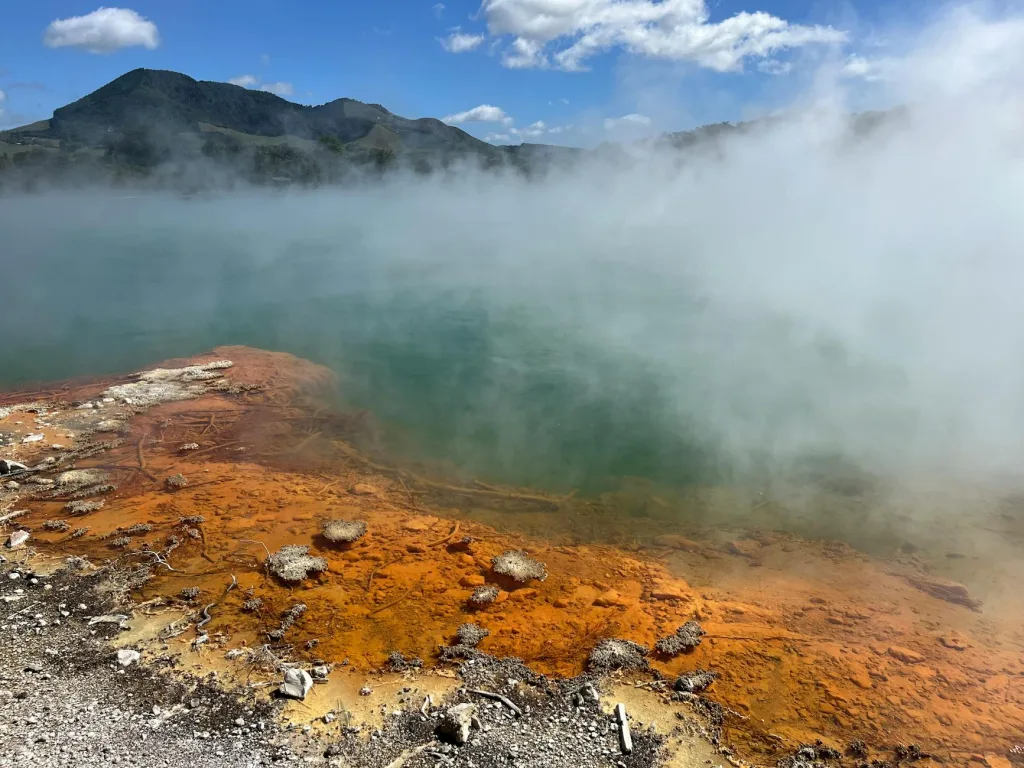
New Zealand's geothermal wonders are some of the most spectacular natural attractions in the Southern Hemisphere, and they're right here on our doorstep. From erupting geysers to vibrant hot springs a...
The Lifetimes NZ editorial team curates, fact-checks, and updates guides on personal finance, property, health, immigration, legal, business, and lifestyle topics relevant to Lifetimes NZ readers. Articles are produced with AI assistance and reviewed by the editorial team before publication.
New Zealand's geothermal wonders are some of the most spectacular natural attractions in the Southern Hemisphere, and they're right here on our doorstep. From erupting geysers to vibrant hot springs and therapeutic mud baths, Rotorua and the Bay of Plenty region offer unforgettable experiences that showcase the raw power of our planet. Whether you're a first-time visitor or a seasoned Kiwi looking to rediscover your own backyard, this guide will help you navigate the best geothermal attractions and make the most of your visit.
Why Rotorua is New Zealand's Geothermal Capital
Rotorua sits at the heart of the Taupō Volcanic Zone, one of the world's most geothermally active regions. The area's unique landscape was shaped dramatically by the eruption of Mount Tarawera in 1886, which created some of the youngest geothermal systems on Earth. Today, the region boasts hundreds of natural geothermal features, from steaming vents and colourful hot springs to powerful geysers and bubbling mud pools. This extraordinary concentration of geothermal activity makes Rotorua an essential destination for anyone wanting to experience New Zealand's natural wonders.
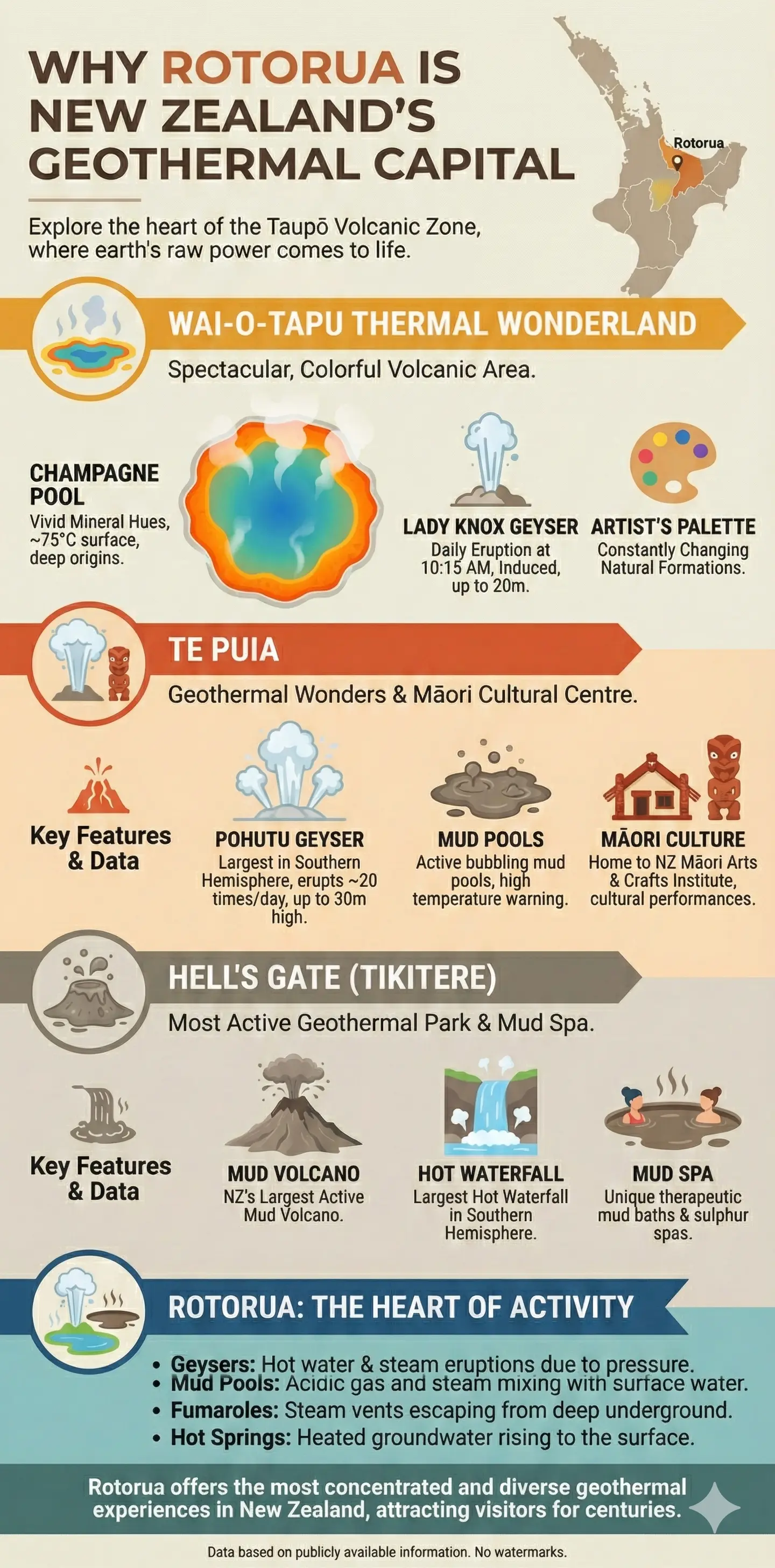
Must-Visit Geothermal Attractions
Wai-O-Tapu Thermal Wonderland
Wai-O-Tapu is arguably New Zealand's most iconic geothermal attraction and a must-do for visitors to the region. This spectacular showcase features some of the most colourful and unique geothermal elements you'll find anywhere, sculpted by thousands of years of geothermal activity. The park's most famous feature is the Champagne Pool, with its distinctive bright orange edges and vibrant blue centre—it's the shot that dominates Instagram feeds for good reason.
The Lady Knox Geyser erupts daily at 10:15am, reaching heights of up to 20 metres. If you want to catch this reliable eruption, arrive by 9:45am to secure a good viewing spot, as this is Rotorua's most popular attraction and gets extremely busy. Beyond the headline attractions, don't miss the vividly coloured lakes, steaming vents, and the massive bubbling mud pool area at the end of the main park trails.
Pro tip: Arrive right at opening (8:30am) to beat the crowds and have more time to explore at your own pace. The park is open seven days a week from 8:30am to 4:30pm, with final admission at 3pm. Note that Wai-O-Tapu is a cashless site, so bring your credit card or EFTPOS card.
Te Puia Geothermal Valley
Te Puia is one of Rotorua's most popular attractions, offering a unique combination of geothermal wonders and deep cultural experiences. This 60-hectare site is home to over 500 natural geothermal features and serves as the location of the New Zealand Māori Arts and Crafts Institute.
The star of Te Puia is the Pōhutu Geyser, which erupts naturally up to 20 times daily and can reach impressive heights of 20 metres. Unlike the Lady Knox Geyser at Wai-O-Tapu, Pōhutu's eruptions are completely natural, making them feel more authentic and awe-inspiring. Beyond the geyser, you can explore the institute to learn about traditional Māori carving, Ta Moko (facial tattoos), and weaving practices. There's also a live kiwi enclosure on-site, making this an excellent choice if you want to combine geothermal exploration with cultural learning and native wildlife viewing.
The park offers a geothermally cooked steambox lunch, allowing you to experience another unique aspect of the region's natural heat.
Hell's Gate Geothermal Park & Mud Spa
If you're looking for a more active geothermal experience, Hell's Gate is New Zealand's only mud spa complex and offers something truly unique. This is Rotorua's most active geothermal reserve, featuring dramatic steaming vents, hot pools, and the largest mud volcano in New Zealand.
The highlight for many visitors is the therapeutic mud bath and sulphur spa experience. The healing waters here have been used by early Māori settlers for hundreds of years to soothe battle wounds and promote wellness. Slathering on the warm geothermal mud and then soaking in the sulphur hot pools is incredibly rejuvenating. The walking trails showcase the most active geothermal landscape in the area, with moody steaming vents and stark, dramatic scenery that's particularly atmospheric on overcast days.
Waimangu Volcanic Valley
For those wanting to escape the crowds, Waimangu Volcanic Valley is one of the world's youngest geothermal systems, created among the destruction of the 1886 Mount Tarawera eruption. The park features Frying Pan Lake, the world's largest hot spring, and the bright blue Inferno Crater. You can explore stunning walking and hiking trails through a natural environment and return by bus, or take a boat cruise on Lake Rotomahana to see unique lakeside geothermal activity.
Budget-Friendly Geothermal Experiences
Kuirau Park – The Free Gem
If budget is a concern, don't worry—Rotorua has excellent free options. Kuirau Park is New Zealand's only free geothermal public park, and it's surprisingly impressive. Located right in the city centre, it features steaming vents, colourful lakes, bubbling mud pools, and even free thermal foot baths to soak your tired feet. If time or budget is tight and you can only do one geothermal spot, this should be it.
Other Free and Low-Cost Spots
Government Gardens is a beautiful public park situated along the edge of Lake Rotorua, just minutes from the city centre, and offers free geothermal features. Te Rātā Bay features a hot spring that trickles down a small stream and into Lake Tarawera, creating a unique hot water beach experience.
Premium Geothermal Experiences
Secret Spot Hot Tubs
For a truly memorable experience, Secret Spot Hot Tubs is a hidden gem tucked into the edge of Whakarewarewa Forest. Private outdoor hot tubs are surrounded by native bush and filled with natural geothermal water. A 45-minute session in your own cedar tub, with birdsong and dappled sunlight filtering through the trees, is pure bliss and one of the most relaxing experiences Rotorua has to offer.
Hamurana Springs
Hamurana Springs is a serene nature reserve just 15-20 minutes' drive north of Rotorua on the shores of Lake Rotorua. It features the deepest natural freshwater spring in the North Island, with unbelievably crystal-clear water in stunning shades of blue and turquoise. You can easily spot trout swimming lazily below the surface and even "dancing sands" bubbling up in certain spots. There's a small entry fee, but it's absolutely worth it.
Practical Information for Visitors
Entry Fees: Geothermal park entry fees typically range from NZ$45–100+ per adult. Most visitors choose one or two parks to prioritise, though many end up visiting multiple attractions because each offers something unique.
What to Wear: Bring comfortable walking shoes with good grip—geothermal areas can be slippery. Wear layers, as temperatures can vary significantly between steaming vents and cooler areas. If you're planning to use the mud spas or hot pools, bring a swimsuit and towel.
Safety: Always stay on marked trails and heed warning signs. Geothermal areas contain boiling water and toxic gases. Keep a safe distance from steam vents and hot springs, and never touch the geothermal features.
Best Time to Visit: Spring and autumn offer pleasant weather and fewer crowds than summer. However, geothermal attractions operate year-round, and the atmospheric steam is often more visible on cooler days.
Frequently Asked Questions
How long should I spend at each geothermal attraction?
Most visitors spend 2–3 hours at each major attraction. Wai-O-Tapu and Te Puia typically take 3–4 hours if you want to explore thoroughly. Hell's Gate, including the mud spa experience, takes about 2–3 hours. Kuirau Park can be enjoyed in 1–2 hours.
Can I visit multiple geothermal parks in one day?
Yes, but it's ambitious. You could comfortably visit two parks in a day if you start early. For example, visit Kuirau Park (free) in the morning, then Wai-O-Tapu in the afternoon to catch the Lady Knox Geyser at 10:15am. However, you'll enjoy the experience more if you take your time at each location.
Are the geothermal parks suitable for children?
Most geothermal parks are family-friendly, with walking trails suitable for various fitness levels. However, always supervise children closely around geothermal features. Te Puia's kiwi enclosure is particularly popular with families. Hell's Gate's mud spa experience is fun for older children and teens.
Do I need to book in advance?
For major attractions like Wai-O-Tapu and Te Puia, booking online in advance is recommended, especially during peak seasons. Some experiences like Secret Spot Hot Tubs require advance booking. Free attractions like Kuirau Park don't require bookings.
What's the difference between Wai-O-Tapu and Te Puia?
Wai-O-Tapu is known for its spectacular colours, the iconic Champagne Pool, and the daily Lady Knox Geyser eruption (which is artificially triggered). Te Puia offers the naturally erupting Pōhutu Geyser, cultural experiences at the Māori Arts and Crafts Institute, and a kiwi enclosure. Wai-O-Tapu is more about natural beauty, while Te Puia combines geothermal features with cultural learning.
Can I combine geothermal visits with other Rotorua activities?
Absolutely. Rotorua offers redwood forests, mountain biking, adventure activities, and cultural experiences. Many visitors combine a geothermal park visit with a trip to nearby Okere Falls Scenic Reserve (10–15 minutes from Hell's Gate), which features native bush trails and stunning views of the Kaituna River waterfalls.
Plan Your Geothermal Adventure
New Zealand's geothermal wonders are truly world-class attractions that showcase the incredible natural forces shaping our country. Whether you're seeking Instagram-worthy moments, therapeutic spa experiences, cultural immersion, or simply a connection with nature's raw power, Rotorua and the Bay of Plenty region have something for everyone. Start with the free attractions like Kuirau Park to get a feel for the area, then explore the paid parks based on your interests—whether that's photography, cultural learning, or wellness experiences. Book your visit during spring or autumn for the best combination of weather and crowds, and remember to take your time exploring these extraordinary natural treasures.
Related Articles
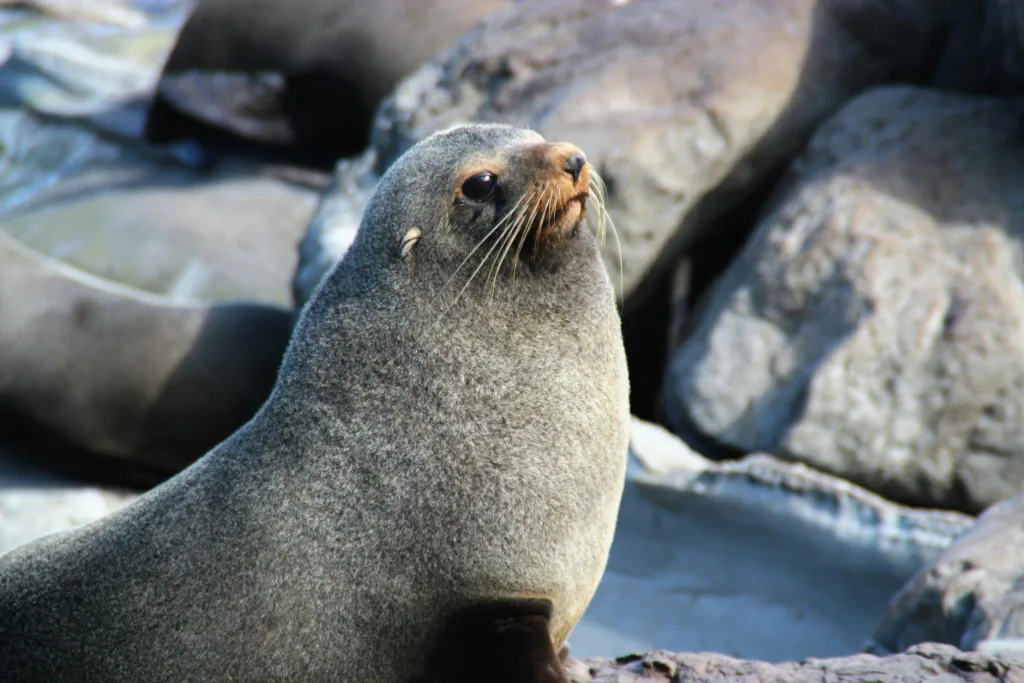
New Zealand for Wildlife Lovers: Penguins, Kiwis, Seals and Albatross
Imagine waddling alongside cheeky little blue penguins at dusk, hearing the haunting call of a kiwi in the night, watching seals bask on rocky shores, or witnessing the majestic glide of an albatross...
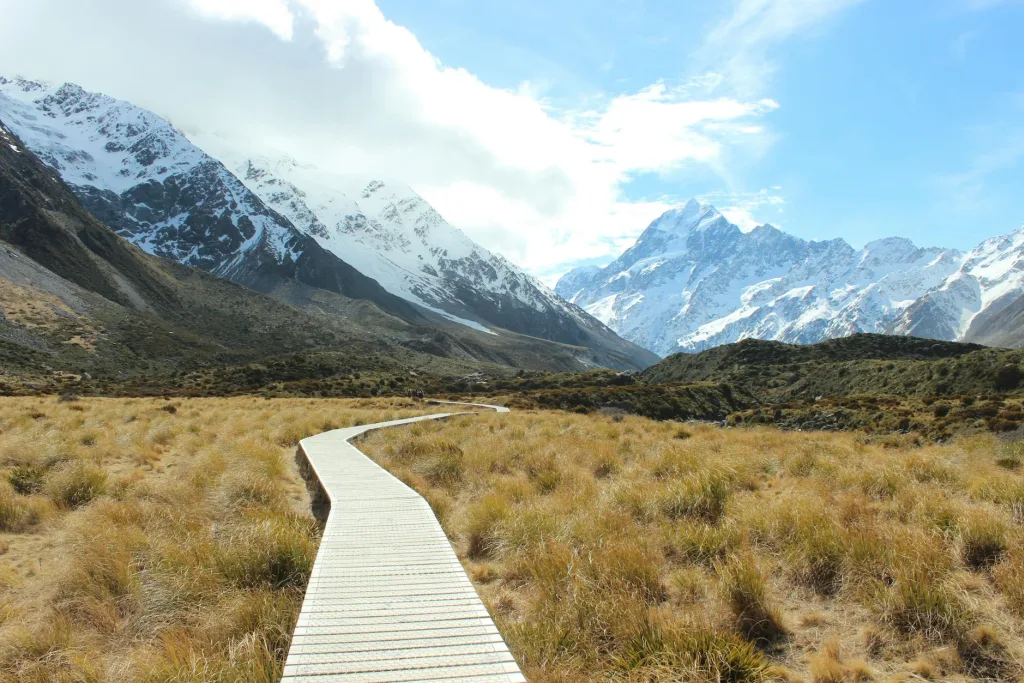
Top Day Hikes in the South Island (Roy’s Peak, Hooker Valley, Ben Lomond etc.)
Imagine standing atop a jagged peak with Aoraki/Mount Cook piercing the sky, or gazing across crystal-clear turquoise lakes framed by snow-capped mountains—all without needing a multi-day tramp. The S...
Guide to New Zealand’s Great Walks: What to Expect, Bookings and Packing
Imagine lacing up your tramping boots and stepping onto tracks that wind through ancient rainforests, along golden beaches, and up to alpine passes with views that stop you in your tracks. New Zealand...
Best Places for Whale and Dolphin Watching in New Zealand
Imagine gliding through pristine New Zealand waters, the salty breeze on your face, as a pod of playful dolphins arcs alongside your boat or a majestic sperm whale surfaces with a powerful exhale. Wha...