Best Hiking Trails in the South Island for Beginners
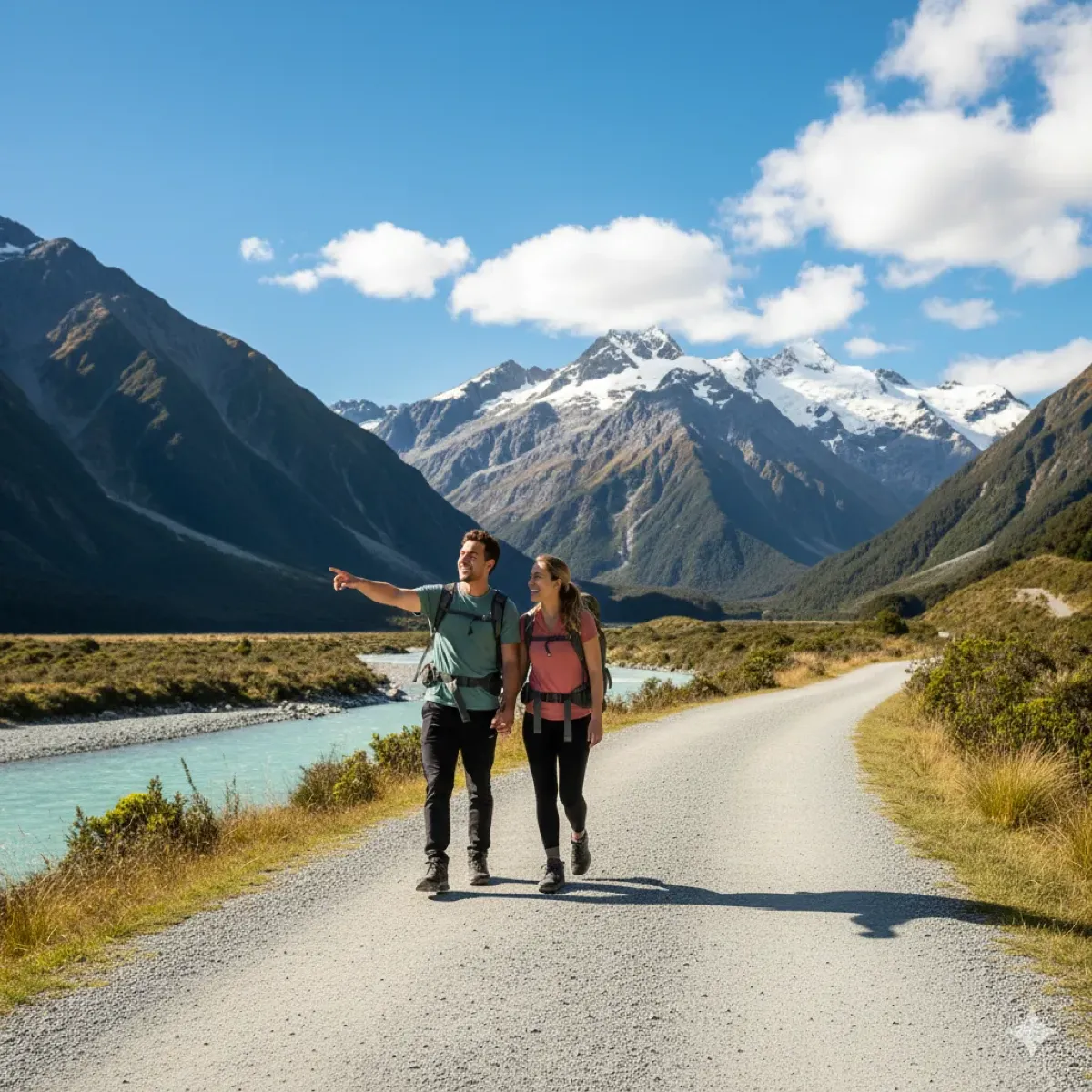
If you're looking to explore Aotearoa's stunning South Island but aren't sure where to start, you're in the right place. Whether you're a local Kiwi wanting to discover your own backyard or visiting f...
Tom covers travel, lifestyle, and cost-of-living topics across New Zealand. He writes practical guides on transport, day trips, outdoor activities, and everyday life in Aotearoa.
If you're looking to explore Aotearoa's stunning South Island but aren't sure where to start, you're in the right place. Whether you're a local Kiwi wanting to discover your own backyard or visiting from across the Tasman, the South Island offers some of the most accessible and breathtaking hiking trails in the world. From easy walks along pristine valleys to short but rewarding climbs with panoramic views, there's something for every fitness level. Let's explore the best beginner-friendly trails that'll get you outdoors and falling in love with New Zealand's natural beauty.
Why the South Island is Perfect for Beginning Hikers
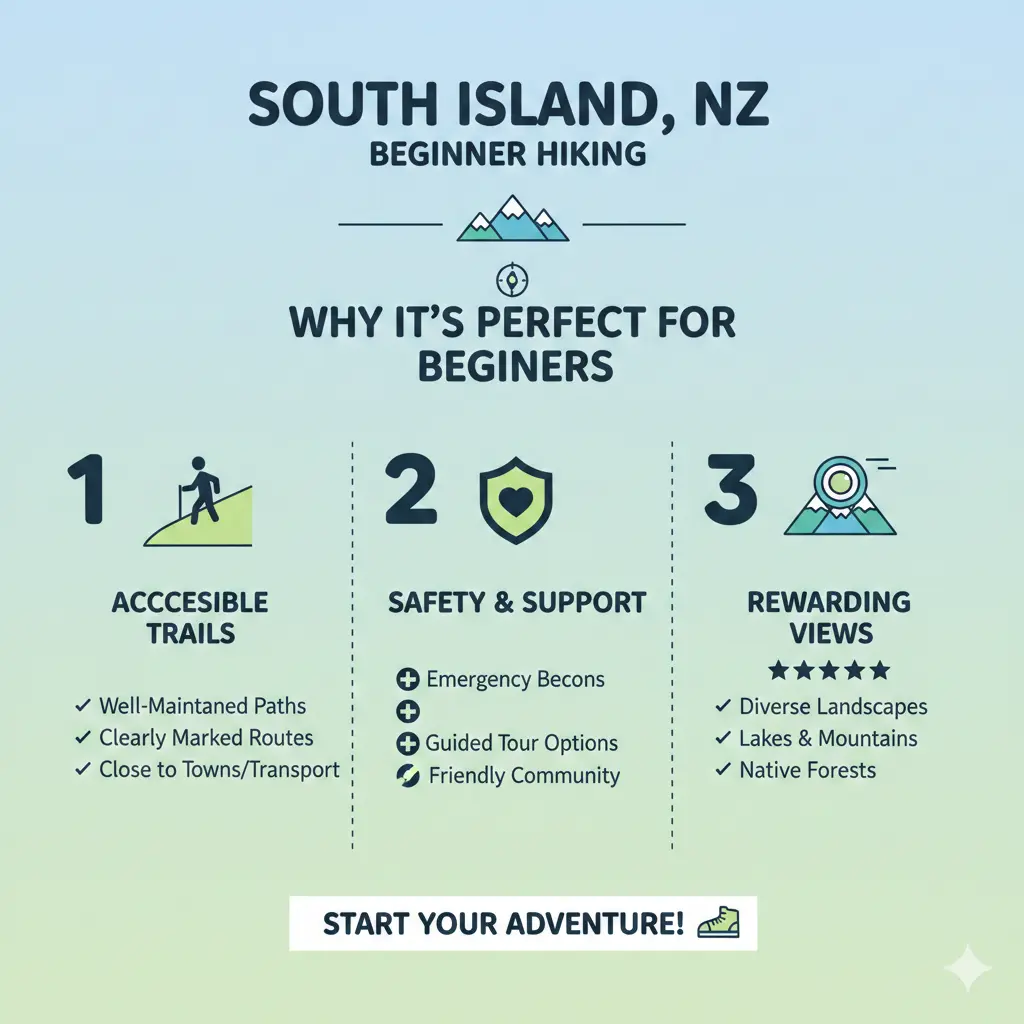
The South Island is a hiker's paradise, and the good news is that you don't need to be ultra-fit to enjoy it. The Department of Conservation (DOC) maintains an extensive network of well-formed tracks throughout the region, making it easier and safer for beginners to explore. Many of the most iconic hikes are actually quite accessible, with options ranging from flat valley walks to gentle climbs with rewarding summit views. The scenery alone—towering mountains, glaciers, pristine lakes, and dramatic coastlines—makes every step worthwhile, even on shorter walks.
The Best Beginner-Friendly Hiking Trails
Hooker Valley Track – Aoraki/Mount Cook National Park
If you're planning a trip to Mount Cook, the Hooker Valley Track is a must-do for beginners. This iconic walk is just 10 km return with minimal elevation gain of around 100 metres, making it one of New Zealand's most accessible hikes. The track starts at the White Horse Hill Campsite car park at the end of Hooker Valley Road and features level terrain, well-formed paths, and three stunning suspension bridges. As you walk along the boardwalk across the expansive valley floor, you'll get spectacular views of Mount Cook itself—one of those genuine bucket-list moments you'll never forget. The walk is suitable for families with small children, and you can take it at your own pace. Most people complete it in 2-3 hours, giving you plenty of time to stop and soak in the views.
Blue Pools Track – Makarora
Located about 20 minutes west of Makarora on the Haast Highway, the Blue Pools Track is a short but spectacular walk. At just 1.5 km return and taking around an hour, it's perfect for beginners who want a manageable distance without sacrificing scenery. The track winds through native beech and podocarp forest to reveal a collection of crystal-clear pools with deep, icy water. Two swing bridges cross the Makarora River and provide excellent views down the gorge. Word of warning: bring bug spray, as the sandflies love this spot as much as we do. If you want to extend your walk, you can continue along the trail for more views along the gorge.
Ōkārito Trig Walk – West Coast
Just north of Franz Josef Glacier sits the coastal settlement of Ōkārito, home to the Ōkārito Trig Walk. This 4.2 km return walk takes about an hour and offers a short but vigorous hike up to a lookout with panoramic views. From the top, you'll see the ocean, estuary, sea cliffs, lush forest, and the Southern Alps—all in one spectacular vista. The track is well-maintained by DOC, and the effort is absolutely worth the reward. It's a great option if you're exploring the West Coast and want something more than a flat stroll but less demanding than a full-day alpine hike.
The Chasm Walk – Milford Sound
If you're heading to Milford Sound, don't miss The Chasm Walk. This is one of the shortest walks on our list—just 1 km return taking about 30 minutes. The track crosses two footbridges over the Cleddau River and features spectacular views of waterfalls in a lush forest setting. The fast-flowing, swirling waters have sculpted rounded shapes and basins in the rock over thousands of years, creating a genuinely dramatic scene. It's perfect if you want to stretch your legs after a drive or combine it with other activities in the Milford Sound area.
Lake Matheson Walk – Fox Township
Lake Matheson, also known as Te Ara Kairaumati, is one of the most photographed lakes in New Zealand, and the walk around it is perfect for beginners. You have options here: the short option to the first jetty is a 40-minute return walk on an assisted wheelchair-accessible path. If you're feeling more adventurous, the full circuit takes about an hour and a half and takes you to the iconic photo spot where you can capture those perfect reflections of the Southern Alps. Early morning or close to sunset offers the best light for photography. There are many spots to stop and take in the views along the way.
Hokitika Gorge – West Coast
Located near Hokitika on the West Coast, Hokitika Gorge is one of the best day hikes for beginners in the South Island. The track is easy to find right off the highway and is clearly signposted once you've parked. The path follows the Bealey River for a short time, crosses two bridges, and then climbs a set of stairs built up the side of the canyon to a beautiful viewpoint of the waterfall. It's quite a busy spot, so be respectful of bridge capacity and bring bug spray—the sandflies are out in full force here. To get there, turn east on Stafford Street (which becomes Kaniere Road), then follow the signs to Whitecombe Valley Road.
Devils Punchbowl – Arthur's Pass
Located at Arthur's Pass, Devils Punchbowl is another excellent beginner walk. The track follows the Bealey River for a short time before crossing two bridges and meeting up with a set of stairs. These stairs are built up the side of the canyon and lead to a beautiful viewpoint of the waterfall. The trailhead is easy to find right off the highway on the right-hand side (if heading west), and directions are clearly marked at the car park.
Essential Tips for Beginner Hikers in the South Island
Check DOC Conditions Before You Go
Always check the Department of Conservation website (doc.govt.nz) before heading out. Track conditions can change due to weather, maintenance, or other factors. DOC provides up-to-date information on track closures, hazards, and difficulty levels. This is especially important in winter or after heavy rain.
Pack the Right Gear
Even on easy walks, bring the essentials: a good pair of hiking boots (or sturdy gym shoes for easier tracks), plenty of water, snacks, a rain jacket, and sunscreen. The South Island weather can change quickly, so layering is key. Don't forget bug spray—sandflies and mosquitoes are particularly active near water and in forested areas.
Start Early and Tell Someone Where You're Going
Start your walk early in the day so you have plenty of daylight to complete it. Tell a friend or family member where you're going and when you expect to be back. This is a basic safety precaution that could be lifesaving if something goes wrong.
Respect the Environment
Take all rubbish with you—leave no trace. Stay on marked tracks to protect native plants and prevent erosion. If you see wildlife, observe from a distance and don't feed animals. New Zealand's ecosystems are fragile, and we all have a responsibility to protect them.
Know Your Fitness Level
Choose walks that match your current fitness level. It's better to do a shorter walk and enjoy it than to overextend yourself and have a miserable experience. You can always build up to longer or more challenging hikes as your fitness improves.
Best Time to Visit
The South Island is beautiful year-round, but the best time for beginner hiking is December through March (summer) or April through May (autumn). During these months, you'll have longer daylight hours, warmer temperatures, and more stable weather. Winter (June-August) can be challenging for beginners due to snow, ice, and shorter daylight hours. Spring (September-November) is also lovely but can be unpredictable weather-wise.
Getting Around the South Island
Most of these trails are accessible by car, and you'll need your own transport or a rental to reach them. If you're using public transport, check out the InterCity or local shuttle services that serve popular hiking areas. Many towns have car rental agencies, and petrol prices in 2026 are reasonable compared to other developed countries. Consider staying in central locations like Queenstown, Wanaka, or the West Coast towns, and taking day trips to nearby trails.
Ready to Hit the Trails?
The South Island offers some of the most stunning scenery on Earth, and you don't need to be an experienced mountaineer to experience it. These beginner-friendly trails give you a taste of what makes New Zealand so special—from turquoise lakes and native forests to dramatic mountain vistas and pristine coastlines. Start with one of the easier walks, build your confidence, and before you know it, you'll be tackling longer and more challenging trails. The South Island is waiting for you—grab your boots, check the DOC website, and get outdoors. Your next adventure is just around the corner.
Frequently Asked Questions
Sources & References
-
1
Must Do Hikes On New Zealand's South Island - Jess Wandering — jesswandering.com
-
2
10 best day hikes on South Island, New Zealand - Atlas & Boots — www.atlasandboots.com
-
3
THE 15 BEST South Island Hiking Trails (2026) - Tripadvisor — www.tripadvisor.com
- 4
-
5
14 Best Day Hikes on the South Island of New Zealand - In a Far Away Land — inafarawayland.com
-
6
6 Unknown Hikes On New Zealand's South Island 2026 - We Are Explorers — weareexplorers.co
-
7
Great Walks of New Zealand - 100% Pure New Zealand — www.newzealand.com
Related Articles
Milford Sound: How to Visit Without a Tour
Imagine cruising through the dramatic fjords of Milford Sound on your own schedule, with the wind in your hair and no tour bus timetable dictating your day. As Kiwis, we know the pull of Fiordland's r...

Kaikoura Wildlife: Whales Dolphins and Seals
Imagine gliding through the deep blue waters off Kaikoura's coast, the Seaward Kaikōura Range towering behind you, as a massive sperm whale breaches the surface just metres away. That's the everyday m...
Queenstown on a Budget: Local's Guide
Queenstown's stunning landscapes and adventure vibes don't have to drain your wallet. As locals know, you can soak up the magic of Lake Wakatipu and the Remarkables without breaking the bank, especial...
Abel Tasman: Day Walks and Water Taxis
Picture this: golden sands fringing crystal-clear waters, lush native bush hugging dramatic coastlines, and the gentle lap of waves inviting you to explore one of New Zealand's true treasures. Abel Ta...