Public Transport in Auckland: AT HOP Guide
Stuck in Auckland traffic? Imagine hopping on a bus, train, or ferry with just a tap of your AT HOP card, zipping through the city without the hassle of cash or parking woes. As Auckland's public tran...
The Lifetimes NZ editorial team curates, fact-checks, and updates guides on personal finance, property, health, immigration, legal, business, and lifestyle topics relevant to Lifetimes NZ readers. Articles are produced with AI assistance and reviewed by the editorial team before publication.
Stuck in Auckland traffic? Imagine hopping on a bus, train, or ferry with just a tap of your AT HOP card, zipping through the city without the hassle of cash or parking woes. As Auckland's public transport network evolves in 2026, mastering the AT HOP card is your ticket to stress-free commuting, saving time and money while exploring our vibrant city.
What is the AT HOP Card?
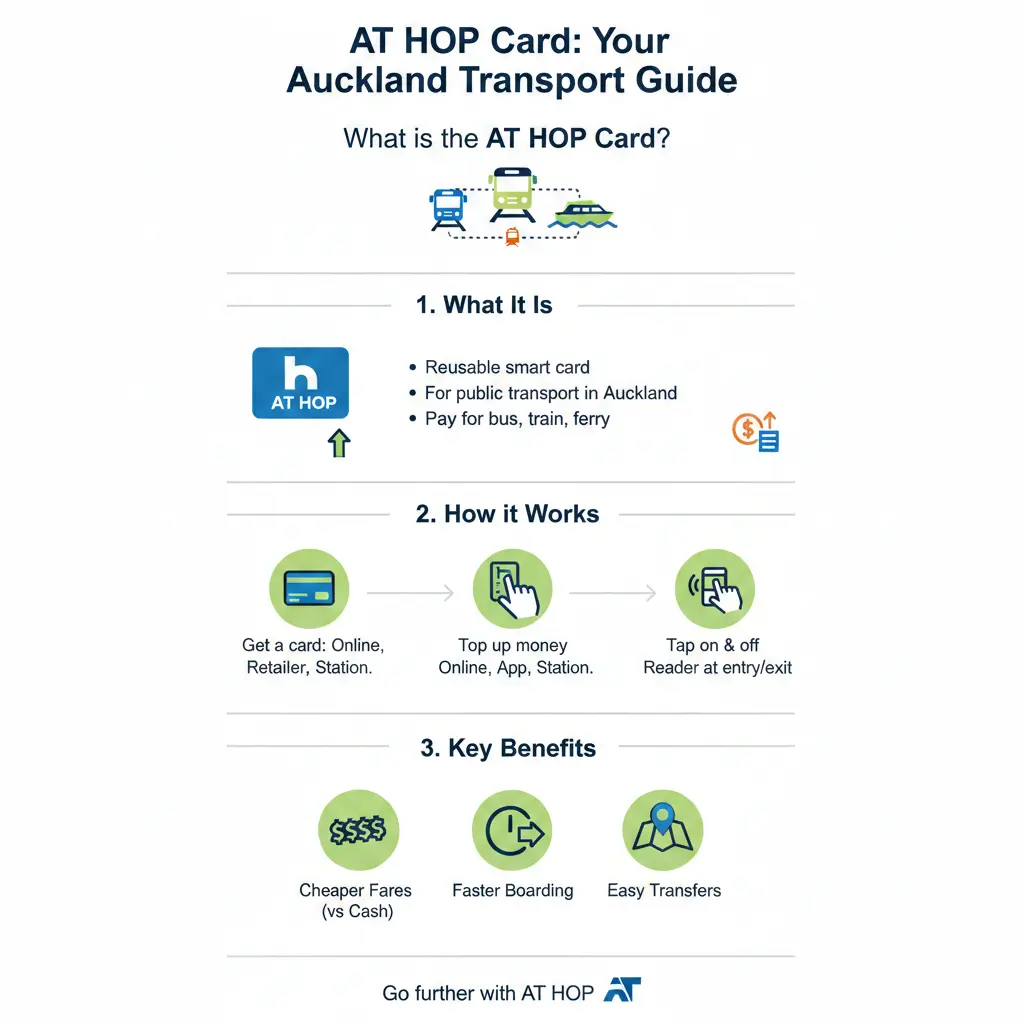
The AT HOP card is Auckland's go-to electronic fare payment smart card, used across buses, trains, and ferries operated by Auckland Transport (AT). Launched in its current form after an initial rollout in 2011, it became fully integrated by March 2014, replacing earlier versions and ensuring seamless travel on all AT services.
Unlike cash or Eftpos—which aren't accepted on buses—this contactless card lets you 'tag on' when boarding and 'tag off' when exiting, automatically deducting the correct fare based on distance and zones. It's exclusively for AT routes and can't be used for inter-city services like the Northern Explorer train or Te Huia to Hamilton, which require their own systems.
How to Get Your AT HOP Card
- Buy online or in-person: Order from the AT website, AT HOP stores, or selected retailers like Papakura Station or Britomart.
- Cost: Adult cards start at $10 (including $5 stored value), with options for child, youth, or concession versions.
- Top it up: Add credit via the AT Mobile app, online at at.govt.nz, HOP stores, or Paywave-enabled machines at stations.
New to town or lost your card? Replacements are straightforward, but always report it lost via the AT app to protect your balance.
Auckland's Public Transport Fares in 2026
From 1 February 2026, AT public transport fares rose by a weighted average of 5.1%, adding 10-25 cents per adult bus or train trip, or 40-60 cents for ferries. These hikes balance rising costs (up 10-16%) while keeping fares affordable amid economic pressures.
Fare Structure and Zones
Auckland uses a zone-based system: most trips fall within 1-2 zones for short commutes, with higher charges for longer distances like airport buses or cross-isthmus ferries. Key 2026 fares (adult, off-peak examples):
| Mode | 1 Zone | 2 Zones | Notes |
|---|---|---|---|
| Bus/Train | $3.25 | $4.50 | Peak adds ~20%; tag on/off required |
| Ferry (Inner Harbour) | $5.50 | N/A | Devonport: $6.00; Rangitoto: $45 return |
| AirportLink Express | N/A | $13.60 | From city to airport |
Pro tip: Peak times (Monday-Friday 7-9am, 4-6pm) cost more—travel off-peak to save.
Concessions and Discounts
- Weekly Cap: $50 max per week—perfect for daily commuters. In its first year, it enabled 886,000 free trips and saved over $2 million.
- Tertiary Students: 40% off (up from 20% in Dec 2025).
- Community Services Card: Half-price via Community Connect.
- Children/Supergold: Free or discounted for under-13s and seniors.
- Fareshare: Employer subsidies loaded onto your card since 2024.
Using AT HOP on Buses, Trains, and Ferries
Buses: Your Everyday Workhorse
Auckland's bus network covers suburbs from Henderson to Botany, with frequent services on routes like the Outer Link (Outer Harbour to Botany). Tag on with your AT HOP at the reader near the door, and tag off at the rear—forgetting means a maximum fare charge!
In 2026, upgraded readers support contactless payments (credit/debit, Apple/Google/Samsung Pay), used by 11% of weekday passengers as of March 2025. Concessions still require AT HOP.
Trains: Faster with City Rail Link
The City Rail Link (CRL) opens in 2026, transforming the network with twin 3.45km tunnels linking Waitematā to Maungawhau Station, plus new stops at Karanga-a-Hape and Te Waihorotiu. Expect more frequent trains, faster journeys, and network changes—like Parnell/Grafton passengers switching to Inner Link buses at Waitematā.
Britomart (Waitematā) remains the hub, connecting to buses and ferries. Tag on at yellow platform readers and off at your destination.
Ferries: Scenic Harbour Hops
From Devonport to Waiheke Island, ferries offer stunning views. Tag on at the gangway and off at arrival—fares vary by destination, with adult returns starting at $12 for inner harbour.
Actionable tip: Check at.govt.nz/ferries for schedules, as services ramp up in summer.
Money-Saving Tips for Auckland Commuters
- Hit the Weekly Cap: If you commute 5+ days, unlimited travel after $50—ideal for KiwiSaver contributors juggling work and life.
- Autoload Credit: Set up auto top-ups in the AT app to avoid shortages and earn discounts.
- Combine Modes: One tag works across transfers within 2 hours—no extra charge for bus-to-train swaps.
- Off-Peak and Concessions: Students, save 40%; Community Card holders, 50% off.
- Fareshare for Work: Ask your employer about subsidies—many Auckland businesses load funds directly.
- App Alerts: Use AT Mobile for real-time disruptions, especially with CRL changes.
"We know affordability is critical for our customers which is why we’ve worked hard to keep this year’s fare increase as low as possible." — Stacey van der Putten, AT Director of Public Transport
What's New in 2026: Contactless and Beyond
Contactless payments launched in November 2024, with 4,000 upgraded validators ready for national Motu Move rollout mid-2025. By 2026, expect seamless debit/credit taps alongside AT HOP, though concessions stay card-only. CRL's arrival means redesigned timetables—check at.govt.nz for your line's updates.
Next Steps for Smarter Commuting
Grab your AT HOP card today via at.govt.nz, download the AT Mobile app, and plan your route. With CRL boosting reliability and caps keeping costs down, 2026 is the year to ditch the car keys. Whether you're heading to work in the CBD or a weekend ferry to Waiheke, public transport makes Auckland more connected—start tagging and saving now!
Frequently Asked Questions
Sources & References
-
1
AT HOP card - Wikipedia — en.wikipedia.org
-
2
City Rail Link: Auckland's new network in 2026 — at.govt.nz
- 3
-
4
Public Transport - Discover Auckland — www.aucklandnz.com
- 5
-
6
Auckland Transport (2026) - All You Need to Know — www.tripadvisor.com
Related Articles

What is My Car Worth? How to Price Your Vehicle for a Fast Sale
Ever wondered what is my car worth? Whether you're eyeing up a trade-in, planning a private sale, or just curious about your pride and joy's value in today's market, getting the price right is key to...
Buying a Used Car in NZ: The Ultimate Pre-Purchase Checklist
Thinking about snagging a bargain on the second-hand market? In New Zealand, where Kiwi roads are full of trusty used cars, getting it right can save you thousands and keep you safe on the motorways f...
Electric Vehicles in NZ: Is 2026 Finally the Year to Switch?
Picture this: you're cruising down State Highway 1 from Auckland to Wellington, no fuel stops needed, just the hum of electric motors and stunning Kiwi scenery whizzing by. With battery tech leaping f...

The Best Used Cars for New NZ Drivers
Starting out on New Zealand's roads as a new driver is exciting, but picking the right used car can make all the difference between smooth journeys and unexpected headaches. With rising fuel costs, st...