What is My Car Worth? How to Price Your Vehicle for a Fast Sale

Ever wondered what is my car worth? Whether you're eyeing up a trade-in, planning a private sale, or just curious about your pride and joy's value in today's market, getting the price right is key to...
The Lifetimes NZ editorial team curates, fact-checks, and updates guides on personal finance, property, health, immigration, legal, business, and lifestyle topics relevant to Lifetimes NZ readers. Articles are produced with AI assistance and reviewed by the editorial team before publication.
Ever wondered what is my car worth? Whether you're eyeing up a trade-in, planning a private sale, or just curious about your pride and joy's value in today's market, getting the price right is key to a fast sale. In New Zealand's competitive used car scene, overpricing can leave your vehicle sitting on Trade Me for months, while underpricing means leaving money on the table. This guide breaks it down with practical steps tailored for Kiwis, using free tools and local insights to help you price your vehicle for a fast sale.
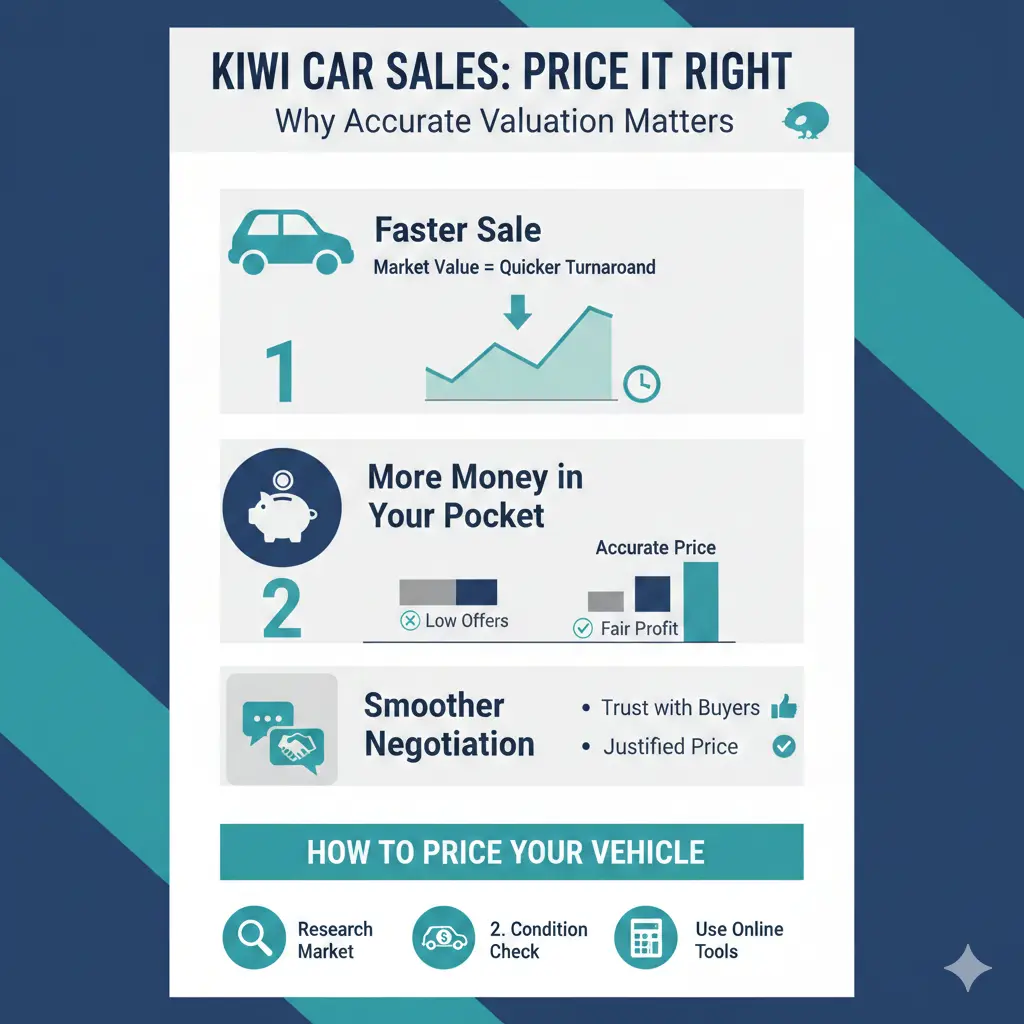
Why Accurate Valuation Matters for Kiwi Sellers
Putting a realistic price on your car isn't just guesswork—it's backed by market data from thousands of sales. In 2026, with fuel prices fluctuating and Kiwis snapping up reliable used rides amid economic shifts, a well-priced car can sell in days rather than weeks. Sellers who use data-driven tools like Trade Me's free valuator often see quicker results because buyers know they're getting a fair deal.
Overpricing by even $500 can deter serious buyers, especially in regions like Auckland where competition is fierce. On the flip side, pricing spot-on builds trust and attracts calls fast. Remember, the market ultimately decides, but starting in the right range sets you up for success.
Factors That Determine Your Car's Value in New Zealand
Several elements influence what your car is worth. Understanding these helps you adjust your price confidently.
Key Valuation Factors
- Mileage and Age: High mileage knocks value down—Trade Me's tool factors this in precisely using your rego and odometer reading.
- Condition: Dents, scratches, or a tatty interior can drop value by 10-20%. A tidy car with no cosmetic damage fetches more.
- Service History: Full logs from AA or your mechanic prove it's been looked after, boosting buyer confidence and price.
- Features and Specs: Extras like low-profile tyres, sunroofs, or popular colours (think white or black) push you to the higher end of the range.
- Make, Model, and Variant: Reliable family wagons like Toyota Hilux or SUVs hold value best in NZ's market.
- Location and Demand: Cars in high-demand areas like Wellington or Christchurch sell faster; rural utes might command a premium.
Market Trends in 2026
Right now, Japanese imports and EVs are hot, with JDM classics appreciating sharply—think Skyline R34s or Evos surging in value. Fuel-efficient hybrids are also prized amid rising petrol costs. Check NZTA's vehicle records via your rego for any issues like outstanding warrants that could tank value.
Top Free Tools to Find Out What Your Car is Worth
No need to pay for a valuation when these Kiwi-focused tools give spot-on estimates using real sales data.
Trade Me Valuation Tool
The go-to for private sellers. Enter your number plate and mileage—Trade Me crunches data from over 3,000 dealers and 150,000 private sales for a price range. Low end for base models with high k's, high end for top-spec in mint condition. It's free, daily updated, and tailored to NZ. Pro tip: Use it weekly as market shifts.
BestCar Valuation
Powered by OptiFleet, this gives a 'residual value' based on sales data and your last NZTA odometer reading. For a 2000 Peugeot 206, it pegged $1,150-$1,400 with a midpoint of $1,250. Great for quick checks without rego input.
Volkswagen Trade-In Calculator
Even if you're not trading VW, enter rego, answer wear-and-tear questions, and get an instant estimate using real-time data. Follow up with a free inspection for accuracy.
Compare all three for a solid average. For example, a 2015 Toyota Corolla with 100,000km might range $12,000-$15,000 across tools.
Professional Valuation Options for Precision
Free tools are ace for ballpark figures, but for high-value cars or disputes (like insurance), go pro.
- Independent Appraisers: Unbiased reports from firms like SKAR provide a detailed 4-page PDF with market value, features, and photos. Ideal for classics or JDM gems appreciating globally.
- Dealership Appraisals: Quick but trade-in biased—expect 10-20% less than private sale.
- Turners Cash Now: Instant online estimate, but needs in-person check.
For imports, NZ Customs uses sales invoices or approved valuations with depreciation: 1.75% per month after 3 months, up to 75% max. Not directly for sales, but useful if selling an import.
How to Price Your Vehicle for a Fast Sale
Armed with valuations, here's how to nail the price.
Step-by-Step Pricing Guide
- Get Multiple Valuations: Average Trade Me, BestCar, and one pro tool.
- Adjust for Condition: Deduct $500-$2,000 for repairs; add for extras.
- Research Comps: Search Trade Me for similar cars sold recently in your area.
- Set a Range: List at high end but be flexible—e.g., $14,000 ONO.
- Factor Warrant and Rego: Fresh WoF adds $300-500 value.
- Time It Right: Spring/summer sees higher demand.
Practical Tips to Maximise Value
- Detail inside and out—clean beats shiny every time.
- Fix minor issues: New tyres or brakes pay off.
- Photocopy service history and PPSR (buyer's report via NZTA).
- Highlight fuel economy or low emissions for green-conscious Kiwis.
- Avoid lowballing; price for quick sale, not auction.
Follow these, and your car could sell in under a week.
Common Pitfalls to Avoid
Don't ignore emotional attachment—stick to data. Skip handwritten valuations; they're invalid. Watch for scams on Facebook Marketplace—use Trade Me for safety. And for insurance, note market vs agreed value debates; market reflects real sales.
Next Steps: Sell Smarter Today
Grab your rego, hit Trade Me's valuator, and list with confidence. Price right, prep well, and watch the offers roll in. For tricky cases, book a pro appraisal. Happy selling—your fast sale awaits!
Frequently Asked Questions
Sources & References
-
1
How to value your vehicle in NZ | Trade Me Motors — www.trademe.co.nz
-
2
How is my Car valued for New Zealand Customs? - Taurus Logistics — tauruslogistics.co.nz
-
3
Free Car Valuations - What is My Car Worth? - MoneyHub NZ — www.moneyhub.co.nz
-
4
Volkswagen Trade In calculator — www.volkswagen.co.nz
-
5
Vehicle Valuation – SKAR — skar.co.nz
-
6
AA Insurance renewals raise questions on vehicle valuation practices — www.insurancebusinessmag.com
Related Articles
Buying a Used Car in NZ: The Ultimate Pre-Purchase Checklist
Thinking about snagging a bargain on the second-hand market? In New Zealand, where Kiwi roads are full of trusty used cars, getting it right can save you thousands and keep you safe on the motorways f...

Electric Vehicles in NZ: Is 2026 Finally the Year to Switch?
Picture this: you're cruising down State Highway 1 from Auckland to Wellington, no fuel stops needed, just the hum of electric motors and stunning Kiwi scenery whizzing by. With battery tech leaping f...

The Best Used Cars for New NZ Drivers
Starting out on New Zealand's roads as a new driver is exciting, but picking the right used car can make all the difference between smooth journeys and unexpected headaches. With rising fuel costs, st...

Best Public Transport Apps for NZ Cities
Navigating New Zealand's cities doesn't have to mean wrestling with confusing timetables or missing your bus in the rain. Whether you're commuting in Auckland's hustle, exploring Wellingtons's windy s...