Electric Vehicles in NZ: Is 2026 Finally the Year to Switch?
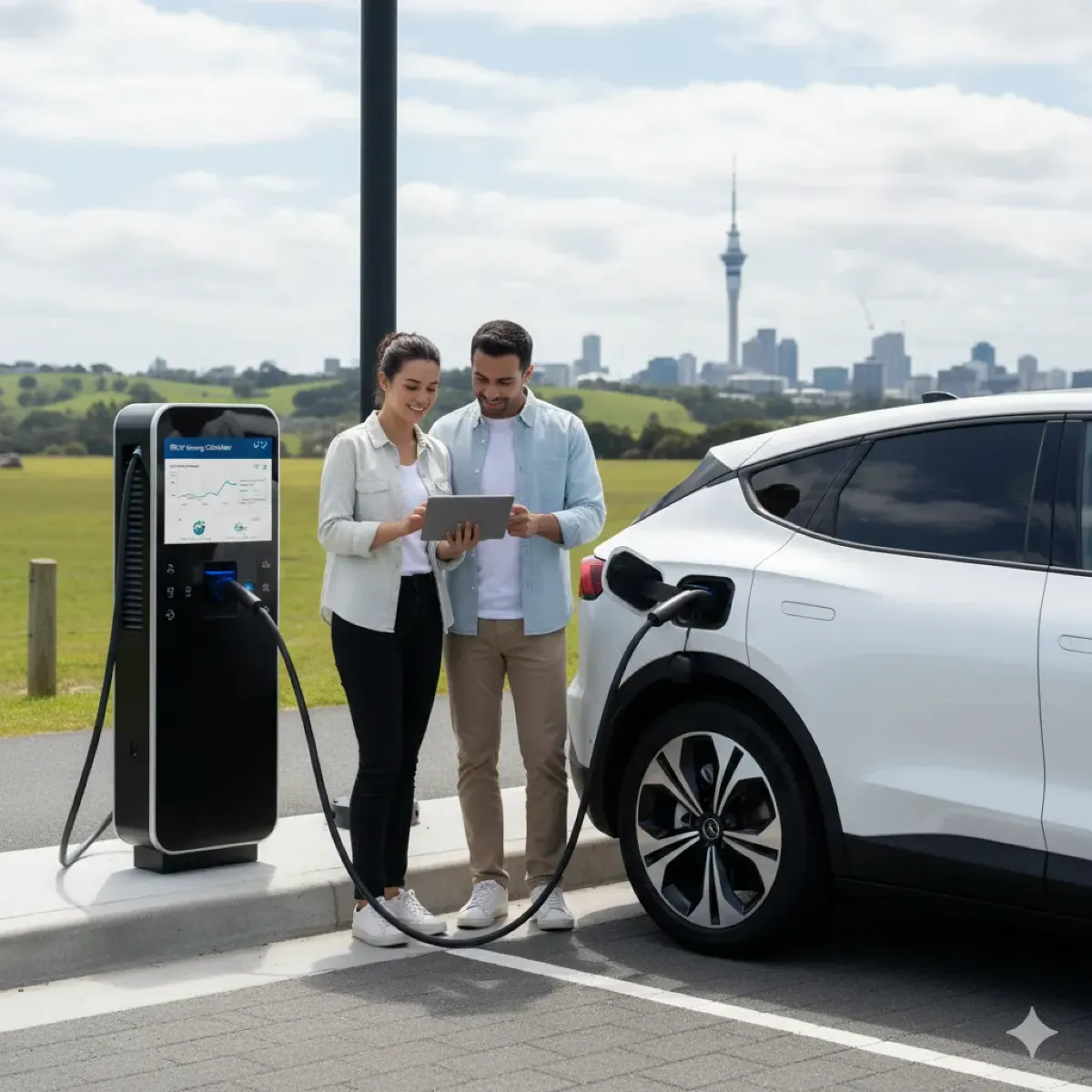
Picture this: you're cruising down State Highway 1 from Auckland to Wellington, no fuel stops needed, just the hum of electric motors and stunning Kiwi scenery whizzing by. With battery tech leaping f...
The Lifetimes NZ editorial team curates, fact-checks, and updates guides on personal finance, property, health, immigration, legal, business, and lifestyle topics relevant to Lifetimes NZ readers. Articles are produced with AI assistance and reviewed by the editorial team before publication.
Picture this: you're cruising down State Highway 1 from Auckland to Wellington, no fuel stops needed, just the hum of electric motors and stunning Kiwi scenery whizzing by. With battery tech leaping forward and charging stations popping up like mushrooms after rain, 2026 feels like the tipping point for electric vehicles (EVs) in New Zealand. But is it finally time to ditch the petrol pump?
We've crunched the latest numbers, chatted with Kiwi drivers, and scoured official stats to bring you the real deal. From sales surges to government perks and home charging hacks, here's everything you need to know if you're eyeing that switch in 2026.
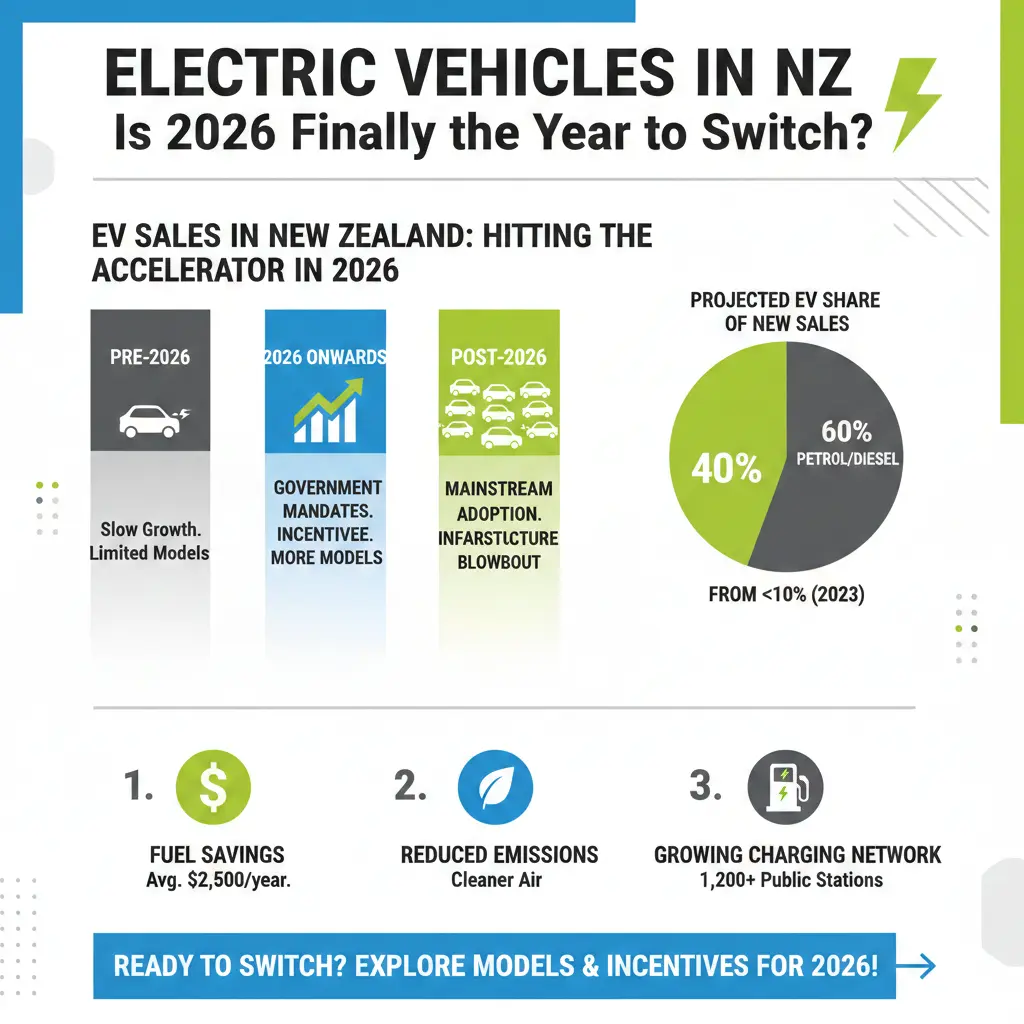
EV Sales in New Zealand: Hitting the Accelerator in 2026
Electric vehicle adoption in NZ has been building momentum, and 2026 is shaping up as a breakout year. In 2025, battery electric vehicles (BEVs) snagged a steady 5.6% market share with 7,706 sales, showing resilience amid global supply hiccups. Early 2026 data points to even stronger growth, mirroring trends across the ditch where BEVs hit 8.4% of new car sales in January alone.
Official NZ stats from the International Energy Agency (IEA) track yearly EV sales by type, revealing a steady climb in both BEVs and plug-in hybrids (PHEVs). The Ministry of Transport's fleet data shows light vehicles (under 3,500kg GVM) leading the charge, with EVs now clearly tracked in the Motor Vehicle Register since 2017 updates.
Top-Selling EVs Right Now
BYD is storming the charts, outselling even Tesla in some months, thanks to affordable models like the Atto 3. Tesla's Model Y remains a Kiwi favourite for its range and autopilot features, while PHEVs like those from Mitsubishi hold steady for wary drivers.
- BYD Seal and Atto 3: Dominating with value pricing and solid ranges over 400km.
- Tesla Model Y: Top pick for families, despite a 30% sales dip in early 2026—refresh models incoming.
- Geely EX5: Gaining traction with over-the-air updates.
EV Database NZ lists 84 models and 195 variants available, with tools to compare range, price, and efficiency. Median prices are dropping, making EVs competitive with mid-range petrol cars.
Why 2026 Could Be Your Year: The Big Advantages
New Zealand's clean energy grid—over 80% renewable—makes EVs a no-brainer for cutting emissions. Transport accounts for half our carbon footprint, mostly from roads, so switching helps us all breathe easier.
Lower Running Costs That'll Save You Thousands
Electricity is cheaper than petrol: expect 3-5 cents per km versus 15-20 cents for a similar petrol car. Use EVDB's running cost calculator to crunch your numbers—many Kiwis save $1,500+ yearly.
Regen braking recaptures energy on Kiwi hills, boosting efficiency. Factor in no oil changes, fewer brakes, and you're laughing.
Road User Charges (RUC) and Clean Car Perks
Zero-emission BEVs pay RUC from 2024 at $76 per 1,000km (light vehicles), but it's still cheaper than petrol equivalents. No Road User Charges until 100,000km for many, and rebates may evolve—check NZTA for 2026 updates.
PHEVs qualify for some incentives too, bridging the gap for longer trips.
Better Range for Kiwi Roads
2026 models boast 400-600km real-world range, perfect for Auckland to Rotorua or Christchurch to Queenstown. EVDB's Real Range Calculator adjusts for NZ conditions like wind and cold.
Charging Up: Infrastructure That's Actually Usable
We've come a long way from sparse chargers. NZTA's EVRoam maps thousands of public stations in real-time, from ultrafast DC units to AC plugs.
Home Charging: The Smart Kiwi Setup
- Install a Level 2 wall charger ($800-$1,500)—EECA rebates might apply.
- EVDB's Home Charging Calculator estimates: overnight top-up for most daily drives (under 50km average Kiwi commute).
- Pair with solar panels and KiwiSaver for off-peak rates via your power co-op.
Public and Road Trip Ready
Ultrafast chargers (350kW) now dot motorways, adding 200km in 15 minutes. BYD's new 1.5MW tech hints at future speed. Apps like PlugShare and EVRoam make planning a breeze—Wellington to Dunedin is now EV-feasible.
Government's cross-agency plan ensures expansion, with EECA consulting on public networks.
Overcoming Common Concerns: Range Anxiety? Sorted
Winter range drops 20-30%, but preconditioning and efficient tyres mitigate it. Towing? Top EVs handle 1,500-2,500kg braked.
Battery life: 8-10 year warranties cover 200,000km+. Resale values hold strong as demand surges.
2026 Forecasts: What the Experts Say
Statista predicts steady PHEV growth, while BEVs accelerate toward 10-15% market share by 2030. EV Volumes forecasts optimistic NZ trends with global sales booming.
Is an EV Right for You? Quick Self-Check
- Drive under 20,000km/year? Yes.
- Home garage for charging? Perfect.
- Budget $50k-$80k? Entry models start at $40k.
- Long hauls weekly? Consider PHEV.
Test drive at dealers in Auckland, Wellington, or Christchurch—most offer free home charger assessments.
Next Steps: Make Your Switch Today
Ready to join the 100,000+ EVs on NZ roads? Start with EVDB.nz to compare models, plug into NZTA's charger map, and book test drives. Chat with WINZ or energy advisors for rebates, and calculate savings—your wallet and whenua will thank you. 2026 isn't just a year; it's our EV revolution. Kia ora to cleaner drives ahead!
Frequently Asked Questions
Sources & References
- 1
-
2
Electric vehicles | NZ Transport Agency — nzta.govt.nz
-
3
January 2026 BEV Sales Data: BYD Continues to Dominate — www.youtube.com
-
4
What are New Zealand's top EVs and PHEVs right now? The numbers are in — www.drivencarguide.co.nz
- 5
-
6
Fleet statistics | Ministry of Transport — www.transport.govt.nz
-
7
EV Volumes - 2025 EV Statistics, Sales & Market Forecasts — ev-volumes.com
-
8
Plug-in Hybrid Electric Vehicles - New Zealand | Forecast - Statista — www.statista.com
Related Articles

What is My Car Worth? How to Price Your Vehicle for a Fast Sale
Ever wondered what is my car worth? Whether you're eyeing up a trade-in, planning a private sale, or just curious about your pride and joy's value in today's market, getting the price right is key to...

Buying a Used Car in NZ: The Ultimate Pre-Purchase Checklist
Thinking about snagging a bargain on the second-hand market? In New Zealand, where Kiwi roads are full of trusty used cars, getting it right can save you thousands and keep you safe on the motorways f...

The Best Used Cars for New NZ Drivers
Starting out on New Zealand's roads as a new driver is exciting, but picking the right used car can make all the difference between smooth journeys and unexpected headaches. With rising fuel costs, st...

Best Public Transport Apps for NZ Cities
Navigating New Zealand's cities doesn't have to mean wrestling with confusing timetables or missing your bus in the rain. Whether you're commuting in Auckland's hustle, exploring Wellingtons's windy s...