Buying a Used Car in NZ: The Ultimate Pre-Purchase Checklist
Thinking about snagging a bargain on the second-hand market? In New Zealand, where Kiwi roads are full of trusty used cars, getting it right can save you thousands and keep you safe on the motorways f...
Tom covers travel, lifestyle, and cost-of-living topics across New Zealand. He writes practical guides on transport, day trips, outdoor activities, and everyday life in Aotearoa.
Thinking about snagging a bargain on the second-hand market? In New Zealand, where Kiwi roads are full of trusty used cars, getting it right can save you thousands and keep you safe on the motorways from Kaitaia to Bluff.
With high new-car prices in 2026, more of us are turning to pre-loved vehicles. But dodgy odometers, hidden rust, and finance owing can turn your dream ride into a nightmare. This ultimate pre-purchase checklist arms you with practical steps, backed by official advice from Waka Kotahi and Consumer Protection, to buy smart and drive away happy.
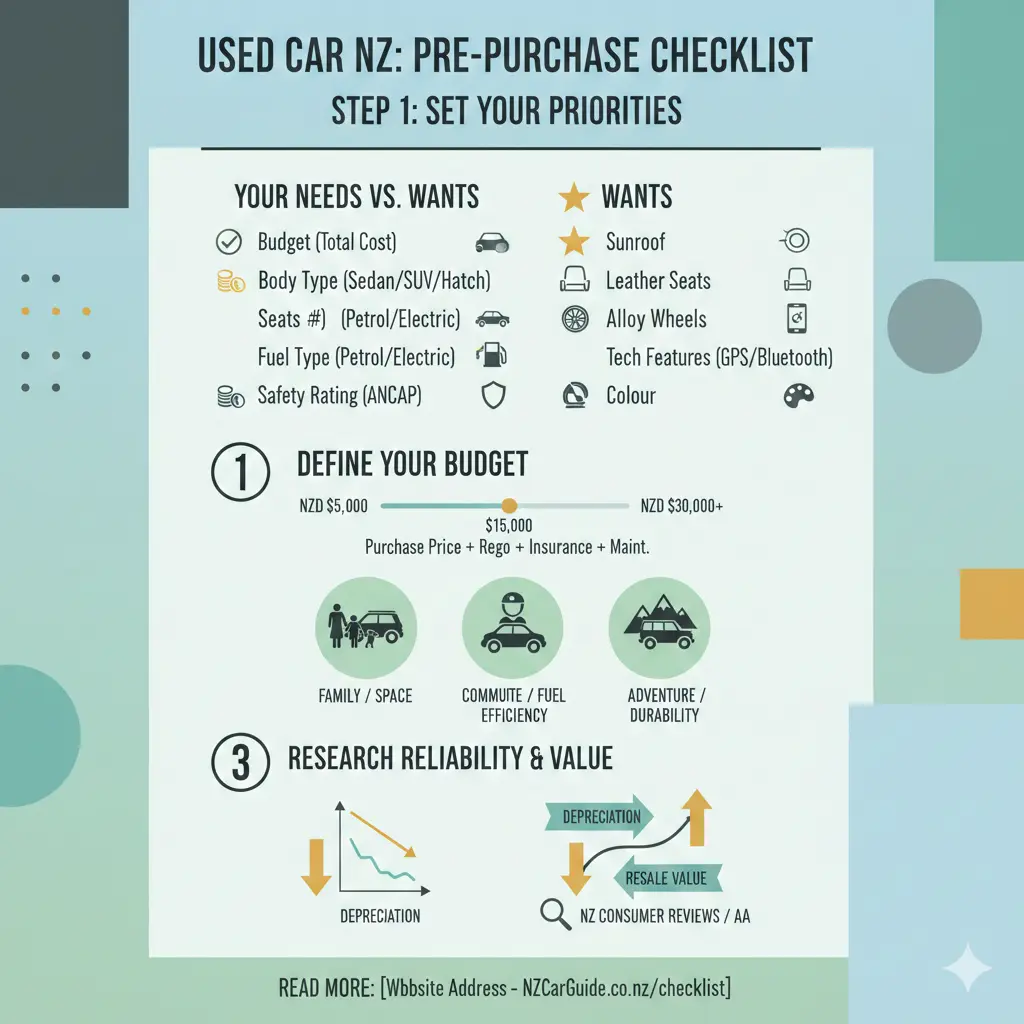
Step 1: Set Your Priorities Before the Hunt Begins
Start by figuring out what you really need. Fuel efficiency for those long commutes to work? Space for the whānau? Or an EV to dodge rising petrol costs?
- Compare makes and models: Use Rightcar NZ for safety and environmental ratings. Reliable picks like the Toyota Corolla or Mazda CX-5 top Kiwi favourites for low repair bills.
- Check reviews: Dive into Consumer NZ reports and online forums for owner satisfaction.
- Set a budget: Factor in on-road costs like rego, WoF, insurance, and potential repairs. In 2026, expect average used car prices around $20,000-$30,000 depending on age and mileage.
Private sales offer lower prices but fewer protections than dealers—no Consumer Guarantees Act coverage if things go wrong.
Private vs Dealer: Know the Difference
Buying privately? You're on your own for faults. Dealers must provide a Consumer Information Notice (CIN) detailing price, VIN, WoF expiry, and security interests. Always haggle on price, but walk away from deals insisting on cash deposits—they're a red flag.
Step 2: Verify the Car's Legal Status and History
Before laying eyes on the car, check it's legit. Scams with stolen vehicles or money owing are all too common.
- Get a Vehicle Information Report (VIR): Reveals mileage history, theft status, and damage. Essential for spotting odometer tampering.
- Check PPSR for finance: Search the Personal Property Securities Register via Companies Office to ensure no security interest (money owing).
- Stolen check: Use the New Zealand Police website.
- Match VIN and plate: Verify against the Certificate of Registration or call Waka Kotahi.
A vehicle history report is your best mate here—providers like MotorWeb offer detailed insights into accidents and write-offs.
RUC and Expiry Dates
Diesel or EV? Confirm Road User Charges (RUC) are paid up. Check WoF (must be less than one month old for sale), rego, and CoF for heavy vehicles.
Step 3: The Visual and Hands-On Inspection
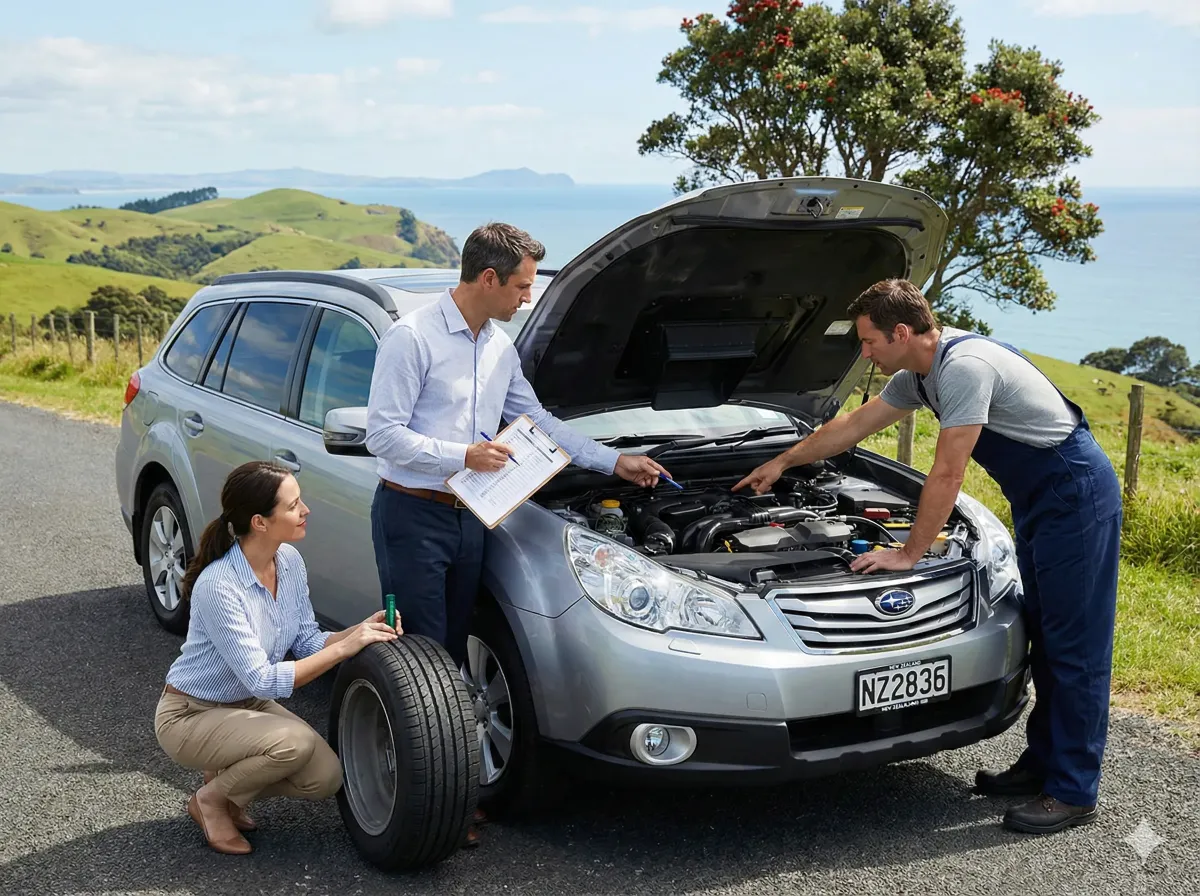
Bring a mate who knows cars, a torch, a magnet for rust, and check in daylight. High-mileage cars (over 100,000km) need extra scrutiny for engine wear and corrosion.
Exterior Checks
- Rust, bubbling paint, uneven panels, or windscreen chips.
- Tyres: Even tread, matching brands, at least 1.5mm depth.
- Lights, mirrors, and doors align properly.
Interior Scrutiny
- Damp smells or water damage (flood risk).
- Seats comfortable? Test all electrics: windows, AC, radio, sunroof.
- Odometer realistic? Expect 15,000km/year—query low mileage.
Under the Bonnet
Look for leaks, cracks, or wear. Check fluids: oil (not milky), coolant, brake fluid. Ask for service history and last WoF report.
"Ask about previous water damage—for used EVs, get a battery state of health (SOH) test."
Step 4: Master the Test Drive
Don't skip this—insure yourself first if private sale. Test on hills, motorways, and corners.
- Listen for odd noises, squeaks, or vibrations.
- Brakes firm? No pulling? Acceleration smooth?
- Handle like new? No burning smells or fumes.
Questions to fire at the seller:
- Service history? Previous owner? Accidents?
- Faults with features? Warranty details? What's included in the price?
Step 5: Get a Professional Pre-Purchase Inspection
Even if you're handy, book an expert. VTNZ or AA specialists check what you can't—brakes, suspension, electronics. Costs $150-$300 but saves fortunes.
For EVs, verify battery SOH and charging cable standards. Insist on this before signing.
Step 6: Negotiate, Finance, and Seal the Deal
Haggle based on inspection findings. Calculate true cost: add insurance (compare via Canstar), potential WoF fixes.
Dealer Specifics
Review the CIN for total price including GST and on-roads. No doubts? Don't sign. Watch for inflated prices on "interest-free" deals.
Financing Tips
Check your credit score (average 700 in 2026). Use Sorted.org.nz for loan calculators. Avoid unnecessary add-ons like extended warranties unless needed.
Private buy? Notify Waka Kotahi of ownership change immediately via their site.
Next Steps to Drive Away Confidently
Tick off this checklist, and you're set for a reliable ride. Print it out, hit Trade Me or Facebook Marketplace, and remember: if it feels off, walk away. Happy hunting, Kiwis—safe travels on our beautiful roads!
Frequently Asked Questions
Sources & References
-
1
Buying a Used Car: What Should You Include in Your Checklist? — canstar.co.nz — www.canstar.co.nz
-
2
The Ultimate Guide to Buying a Used Car in New Zealand — moneyhub.co.nz — www.moneyhub.co.nz
-
3
Car buying checklist | Trade Me Motors — trademe.co.nz — www.trademe.co.nz
- 4
-
5
Before buying a used car - Consumer Protection — consumerprotection.govt.nz — www.consumerprotection.govt.nz
-
6
Essential Paperwork Required When Buying a Car in New Zealand — onlycars.co.nz — www.onlycars.co.nz
-
7
How to buy a new or used car - Consumer NZ — consumer.org.nz — www.consumer.org.nz
-
8
Car Buyer's Guide | 9 Steps to Buying a Great Used Car - MotorWeb — motorweb.co.nz — www.motorweb.co.nz
-
9
What to consider when buying a 2nd hand car - Enterprise Cars — enterprisecars.co.nz — www.enterprisecars.co.nz
- 10
Related Articles

What is My Car Worth? How to Price Your Vehicle for a Fast Sale
Ever wondered what is my car worth? Whether you're eyeing up a trade-in, planning a private sale, or just curious about your pride and joy's value in today's market, getting the price right is key to...
Electric Vehicles in NZ: Is 2026 Finally the Year to Switch?
Picture this: you're cruising down State Highway 1 from Auckland to Wellington, no fuel stops needed, just the hum of electric motors and stunning Kiwi scenery whizzing by. With battery tech leaping f...

The Best Used Cars for New NZ Drivers
Starting out on New Zealand's roads as a new driver is exciting, but picking the right used car can make all the difference between smooth journeys and unexpected headaches. With rising fuel costs, st...
Best Public Transport Apps for NZ Cities
Navigating New Zealand's cities doesn't have to mean wrestling with confusing timetables or missing your bus in the rain. Whether you're commuting in Auckland's hustle, exploring Wellingtons's windy s...