Importing a Used Car to NZ: Complete Process

Ever dreamed of cruising Kiwi roads in that unique used car from overseas? Importing a used car to New Zealand can bring your vision to life, but it's a process packed with regulations, costs, and pap...
The Lifetimes NZ editorial team curates, fact-checks, and updates guides on personal finance, property, health, immigration, legal, business, and lifestyle topics relevant to Lifetimes NZ readers. Articles are produced with AI assistance and reviewed by the editorial team before publication.
Ever dreamed of cruising Kiwi roads in that unique used car from overseas? Importing a used car to New Zealand can bring your vision to life, but it's a process packed with regulations, costs, and paperwork. Whether you're a returning Kiwi, new migrant, or enthusiast eyeing a classic, understanding the complete process ensures you avoid costly pitfalls and get your ride road-legal swiftly.
In 2026, with updated Clean Car Standards and stricter emissions rules, preparation is key. This guide walks you through every step, from eligibility checks to registration, with practical tips tailored for Kiwis. You'll learn how to navigate Waka Kotahi NZ Transport Agency requirements, Customs duties, and more, saving time and money.
Why Import a Used Car to NZ?
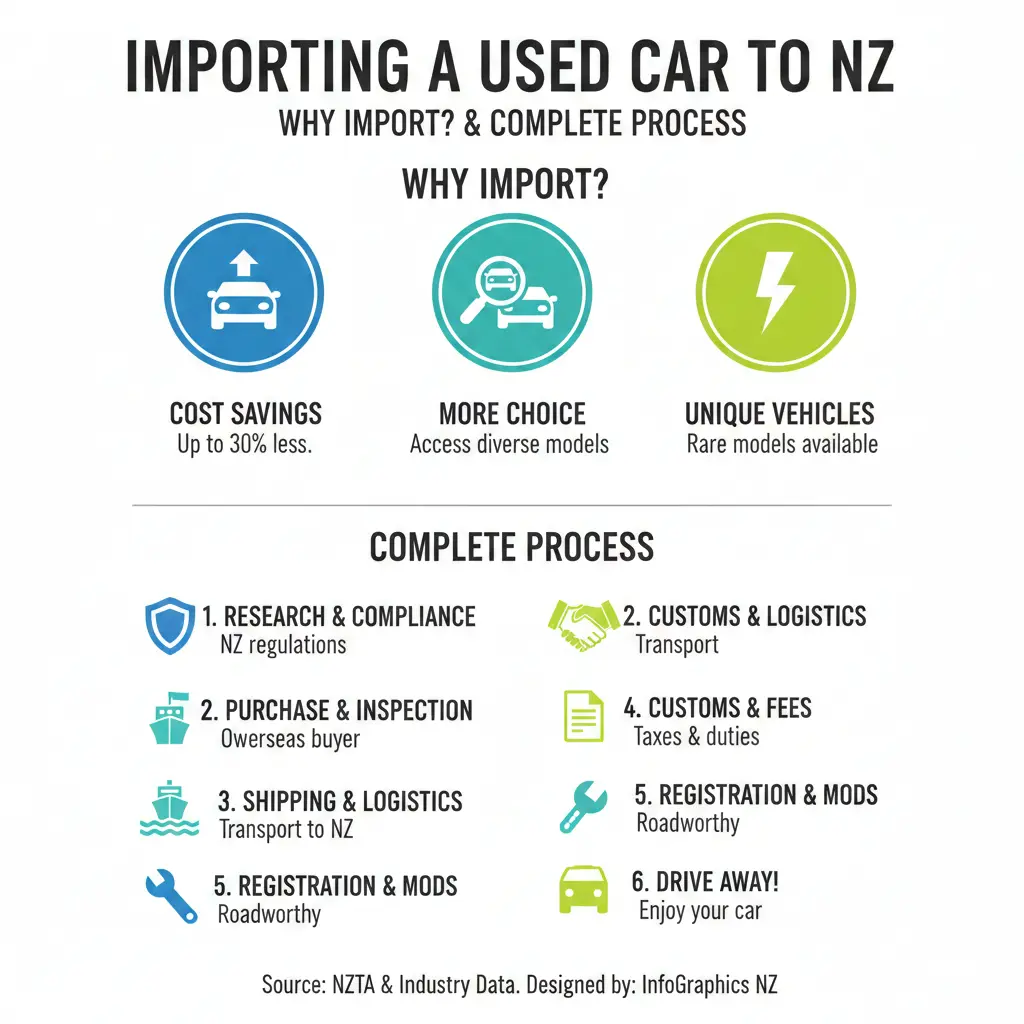
Bringing in a used vehicle offers access to models unavailable locally, like rare JDM cars or US muscle classics. It's popular among returning residents who've owned their car overseas for 12+ months and new immigrants meeting residency criteria. However, not all cars qualify—right-hand drive is generally required for passenger vehicles, and emissions must align with the Clean Car Programme.
Costs can range from $5,000 to $20,000+ depending on shipping origin, vehicle value, and modifications, but exemptions exist for immigrants and tourists with carnets. Always weigh this against buying locally to ensure it's worthwhile.
Step 1: Check Eligibility and Compliance Standards
Before purchasing, verify your car meets New Zealand's strict vehicle standards. Use an entry certifier appointed by Waka Kotahi to assess compliance early—it's not mandatory but highly recommended to avoid rejection.
Key Eligibility Criteria
- Ownership and Use: For exemptions, own and register the vehicle overseas for 12+ months for personal use.
- Residency Rules: Returning Kiwis or permanent residents must have lived abroad 21+ months. Immigrant vehicles can't be sold for 24 months.
- Safety and Emissions: Comply with frontal impact, pedestrian safety, and emissions under the Clean Car Standard. Credit transfers between new/used sectors start in 2026.
- Right-Hand Drive: Preferred for passenger cars; left-hand drive may need special approval.
- Off-Road or Classics: No restrictions for collections or non-road use.
Search Waka Kotahi's vehicle standards database or consult an entry certifier for your model's evidence list. Non-compliant cars may require costly mods.
Temporary Imports for Tourists
Tourists can import duty-free for up to 12 months with a Carnet de Passages (car passport) from an FIA club. Pay a refundable deposit, notify NZTA, and export the vehicle— no selling allowed.
Step 2: Gather Essential Documentation
Paperwork is your gateway—miss it, and your car faces refusal. Start collecting now.
Required Documents
- Vehicle purchase invoice.
- Original registration/title from origin country.
- Bill of lading from shipper.
- Proof of ownership and 12-month use (for exemptions).
- Evidence of compliance (e.g., emissions certificates).
- Passport/residency proof for importers.
For entry certification: V5 inspection doc, roadworthiness proof, and Warrant of Fitness equivalent. Hire a freight forwarder specialising in vehicles for guidance—they handle MPI and Customs nuances.
Step 3: Arrange Shipping to New Zealand
Choose between Roll-on/Roll-off (RoRo) for cost savings or Full Container Load (FCL) for security. RoRo is cheaper but exposes cars to elements; FCL allows personal effects but bans fuel and costs more.
Shipping Options and Costs (2026 Estimates)
| Origin | RoRo Cost | FCL Cost | Transit Time |
|---|---|---|---|
| UK/Europe | $2,000–$4,000 | $4,000–$6,000 | 6–8 weeks |
| USA | $1,500–$3,000 | $3,500–$5,000 | 4–6 weeks |
| Australia | $1,000–$2,000 | $2,500–$3,500 | 1–2 weeks |
Note: Costs exclude insurance, duties, and clearance. Use specialists like Method Global or Taurus Logistics for door-to-door. Drain fuel, remove batteries, and clean thoroughly for MPI biosecurity.
Step 4: Border Clearance – Customs, MPI, and Biosecurity
Upon arrival (Auckland, Wellington, or Lyttelton ports), your vehicle undergoes checks.
Customs Duties and Taxes (2026 Rates)
- GSR (Goods and Services Tax): 15% on vehicle value + shipping + insurance.
- Tariff Duty: 0% for most cars from trade partners (e.g., Australia, Japan); up to 27.5% otherwise.
- ACC Levy: Paid on registration (~$500–$1,000 annually).
- MPI Biosecurity: Cleaning certificate + inspection ($200–$500); risk of quarantine if dirty.
Total clearance: $2,000–$10,000. Tourists with carnets skip duties but pay MPI fees. Use a customs broker for smooth entry into the Customs system.
Step 5: Entry Certification and Repairs
Post-clearance, book an entry certifier for inspection. They'll check condition, assign a VIN if needed, and issue MR2A form + Warrant of Fitness.
Common Repairs Needed
- Emissions upgrades.
- Safety restraints.
- Speedo conversion to km/h.
- Child restraint anchors.
Fees: $300–$800 + repairs ($1,000–$5,000). Major damage? Go to a repair certifier first.
Step 6: Register and Licence Your Vehicle
Take MR2A, cert docs, and proof of insurance to an NZTA agent. Pay registration ($20–$50), licensing (rego ~$300/year), and ACC levy.
Your car is now legal! Schedule regular WoF and maintain insurance—compulsory third-party via licensed providers.
Costs Breakdown: Budgeting for Your Import
Expect $10,000–$30,000 total. Here's a realistic 2026 breakdown for a $15,000 US sedan:
| Item | Estimated Cost |
|---|---|
| Shipping (RoRo from US) | $2,500 |
| Customs Duty/GSR | $3,000 |
| MPI/Biosecurity | $400 |
| Entry Cert + Repairs | $2,500 |
| Rego/Licensing/ACC | $1,200 |
| Insurance (1st year) | $800 |
| Total | $10,400 |
Factor IRD GST implications if reselling later. Use online calculators from Waka Kotahi.
Practical Tips for Kiwis Importing Smoothly
- Hire pros: Shipping agent, customs broker, entry certifier—saves headaches.
- Research model: Check NZTA's importer database for past successes.
- Budget extra 20% for surprises.
- Clean meticulously: MPI fines for dirt are steep.
- Insurance early: Cover transit and local use.
- Track Clean Car updates: 2026 exemptions for disability vehicles.
Next Steps to Get Your Car on Kiwi Roads
Start with Waka Kotahi's importer checklist and contact an entry certifier today. Engage a specialist forwarder for quotes, and crunch numbers with a financial advisor—imports impact your KiwiSaver or IRD filings if financed. Drive safe, and enjoy the journey!
Disclaimer: This is general advice. Consult professionals for personalised financial, tax, or legal guidance. Rates current as of 2026; check official sites for updates.
Frequently Asked Questions
Sources & References
-
1
How to Import a Car into New Zealand - Canstar — www.canstar.co.nz
-
2
Guide to Importing Your Vehicle into New Zealand — www.mmnz.biz
-
3
How to Import Vehicles into New Zealand - Method Global Logistics — methodglobal.com
- 4
-
5
Importing Cars to New Zealand - Taurus Logistics — tauruslogistics.co.nz
-
6
Importing a used vehicle - NZ Transport Agency Waka Kotahi — nzta.govt.nz
- 7
-
8
New Zealand Car Import Guide - West Coast Shipping — www.wcshipping.com
- 9
Related Articles

Working Multiple Jobs NZ: Tax and Legal Considerations
Juggling multiple jobs can boost your income, but it's crucial to understand the tax implications and legal requirements that come with working more than one role in Aotearoa. Whether you're a contrac...

Name Changes NZ: Legal Process and Costs
Considering a fresh start with a new name? Whether it's after marriage, divorce, or simply embracing a personal transformation, changing your name in New Zealand is straightforward but requires follow...

Holiday Home Tax Rules NZ: Private Use and Rental
Own a bach in Coromandel or a holiday home in Queenstown? You're not alone—many Kiwis cherish these escapes, but renting them out while enjoying personal use can trip you up on tax rules. Getting the...

Industry Bodies and Professional Associations NZ
Whether you're launching a business, advancing your career, or navigating financial regulations, industry bodies and professional associations in New Zealand offer invaluable support. These organisati...