Personal Legal Guidance: When Do You Need a Lawyer?

Imagine you're facing a sudden redundancy notice at work, or a family dispute erupts over a will, leaving you unsure of your rights. These moments can feel overwhelming, but knowing when to seek perso...
Sarah covers personal finance, tax, and KiwiSaver topics for Lifetimes NZ. She focuses on making money management straightforward and practical for everyday Kiwis.
Imagine you're facing a sudden redundancy notice at work, or a family dispute erupts over a will, leaving you unsure of your rights. These moments can feel overwhelming, but knowing when to seek personal legal guidance can protect your interests and bring clarity. In New Zealand, where our legal system blends common law with unique statutes like the Property (Relationships) Act, timely advice from a qualified lawyer often makes all the difference.
We'll explore common situations where Kiwis need a lawyer, how to find the right one, what to expect in costs, and free options available. Whether you're dealing with employment issues amid 2026's Employment Relations Act changes or navigating property disputes, this guide equips you with practical steps tailored to our local context.
Common Situations Where You Need a Lawyer in New Zealand
Not every problem requires a lawyer, but certain scenarios demand professional input to avoid costly mistakes. Here's when personal legal guidance becomes essential.
Employment Disputes and Redundancy
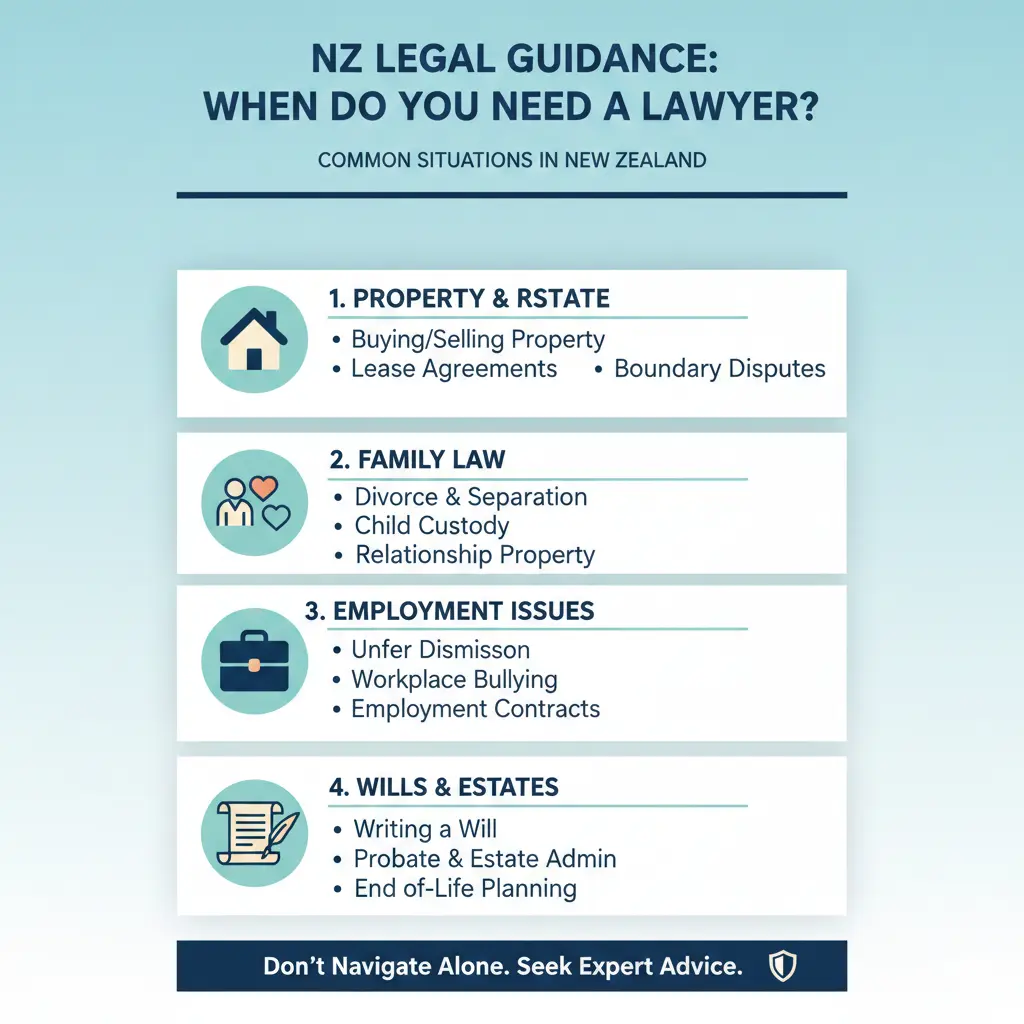
With updates to the Employment Relations Act and Holidays Act in 2026, including pay secrecy protections, workplace issues are evolving. If you've received a redundancy notice without proper consultation, or face unfair dismissal, consult a lawyer immediately. They can review your employment agreement, negotiate settlements, or represent you at the Employment Relations Authority (ERA).
For instance, if your employer fails to provide required notice periods or penalises you for requesting information, legal advice ensures compliance with 90-day trial period rules and good faith obligations. In 2026, HR leaders emphasise proactive preparation for these changes, making early legal input crucial for employees too.
Family Law Matters: Separation, Custody, and Wills
Separating couples often need guidance under the Property (Relationships) Act 1976, which equalises relationship property unless a contracting-out agreement exists. Lawyers help divide assets fairly, especially with KiwiSaver and family homes involved. For child custody, they ensure Parenting Orders prioritise the child's welfare per the Care of Children Act 2004.
Drafting or contesting a will? Without legal advice, ambiguous terms can lead to disputes. If you're administering an estate, a lawyer navigates the Administration Act 1969 and probate processes at the High Court.
Property Transactions and Disputes
Buying or selling a home? Engage a lawyer for LIM reports, title searches, and contract reviews under the Land Transfer Act 2017. In 2026, with rising interest rates stabilising, disputes over leaky homes or boundary issues remain common—lawyers handle these via the Weathertight Homes Resolution Service or District Court claims.
Business and Entrepreneur Challenges
New entrepreneurs should seek a lawyer early for shareholder agreements, IP protection, and compliance with the Companies Act 1993. As one expert notes, engaging counsel at formation prevents later conflicts.
If facing ACC disputes or IRD audits, specialists ensure your claims or returns align with current rules, like 2026 KiwiSaver withdrawal thresholds.
Criminal Charges or Traffic Offences
Even minor charges under the Land Transport Act 1998, like drink-driving, warrant duty lawyer schemes or private counsel. For serious matters, legal aid covers representation in District or High Courts.
How to Find the Right Lawyer for Your Needs
Finding a trustworthy lawyer starts with verifying credentials. Only those with a current practising certificate from the New Zealand Law Society (NZLS) can call themselves lawyers. Search the public Register of Lawyers on the NZLS website.
Steps to Choose a Lawyer
- Identify expertise: Match the lawyer's specialisation to your issue—family, employment, property, etc. Check their website or ask directly.
- Get recommendations: Ask whānau, friends, or colleagues for referrals.
- Shop around: Contact 2-3 lawyers to discuss fees and experience. Some offer free initial consultations.
- Prepare questions: Inquire about timelines, costs, and required documents like ID for Anti-Money Laundering checks.
For employment specialists, look to firms experienced in 2026 law changes. Regional demand is growing, with Auckland legal jobs up 11.7% year-on-year as of late 2025.
What to Expect: Costs and Free Legal Services
Typical Costs in 2026
Legal fees vary: hourly rates range from $300-$600+ for juniors to seniors. Fixed fees suit simple matters like wills ($500-$1,500). Employment advice might cost $2,000-$5,000 for ERA hearings. Always get a written cost estimate under the Lawyers and Conveyancers Act 2006.
In a robust 2026 legal market, in-house and private practice roles reflect steady demand.
Free and Low-Cost Options for Kiwis
- Community Law Centres: Free advice nationwide; find your local via communitylaw.org.nz.
- Duty Lawyer Scheme: Free for first court appearances in criminal and family courts.
- Legal Aid: Means-tested via Ministry of Justice; covers eligible cases.
- CAB (Citizens Advice Bureau): Initial guidance and referrals.
- Employment Mediation: Free via MBIE before ERA.
These services ensure access regardless of income, aligning with our equitable system.
Preparing for Your First Lawyer Appointment
Come organised: bring ID, relevant documents (contracts, emails), and a timeline of events. Note questions on fees, strategy, and outcomes. Expect 30-60 minutes for the initial meeting.
Post-appointment, confirm engagement in writing, including costs and scope.
Next Steps: Take Control Today
Don't wait for problems to escalate—assess your situation against these scenarios and contact a lawyer or free service promptly. Use the NZLS lawyer finder, prepare your documents, and secure that initial appointment. With the right personal legal guidance, you'll navigate New Zealand's laws confidently, protecting your future.
For urgent matters, call Community Law on 0800 000 435 or visit lawsociety.org.nz.
Frequently Asked Questions
Sources & References
-
1
Admission Dates | New Zealand Law Society — www.lawsociety.org.nz
-
2
Best Lawyers Research Timeline in New Zealand — www.bestlawyers.com
-
3
NZ Employment Law 2026 Forecast - YouTube — www.youtube.com
-
4
Choosing a lawyer and your first appointment - NZLS — www.lawsociety.org.nz
-
5
The Future of Legal Careers in New Zealand - Stellar Recruitment — www.stellarrecruitment.com
-
6
New Zealand Legal Market Overview 2026 - Robert Walters — www.robertwalters.co.nz
-
7
When To Hire An Employment Lawyer In New Zealand | Sprintlaw NZ — sprintlaw.co.nz
-
8
Move your legal career around the globe with Taylor Root — www.taylorroot.com
-
9
New entrepreneur? When is the right time to engage a lawyer? — www.mondaq.com
Related Articles

Scam Alert: How to Stay Safe on NZ Online Marketplaces
Picture this: you're scrolling Facebook Marketplace for a bargain on a second-hand lawnmower, spot a deal too good to pass up, and before you know it, your bank's alerting you to suspicious activity....

5 NZ Laws Changing in 2026 That You Haven’t Heard Of
Ever scrolled through your news feed and wondered if you're missing out on the quiet legal shifts that could change how you work, shop, or even camp in Aotearoa? In 2026, five under-the-radar law chan...

Inheritance & Wills: A Practical Guide to Protecting Your NZ Estate
Imagine this: you've spent decades building a life in Aotearoa—your family home in Auckland, a KiwiSaver nest egg, maybe a bach on the Coromandel. But without a solid will or estate plan, it could all...

Tenancy Disputes and Legal Aid: Getting Help
Imagine coming home to a leaky roof after a heavy Auckland downpour, only to have your landlord brush off your urgent repair request. Or as a landlord, discovering unexplained damage to your property...