Inheritance & Wills: A Practical Guide to Protecting Your NZ Estate

Imagine this: you've spent decades building a life in Aotearoa—your family home in Auckland, a KiwiSaver nest egg, maybe a bach on the Coromandel. But without a solid will or estate plan, it could all...
Sarah covers personal finance, tax, and KiwiSaver topics for Lifetimes NZ. She focuses on making money management straightforward and practical for everyday Kiwis.
Imagine this: you've spent decades building a life in Aotearoa—your family home in Auckland, a KiwiSaver nest egg, maybe a bach on the Coromandel. But without a solid will or estate plan, it could all unravel into family disputes or unintended tax hits after you're gone. In New Zealand, where $1.6 trillion in intergenerational wealth is set to transfer by 2050, getting your inheritance and wills sorted isn't just smart—it's essential for protecting your legacy.
Whether you're a young family in Wellington or a retiree in Christchurch, this practical guide breaks down everything you need to know about wills, intestacy rules, taxes, and trusts under 2026 laws. We'll cover actionable steps, real Kiwi examples, and official resources to help you safeguard your estate today.
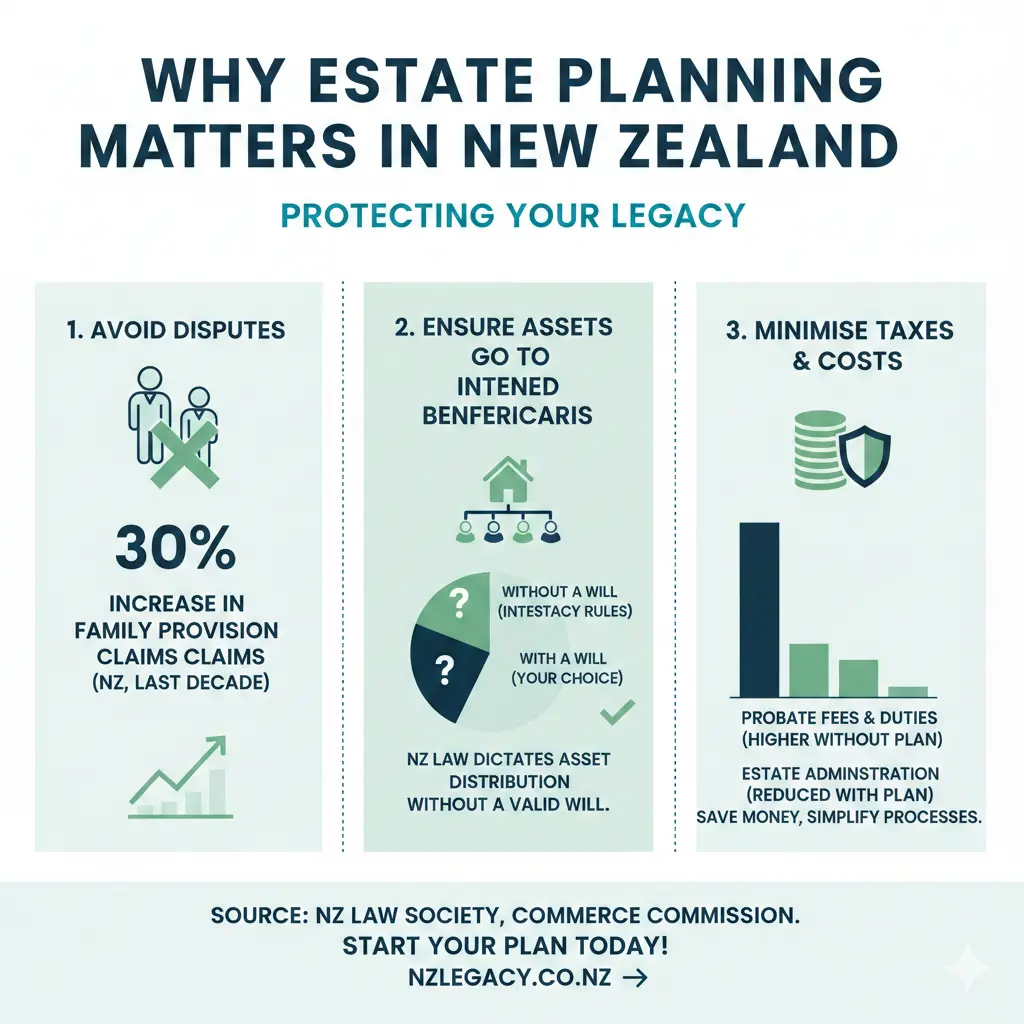
Why Estate Planning Matters in New Zealand
New Zealand's lack of inheritance tax makes us lucky compared to many countries—there's no estate duty or gift tax on what you pass on. But only about 50% of adult Kiwis have a will, leaving the rest vulnerable to rigid intestacy laws that might not match your wishes. With rising property values and complex family structures, poor planning can lead to Family Court battles or unexpected tax bills under the bright-line test.
Proactive steps like drafting a will, setting up enduring powers of attorney (EPAs), or using a family trust ensure your assets go where you want, minimise disputes, and protect against relationship property claims. As of late 2025, the probate threshold sits at $40,000, meaning smaller estates can skip High Court involvement.
The Big Wealth Transfer Ahead
Research from Public Trust and JBWere forecasts intergenerational inheritances jumping from $27 billion in 2024 to $1.6 trillion by 2050. That's your hard-earned assets—family homes, farms, investments—moving to the next generation. Without planning, rigid laws kick in, potentially favouring a spouse over children from a previous relationship.
How Inheritance Works Without a Will: Intestacy Rules
If you die intestate (without a valid will), New Zealand's Administration Act 1969 dictates distribution. Spouses and children get priority, but it follows a strict formula that might not reflect your intentions.
- Spouse/partner gets the whole estate if no children, or personal chattels plus half the rest (with children sharing the other half).
- Children split equally if no spouse.
- Parents, siblings, or wider whānau may claim if no closer relatives.
This can get messy with blended families. For example, if you have kids from a prior relationship and a current partner, intestacy might leave your partner with the lion's share, sidelining your children.
Property (Relationships) Act 1976 (PRA) Complications
Married or de facto partners face a choice under the PRA: Option A (claim relationship property, forfeiting will benefits) or Option B (take what's in the will/intestacy, giving up PRA claims). Take Jack and Jill's story: after 10 years together, Jack dies owning the $750,000 family home. His will gives Jill a life interest, but without a contracting-out agreement, she must choose—potentially triggering Family Court to divide assets.
Tip: Get a prenup or contracting-out agreement early to clarify what's separate property.
Crafting a Valid Will: Your Key to Control
A will lets you exercise testamentary freedom—deciding exactly who gets what, unlike forced heirship in some countries. No forced shares for spouses or kids here, but claims can still arise.
Steps to Make Your Will
- Choose an executor: A trusted person (spouse, lawyer, or friend) to administer the estate. Name backups.
- Inventory assets: List property, bank accounts, KiwiSaver, shares, superannuation.
- Appoint guardians for minors.
- Sign and witness: Two witnesses (not beneficiaries) must watch you sign. Do it at a lawyer or use a Public Trust kit.
- Store safely: With your lawyer, Public Trust, or family—avoid the sock drawer.
Update after life events: marriage (auto-revokes prior wills unless specified), divorce, kids, or property buys. Costs? A simple will runs $300–$500; complex ones with trusts more.
Probate Process
Executors apply to the High Court for probate if assets exceed $40,000 (2025 threshold). This confirms the will's validity. Smaller estates sort via statutory declarations. Expect 4–12 weeks; fees around $200–$1,000 plus legal costs.
Family Protection Act Claims: Guarding Against Challenges
Even with a will, spouses, children, or dependents can claim under the Family Protection Act 1955 (FPA) if not "adequately provided for". Courts consider moral duty, not just financial need—recent cases like Carson show disinherited kids winning shares.
Practical tip: Include a statement explaining gifts (or non-gifts) to deter claims. Trusts can ring-fence assets from FPA reach.
No Inheritance Tax, But Watch These Traps
Great news: NZ has no inheritance, estate, or gift tax. Inheritances aren't income-taxed either. But selling inherited property? The bright-line test applies if sold within 10 years (2026 rules).
- Exemption: Your main home or if not bought for resale.
- Taxable example: Inherit subdivided land intended for profit? Sell and pay income tax on gains, as Maya did with her mum Lola's properties.
- Overseas assets: Check foreign taxes; NZ offers credits.
IRD resources: Visit ird.govt.nz for calculators and advice.
Family Trusts: Advanced Protection for 2026
Family trusts shield assets from creditors, relationship splits, or aged care costs. Governed by the Trusts Act 2019, they now last 125 years (up from 80). Trustee tax is 39%, so review if yours fits.
Setting Up a Trust
- Define settlor (you), trustees, beneficiaries (whānau).
- Draft deed with a lawyer (comply with Trusts Act).
- Transfer assets: Home, farm, shares—but watch gifting rules.
- Register with IRD.
- Review every 5 years or on life changes.
Example: Transfer your Pukekohe rural property to protect it from business risks. Costs: $2,000–$5,000 setup, plus ongoing accounting.
Enduring Powers of Attorney (EPAs)
Appoint someone to manage your affairs if dementia strikes. Property EPA and personal care EPA—register with Public Trust. Vital, as only 20% of Kiwis have them.
Practical Tips for Kiwis
- Start now: Use govt.nz checklists for wills and estates.
- KiwiSaver: nominate beneficiaries to bypass the estate.
- Joint assets: Pass automatically to survivor—good for spouses, risky for kids.
- Get help: Public Trust, community law centres, or private lawyers. WINZ/ACC won't cover estate advice.
- Digital assets: List passwords, crypto, online accounts in your will.
Next Steps to Protect Your Estate
Don't leave your legacy to chance. Inventory your assets today, book a lawyer for a will review, and check if a trust or EPA fits. Use free tools on govt.nz or contact Public Trust. Your whānau will thank you—start with one step, like downloading a will kit from communitylaw.org.nz. Secure your NZ estate now for peace of mind tomorrow.
Frequently Asked Questions
Sources & References
-
1
Inheritance tax in New Zealand (UK Guide) — wise.com
-
2
Succession law in New Zealand — www.simpsonwestern.co.nz
-
3
Inheritance and gift tax rates - PWC — taxsummaries.pwc.com
-
4
Securing Your Legacy: A Definitive Guide to Estate Planning — www.pklaw.nz
-
5
Is Your Family Trust Still Fit for Purpose in 2026? — www.shanahanslaw.co.nz
-
6
How to Set Up a Family Trust in New Zealand: A 2025 Guide — www.arnetlaw.co.nz
-
7
Best Inheritance Investment Advice in 2026 — www.compoundwealth.co.nz
-
8
Inheriting property — www.ird.govt.nz
-
9
Wills, probate and estates — www.govt.nz
Related Articles

Scam Alert: How to Stay Safe on NZ Online Marketplaces
Picture this: you're scrolling Facebook Marketplace for a bargain on a second-hand lawnmower, spot a deal too good to pass up, and before you know it, your bank's alerting you to suspicious activity....

5 NZ Laws Changing in 2026 That You Haven’t Heard Of
Ever scrolled through your news feed and wondered if you're missing out on the quiet legal shifts that could change how you work, shop, or even camp in Aotearoa? In 2026, five under-the-radar law chan...

Tenancy Disputes and Legal Aid: Getting Help
Imagine coming home to a leaky roof after a heavy Auckland downpour, only to have your landlord brush off your urgent repair request. Or as a landlord, discovering unexplained damage to your property...

Small Claims: Disputes Tribunal Guide NZ
If you've got a dispute with a business, neighbour, or another person and you're not sure how to resolve it, New Zealand's Disputes Tribunal might be your answer. It's a quick, affordable way to settl...