Retirement Villages and Aged Care Options in NZ
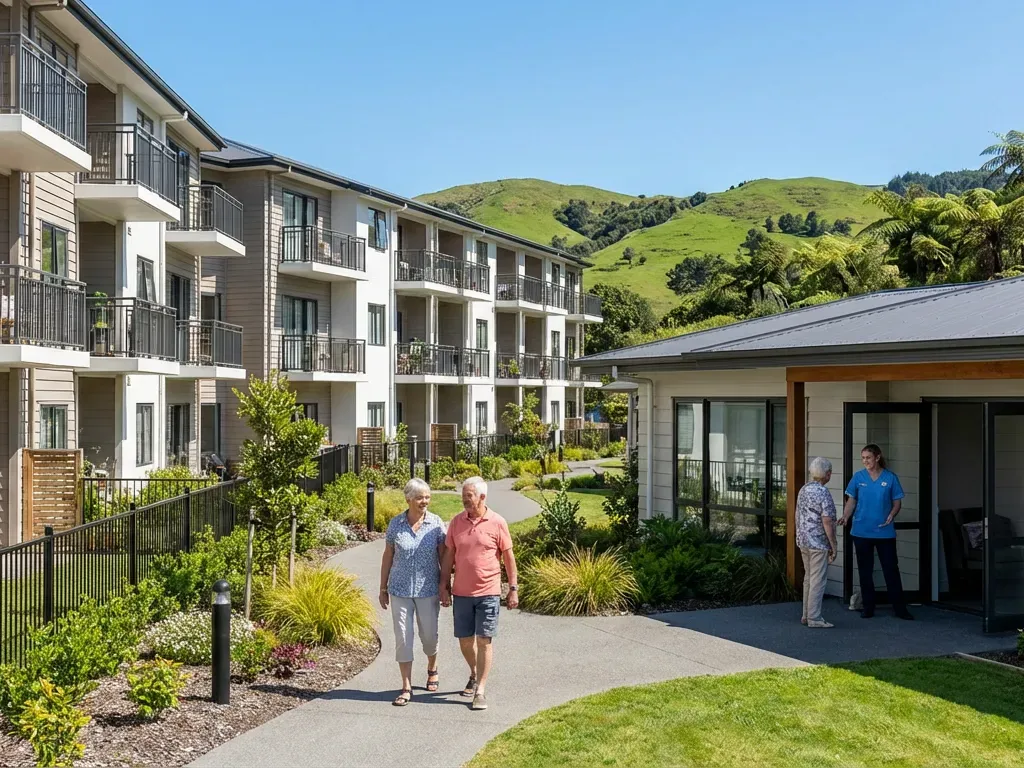
Planning your retirement living in New Zealand doesn't have to feel overwhelming. Whether you're dreaming of low-maintenance villas with like-minded neighbours or need reliable aged care support, unde...
The Lifetimes NZ editorial team curates, fact-checks, and updates guides on personal finance, property, health, immigration, legal, business, and lifestyle topics relevant to Lifetimes NZ readers. Articles are produced with AI assistance and reviewed by the editorial team before publication.
Planning your retirement living in New Zealand doesn't have to feel overwhelming. Whether you're dreaming of low-maintenance villas with like-minded neighbours or need reliable aged care support, understanding your options empowers you to choose what's right for your lifestyle and needs.
As Kiwis, we value independence, community, and security in our later years. With over 49 villages from operators like Ryman Healthcare alone, plus dozens more nationwide, retirement villages and aged care facilities offer tailored solutions from independent living to full hospital-level care. This guide breaks it down, helping you navigate costs, contracts, and key providers so you can make informed decisions.
What Are Retirement Villages in New Zealand?
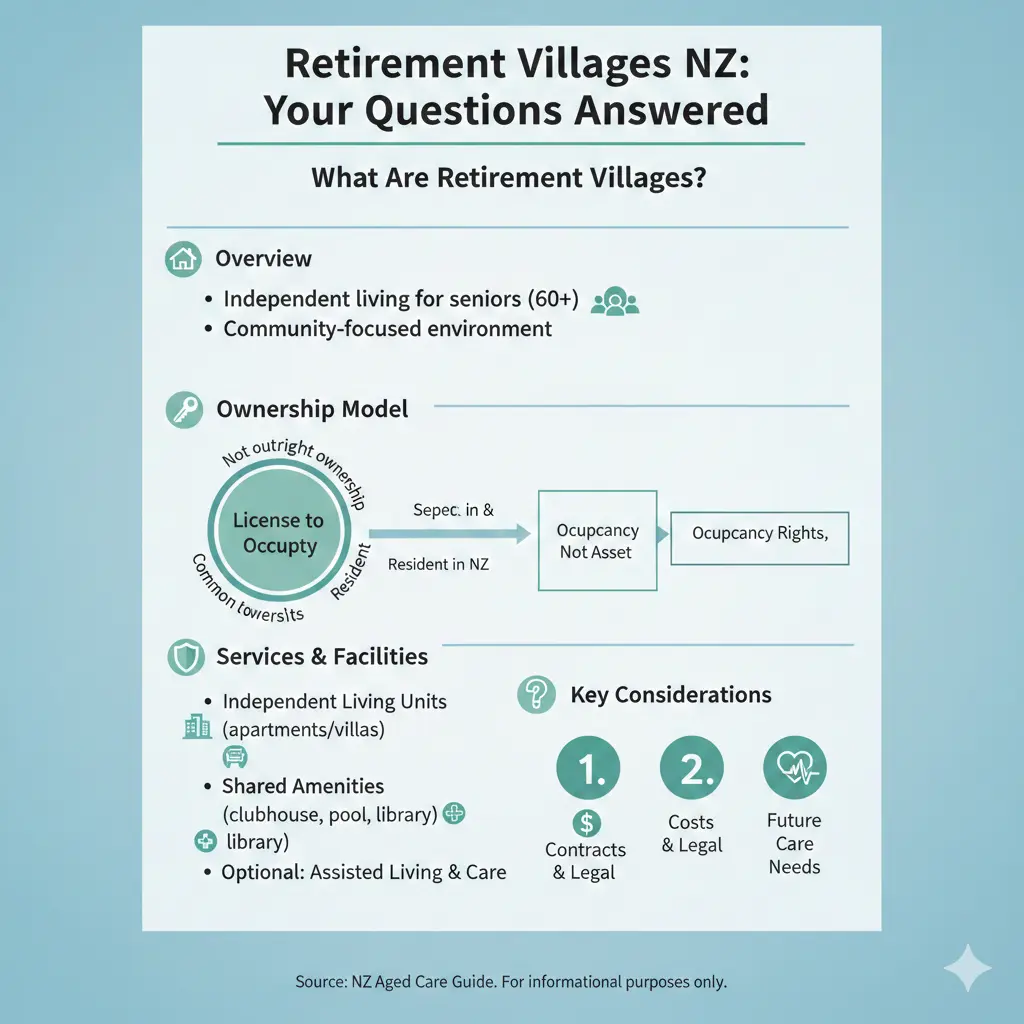
Retirement villages provide secure, community-focused living for over-70s, blending independence with on-site support. They're not traditional rest homes but vibrant communities with apartments, villas, and care options designed for evolving needs.
These villages typically include modern amenities like pools, gyms, libraries, and recreational spaces, plus 24/7 emergency systems, in-house nurses, and allied health services such as physiotherapy and podiatry. Many operators, like Summerset with 38 villages, offer villas, townhouses, apartments, and serviced units across the country.
Key Housing Options in Retirement Villages
- Independent Apartments and Villas: Low-maintenance homes for active seniors who want privacy and comfort without upkeep hassles.
- Serviced Apartments: Ideal for semi-independent living, with help for meals, laundry, and cleaning.
- Care Units: For higher needs, including rest home, hospital-level, and dementia care.
Operators like Arvida provide over 4,126 retirement units and 1,541 aged care beds across 34 communities, ensuring flexibility as your needs change.
Aged Care Options Beyond Retirement Villages
Not everyone needs a full village setup. Standalone rest homes and dementia facilities offer specialised care, often listed on directories like Eldernet, which covers hundreds of providers from Kamo Home and Village to Arvida Ashwood Park.
Rest Homes and Residential Care
Rest homes provide 24/7 support for daily activities like bathing and medication, suitable for those no longer safe at home. Hospital-level care handles complex medical needs, while secure dementia units focus on specialised support.
Examples include Nurse Maude for homecare in Canterbury or Lonsdale Total Care Centre for residential options. Many villages integrate these, like Ryman's model covering independent living to dementia care.
Home and Community Support
For those staying home longer, services like personal care from Access Community Health or day programmes from Enliven offer alternatives. Kaumātua programmes, such as those from Te Hauora O Ngāti Rārua, provide culturally sensitive support.
Major Retirement Village Operators in NZ
New Zealand's market is dominated by the "Big 6" operators, managing hundreds of villages and care facilities. Here's a quick comparison:
| Operator | Villages/Facilities | Key Features |
|---|---|---|
| Ryman Healthcare | Over 49 in NZ | Largest operator; full continuum from independent to dementia care; vertically integrated. |
| Summerset Group | More than 37 | Resort-style; scales care as needs evolve. |
| Oceania Healthcare | Over 40 locations | Strong on hospital and dementia care with lifestyle amenities. |
| Arvida | 34 communities | 4,126+ units; villas to dementia suites; flexible plans. |
| Metlifecare | 43 villages | Community-focused; sustainable designs. |
| Bupa | Multiple villages | Independent to assisted living in welcoming settings. |
Smaller players like Generus (100% NZ-owned premium villages) and Resthaven add variety. Use Eldernet's directory to find local options like Willowpark Village or Bupa Remuera.
Costs of Retirement Villages and Aged Care in NZ
Costs vary widely, but expect an upfront capital sum (often 20-40% of property value refunded on exit) plus weekly fees for maintenance and care. In 2026, average entry prices range from $400,000-$800,000 for villas, with deferred management fees (DMF) up to 30-40% of sale proceeds.
Weekly fees: $800-$1,500 for independent living; $1,200+ for care. Subsidies help:
- NZ Super + Accommodation Supplement: Up to $205/week (2026 rates) for eligible Kiwis over 65.
- Residential Care Subsidy: From Work and Income (WINZ) covers rest home/hospital costs after asset/income tests.
- KiwiSaver Withdrawals: First home withdrawal rules may apply for village purchases.
Always factor in exit fees and resale risks. Get independent financial advice from IRD or a Retirement Villages Association member.
Understanding Retirement Village Contracts
Contracts are complex—opt for occupation right agreements (ORAs) or licences to occupy (LTOs). Key protections under the Retirement Villages Act 2003 (updated 2026):
- Weekly fee caps and disclosure of all costs.
- Refund timelines (up to 12 months post-exit).
- Right to independent legal advice (often operator-funded).
Watch for DMFs, renovation contributions, and care fee escalations. Review with a lawyer; resources like the Retirement Villages Association provide templates and checklists.
Red Flags in Contracts
- Unclear exit fees over 40%.
- No cap on weekly fee increases.
- Limited resale support.
How to Choose the Right Retirement Village or Aged Care Option
Start with your needs: independent? Some help? Full care? Visit multiple sites, talk to residents, and assess vibes.
- Location: Near family, doctors, or marae? Check Auckland's Metlifecare St Andrew's or Christchurch's Merivale.
- Facilities: Pools, gyms, cultural activities?
- Care Continuum: Can you stay if needs change?
- Financial Fit: Model fees over 10 years.
- Operator Reputation: Read reviews on Eldernet; check HealthCert ratings.
Practical tip: Attend open days at Ryman or Summerset villages—many host regular events.
Next Steps for Your Retirement Journey
Ready to explore? Browse Eldernet for local listings, visit top operators like Ryman or Arvida, and consult WINZ for subsidies. Chat with current residents, crunch numbers with a financial adviser, and review contracts meticulously. The right choice means more golden years enjoying New Zealand's beaches, hikes, and whānau—securely and on your terms.
Frequently Asked Questions
Sources & References
-
1
Retirement Villages in New Zealand: A Complete Guide — www.lifecareresidences.co.nz
-
2
Retirement Villages | Aged Care - Ryman Healthcare — www.rymanhealthcare.co.nz
-
3
The Big 6 Village Operators - Aged Advisor Articles — www.agedadvisor.nz
-
4
Retirement Villas, Apartments, & More – Elderly Home Options - Arvida — www.arvida.co.nz
-
5
Rest Homes, Retirement Villages and Home Services in New Zealand — www.eldernet.co.nz
-
6
Summerset Retirement Villages - Home | Summerset — www.summerset.co.nz
-
7
Generus Living: Retirement in New Zealand — www.generus.co.nz
-
8
Bupa NZ | Care Homes | Retirement Villages — www.bupa.co.nz
Useful Tools
Related Articles

Pension Age and Residency Requirements for NZ Super
Planning your retirement in New Zealand means understanding the ins and outs of NZ Superannuation—it's the safety net many Kiwis rely on after 65. But with changing residency rules and specific age re...

The Truth About NZ Superannuation: Will It Be There When You Retire?
Picture this: you're finally hitting 65, dreaming of lazy mornings with a flat white and adventures in the Coromandel, only to wonder if NZ Superannuation—the safety net we've all counted on—will actu...