LIM Report vs Building Report: What Do You Need?

Buying a home in New Zealand is exciting, but it's also one of the biggest financial decisions you'll make. Imagine discovering after settlement that your dream property sits in a flood zone or has un...
James writes about the New Zealand property market, renting, home ownership, and housing costs. He breaks down complex property topics into practical advice for renters and buyers.
Buying a home in New Zealand is exciting, but it's also one of the biggest financial decisions you'll make. Imagine discovering after settlement that your dream property sits in a flood zone or has unconsented renovations that void your insurance—nightmare scenarios that a simple document could prevent. That's where the LIM Report vs Building Report debate comes in: knowing which one you need (or both) can save you thousands and heartache.
As Kiwis, we're no strangers to our unique property landscape—from liquefaction risks in Christchurch to zoning quirks in Auckland. This guide breaks down everything you need to know about LIM reports and building reports, their differences, costs, and when to get each. By the end, you'll be equipped to make smart choices before signing that sale and purchase agreement.
What is a LIM Report?
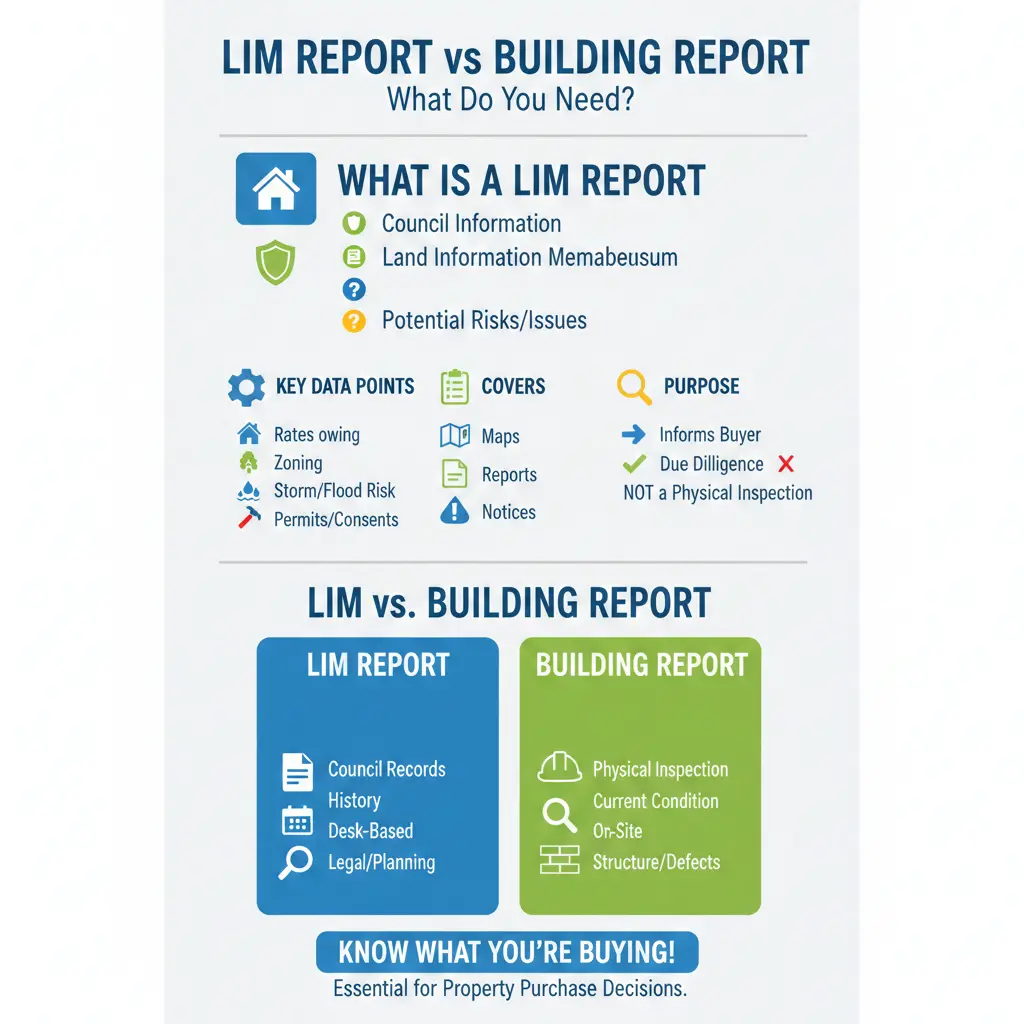
A **Land Information Memorandum (LIM) report** is an official document from your local council summarising all the information they hold on a specific property. Issued under the Local Government Official Information and Meetings Act 1987, it's a factual record—not an opinion or inspection—of council-held data.
Think of it as the council's dossier on the land: everything from consents to hazards. Councils must provide one upon request, making it a cornerstone of pre-purchase due diligence.
Key Information in a LIM Report
A LIM packs a punch with details like:
- Building and resource consents: Lists issued consents, code compliance certificates (CCCs), and any outstanding work or notices to fix.
- Rates info: Current rates, arrears, and any targeted rates under acts like the Infrastructure Funding and Financing Act 2020.
- Zoning and district plan: How the land is classified, overlays, and restrictions for renovations or subdivisions.
- Natural hazards: Flood zones, liquefaction, erosion, instability, or contamination known to the council.
- Services: Water supply, wastewater, stormwater, and road access connections.
- Special features: Heritage listings, protected trees, or notices from network utilities.
For example, in Auckland, a LIM might flag stormwater drains or historic places trust listings. In Wellington, it could highlight earthquake-prone status or slip risks—crucial in our seismic landscape.
What a LIM Report Doesn't Cover
Important limitations: A LIM won't assess the building's physical condition, reveal council-unknown issues, or include data from regional councils, LINZ, or insurers. It also skips neighbour plans or future zoning changes unless notified.
Real-world case: A deck built without consent might show up, potentially affecting your insurance—but whether it's rotting underneath? That's not in the LIM.
What is a Building Report?
A **building report** (or pre-purchase inspection) is an independent assessment by a qualified building inspector. It physically examines the property for defects, structural issues, and maintenance needs—not council records.
Unlike the LIM, it's hands-on: inspectors check roofs, foundations, plumbing, electrics, and more, flagging "red flags" like leaks, weathertightness problems, or subsidence. It's your eyes into hidden issues that consents can't catch.
What a Building Report Reveals
Expect a detailed rundown including:
- Structural integrity: Cracks, dampness, or foundation movement.
- Roof and cladding: Leaks, corrosion, or weathertightness failures—big in NZ post-leaky homes crisis.
- Renovations: Clues to unconsented work (pair with LIM to verify consents).
- Systems: Electrical, plumbing, heating—often with cost estimates for fixes.
- Overall condition: Graded from minor fixes to major rebuilds.
In 2026, with rising material costs and stricter Building Code updates, these reports are gold for budgeting renovations. Inspectors use tools like moisture meters and thermal imaging for accuracy.
LIM Report vs Building Report: Key Differences
Don't pit them against each other—they complement perfectly. Here's a side-by-side:
| LIM Report | Building Report | |
|---|---|---|
| Source | Council records | Independent inspector |
| Focus | Legal/compliance/hazards | Physical condition/defects |
| Cost (2026 est.) | $250–$450+ (varies by council) | $600–$1,200+ (depends on size/location) |
| Time | Up to 10 working days | 1–3 days |
| Covers consents? | Yes | No—flags need for checks |
| Covers leaks/rot? | No | Yes |
A LIM might confirm a garage has no CCC, but only a building report reveals if it's structurally sound. Together, they give the full picture.
Costs and How to Obtain Them in New Zealand
LIM Report Costs and Process
Prices range from $250 in smaller councils to $450+ in big cities like Auckland. Order online via your council's website (e.g., aucklandcouncil.govt.nz) or in person—provide the property address and legal description.
Pro tip: Request during due diligence; it takes up to 10 days, so build this into your offer conditions. Some real estate agents include property file views (cheaper, basic consents) as a LIM preview.
Building Report Costs and Process
Expect $600–$1,200 for a standard house, more for large or remote properties. Choose licensed inspectors via Sebex or similar registries—avoid the cheapest to ensure quality.
Book post-offer but pre-unconditional; attend if possible. In 2026, digital reports with photos/videos are standard for transparency.
When Do You Need a LIM Report? When a Building Report?
Get both for every purchase—it's non-negotiable for residential, commercial, or land. But prioritise:
- LIM first: Essential for hazards, zoning, consents. Skip it, and you risk insurance denials or development blocks.
- Building report always: Even if LIM is clean, physical issues lurk. Post-1992 homes need CCC checks via LIM, but condition via inspection.
Scenarios:
- Auckland villa? LIM for heritage/floods; building report for weathertightness.
- Christchurch section? LIM for liquefaction; report for rebuild quality.
- Rural block? LIM for services/zones; report for off-grid setup viability.
Under the Building Act 2004, unconsented work transfers to you—LIM spots it, report assesses impact.
Real-Life Examples and Risks
In 2023, a Kiwi buyer in Tauranga skipped the LIM; post-purchase, council rates arrears and a flood zone notice hit them for $50k remediation. Another in Hamilton got a building report revealing $100k roof rot despite perfect consents—LIM wouldn't have caught it.
Insurance red flag: LIM-shown liquefaction zones can exclude cover or hike premiums 20–50% in 2026 market.
Tips for Kiwi Buyers
- Make both reports conditions in your REINZ/ADLS agreement—10–15 working days standard.
- Consult your lawyer: They'll review alongside title search.
- Budget $1,000–$2,000 total—cheaper than surprises.
- Rural? Check regional council too (e.g., consent.io for consents).
- 2026 update: New digital LIM portals speed things up in most councils.
Next Steps for Your Property Purchase
Ready to buy? Start with the LIM—order today via your council site. Follow with a building report from a trusted inspector. Chat to your real estate lawyer and mortgage broker early. Tools like homes.co.nz or OneRoof pair well for market checks.
Protect your Kiwi dream: Due diligence now prevents regrets later. Happy house hunting!
Frequently Asked Questions
Sources & References
-
1
What is a LIM Report in NZ? Complete Buyer's Guide — www.haydenroulston.co.nz
-
2
Do You Need a LIM Report When Buying Property in New Zealand? — www.glaisterkeegan.co.nz
-
3
What can the council tell you about the house? - Building Performance — www.building.govt.nz
-
4
Building reports and red flags - Consumer Protection — www.consumerprotection.govt.nz
-
5
About property files and Land Information Memorandum (LIM) reports — www.aucklandcouncil.govt.nz
-
6
What is a LIM Report, and Why is it Essential for Property Buyers? — www.pierlaw.co.nz
Related Articles
First Home Grant NZ: How to Get Up to $10000
Buying your first home is one of the biggest financial decisions you'll make, and the New Zealand government wants to help. The First Home Grant puts up to $10,000 directly towards your deposit, makin...

Why 2026 is the Hardest Year to Buy a Home (and How to Beat the Odds)
Imagine standing at the edge of the property ladder in 2026, eyeing your dream home while prices hover stubbornly high, listings pile up, and buyer confidence wavers. For Kiwis, this year feels toughe...

Buying Your First Home in 2026: A Step-by-Step NZ Checklist
Imagine standing in your own Kiwi bach or cosy family home, keys in hand, after years of renting. In 2026, with interest rates stabilising and first-home schemes still strong, buying your first home i...

Selling Your Home? 10 Low-Cost Renovations That Add $50k in Value
If you're planning to sell your home in New Zealand, you don't need to break the bank with a complete renovation to attract buyers and boost your sale price. The good news? Some of the most effective...