Why 2026 is the Hardest Year to Buy a Home (and How to Beat the Odds)

Imagine standing at the edge of the property ladder in 2026, eyeing your dream home while prices hover stubbornly high, listings pile up, and buyer confidence wavers. For Kiwis, this year feels toughe...
James writes about the New Zealand property market, renting, home ownership, and housing costs. He breaks down complex property topics into practical advice for renters and buyers.
Imagine standing at the edge of the property ladder in 2026, eyeing your dream home while prices hover stubbornly high, listings pile up, and buyer confidence wavers. For Kiwis, this year feels tougher than ever to break into the housing market—despite lower rates and better affordability, a sluggish start with falling sales and an overhang of unsold properties is making it the hardest year to buy a home. But don't despair; with smart strategies tailored to New Zealand's unique market, you can beat the odds and secure your slice of Kiwi soil.
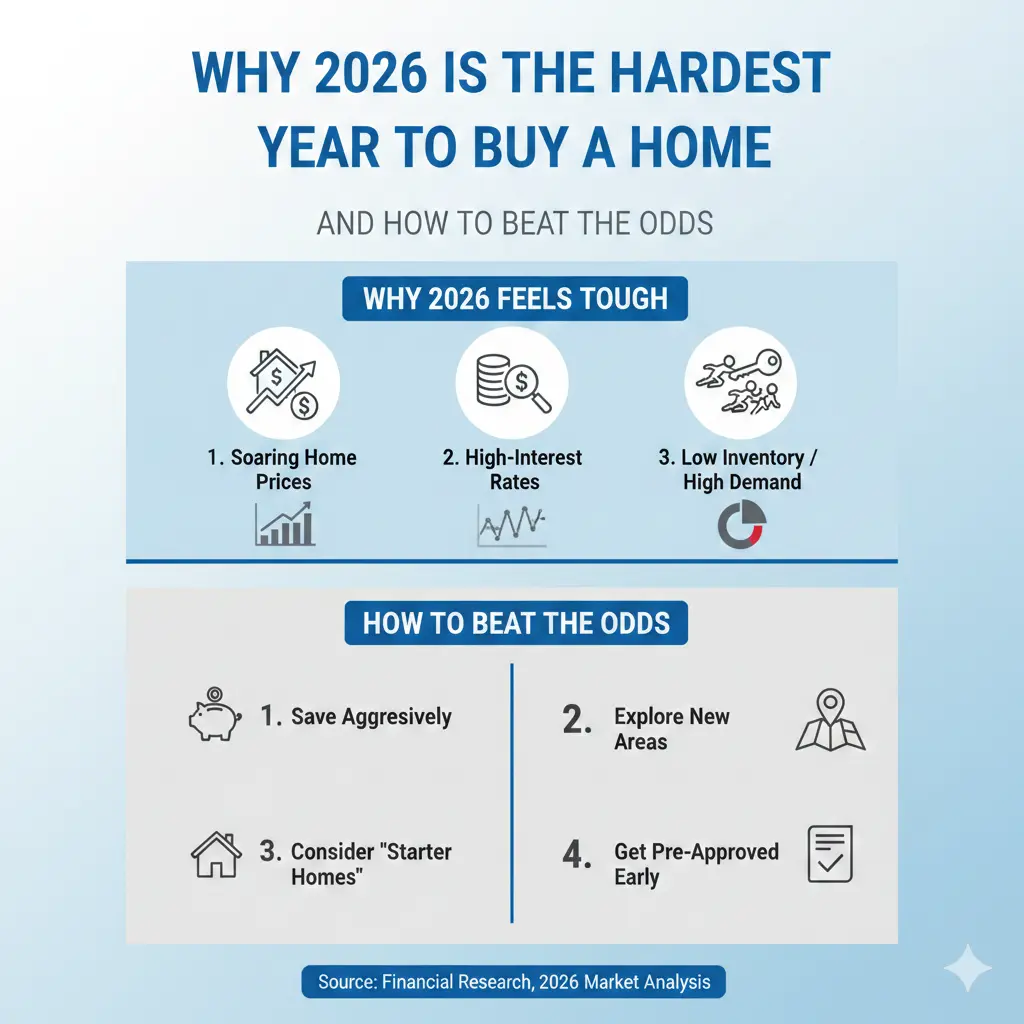
Why 2026 Feels Like the Toughest Year for Home Buyers
The housing market kicked off 2026 on a cautious note, with national median property values dipping a modest 0.3% over the three months to January. Prices remain 17.5% below the 2022 peak, yet sales volumes dropped 5.4% year-on-year in January, hitting just 3,837 transactions nationwide. Auckland and Wellington lagged, while spots like Dunedin and Invercargill showed more resilience.
High Overhang and Sales Dropouts Squeeze Buyers
January saw an estimated 2,400 sales dropouts—a decade-high, up 10% from prior years—alongside a property overhang of over 24,000 unsold homes, also a 10-year peak for the month. This surplus stems from new listings rising 2.3% to 33,149, outpacing demand in a post-Christmas slump. For buyers, it means more choice but fierce competition when motivated sellers finally bite, especially as the Reserve Bank of New Zealand's (RBNZ) OCR cuts of 3.25% since mid-2024 have eased mortgage rates to pre-pandemic levels without sparking a rebound.
Slowing Population Growth Caps Demand
Net migration plunged to 14,200 in 2025—the lowest in over a decade outside COVID—down from 135,500 the prior year, as Kiwis head to Australia and arrivals slow. This drags population growth below new dwelling supply, with 35,969 consents in the 12 months to November 2025 (up 7% but still creating a surplus). Stats NZ data shows construction stabilising, but the National Construction Pipeline forecasts declines before growth resumes, keeping supply ahead of demand.
Auckland's Million-Dollar Barrier Returns
Auckland prices have leaped back above $1 million, with buyers flooding listings amid regional disparities—Wellington down 25.5% from peak, Christchurch just 3.6%. Nationally, the REINZ House Price Index fell 0.7% year-on-year, down 16.2% from 2022 highs (over 30% inflation-adjusted to 2019 levels). Yields improved slightly to 4.12%, but affordability gains haven't translated to a boom.
Positive Signs Amid the Challenges
It's not all doom—affordability is at its best in years, mortgage rates have eased, and listings are drifting lower, setting up gradual sales growth through 2026. Experts like Cotality's Kelvin Davidson predict modest price rises as movers regain confidence and fixed-rate rollovers free up cashflow. First-home buyers held at 26.2% of transactions, showing resilience. Industry sentiment is upbeat, with sales trends pointing upward overall.
How to Beat the Odds: Practical Strategies for Kiwi Buyers in 2026
Armed with these insights, here's how to navigate 2026's tricky market. Focus on preparation, timing, and local resources to turn challenges into opportunities.
1. Maximise Your Deposit and Explore KiwiSaver Withdrawals
Aim for a 20% deposit to dodge Loan-to-Value Ratio (LVR) restrictions from the RBNZ—currently allowing up to 80% LVR for owner-occupiers. Tap KiwiSaver for your first home: withdraw your contributions plus government and employer portions if buying a home under $1 million (or higher in Auckland with exemptions). Use the KiwiSaver First Home Withdrawal calculator on ird.govt.nz to estimate. Pro tip: If you're close, contribute extra now—2026 rates allow voluntary boosts without penalties for first-home use.
2. Lock in Rates and Get Pre-Approved
With OCR cuts stabilising, fixed rates hover around 5-6%—shop banks via Canstar or interest.co.nz for the best. Get pre-approval from lenders like ASB or Kiwibank; it signals strength in a market with dropouts. Watch RBNZ announcements—rising rate threats softened January sales.
- Compare at least three lenders.
- Factor in ACC levies and council rates for true affordability.
- Use the Reserve Bank's mortgage calculator at rbnz.govt.nz.
3. Target Buyer's Market Opportunities
Leverage the overhang: negotiate on properties lingering 30+ days. Focus on resilient regions like Dunedin or Invercargill for value, or Canterbury suburbs holding firm. Attend auctions prepared—REINZ data shows subdued volumes favour prepared bidders.
| Region | Jan 2026 Performance | Buyer Tip |
|---|---|---|
| Auckland | Prices >$1m, soft sales | Target apartments or first-home grants |
| Wellington | -25.5% from peak | Negotiate aggressively on overhang |
| Dunedin/Invercargill | Resilient prices | Trade up with mover confidence |
| Christchurch | -3.6% from peak | Strong supply, seek motivated sellers |
4. Leverage Government Support and First-Home Schemes
Check Kāinga Ora's First Home Grant (up to $10,000 for existing homes, $5,000 for new builds) if your deposit is 5-20%—applications via kaingaora.govt.nz. Progressive Home Ownership helps lower earners. Low-income? WINZ's Accommodation Supplement adds up to $145/week. For immigrants, Immigration NZ's pathways align with housing demand slowdowns.
5. Time Your Move and Build a Team
Expect gradual lift from February as post-holiday listings convert—buy now in the buyer's market. Assemble pros: a buyer's agent via REINZ, lawyer for LIM reports, and builder for inspections. Track listings on Trade Me Property or OneRoof for deals.
6. Consider Alternatives Like Shared Ownership or Townhouses
With multi-unit consents at 40% of pipeline, townhouses offer entry points. Explore group ownership via Progressive Ownership or family pooling via KiwiSaver multi-withdrawal rules.
Common Pitfalls to Avoid in 2026
- Overstretching on rates: Stress-test at 8% OCR.
- Ignoring regions: Auckland isn't the only option—provincial growth awaits.
- Rushing without checks: Always get a building report; Healthy Homes standards apply.
Next Steps to Secure Your Home
Start today: calculate your KiwiSaver eligibility on ird.govt.nz, get pre-approved, and scout listings in resilient areas. Track RBNZ updates and REINZ reports monthly. With patience and these Kiwi-specific tactics, 2026's challenges become your advantage—get in before the gradual uptick hits.
Frequently Asked Questions
Sources & References
-
1
Monthly Housing Chart Pack - February 2026 — www.cotality.com
-
2
Housing sales dropouts and market overhang unsold properties both decade high month — www.interest.co.nz
-
3
Auckland house prices leap back above $1m as buyers flood listings — www.mpamag.com
-
4
New Zealand's housing crash restores affordability — www.macrobusiness.com.au
-
5
New Zealand Residential Property Market Analysis 2026 — www.globalpropertyguide.com
-
6
Housing market momentum: Early 2026 snapshot — www.valocityglobal.com
- 7
-
8
Kiwis turn upbeat on housing – just don't expect a 2026 boom — www.mpamag.com
-
9
Housing market softens in January as threat of rising rates looms — www.nzherald.co.nz
Related Articles
First Home Grant NZ: How to Get Up to $10000
Buying your first home is one of the biggest financial decisions you'll make, and the New Zealand government wants to help. The First Home Grant puts up to $10,000 directly towards your deposit, makin...

Buying Your First Home in 2026: A Step-by-Step NZ Checklist
Imagine standing in your own Kiwi bach or cosy family home, keys in hand, after years of renting. In 2026, with interest rates stabilising and first-home schemes still strong, buying your first home i...

Selling Your Home? 10 Low-Cost Renovations That Add $50k in Value
If you're planning to sell your home in New Zealand, you don't need to break the bank with a complete renovation to attract buyers and boost your sale price. The good news? Some of the most effective...

Tiny Homes in NZ: Legal Hurdles and Living Realities
Imagine downsizing your life into a cosy 70-square-metre haven on your own section, free from the hassle of building consents and council red tape. For Kiwis grappling with sky-high housing costs, tin...