Tiny Homes in NZ: Legal Hurdles and Living Realities
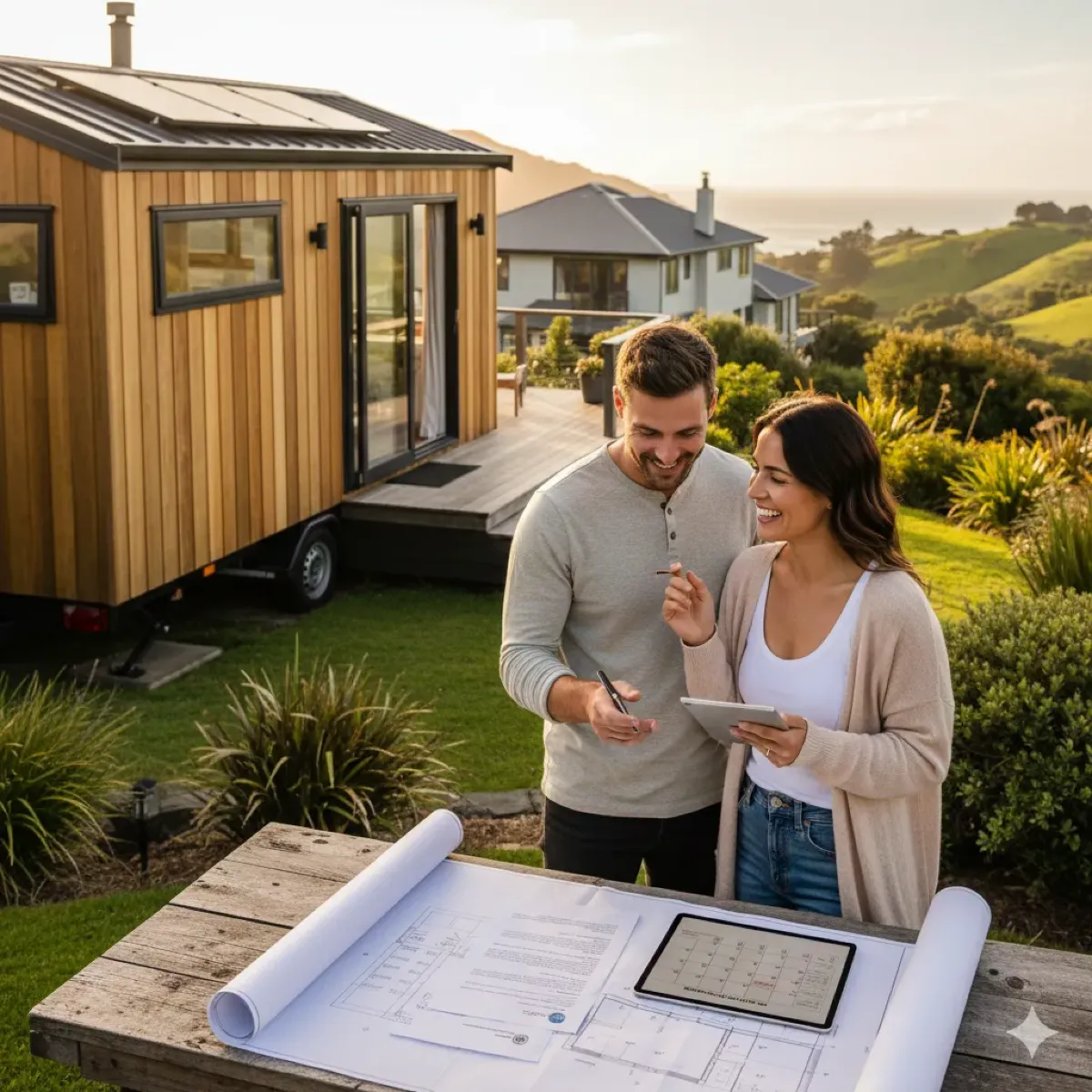
Imagine downsizing your life into a cosy 70-square-metre haven on your own section, free from the hassle of building consents and council red tape. For Kiwis grappling with sky-high housing costs, tin...
The Lifetimes NZ editorial team curates, fact-checks, and updates guides on personal finance, property, health, immigration, legal, business, and lifestyle topics relevant to Lifetimes NZ readers. Articles are produced with AI assistance and reviewed by the editorial team before publication.
Imagine downsizing your life into a cosy 70-square-metre haven on your own section, free from the hassle of building consents and council red tape. For Kiwis grappling with sky-high housing costs, tiny homes in NZ promise freedom—but legal hurdles and everyday realities can quickly turn that dream into a nightmare. With new 2026 rules shaking things up, here's what you need to know to make it work.
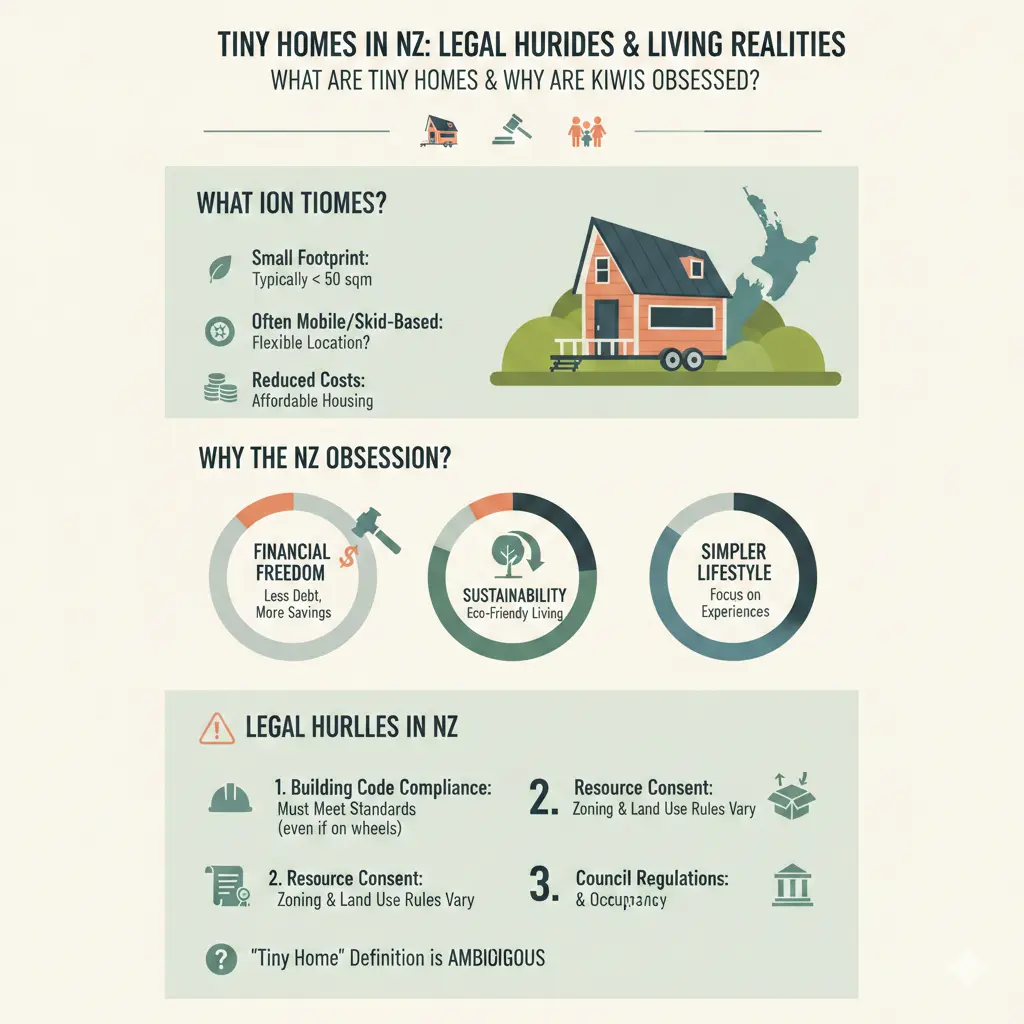
What Are Tiny Homes, and Why Are Kiwis Obsessed?
Tiny homes are compact, efficient dwellings typically under 70m², designed for minimalistic living while maximising comfort. In New Zealand, they've surged in popularity amid a housing crisis, offering affordability for first-home buyers, retirees, or families housing whānau.Tiny homes in NZ appeal because they slash building costs—often $150,000-$300,000 fully compliant—compared to traditional homes topping $1 million in cities like Auckland or Wellington.
But it's not all smooth sailing. Pre-2026, most tiny homes needed full building consents, resource consents, and district plan checks, costing $5,000-$15,000 in fees and months of delays. Mobile "tiny homes on wheels" dodged some rules by being classified as caravans, but councils cracked down on permanent setups without consents.
The 2026 Game-Changer: Granny Flat Exemptions
From early 2026, the Building and Construction (Small Standalone Dwellings) Bill lets you build granny flats (or minor dwellings) up to 70m² without building consent, as long as they meet strict criteria. Passed in October 2025, this nationwide change removes resource consent barriers from late 2025 too. It's a massive win for Kiwi homeowners adding sleepouts for ageing parents, rental income, or grown kids.
To qualify:
- Single-storey with simple design—no lofts, mezzanines, or complex roofs.
- Fixed to permanent foundations—not on wheels or trailers.
- Internal floor area ≤70m² (decks excluded).
- Built to NZ Building Code, using approved materials, by Licensed Building Practitioners (LBPs).
- On the same property as an existing consented home, at least 2m from boundaries.
- Permanently connected to water, wastewater, power—no off-grid unless compliant.
- Not for short-term rentals like Airbnb.
You must notify your council via a Project Information Memorandum (PIM) before starting (work within 2 years), and submit plans, LBP certificates, and compliance records within 20 working days of completion. No retrospective approval for pre-2026 builds.
Legal Hurdles: Navigating Councils, Codes, and Consents
Even with exemptions, tiny homes in NZ legal hurdles persist. Not every property qualifies—heritage zones, flood-prone areas, or rural septic setups may need extra checks. Site coverage jumps to 50% in most residential zones (from 40%), but only one minor dwelling per property.
District Plan Rules and Resource Consents
Resource consents are mostly gone post-2025, but check your local district plan via your council's online viewer. Urban sections usually qualify; rural ones might need wastewater consents. Call your council with your address: "Can I add a 70m² minor dwelling?" Most residential properties (70-80%) sail through.
Tiny Homes on Wheels: A Grey Area
Dreaming of a relocatable tiny home? Bad news—the 2026 exemption excludes trailers or mobiles; they must be fixed. Pre-2026, some parked on private land as "accessory buildings" under 30m² without plumbing, but councils now treat permanent ones as dwellings needing consents. Renters or non-landowners can't use exemptions.
| Scenario | Eligible for 2026 Exemption? | Why/Why Not |
|---|---|---|
| On your own land, fixed foundation | ✅ Yes | Meets all criteria if simple design. |
| Tiny home on wheels | ❌ No | Must be permanent. |
| Pre-2026 build | ❌ No | No retroactive approval. |
| Rental on someone else's land | ❌ No | Landowner only. |
| With loft or complex features | ❌ No | Single-storey only. |
Building Code Essentials
All builds must hit H1 insulation standards, even without consent. Use CodeMark products for roofing/cladding. Engage LBPs early—DIY risks fines up to $200,000 or demolition orders under the Building Act.
Living Realities: Costs, Lifestyle, and Pitfalls
Beyond legality, tiny homes in NZ living realities test your resolve. They're cheap to run—lower power bills, smaller rates—but demand smart design.
Costs Breakdown (2026 Estimates)
- Build: $2,500-$4,000/m² ($175,000-$280,000 for 70m²).
- Foundations/Site works: $20,000-$50,000.
- PIM/Compliance: $1,000-$3,000 (no consent fees).
- Services: $10,000-$20,000 (power, water, septic).
- Total: $200,000-$350,000—half a standard home.
Daily Life in a Tiny Home
Pros: Eco-friendly, debt-free living, closer family ties. Cons: Limited storage, no room for hobbies, resale challenges (buyers want space). In NZ's climate, insulation is non-negotiable—expect $500/year power vs $2,000+ for bigger homes. Wastewater compliance is key; many councils mandate connections to mains.
Real Kiwi example: Auckland families use granny flats for rental income ($400-$600/week), boosting mortgage affordability amid 6-7% interest rates.
Common Pitfalls and How to Avoid Them
- Overlooking council overlays: Use tools like Auckland Council's GIS viewer or equivalent.
- Skipping LBPs: Hire early—firms like Cocoon Tiny Homes handle compliance.
- Underestimating services: Budget for engineers on sloped sites.
- Future-proofing: Design for KiwiSaver withdrawals or First Home Grants if eligible (check HUD.govt.nz).
Practical Tips: Building Your Tiny Home Legally
Step 1: Assess your section—PIM application first.
Step 2: Engage an LBP builder specialising in exemptions.
Step 3: Design within limits—70m², simple, compliant.
Step 4: Notify council pre- and post-build.
Step 5: Get Code of Compliance vibes via LBP sign-off.
For tiny homes on wheels, consider relocatable cabins under 30m² or full consents. Suppliers like Freedom Cabins offer compliant options.
Next Steps: Make Your Tiny Dream Reality
Ready to ditch the big-house grind? Start with your council's PIM process and connect with LBP builders today. Download a free 70m² checklist from specialists, and explore KiwiSaver for funding. Tiny homes in NZ aren't for everyone, but with 2026 rules, they're more accessible than ever—smart planning turns hurdles into home sweet home.
Frequently Asked Questions
Sources & References
- 1
- 2
-
3
How to Choose a 70m²-Compliant Tiny Home in NZ — sunrisebuild.co.nz — sunrisebuild.co.nz
-
4
Granny flats exemption in place from early 2026 — mbie.govt.nz — www.mbie.govt.nz
-
5
Complete Guide to NZ's 2026 Granny Flat Laws — freedomcabinsnz.com — www.freedomcabinsnz.com
- 6
-
7
Granny flats building consent exemption set for early 2026 — building.govt.nz — www.building.govt.nz
-
8
2026 Granny Flat Rules NZ | Free 70m² Checklist — thelittlebigtinyhouse.nz — www.thelittlebigtinyhouse.nz
Related Articles
First Home Grant NZ: How to Get Up to $10000
Buying your first home is one of the biggest financial decisions you'll make, and the New Zealand government wants to help. The First Home Grant puts up to $10,000 directly towards your deposit, makin...

Why 2026 is the Hardest Year to Buy a Home (and How to Beat the Odds)
Imagine standing at the edge of the property ladder in 2026, eyeing your dream home while prices hover stubbornly high, listings pile up, and buyer confidence wavers. For Kiwis, this year feels toughe...

Buying Your First Home in 2026: A Step-by-Step NZ Checklist
Imagine standing in your own Kiwi bach or cosy family home, keys in hand, after years of renting. In 2026, with interest rates stabilising and first-home schemes still strong, buying your first home i...
Selling Your Home? 10 Low-Cost Renovations That Add $50k in Value
If you're planning to sell your home in New Zealand, you don't need to break the bank with a complete renovation to attract buyers and boost your sale price. The good news? Some of the most effective...