Building Consent NZ: When You Need One

Planning a home renovation or addition in New Zealand? One of the first questions on every Kiwi homeowner's mind is whether you'll need a building consent. With major changes rolling out in 2026, unde...
James writes about the New Zealand property market, renting, home ownership, and housing costs. He breaks down complex property topics into practical advice for renters and buyers.
Planning a home renovation or addition in New Zealand? One of the first questions on every Kiwi homeowner's mind is whether you'll need a building consent. With major changes rolling out in 2026, understanding when you need one—and when you don't—can save you time, money, and headaches.
Building consents ensure our homes are safe, durable, and compliant with the New Zealand Building Code. But not every project requires the full council approval process. From low-risk exemptions to the exciting new granny flat rules, we'll break it down step by step, with practical tips tailored for Kiwis tackling renos in 2026.
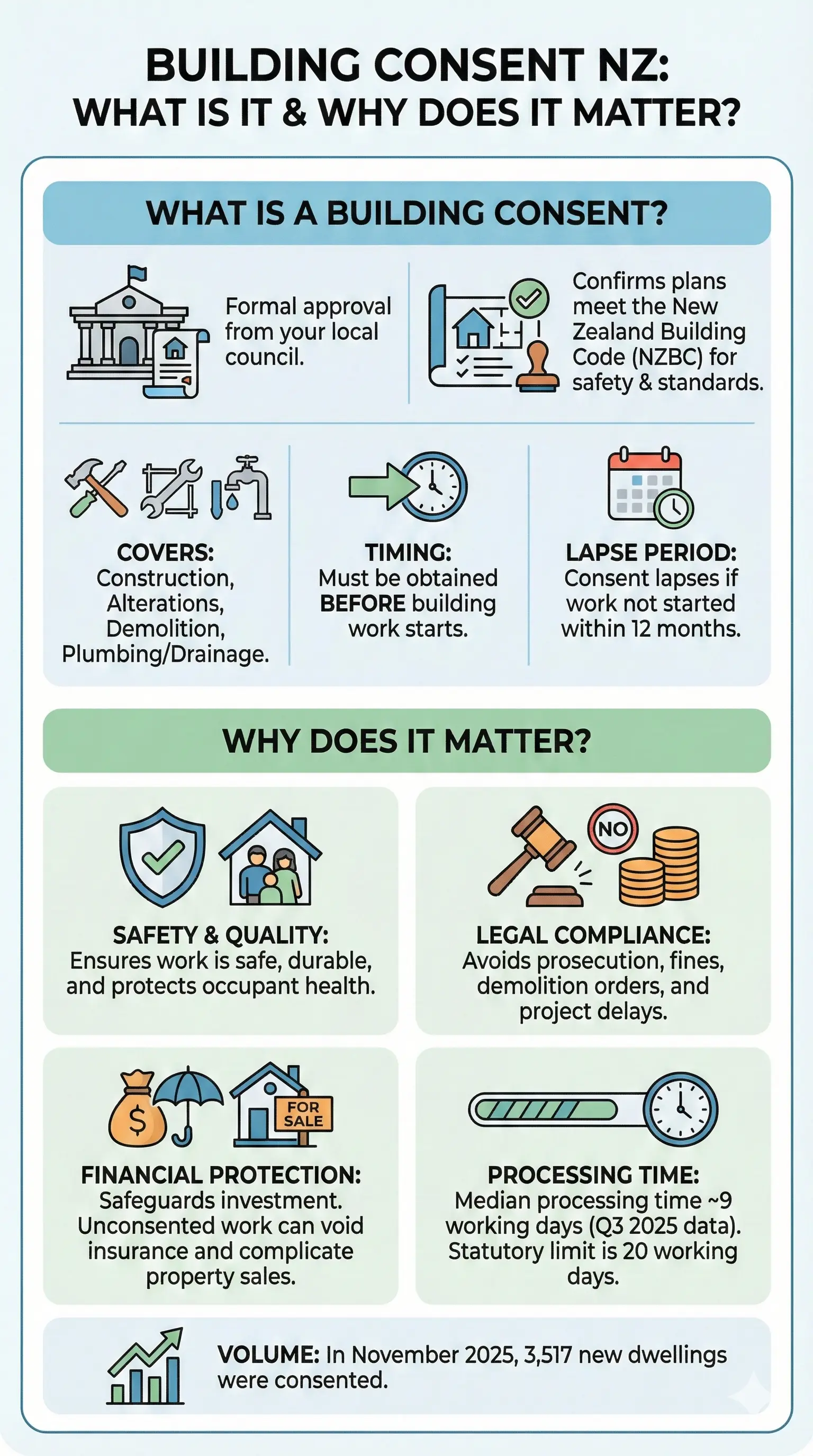
What is a Building Consent and Why Does it Matter?
A building consent is official permission from your local council to carry out building work. It's required for most projects to confirm your plans meet the Building Code standards for structure, fire safety, insulation, and more. Without one when needed, you risk hefty fines—up to $200,000, plus $10,000 per day if work continues—along with notices to fix or even restricted access to your property.
In Aotearoa, all building work must comply with the Building Code, but consents are mandatory unless your project qualifies as exempt 'low-risk' work under the Building Act. This system protects us from dodgy builds, but the 2026 updates aim to cut red tape for simple projects, making housing more affordable.
The Consequences of Skipping a Required Consent
- Fines and penalties: Councils can issue instant fines up to $1,000 or escalate to court.
- Notices to fix: You'll have to undo unauthorised work at your cost.
- Insurance issues: Unconsented work might void your home insurance or complicate sales.
- Resale hurdles: Buyers and banks often demand proof of consents for major changes.
Pro tip: Always check with your council early. Many offer free pre-application advice to clarify if consent is needed.
2026 Changes: Granny Flats Without Consent
Big news for Kiwi backyards—from early 2026, you can build a standalone granny flat up to 70m² without a building consent, passed unanimously by Parliament in October 2025. This targets affordable housing, potentially adding 13,000 dwellings over the next decade.
Perfect for whānau needing extra space, rental income, or a home office—these small secondary dwellings skip the months of paperwork and fees. But 'consent-free' doesn't mean 'regulation-free'. You must meet strict conditions to qualify.
Key Requirements for Consent-Free Granny Flats
To build without consent, your granny flat must tick every box:
- Size and design: New, standalone, single-storey up to 70m² with a 'simple design' as defined in Schedule 1A of the Building Act.
- Building Code compliance: Fully meet standards for structure, weather-tightness, insulation, fire safety, access, and energy efficiency—no shortcuts.
- Licensed pros: Work carried out or supervised by licensed building practitioners (LBPs) for restricted tasks like framing or piling.
- Council notification: Notify your local council before starting and after completion.
- Siting rules: Generally 2m from boundaries, height limits—often no separate resource consent needed if compliant, but check district plan rules.
Note: This exemption is for new builds after early 2026. Conversions (e.g., garage to flat) or work started earlier still need full consent. Councils can audit via random checks or tips, so keep Records of Work (RoW) and certificates.
Projects That Still Need a Building Consent in 2026
Not everything gets a free pass. Most renovations and additions require consent to ensure safety. Use the Building Performance site's checklist to confirm.
Common Projects Requiring Consent
| Project Type | Why Consent Needed | NZ Example |
|---|---|---|
| Structural additions or alterations | Affects building integrity (e.g., new room, re-piling) | Extending your villa in Auckland |
| Plumbing/drainage with new fixtures | Hygiene and wastewater risks | Adding a bathroom |
| Relocating a building | Foundation and site stability | Moving a sleepout |
| Woodburner or AC install | Fire and ventilation standards | Upgrading heating in Christchurch |
| Retaining walls >1.5m (3m rural with engineer) | Collapse risk | Sloping section in Wellington |
| Fences/walls >2.5m, all pool fences | Safety barriers | Pool surround in Hamilton |
| Decks/platforms >1.5m high | Fall hazards | Balcony reno in Dunedin |
| Sheds >30m² (10-30m² need LBP/engineer) | Wind/earthquake loading | Large workshop in rural Waikato |
Larger than 70m²? Two-storey? Attached to your house? Still needs consent. Earthworks over certain volumes also require it.
Low-Risk Exemptions: No Consent Needed (Besides Granny Flats)
Even before 2026, some work skips consent if low-risk and Code-compliant:
- Minor repairs (e.g., repainting, re-roofing with same materials)
- Low decks (<1.5m high)
- Small sheds (<10m²)
- Porches or carports (<30m², low height)
Full list on building.govt.nz—always verify, as plumbing/electrical certs may still apply.
How to Apply for a Building Consent: Step-by-Step Guide
If consent is required, follow these steps for a smooth process:
- Pre-application meeting: Chat with council planners (often free).
- Prepare docs: Plans, specs, RoW from LBPs, energy certificates.
- Submit online: Via Simpli or council portal—fees vary ($2,000-$10,000+ typical).
- Inspections: Council checks at key stages (foundations, framing, final).
- Code of Compliance Certificate (CCC): Issued on completion—keep it safe!
Tip: Hire a Licensed Building Practitioner early to avoid rework. Processing times average 20-30 working days, but complex jobs take longer.
Practical Tips for Kiwi Homeowners
- Budget extra: Consents add 5-10% to project costs—factor in pros too.
- Resource consent too? Check district plan for zoning, height, coverage (separate from building consent).
- Earthquake country: All work must meet NZS 1170.5 standards.
- Get quotes: Use LBP Finder on building.govt.nz.
- Document everything: Photos, invoices—vital for audits or sales.
FAQ: Building Consent NZ Questions Answered
Q: Can I build a granny flat without consent in 2026?
A: Yes, up to 70m² standalone if it meets all conditions like simple design, Code compliance, licensed supervision, and council notification.
Q: What if my project doesn't qualify for exemption?
A: Apply for full consent—additions, larger builds, or conversions still need it.
Q: Do I need to notify council for exempt work?
A: For granny flats yes (start and finish); other exemptions usually no, but keep records.
Q: What's the fine for unconsented work?
A: Up to $200,000 plus daily fines, notices to fix, or access restrictions.
Q: Can councils still check my consent-free granny flat?
A: Yes, via audits or complaints—ensure full compliance to avoid issues.
Q: Does this apply nationwide?
A: Yes, but local district plans may add resource consent needs (e.g., heritage areas).
Next Steps for Your Project
Ready to reno? Start by using the Building Performance 'Check if you need consents' tool. Contact your local council for site-specific advice, and consult an LBP for plans. With 2026's granny flat freedom, now's the perfect time to expand your Kiwi dream home—safely and legally. Happy building!
Related Articles
Bathroom Renovation Costs NZ 2025
Planning a bathroom spruce-up in 2026? With Kiwi homes getting older and our love for cosy, functional spaces growing, knowing the real bathroom renovation costs NZ 2025 (updated for current rates) ca...

Deck Building NZ: Costs and Consent Requirements
Imagine firing up the barbie on a sunny Kiwi afternoon, with mates gathered around and kids playing safely on a sturdy new deck. That's the dream for many homeowners across New Zealand, but before you...

Painting Your House NZ: DIY vs Professional Costs
Ever stared at your peeling weatherboards or faded interior walls and wondered if it's time for a fresh coat of paint? In New Zealand, where our homes battle salty coastal air, relentless UV rays, and...

Energy Efficient Home Upgrades NZ
Imagine slashing your power bills by hundreds of dollars a year while cosying up in a warmer, healthier home this winter. For Kiwis facing rising energy costs and chilly draughts, energy efficient hom...