Energy Efficient Home Upgrades NZ
Imagine slashing your power bills by hundreds of dollars a year while cosying up in a warmer, healthier home this winter. For Kiwis facing rising energy costs and chilly draughts, energy efficient hom...
The Lifetimes NZ editorial team curates, fact-checks, and updates guides on personal finance, property, health, immigration, legal, business, and lifestyle topics relevant to Lifetimes NZ readers. Articles are produced with AI assistance and reviewed by the editorial team before publication.
Imagine slashing your power bills by hundreds of dollars a year while cosying up in a warmer, healthier home this winter. For Kiwis facing rising energy costs and chilly draughts, energy efficient home upgrades NZ offer a smart path to comfort, savings, and sustainability—backed by government grants and low-interest loans tailored right here in Aotearoa.
With over 20% of New Zealand homes still cold, damp, or poorly insulated, it's time to act. Programmes like Warmer Kiwi Homes make it easier than ever to retrofit your place, especially with updates rolling out through 2026 and beyond. Whether you're in Auckland's suburbs or a rural spot in the South Island, these upgrades can cut emissions, boost health, and future-proof your home against our variable climate.
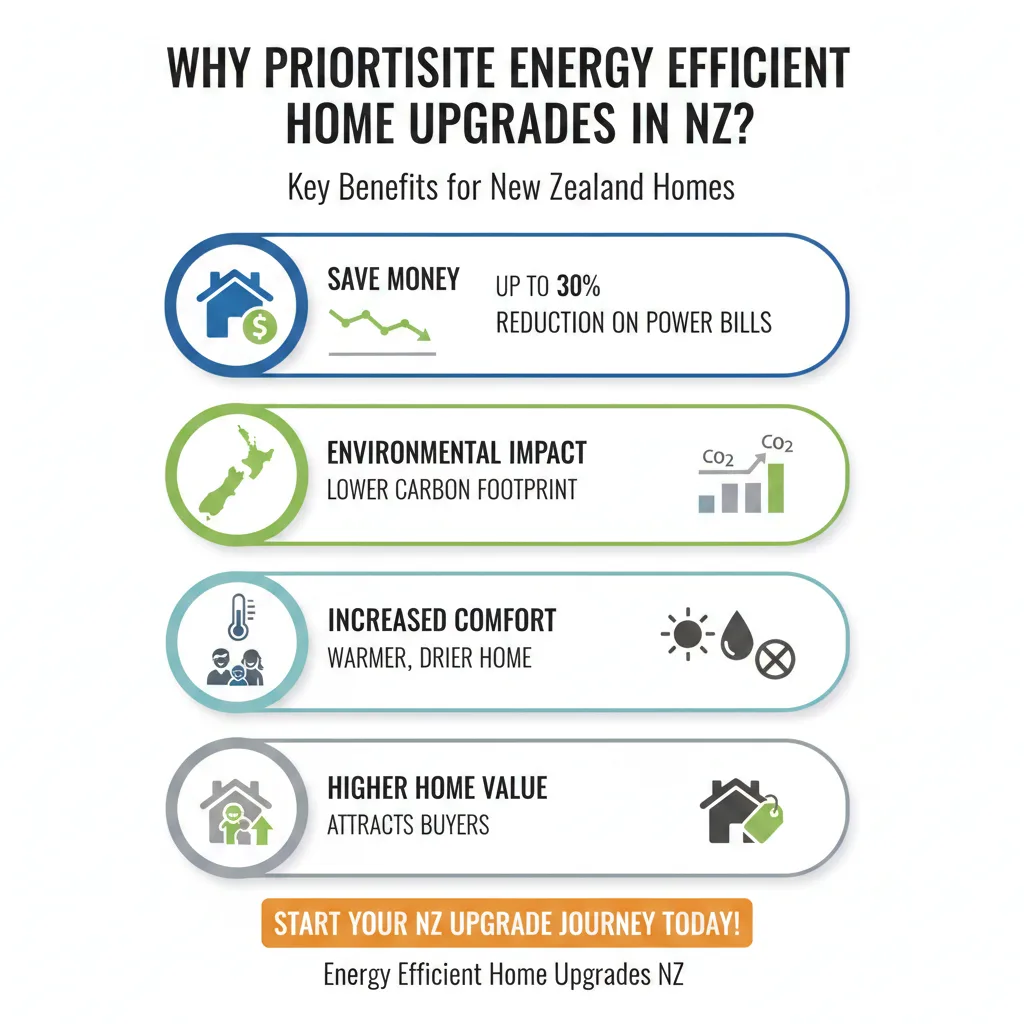
Why Prioritise Energy Efficient Home Upgrades in NZ?
New Zealand's housing stock is among the least efficient in the OECD, with many homes built before modern insulation standards. Upgrading not only lowers your bills—potentially saving over $1,000 annually by swapping inefficient appliances—but also reduces health risks like respiratory issues from dampness. The New Zealand Green Building Council envisions all existing homes near zero emissions by 2050, starting with deep retrofits in 2026.
Government targets include 1 million homes reaching EPC "A" rating by 2040, with milestones like 100,000 fully electrified homes by 2030. From 1 May 2026, updated minimum energy performance standards (MEPS) for heat pumps, fridges, and more will ensure new appliances are efficient, aligning us with Australia.
Key Benefits for Kiwi Households
- Lower Bills: Heat pumps and insulation can deliver $4.66 in benefits for every $1 spent, mainly through energy savings and health gains.
- Healthier Living: Warmer, drier homes cut illness risks, especially for families with kids or the elderly.
- Climate Resilience: Electrified homes with solar prep handle storms and heatwaves better.
- Property Value: Energy-efficient features appeal to buyers, with calls for mandatory EPC labels by 2026.
Top Energy Efficient Home Upgrades for NZ Homes
Focus on high-impact changes that suit our climate—mild summers but cold, wet winters. Start with a home energy audit via EECA tools to pinpoint leaks and inefficiencies.
1. Insulation: The Foundation of Efficiency
Ceiling and underfloor insulation is a game-changer, trapping heat and blocking cold. Warmer Kiwi Homes grants cover 80-90% for eligible homes, up to full funding for the coldest 200,000 properties. In rentals, Healthy Homes Standards already mandate minimum levels, but owners can go further with wall insulation during renos—proposed for major upgrades by 2028.
Practical Tip: Pair it with airtightness measures; expect payback in 3-5 years via lower power use.
2. Heating Systems: Switch to Heat Pumps
Ditch inefficient electric heaters or open fires for reverse-cycle heat pumps—they're three times more efficient and qualify for up to 80% grants (capped at $3,000 GST-inclusive). Low-voltage network expansions from 2026 support more heat pumps without grid upgrades.
| Upgrade | Annual Savings | Grant Coverage |
|---|---|---|
| Heat Pump | $300-600 | Up to 80% |
| Insulation | $200-400 | 80-90% |
| Double Glazing | $150-300 | Combined projects |
3. Windows and Doors: Double Glazing and Draught-Proofing
Single-glazed windows leak up to 30% of your heat. Double glazing with low-E coatings suits NZ's conditions, often bundled in Warmer Kiwi Homes projects. For DIY, weatherstripping doors costs under $100 and pays back fast.
4. Appliances and Lighting: MEPS-Compliant Choices
From May 2026, look for updated energy labels on fridges, dishwashers, and heat pumps over 65kW. Swap to hot water heat pumps for 60% savings on hot water costs. LEDs are standard now—check your hot water cylinder for efficiency.
5. Solar and Electrification: Future-Proofing
Rooftop solar uptake surges with 2026 voltage expansions for EVs and batteries. Rewiring Aotearoa pushes full electrification: solar, batteries, and induction cooktops for net-zero by 2050. Banks like ANZ, BNZ, and ASB offer green loans up to $80,000 at ~1% fixed for three years—over $1 billion issued since 2022.
Government Grants and Funding: Warmer Kiwi Homes Explained
The Warmer Kiwi Homes programme, extended to June 2027, now covers middle-income homes (deciles 5-7) for insulation. It's an upfront grant—installer deducts the subsidy (50-80%) from your bill, no reimbursement hassle.
Eligibility: Community Services Card holders or high-deprivation areas get top rates. Apply via approved providers; they'll assess and quote.
- Check eligibility on govt.nz.
- Get a free assessment.
- Review itemised quote with grant applied.
- Sign and schedule—enjoy the warmth!
Deeper pilots in 2026 fund full retrofits (insulation, glazing, ventilation, heating) for select homes. National loans via local councils aim for 250,000 efficient homes by 2035.
Financing Your Upgrades: Green Loans for Kiwis
No cash upfront? Major banks' green loans make it doable. Borrow up to $80,000 for insulation, heat pumps, or solar at low rates—perfect for owner-occupiers and landlords. Daikin advocates expanding Warmer Kiwi Homes to all incomes.
Actionable Advice: Compare rates at ANZ, BNZ, ASB; factor in grants to minimise borrowing.
Step-by-Step Guide to Your Energy Upgrade
- Audit Your Home: Use EECA's free tools or hire a pro.
- Prioritise: Insulation first, then heating.
- Apply for Grants: Via warmerkiwi.govt.nz.
- Choose Suppliers: Warmer Kiwi Homes-approved for quality.
- Monitor Savings: Track bills pre- and post-upgrade.
Building code tweaks enhance H1 energy flexibility for renos.
FAQ
How do I qualify for Warmer Kiwi Homes?
Homes in deciles 1-10, with Community Services Card for max grants. Check via providers.
What's the payback time for insulation?
Typically 3-5 years, with health and comfort benefits immediate.
Are heat pumps suitable for all NZ regions?
Yes, updated MEPS from May 2026 ensure efficiency nationwide.
Can renters get upgrades?
Landlords can via grants; tenants benefit from Healthy Homes rules.
Do green loans affect my credit?
Standard checks apply, but low rates make them accessible.
Is solar viable in cloudy areas?
Absolutely—NZ's solar resource is strong, boosted by grid changes.
Ready to Upgrade? Your Next Steps
Don't let another winter slip by in the cold. Start with a free Warmer Kiwi Homes assessment today—visit govt.nz or contact a provider. Combine grants, loans, and DIY tweaks for maximum impact. Your warmer, greener home awaits, saving you money while helping Aotearoa hit net-zero goals. Get quoting now and feel the difference.
Useful Tools
Related Articles
Bathroom Renovation Costs NZ 2025
Planning a bathroom spruce-up in 2026? With Kiwi homes getting older and our love for cosy, functional spaces growing, knowing the real bathroom renovation costs NZ 2025 (updated for current rates) ca...

Deck Building NZ: Costs and Consent Requirements
Imagine firing up the barbie on a sunny Kiwi afternoon, with mates gathered around and kids playing safely on a sturdy new deck. That's the dream for many homeowners across New Zealand, but before you...

Painting Your House NZ: DIY vs Professional Costs
Ever stared at your peeling weatherboards or faded interior walls and wondered if it's time for a fresh coat of paint? In New Zealand, where our homes battle salty coastal air, relentless UV rays, and...
Home Insulation NZ: Costs and Grants 2025
Imagine stepping into a home that's actually warm in winter and cool in summer—no more chilly floors or draughts sneaking through the walls. For Kiwis, insulating your home isn't just a nice-to-have;...