Home Insulation NZ: Costs and Grants 2025
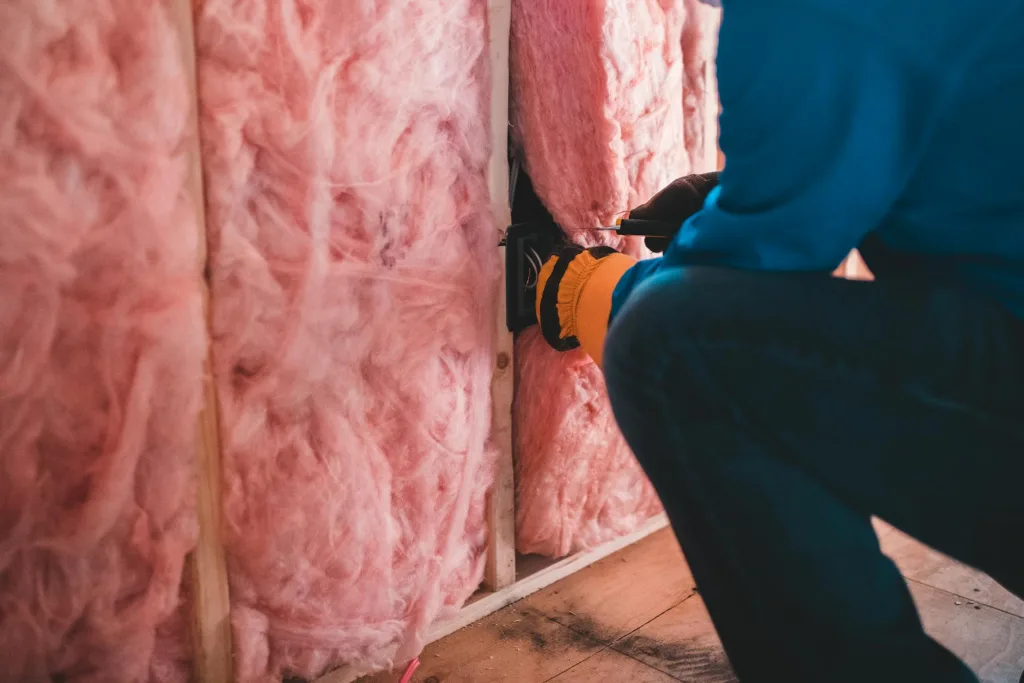
Imagine stepping into a home that's actually warm in winter and cool in summer—no more chilly floors or draughts sneaking through the walls. For Kiwis, insulating your home isn't just a nice-to-have;...
James writes about the New Zealand property market, renting, home ownership, and housing costs. He breaks down complex property topics into practical advice for renters and buyers.
Imagine stepping into a home that's actually warm in winter and cool in summer—no more chilly floors or draughts sneaking through the walls. For Kiwis, insulating your home isn't just a nice-to-have; it's a game-changer for comfort, health, and your power bill. With 2026 bringing updated grants and cost-saving Building Code tweaks, now's the perfect time to explore Home Insulation NZ: Costs and Grants 2025 and beyond.
Why Insulate Your Kiwi Home?
New Zealand homes, especially those built before the late 1970s, often lack proper insulation, leading to massive heat loss—up to 40% through the ceiling and roof, 24% via walls, and 10% from floors. This means you're pouring money into heating that's escaping faster than it warms your whānau. Proper insulation creates a warmer, drier home, slashes energy bills by up to $340 a year, and boosts resale value—it's the second most important feature for homebuyers.
Health benefits are huge too: fewer colds, less mould, and better sleep in a cosier space. Plus, it's kinder to the planet, cutting greenhouse emissions while meeting our Kiwi commitment to sustainable living.
R-Values Explained: What You Need for Your Region
All NZ insulation carries an R-value, measuring thermal resistance—the higher, the better at blocking heat flow. Minimum requirements vary by climate:
- North Island (excluding Central Plateau): Ceiling R3.2, Walls R2.2, Floors R1.6
- Central Plateau and South Island: Ceiling R3.6, Walls R2.4, Floors R1.6
Aim higher if your budget allows for maximum efficiency. Polyester (from recycled bottles) and fibreglass are popular, with bulk or blanket options fitting snugly between joists.
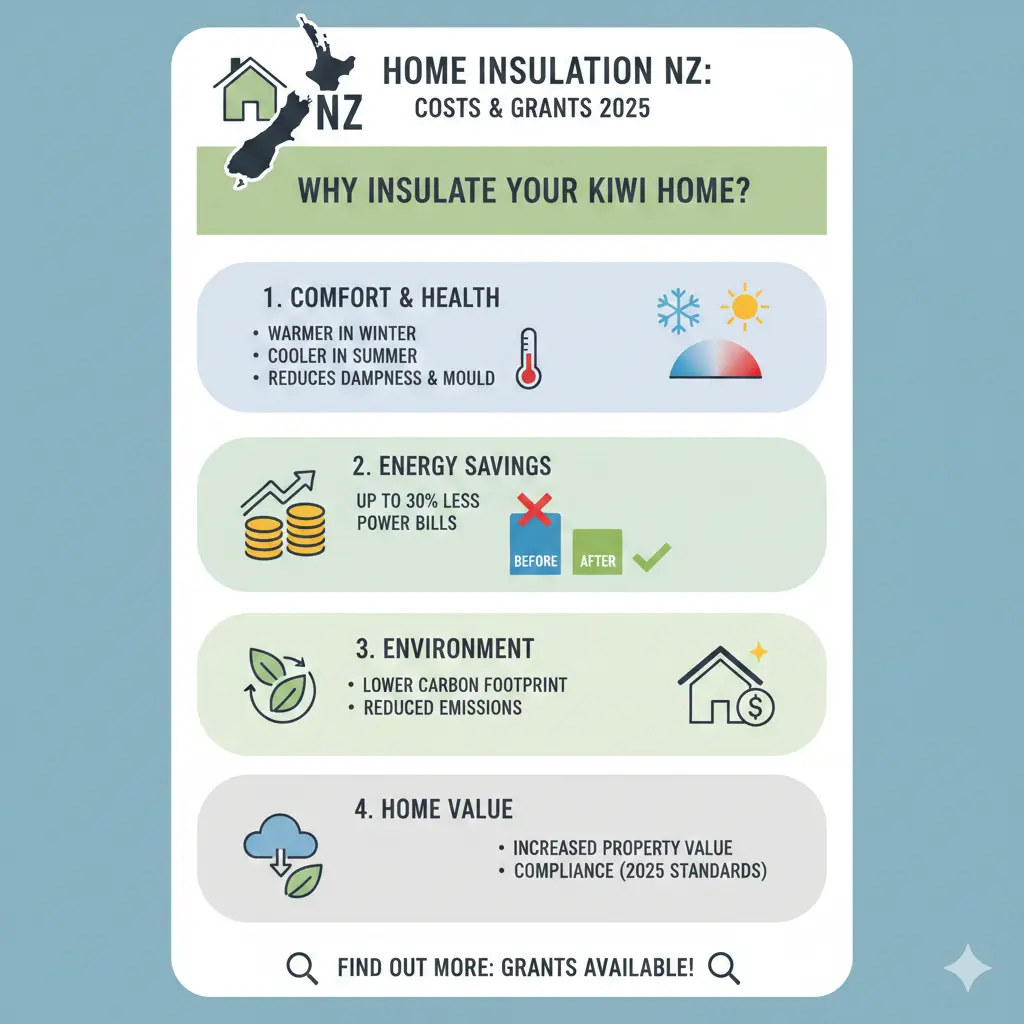
Insulation Costs in NZ: What to Expect in 2026
For an average 100m² three-bedroom house, full ceiling and underfloor insulation runs $3,000–$5,000, depending on R-value, access, and installer. Break it down:
Ceiling Insulation
R2.9–R3.3 product and install: $1,500–$2,500. Gabled ceilings or poor access might require roof removal, hiking costs.
Underfloor Insulation
R1.3–R1.6: $1,500–$3,000. Add $1,000–$1,500 for a ground moisture barrier (polythene sheet) if clearance is under 400mm.
Full Retrofit Average
Expect around $4,300 for a typical retrofit covering ceiling and underfloor. New builds see slimmer uplifts—H1-compliant insulation adds just $2,179 to a 140m² three-bedroom home, and some smaller homes (92m² two-bed) are even cheaper post-2023 standards.
Recent government changes aim to trim new build costs by up to $15,000 by easing H1 requirements, making insulation more affordable without skimping on performance.
Factors pushing prices up: home size, insulation type (eco-friendly or soundproof adds cost), and fixes like leaks or wiring first. Get multiple quotes—use free tools like Builderscrack's insulation calculator for a ballpark.
Warmer Kiwi Homes Grants: Your Ticket to Affordable Insulation
The star of Home Insulation NZ: Costs and Grants 2025 is the Warmer Kiwi Homes programme from EECA, covering ceiling/underfloor insulation (and some heaters) for eligible Kiwis. No low-interest loan repayment needed—it's a true grant.
Eligibility Basics
- Own or rent a pre-2008 home (built or last insulated before 1 July 2008)
- Live in a participating region (most of NZ)
- Have a Community Services Card, SuperGold Combo, or live in a higher-deprivation area
Check your postcode on the EECA site for instant eligibility.
Grant Levels and Savings
| Area/Status | Grant Coverage | Your Cost (Avg $4,300 Job) |
|---|---|---|
| NZDep 5-7 (Middle-income) | 50% | ~$2,150 |
| NZDep 8 | 80% | ~$860 |
| Community Services Card, SuperGold, or NZDep 9-10 | 90% | ~$430 |
Assessors visit free to check your home, recommend work, and connect you with approved installers. Post-job, they verify quality.
"A well-insulated home can save you up to $340 each year off your power bill."
Steps to Insulate Your Home in 2026
- Assess Your Needs: Check existing insulation (lift a ceiling tile or call a pro). Fix leaks, moisture, and wiring first.
- Confirm Eligibility: Visit EECA's Warmer Kiwi Homes page or call 0800 275 808.
- Get Quotes: Use approved providers like Premier Insulation. Compare R-values and warranties.
- Apply for Grant: Programme handles paperwork—your share paid directly.
- Install and Enjoy: Work usually takes 1–3 days. Expect healthier lungs and lower bills immediately.
Pro Tip: Combine with efficient heating (e.g., heat pumps) for full grant benefits and max savings.
2026 Updates: Cheaper Builds and Smarter Standards
The government's tweaking H1 insulation rules to cut new build costs—up to $15,000 savings per average home—while keeping essentials intact. For renos, grants remain robust, and research shows long-term wins: $62,000 saved over 30 years in a 6 Homestar home via lower power and mortgage rates.
FAQ: Home Insulation NZ Queries Answered
1. Do I qualify for Warmer Kiwi Homes if I rent?
Yes, if your landlord agrees and you're in an eligible home. The grant goes to them, but you get the warm home.
2. How long does installation take?
1–3 days for most homes, depending on access.
3. What's the payback period on insulation?
2–5 years via power savings, plus health and comfort gains.
4. Can I insulate walls too?
Warmer Kiwi Homes focuses on ceiling/underfloor, but walls are worth it for full efficiency—check private options.
5. Are there grants for new builds?
Not through Warmer Kiwi Homes, but banks like BNZ offer green loans for high-rated homes.
6. How do I find my NZDep rating?
Use EECA's online tool by entering your address.
Ready to Warm Up Your Home?
Insulating your Kiwi home pays off in comfort, cash, and carbon savings—especially with 2026 grants covering up to 90%. Start today: check eligibility at EECA, grab quotes from approved pros, and turn your house into a haven. Your whānau (and wallet) will thank you. Contact a local installer or visit lifetimes.co.nz for more reno guides.
Related Articles
Bathroom Renovation Costs NZ 2025
Planning a bathroom spruce-up in 2026? With Kiwi homes getting older and our love for cosy, functional spaces growing, knowing the real bathroom renovation costs NZ 2025 (updated for current rates) ca...

Deck Building NZ: Costs and Consent Requirements
Imagine firing up the barbie on a sunny Kiwi afternoon, with mates gathered around and kids playing safely on a sturdy new deck. That's the dream for many homeowners across New Zealand, but before you...

Painting Your House NZ: DIY vs Professional Costs
Ever stared at your peeling weatherboards or faded interior walls and wondered if it's time for a fresh coat of paint? In New Zealand, where our homes battle salty coastal air, relentless UV rays, and...
Energy Efficient Home Upgrades NZ
Imagine slashing your power bills by hundreds of dollars a year while cosying up in a warmer, healthier home this winter. For Kiwis facing rising energy costs and chilly draughts, energy efficient hom...