E-Scooter and E-Bike Rules NZ: Road Code Update

Picture this: you're zipping through Auckland's bustling streets on your e-scooter or e-bike, dodging traffic and enjoying the fresh Kiwi air. But one wrong move, and you could face a hefty fine or wo...
The Lifetimes NZ editorial team curates, fact-checks, and updates guides on personal finance, property, health, immigration, legal, business, and lifestyle topics relevant to Lifetimes NZ readers. Articles are produced with AI assistance and reviewed by the editorial team before publication.
Picture this: you're zipping through Auckland's bustling streets on your e-scooter or e-bike, dodging traffic and enjoying the fresh Kiwi air. But one wrong move, and you could face a hefty fine or worse. With the 2026 Road Code updates from Waka Kotahi NZ Transport Agency shaking things up, knowing the latest **e-scooter and e-bike rules NZ** is essential for staying safe and legal.
These micromobility devices have exploded in popularity across New Zealand, from Wellington's waterfront paths to Christchurch's cycleways. Yet, as usage surges, so do safety concerns—and regulators are responding. This guide breaks down the current laws, 2026 changes, and practical tips to keep you compliant without slowing your roll.
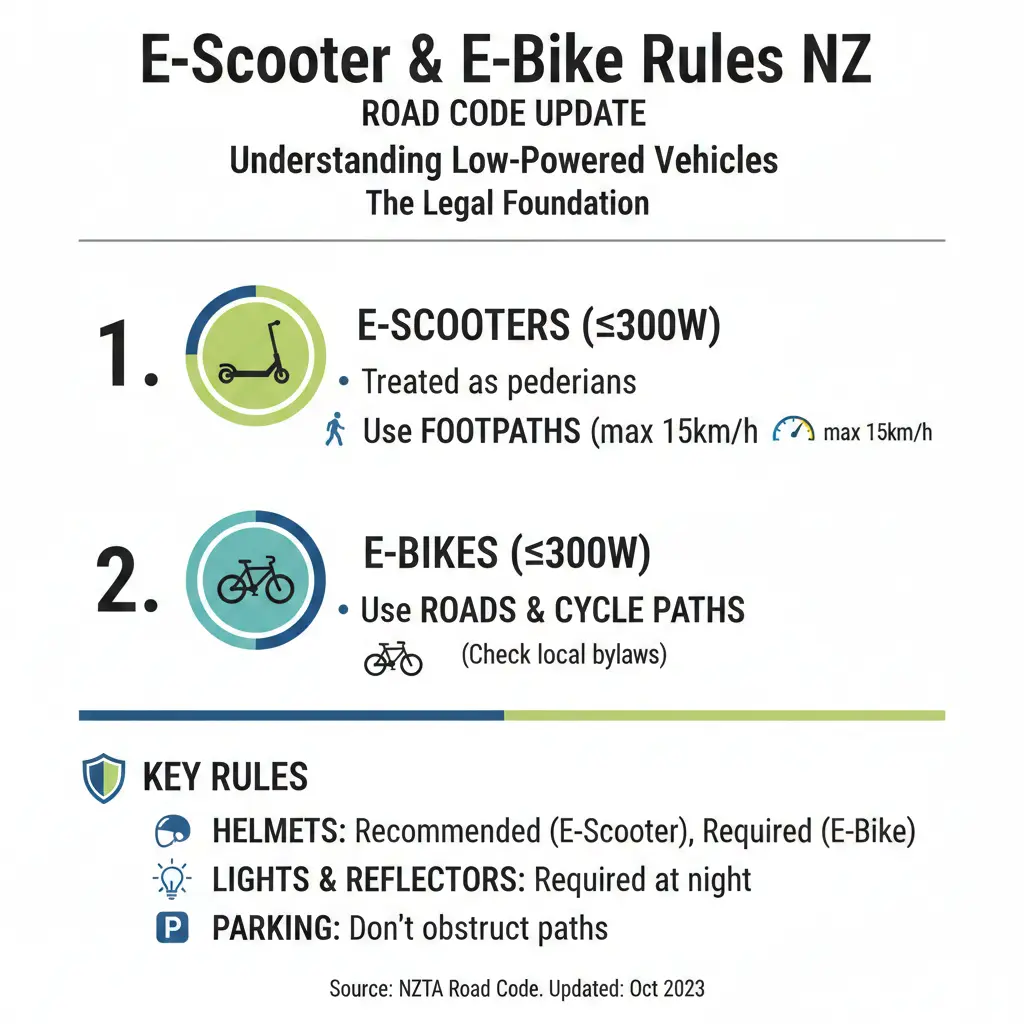
Understanding Low-Powered Vehicles: The Legal Foundation
In New Zealand, e-scooters and certain e-bikes fall under the category of low-powered vehicles (LPVs), as defined by Waka Kotahi NZ Transport Agency. This classification exempts them from traditional motor vehicle rules like registration, licensing, and warrants of fitness (WoF).
LPVs include devices with specific limits: for e-scooters, a maximum motor output of 300 watts and wheels no larger than 355mm in diameter. Anything exceeding this enters a grey area—technically unregulated and not road-legal, though enforcement often prioritises bad behaviour over specs.
Key Definition Differences: E-Scooters vs E-Bikes
- E-Scooters (PWRDs - Powered Wheeled Recreational Devices): Max 300W continuous power. No pedalling required. Treated like cycles for road use.
- E-Bikes: Pedal-assist models up to 250W (common global standard, aligned with NZ practices) with motor cut-off at 25km/h. Higher-powered ones may be classified as mopeds if over 2kW or 50km/h top speed, requiring registration.
Pro tip: Check your scooter's or bike's specs before hitting the road. Manufacturers like those sold via NZ retailers often label compliance, but modifications can void this.
Where You Can Ride: Roads, Paths, and Restrictions
Freedom is a Kiwi hallmark, but e-mobility comes with boundaries. Under the Road Code, e-scooters and compliant e-bikes can generally be used on footpaths, shared paths, cycle lanes, and roads—except designated cyclist-only lanes on roads.
Road Rules Breakdown
| Location | E-Scooters | E-Bikes | Notes |
|---|---|---|---|
| Footpaths & Shared Paths | Allowed | Allowed (as cycles) | Give way to pedestrians; max speed to match walking pace in busy areas. |
| Cycle Lanes | Allowed if shared | Allowed | Stay right in shared lanes. |
| Roads | Allowed, hug left edge | Allowed, follow cycle rules | Not recommended for e-scooters due to speed mismatches. |
| Prohibited Areas | Busy malls, some council zones | Motorways, high-speed roads | Check local bylaws—e.g., Auckland Council restrictions. |
Local councils hold sway: Auckland, for instance, regulates rental e-scooters via licences, banning them in high-pedestrian zones like Queen Street during peak hours. Always dismount in crowded spots to avoid fines.
Speed Limits and Safety Gear: What the 2026 Road Code Update Means
The 2026 Road Code refresh addresses rising incidents, with Waka Kotahi proposing tighter controls amid growing e-mobility adoption. No blanket speed cap exists yet—devices must obey the road's limit (e.g., 50km/h urban default)—but expect changes.
Proposed 2026 Updates
- Speed Restrictions: Lower limits (e.g., 15km/h) in high-pedestrian areas via signage. Monitoring over five years for broader rules.
- Helmet Mandate: Not required now (strongly recommended), but mandatory use is on the table, especially for rentals.
- Intoxicated Riding: Zero tolerance, akin to cycling laws, with breath tests possible.
- Battery Safety: Stricter standards for lithium-ion batteries to curb fires, influenced by global trends.
For e-bikes, pedal-assist keeps you under 25-45km/h depending on class, but tampering (e.g., removing limiters) risks reclassification as a motorbike—fines up to $1,000 and seizure.
"Over the next five years we will continue to explore... measures to promote the safe and responsible use of e-scooters." — Waka Kotahi NZTA
Financial Implications: Fines, Insurance, and Costs
While no registration or KiwiSaver deductions apply, non-compliance hits your wallet. In the Money & Finance category, here's the Kiwi reality:
Common Fines and Penalties
- Illegal Riding (e.g., >300W unregistered): Up to $1,000 fine; vehicle seizure.
- Bylaw Breaches (prohibited areas): $150-$500 infringement notices from councils like Auckland.
- Dangerous Behaviour: $100+ for speeding or not yielding; escalated for intoxication.
- Tampering: Hefty penalties under 2026 rules, plus insurance invalidation if you have third-party cover.
Insurance tip: Personal liability cover via AA or State is wise (from $100/year), as ACC covers injuries but not property damage. No compulsion, but rental firms like Lime mandate it.
Budget for gear: Quality helmets ($50-$150), lights ($20+), and locks. Compare e-scooter/e-bike costs—entry models $400-$1,000; commuters $2,000+ with legal power.
Practical Tips for Compliant Riding in NZ
Stay legal and safe with these actionable steps tailored for Kiwi conditions:
- Pre-Ride Checks: Verify power/wheel size; test brakes, lights, and tyres. Use Waka Kotahi's LPV checklist.
- Visibility Boost: Lights on dawn/dusk; hi-vis vest in rain—NZ weather demands it.
- Share the Road: Signal turns, eye contact with drivers, yield to peds. Follow the Cycling Code.
- Urban Navigation: Apps like NZTA's Journey Planner for safe routes; avoid peak-hour motorways.
- Storage & Charging: Secure against theft (use sold-secure locks); charge on non-flammables per 2026 battery rules.
Regional Variations: Auckland, Wellington, and Beyond
National rules apply, but councils tweak them. Auckland licenses rental operators, banning scooters in key CBD spots. Wellington pushes shared paths; Christchurch focuses on post-quake cycle infrastructure. Check your local council site—e.g., aucklandcouncil.govt.nz—for bylaws.
Next Steps: Ride Smart, Stay Legal
Mastering **e-scooter and e-bike rules NZ: Road Code update** keeps you mobile, safe, and fine-free. Download the official Road Code app, join local cycling groups via Bicycle Auckland, and review your gear annually. For personalised advice, consult Waka Kotahi or a bike shop.
Disclaimer: This is general guidance. Laws evolve—seek professional advice from NZTA or a lawyer for your situation. Financial decisions? Chat to an authorised adviser; outcomes depend on individual circumstances.
Frequently Asked Questions
Sources & References
-
1
Are E-Scooters Legal in NZ? — freedpev.co.nz — freedpev.co.nz
- 2
-
3
Overview of Electric Bike Regulations in 2026 — hovsco.com — www.hovsco.com
-
4
Electric Bike Road Safety Laws 2025: What Changed — victripebike.com — victripebike.com
-
5
Micromobility: Licensing and Regulating E-Scooter and E-Bike Rental — aucklandcouncil.govt.nz — www.aucklandcouncil.govt.nz
-
6
Using E-Scooters and Low-Powered Vehicles — nzta.govt.nz — nzta.govt.nz
-
7
Goodbye to Old Driving Rules: New Zealand's 2026 Road Changes — artbeat.org.nz — www.artbeat.org.nz
-
8
Low-Powered Vehicles — nzta.govt.nz — nzta.govt.nz
Useful Tools
Related Articles

Working Multiple Jobs NZ: Tax and Legal Considerations
Juggling multiple jobs can boost your income, but it's crucial to understand the tax implications and legal requirements that come with working more than one role in Aotearoa. Whether you're a contrac...

Name Changes NZ: Legal Process and Costs
Considering a fresh start with a new name? Whether it's after marriage, divorce, or simply embracing a personal transformation, changing your name in New Zealand is straightforward but requires follow...

Holiday Home Tax Rules NZ: Private Use and Rental
Own a bach in Coromandel or a holiday home in Queenstown? You're not alone—many Kiwis cherish these escapes, but renting them out while enjoying personal use can trip you up on tax rules. Getting the...

Industry Bodies and Professional Associations NZ
Whether you're launching a business, advancing your career, or navigating financial regulations, industry bodies and professional associations in New Zealand offer invaluable support. These organisati...