Emergency Benefit NZ: When You Have No Other Options

When you're struggling financially and don't qualify for other benefits, the Emergency Benefit might be your lifeline. It's a discretionary payment designed for Kiwis in genuine hardship who've exhaus...
The Lifetimes NZ editorial team curates, fact-checks, and updates guides on personal finance, property, health, immigration, legal, business, and lifestyle topics relevant to Lifetimes NZ readers. Articles are produced with AI assistance and reviewed by the editorial team before publication.
When you're struggling financially and don't qualify for other benefits, the Emergency Benefit might be your lifeline. It's a discretionary payment designed for Kiwis in genuine hardship who've exhausted other options. Here's what you need to know about accessing this support.
What Is the Emergency Benefit?
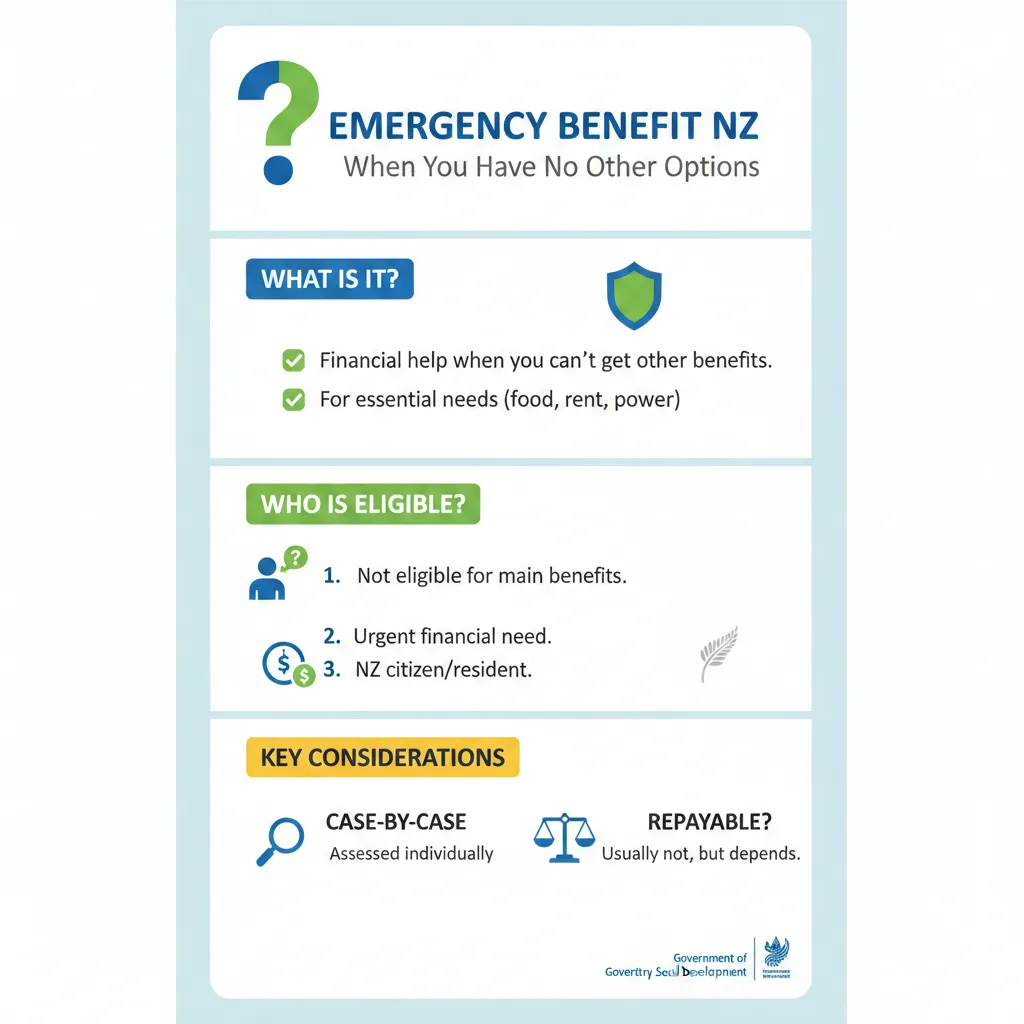
The Emergency Benefit is assistance for people who cannot support themselves and don't qualify for any other main benefit. It's treated as a last resort by Work and Income, meaning you'll need to demonstrate that you have no other means of supporting yourself or your dependants.
Unlike regular benefits with set payment rates, the Emergency Benefit is discretionary. Work and Income decides the amount on a case-by-case basis, typically paying it at the rate of the main benefit you'd otherwise be eligible for.
Who Can Qualify for the Emergency Benefit?
To qualify, you need to meet these basic criteria:
- You're 16 years or older
- You don't qualify for any other main benefit
- You have no other means of supporting yourself
- Your cash assets are below the threshold limits
Asset Limits in 2026
Work and Income will assess your financial situation carefully. You can't have cash assets exceeding:
- $4,300 if you're single without children
- $7,464 if you have a partner or any children
There are exceptions to these limits. If refusing you the Emergency Benefit would seriously harm your health or welfare, Work and Income may approve your application despite higher assets.
Important Changes Coming in November 2026
If you're 18 or 19 years old without dependent children, new rules will apply from November 2026. You'll need to pass a Parental Assistance Test to access Emergency Benefit.
This test includes two components:
- A parental income test showing whether your parents earn at or below the income limit
- A parental support gap test showing you can't reasonably rely on your parents for support
The income limit is currently set at $65,529 (the cut-out point for a couple with dependent children receiving Supported Living Payment). This will be adjusted annually from April. Young people from very low-income families will still access support if needed.
How Much Will You Receive?
The Emergency Benefit amount varies depending on your circumstances. Work and Income typically pays it at the rate equivalent to the main benefit you'd qualify for under normal circumstances. The payment is made fortnightly, like other benefits.
If you're approved, you'll also qualify for the Winter Energy Payment to help with heating costs during winter months.
How to Apply for the Emergency Benefit
Applying is straightforward, but you'll need to act quickly:
- Call Work and Income on 0800 559 009
- Explain your situation and why you don't qualify for other benefits
- Provide details about your financial circumstances, assets, and dependants
- Be prepared to discuss what support you need and why
Work and Income may also set specific conditions on your Emergency Benefit. For example, if you're getting it in place of Jobseeker Support, you might need to meet work-test requirements.
Before You Apply: Check Other Benefits First
The Emergency Benefit is genuinely a last resort. Before applying, you should check whether you qualify for other payments, which might be more advantageous. These could include:
- Jobseeker Support (if you're looking for work)
- Sole Parent Support (if you're a sole parent)
- Supported Living Payment (if you have a health condition or disability)
- Accommodation Supplement
- Disability Allowance
- Temporary Additional Support
Work and Income has a Check What You Might Get tool on their website to help you identify which payments you might qualify for. This can save you time and ensure you're applying for the right assistance.
What Work and Income Will Consider
When assessing your Emergency Benefit application, Work and Income will examine:
- Why you and any dependants can't support yourselves
- Your current financial situation and assets
- Whether you've exhausted other benefit options
- The seriousness of your circumstances
- Your health and welfare needs
Be honest and thorough when explaining your situation. Work and Income needs to understand the genuine hardship you're facing to make their decision.
Frequently Asked Questions
Can I get the Emergency Benefit if I've been turned down for other benefits?
Yes. In fact, being ineligible for other main benefits is a key requirement. If you qualify for another benefit, you must apply for that instead. The Emergency Benefit is specifically for people who fall through the gaps of the regular benefit system.
What happens if my circumstances change while I'm receiving the Emergency Benefit?
You must report changes to Work and Income immediately. If your financial situation improves or you become eligible for another benefit, your Emergency Benefit may be stopped or adjusted. Failing to report changes could affect your payments or result in overpayments you'd need to repay.
Will the Emergency Benefit affect my ability to get other help?
No. If you're receiving the Emergency Benefit, you'll still qualify for supplementary assistance like the Winter Energy Payment. However, final decisions about access to hardship and other supplementary assistance for young people (18-19) affected by the new Parental Assistance Test are still being determined.
How long can I receive the Emergency Benefit?
The Emergency Benefit is discretionary and can be reviewed at any time. Work and Income will assess your circumstances regularly. The duration depends on your situation and whether your circumstances improve or change.
What if I disagree with Work and Income's decision?
You have the right to appeal Work and Income's decision. If your application is declined or you're unhappy with the outcome, you can request a review or lodge a formal appeal. Community Law Aotearoa and other legal aid services can help you understand your rights.
Do I need to meet work requirements to get the Emergency Benefit?
Work and Income can set specific conditions on your Emergency Benefit. If it's being paid instead of Jobseeker Support, you may need to meet work-test requirements. These conditions vary depending on your circumstances, so clarify what's expected when you apply.
Getting Additional Support
If you're approved for the Emergency Benefit, don't assume that's your only help available. Ask Work and Income about:
- Accommodation Supplement – help with rent or mortgage payments
- Temporary Additional Support – for unexpected costs or emergencies
- Winter Energy Payment – automatic if you're on the Emergency Benefit
- Disability Allowance – if you have ongoing medical costs
These supplementary payments can make a real difference to your weekly budget and help you cover essential costs.
Next Steps: Taking Action Today
If you're in genuine hardship and don't qualify for other benefits, the Emergency Benefit could provide the support you need. Here's what to do:
- Gather your financial documents (bank statements, proof of assets, details of dependants)
- Use the Work and Income Check What You Might Get tool to confirm you don't qualify for other benefits
- Call 0800 559 009 to apply for the Emergency Benefit
- Be clear and honest about your circumstances
- Ask about supplementary payments you might also qualify for
- Keep records of your application and any correspondence
The Emergency Benefit exists because we recognise that life can be unpredictable. If you're struggling, you don't have to manage alone. Work and Income is there to help, and the Emergency Benefit is a genuine safety net for Kiwis facing genuine hardship.
Important note: This article provides general information about the Emergency Benefit. Every situation is unique, and your eligibility depends on your specific circumstances. If you're unsure whether you qualify, contact Work and Income directly or seek advice from Community Law Aotearoa.
Related Articles

Industry Bodies and Professional Associations NZ
Whether you're launching a business, advancing your career, or navigating financial regulations, industry bodies and professional associations in New Zealand offer invaluable support. These organisati...

Unpaid Internships NZ: Are They Legal?
Unpaid internships are a common pathway for students and graduates to gain work experience in New Zealand, but there's often confusion about whether they're actually legal. The short answer is: unpaid...

Estate Administration NZ: Managing Someone's Affairs After Death
Losing a loved one is one of life's toughest challenges, and stepping in to manage their estate can feel overwhelming. In New Zealand, estate administration—the process of handling someone's affairs a...

Investor Visas NZ: Bringing Capital to New Zealand
Imagine transforming your wealth into a foothold in one of the world's most liveable countries, where stunning landscapes meet a thriving economy. Investor visas in New Zealand offer high-net-worth in...