Temporary Additional Support: Help with Essential Costs

Struggling to make ends meet despite your best efforts? You're not alone—many Kiwis face unexpected rises in living costs that stretch even a steady income thin. Temporary Additional Support from Work...
Sarah covers personal finance, tax, and KiwiSaver topics for Lifetimes NZ. She focuses on making money management straightforward and practical for everyday Kiwis.
Struggling to make ends meet despite your best efforts? You're not alone—many Kiwis face unexpected rises in living costs that stretch even a steady income thin. Temporary Additional Support from Work and Income offers a vital weekly payment to bridge that gap, helping cover essential costs like rent, power, and food when other resources fall short.
This non-taxable assistance doesn't require you to be on a main benefit, making it accessible for working families, students, and others in hardship. In 2026, with ongoing economic pressures, understanding how to access this support could mean the difference between stability and stress.
What is Temporary Additional Support?
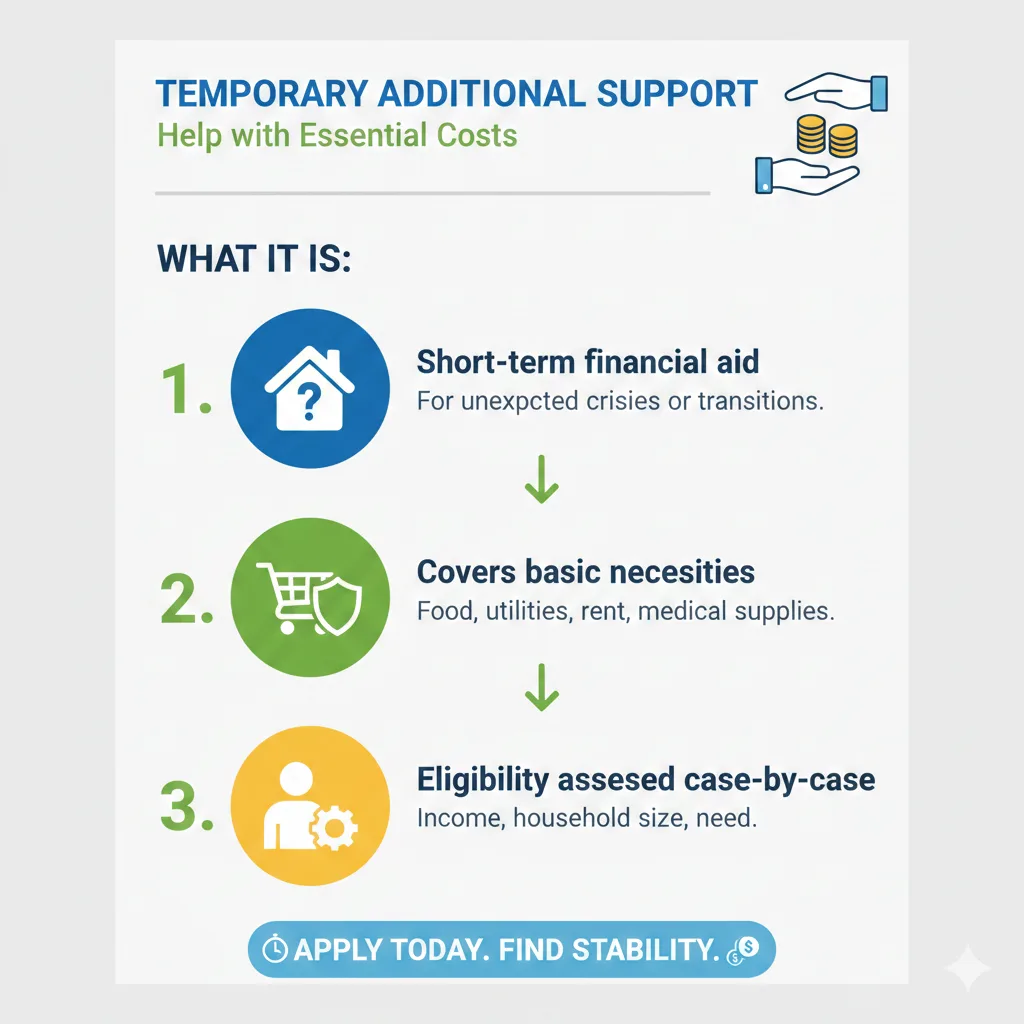
Temporary Additional Support (TAS) is a weekly, non-taxable payment designed to help Kiwis who can't meet their essential living costs from earnings, benefits, or other sources. It's not a loan—you don't pay it back—and it's available for up to 13 weeks at a time, with the option to reapply if you continue taking reasonable steps to improve your situation.
Unlike one-off grants, TAS provides ongoing help tailored to your deficit after allowable expenses. For instance, if power bills spike or grocery costs climb due to inflation, TAS can cover the shortfall, often stacking with other aids like Accommodation Supplement or Disability Allowance. In 2026, this remains a key tool amid rising costs, with no changes to core eligibility reported.
How TAS Fits into New Zealand's Support System
TAS complements broader welfare like Jobseeker Support, where you might also qualify for extras such as Disability Allowance or Childcare Subsidy. It's governed by Social Security Regulations 2018 (regs 56–71), ensuring a fair formula-based assessment. For students via StudyLink, it's available if you have dependents, high disability costs, or are on a Work and Income benefit.
Who Qualifies for Temporary Additional Support?
Eligibility for TAS is straightforward but assessed individually. You must meet these core criteria:
- Be over 16 years old.
- Hold New Zealand citizenship or permanent residency and normally live here with intent to stay.
- Have essential costs you can't cover from income, assets, or other help.
- Not be receiving Special Benefit.
Work and Income then applies a formula: they calculate your total income (wages, benefits, supplements), subtract standard costs based on family size, and allowable expenses. A surplus means no TAS; a deficit qualifies you. Cash assets must be below cut-off points, and they'll consider your efforts to cut costs or boost income.
Special Cases: Students, Families, and Disabilities
Full-time students can access TAS only with a dependent child, maximum Disability Allowance plus extra costs, or if on a Work and Income benefit. Families with high disability-related expenses may exceed standard TAS maximums. Even if you don't meet two-year residency for other supplements, TAS could still apply.
Recent events like the January 2026 severe weather highlight related supports—while TAS isn't emergency housing, displaced Kiwis might pair it with MBIE's Temporary Accommodation Service for broader relief.
How Much Temporary Additional Support Can You Get?
Amounts vary by your calculated deficit, family size, and costs. In 2026, reports suggest up to $75 weekly extra for some, especially seniors or low-income households, though exact rates depend on assessment. It's additional to benefits like Jobseeker Support (valid rates from 1 April 2025–31 March 2026 include potential TAS top-ups).
Standard costs are family-sized adjusted—e.g., singles have lower thresholds than families. If approved, payments start from your application date if completed within 20 working days.
How to Apply for Temporary Additional Support
Applying is simple and can be done online via MyMSD for fastest processing. Here's a step-by-step guide:
- Check eligibility first: Use Work and Income's 'Check what you might get' tool online.
- Gather documents: Income proof (payslips, bank statements), expense details (rent, power bills), and asset info.
- Apply based on your situation:
- Not on benefits or only childcare: Apply online or print Extra Help form.
- Already on benefits: Use TAS application form.
- Submit: Log into MyMSD, complete the form, upload docs, and submit. Or call 0800 559 009 (or 0800 552 002 if over 65) and say "Temporary Additional Support".
- Wait for outcome: They'll contact you for more info if needed; payments can backdate if applied promptly.
Visit your local Work and Income service centre if online isn't an option.
Reapplying for Temporary Additional Support
TAS lasts a maximum 13 weeks—you must reapply before it ends to avoid gaps. You'll receive a letter and MyMSD notification four weeks prior with a form.
To reapply:
- Online (preferred): Log into MyMSD, select reapply, complete form, upload changes (e.g., partner/child details), submit.
- Phone or in-person: Call and request phone help, or drop off the form at a service centre.
Prove you've taken reasonable steps to reduce costs or increase income, like job hunting or budgeting. Approval confirms continued need via the deficit formula.
Tips for Successful Reapplication
- Track expenses meticulously—use apps or spreadsheets.
- Document income efforts: CV updates, job applications.
- Update MyMSD immediately for life changes (e.g., new job, family addition).
Practical Tips to Maximise Your Chances and Manage Costs
While waiting for TAS:
- Reduce essentials: Switch to budget power plans, shop at local markets, apply for WINZ discounts.
- Boost income: Check KiwiSaver withdrawals if eligible, freelance via local sites, or seek ACC if injured.
- Stack supports: Pair TAS with IRD family credits, StudyLink for students, or tenancy aids at tenancy.govt.nz.
- Budget wisely: Use MoneyHub tools for benefit rates; track against 2026 Jobseeker thresholds.
For disabilities, combine with maximum Disability Allowance—apply via Work and Income for holistic help.
FAQ
1. Do I need to be on a benefit to get Temporary Additional Support?
No, TAS is available even if working or only on childcare payments.
2. How long does Temporary Additional Support last?
Up to 13 weeks, but you can reapply if still eligible and showing progress.
3. Is Temporary Additional Support taxable?
No, it's a non-taxable weekly payment.
4. Can students get Temporary Additional Support?
Yes, via StudyLink if you have dependents, high disability costs, or a Work and Income benefit.
5. What if I'm affected by recent weather events?
Access TAS for costs, plus MBIE's Temporary Accommodation Service for housing—register online or call 0508 754 163.
6. How do I know my exact TAS amount?
Work and Income calculates via income minus standard/allowable costs; use their checker tool.
Next Steps: Secure Your Support Today
Don't let essential costs overwhelm you—start by checking eligibility on the Work and Income site or calling 0800 559 009. Reapplying keeps support flowing, and combining TAS with budgeting builds long-term resilience. Remember, this is general info; circumstances vary, so seek personalised advice from a financial adviser or Work and Income case manager. KiwiSaver, IRD, or WINZ pros can tailor plans further.
Apply now to cover those gaps and focus on what matters—your wellbeing and whānau.
Related Articles

Industry Bodies and Professional Associations NZ
Whether you're launching a business, advancing your career, or navigating financial regulations, industry bodies and professional associations in New Zealand offer invaluable support. These organisati...

Emergency Benefit NZ: When You Have No Other Options
When you're struggling financially and don't qualify for other benefits, the Emergency Benefit might be your lifeline. It's a discretionary payment designed for Kiwis in genuine hardship who've exhaus...

Unpaid Internships NZ: Are They Legal?
Unpaid internships are a common pathway for students and graduates to gain work experience in New Zealand, but there's often confusion about whether they're actually legal. The short answer is: unpaid...

Estate Administration NZ: Managing Someone's Affairs After Death
Losing a loved one is one of life's toughest challenges, and stepping in to manage their estate can feel overwhelming. In New Zealand, estate administration—the process of handling someone's affairs a...