Disability Allowance NZ: What You Can Claim

Navigating the extra costs of living with a disability in New Zealand can feel overwhelming, but the Disability Allowance NZ offers vital financial relief for Kiwis facing ongoing expenses. Whether it...
Sarah covers personal finance, tax, and KiwiSaver topics for Lifetimes NZ. She focuses on making money management straightforward and practical for everyday Kiwis.
Navigating the extra costs of living with a disability in New Zealand can feel overwhelming, but the Disability Allowance NZ offers vital financial relief for Kiwis facing ongoing expenses. Whether it's prescription fees, specialist appointments, or mobility aids, this weekly payment from Work and Income helps cover what other agencies don't, ensuring you can focus on your wellbeing rather than the bills.
With changes to Disability Support Services rolling out in 2026, understanding what you can claim has never been more important. This guide breaks down eligibility, claimable costs, application steps, and tips tailored for New Zealanders, so you know exactly what you're entitled to in 2026.
What is Disability Allowance NZ?
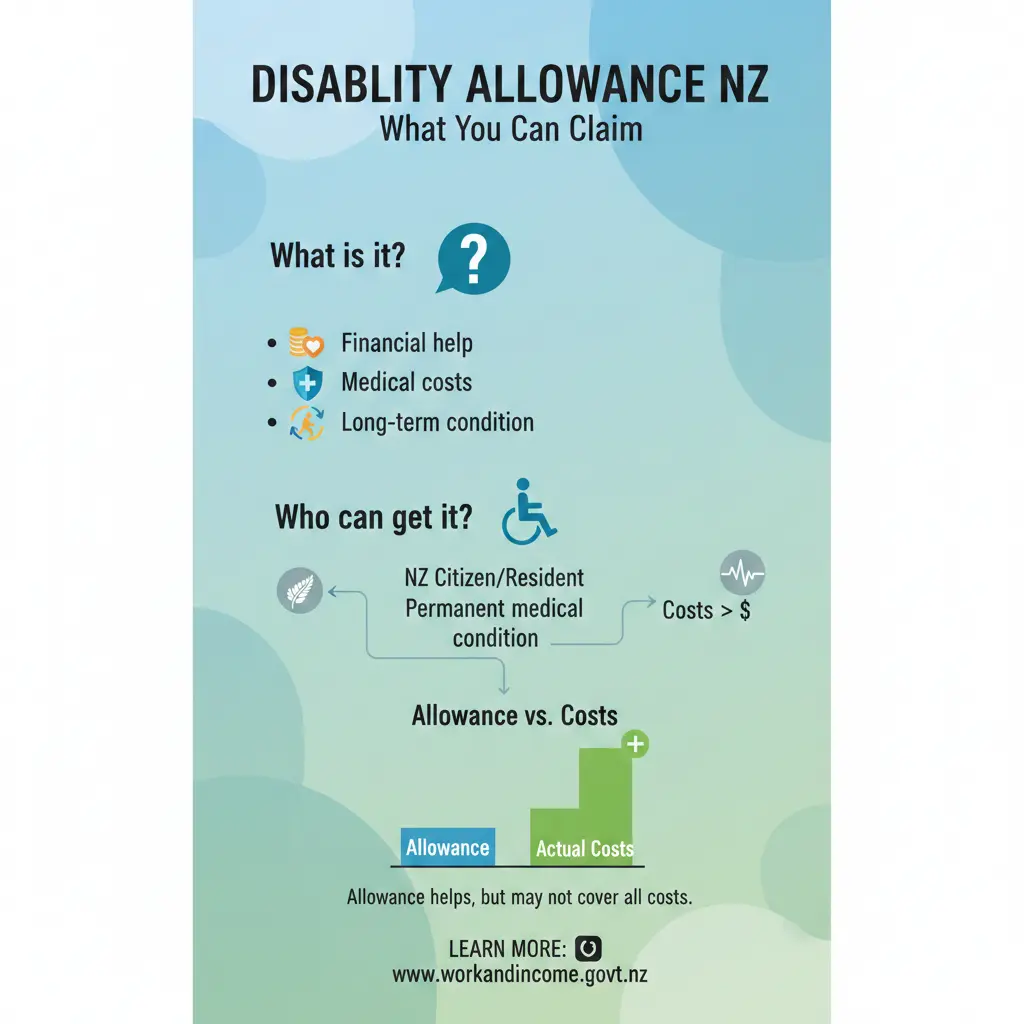
The Disability Allowance is a non-taxable, income-tested weekly payment designed to reimburse regular, ongoing costs directly linked to your disability. Unlike main benefits, it's not asset-tested, meaning your savings or property won't affect eligibility. You can receive it alongside other benefits, wages, or even if you're studying, as long as you meet the criteria.
Administered by Work and Income (part of the Ministry of Social Development), it supports Kiwis who are New Zealand citizens or permanent residents living here permanently. In 2026, the maximum weekly rate remains around $65.36, but your exact amount depends on verified costs and income. It's paid weekly into your bank account and helps bridge gaps left by ACC, health services, or other funding.
Key Features of Disability Allowance
- Ongoing support: For disabilities likely to last at least six months.
- Flexible claiming: Covers a wide range of disability-related expenses confirmed by your doctor.
- No work restrictions: You can be employed, on a benefit, or studying.
- Child applications: Parents or guardians can claim for dependent children under 18.
Who Qualifies for Disability Allowance NZ?
To claim, you must have a disability—defined as a physical, intellectual, sensory disability, autism, or combination—that's likely to last at least six months and requires ongoing support. This results in extra costs not fully covered elsewhere. You're ineligible if receiving Residential Care Subsidy or certain Oranga Tamariki board payments.
Residency and Age Requirements
- New Zealand citizen or permanent resident.
- Normally live in NZ and intend to stay.
- No upper age limit; applies to those 16+ or children via a parent/guardian.
Income Limits (2026 Rates, Before Tax)
Your household income must fall below these weekly thresholds. Partners' income is included for couples.
| Your Situation | Weekly Income Limit (Before Tax) |
|---|---|
| Single 16-17 years | $675.60 |
| Single 18+ years | $843.78 |
| Couple (with or without children) | $1,256.07 |
| Sole parent, 1 child | $942.23 |
| Sole parent, 2+ children | $992.74 |
If your income exceeds these, you won't qualify, but small amounts may still be payable if costs are high. Use Work and Income's online checker for a quick estimate.
Changes in 2026: What Kiwis Need to Know
From 9 February 2026, new applicants to Disability Support Services (DSS) face updated funding rules for more flexible supports, with existing recipients transitioning by April. Eligibility criteria remain unchanged: at least one qualifying disability (physical, intellectual, sensory, or autism) needing support for six+ months. Disability Allowance itself is unaffected, but it complements DSS funding.
Disability Allowance NZ: What You Can Claim
The allowance covers extra costs arising from your disability—those higher than what a non-disabled person would pay. Your doctor must certify these on the Disability Certificate, linking them directly to your condition. Common examples include:
Medical and Health Costs
- Prescription fees and medicines (e.g., asthma inhalers if certified).
- Doctor, specialist, or therapist visits (psychologists, counsellors if related).
- Dental work linked to disability (e.g., pain management for arthritis).
- Glasses, hearing aids, or medical alarms.
Mobility and Daily Living Aids
- Wheelchairs, crutches, or walking frames.
- Specialist transport (taxis with medical certification).
- Home modifications like ramps or grab rails (if ongoing costs apply).
Other Eligible Expenses
- Attendant care or respite (if not covered by DSS).
- Clothing alterations for braces/prosthetics.
- Petrol for medical appointments if public transport isn't viable.
- Child-specific: Car seats, special diets, or education aids.
What's not covered: One-off costs, mortgages, food (unless special diet certified), or expenses fully funded by ACC/health services. Always check with your doctor—most long-term conditions qualify for at least GP/prescription help.
"Most people will qualify for something if they have a long-standing health issue, even if it is only doctors visits and prescription costs."
How to Apply for Disability Allowance NZ in 2026
Applying is straightforward via MyMSD online, phone (0800 559 009), or in-person at Work and Income. Start within 20 working days of first contact for backdating.
Step-by-Step Application Guide
- Gather evidence: See your doctor for the Disability Certificate, detailing your condition and costs. Get 12 months' receipts or pharmacy summaries.
- Check eligibility: Use the online tool at check.msd.govt.nz.
- Apply online: Log into MyMSD, select Disability Allowance. Upload the certificate and proofs. Students use MyStudyLink.
- Wait for assessment: Work and Income may contact your doctor (with permission). Decisions usually take 2-4 weeks.
- Receive payment: Weekly to your bank; review annually or report changes.
For children: Apply as the financial supporter; income limits apply to you. Nominate an agent if applying for someone else.
Practical Tips for a Successful Claim
- Discuss costs with your doctor beforehand—they must confirm therapeutic value.
- Keep detailed receipts; quotes for future costs if none exist.
- If working, provide payslips; self-employed submit tax returns.
- Appeal refusals via Work and Income review or Benefits Review Committee.
- Combine with KiwiSaver, ACC, or WINZ for full support.
Combining Disability Allowance with Other NZ Benefits
You can stack it with Jobseeker Support, Sole Parent Support, or Student Allowance. It's separate from Child Disability Allowance (up to $340/week extra for carers). In 2026, DSS changes enhance flexibility without altering core eligibility.
Common Mistakes to Avoid
- Not getting doctor certification—essential for approval.
- Forgetting partner income affects limits.
- Claiming unrelated costs (e.g., general groceries).
- Delaying application—miss potential backpay.
Next Steps: Claim Your Disability Allowance Today
Don't let extra costs hold you back—start your application now via MyMSD or call 0800 559 009. Gather your doctor's certificate and receipts, check your income, and get the support you deserve. For personalised advice, visit a Work and Income office or use their eligibility checker. Remember, this isn't financial advice—consult a professional advisor or call MSD for your situation.
Frequently Asked Questions
Sources & References
-
1
Disability Allowance - Work and Income — www.workandincome.govt.nz
-
2
About the changes | Disability Support Services — www.disabilitysupport.govt.nz
-
3
Disability Allowance in a Nutshell - MoneyHub NZ — www.moneyhub.co.nz
-
4
Help with ongoing disability costs: Disability Allowance — communitylaw.org.nz
-
5
How to apply for Disability Allowance | Check what you might get — check.msd.govt.nz
-
6
Disability Allowance - StudyLink — www.studylink.govt.nz
Related Articles

Industry Bodies and Professional Associations NZ
Whether you're launching a business, advancing your career, or navigating financial regulations, industry bodies and professional associations in New Zealand offer invaluable support. These organisati...

Emergency Benefit NZ: When You Have No Other Options
When you're struggling financially and don't qualify for other benefits, the Emergency Benefit might be your lifeline. It's a discretionary payment designed for Kiwis in genuine hardship who've exhaus...

Unpaid Internships NZ: Are They Legal?
Unpaid internships are a common pathway for students and graduates to gain work experience in New Zealand, but there's often confusion about whether they're actually legal. The short answer is: unpaid...

Estate Administration NZ: Managing Someone's Affairs After Death
Losing a loved one is one of life's toughest challenges, and stepping in to manage their estate can feel overwhelming. In New Zealand, estate administration—the process of handling someone's affairs a...