Union Membership NZ: Benefits and How to Join

In today's competitive job market, many Kiwis are turning to unions for better pay, job security, and a stronger voice at work. Whether you're starting a new role or looking to improve your current co...
Sarah covers personal finance, tax, and KiwiSaver topics for Lifetimes NZ. She focuses on making money management straightforward and practical for everyday Kiwis.
In today's competitive job market, many Kiwis are turning to unions for better pay, job security, and a stronger voice at work. Whether you're starting a new role or looking to improve your current conditions, understanding union membership NZ: benefits and how to join can make a real difference to your career and finances.
Unions have a long history in New Zealand of negotiating fair deals for workers across industries like dairy, education, healthcare, and more. With 2026 bringing changes to employment laws and collective bargaining, now's the perfect time to explore how union membership can protect your rights and boost your wellbeing. This guide breaks down the key benefits, the joining process, and practical steps tailored for New Zealand workers.
What Are Unions and Why Do They Matter in New Zealand?
Unions are organisations that represent workers' interests, negotiating collective employment agreements (CEAs) on pay, hours, leave, and conditions. In NZ, they're backed by the Employment Relations Act, ensuring fair treatment and giving members collective power against employers.
From the New Zealand Dairy Workers Union (NZDWU) achieving over 90% unionisation in their sector to tertiary education unions like TIASA supporting allied staff, unions deliver real results. Recent surveys show union members receive pay rises more frequently than non-union workers, even amid rising living costs.
The Role of Unions in 2026's Changing Landscape
2026 is shaping up as a pivotal year for unions. With wage pushes above inflation, longer collective terms (often 2 years), and upcoming Employment Relations Act changes—like KiwiSaver employer contributions rising to 5% from April—unions are advocating strongly. The removal of the 30-day rule for new employees could shift how agreements are handled, making union involvement crucial.
Unions also address inequities, from pay equity setbacks to flexible work demands, helping Kiwis navigate economic stabilisation and election-year politics.
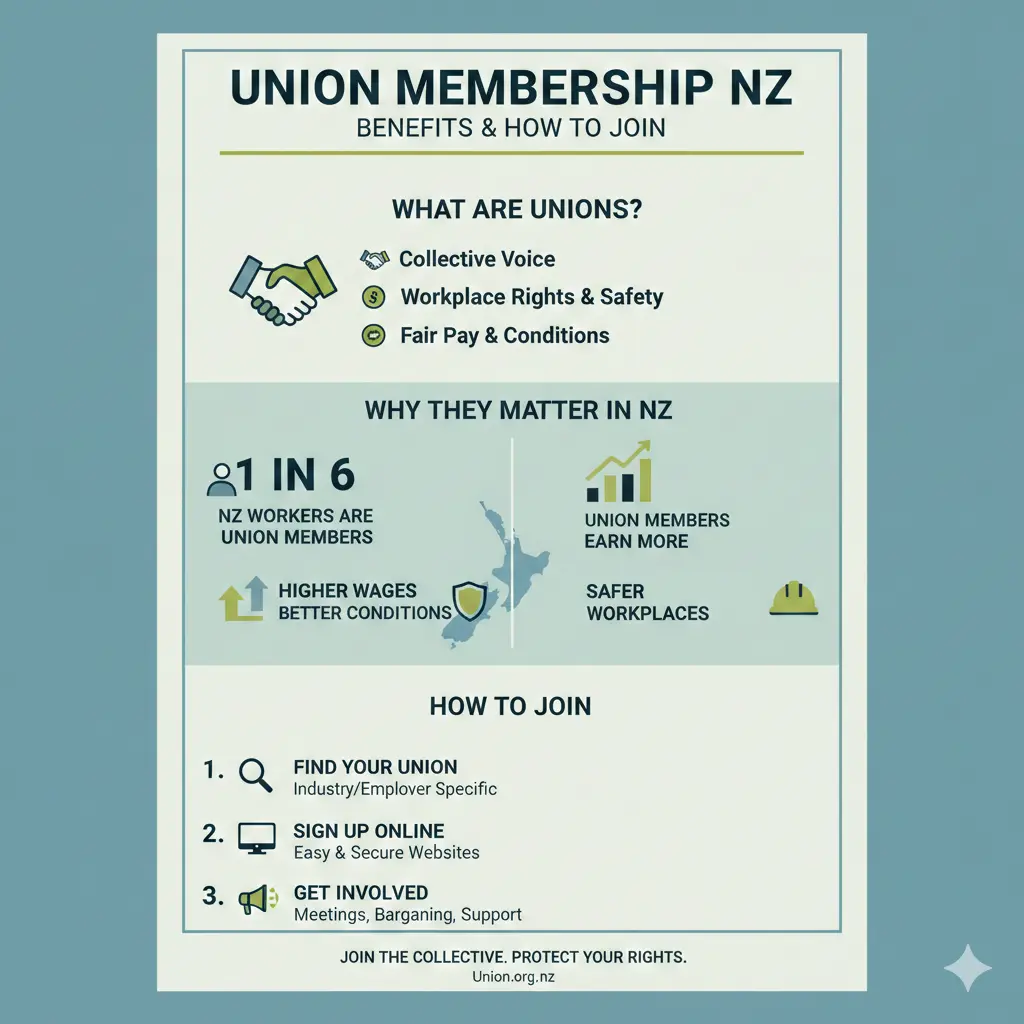
Key Benefits of Union Membership in NZ
Joining a union unlocks a range of protections and perks not available to non-members. Here's what you gain:
- Negotiated Pay and Conditions: Regular increases and better terms via CEAs, like those from NZDWU.
- Legal Representation: Support in redundancy, dismissal, discrimination, or unfair treatment cases.
- Health and Safety Advice: Monitoring and guidance on workplace risks.
- Training and Development: Paid courses, qualifications advice, and career progression.
- Financial and Welfare Support: Schemes for hardship, medical insurance, education grants, and funeral benefits.
- Discounts and Wellbeing Perks: Programs like Better Off Together offer deals on health, finance, and more through collective buying power.
Paid Time for Union Delegates
Since 2018 amendments to the Employment Relations Act, union delegates get reasonable paid time for activities like meetings and member representation. Employers must allow this during work hours unless it's unreasonably disruptive—vital for sectors like teaching.
Sector-Specific Examples
In dairy, NZDWU members access UniMed insurance (often fully paid for workers) and the Dairy Industry Superannuation Scheme (DISS) with employer-matched contributions. Education unions like TEU provide lifelong benefits via HealthCarePlus, including mental health support and grants. Allied staff in tertiary education benefit from TIASA's specialist advocacy.
Workers First offers free legal support for employment and ACC matters, plus collective wage negotiations.
How Collective Agreements Work for New Employees
New hires in unionised workplaces get CEA terms for the first 30 days, with options for better individual additions. Employers must provide a union intent form within 10 days. Post-30 days, non-members negotiate individual agreements (IEAs), often less favourable.
Proposed 2026 changes may scrap this 30-day rule, emphasising minimum hours for leave—another reason to join early.
Step-by-Step Guide: How to Join a Union in New Zealand
Joining is straightforward and free from employer interference. Follow these steps:
- Find Your Union: Identify one covering your industry—e.g., NZDWU for dairy, PPTA for teachers, TIASA for tertiary allied staff, or TEU for educators.
- Contact Them: Visit their website or workplace delegate. Many offer online forms.
- Fill the Intent Form: Your employer provides this; indicate interest.
- Sign Up: Pay fees (often income-based, e.g., 1-2% of pay) and get immediate coverage.
- Get Involved: Attend meetings, elect delegates, and shape policies.
No cooling-off period—benefits start right away. In 2026, with bargaining ramps, timely joining maximises gains.
Costs and Fees
Fees vary: NZDWU focuses on value via benefits; others like TEU bundle discounts. They're tax-deductible via IRD, and many offer hardship waivers. Always check KiwiSaver compatibility, especially with 2026 changes.
2026 Trends: What Unions Are Pushing For
Unions anticipate assertive bargaining: above-inflation wages, flexible work, and professional development amid employer constraints. Public sector unions highlight government constraints and pay equity. The NZCTU's 2026 Workforce Mood report notes union edge in pay outcomes despite broad cost pressures.
Prepare by reviewing your agreement—unions can help navigate KiwiSaver hikes and ERA amendments.
Practical Tips for Kiwi Workers
- Check if your workplace has a CEA via MBIE or your union.
- Talk to colleagues or delegates confidentially.
- Review ACC and KiwiSaver links—unions often enhance these.
- For migrants or students, unions like TEU support via StudyLink-aligned grants.
- If facing issues, contact WINZ for interim support while union advocates.
Disclaimer: This isn't financial advice. Consult IRD, ACC, or a professional advisor for personal circumstances.
Next Steps to Secure Your Future
Ready to boost your pay and protections? Research your industry union today, chat with a delegate, and sign up before 2026 bargaining heats up. With union backing, you'll negotiate from strength—whether it's fair wages, family support, or job security. Contact MBIE or your local union for personalised advice, and remember to check IRD for fee deductions. Your voice matters—make it heard.
Frequently Asked Questions
Sources & References
-
1
Benefits - New Zealand Dairy Workers Union — nzdwu.org.nz
-
2
New entitlement recognises the benefits of union representation — www.ppta.org.nz
-
3
Te Hautū Kahurangi o Aotearoa | Member Benefits — teu.ac.nz
-
4
Collective and individual employment agreements — www.employment.govt.nz
-
5
What to Expect in Collective Bargaining in 2026 - Three60 Consult — three60consult.co.nz
-
6
Mood of the Workforce 2026 - NZCTU — union.org.nz
-
7
Why Workers Join Our Union — www.workersfirst.nz
- 8
Related Articles

Industry Bodies and Professional Associations NZ
Whether you're launching a business, advancing your career, or navigating financial regulations, industry bodies and professional associations in New Zealand offer invaluable support. These organisati...

Emergency Benefit NZ: When You Have No Other Options
When you're struggling financially and don't qualify for other benefits, the Emergency Benefit might be your lifeline. It's a discretionary payment designed for Kiwis in genuine hardship who've exhaus...

Unpaid Internships NZ: Are They Legal?
Unpaid internships are a common pathway for students and graduates to gain work experience in New Zealand, but there's often confusion about whether they're actually legal. The short answer is: unpaid...

Estate Administration NZ: Managing Someone's Affairs After Death
Losing a loved one is one of life's toughest challenges, and stepping in to manage their estate can feel overwhelming. In New Zealand, estate administration—the process of handling someone's affairs a...