IRD Refunds and Tax Returns: How to Claim What You're Owed
If you've been paying tax in New Zealand, you might be owed money back. The Inland Revenue Department (IRD) processes thousands of refunds every year, and the good news is that for most Kiwis, claimin...
The Lifetimes NZ editorial team curates, fact-checks, and updates guides on personal finance, property, health, immigration, legal, business, and lifestyle topics relevant to Lifetimes NZ readers. Articles are produced with AI assistance and reviewed by the editorial team before publication.
If you've been paying tax in New Zealand, you might be owed money back. The Inland Revenue Department (IRD) processes thousands of refunds every year, and the good news is that for most Kiwis, claiming what you're owed is straightforward. Whether you're a salaried employee, self-employed, or receiving investment income, understanding how tax refunds work could put money back in your pocket. Let's walk through everything you need to know about IRD refunds and how to claim them.
Who's Eligible for an IRD Tax Refund?
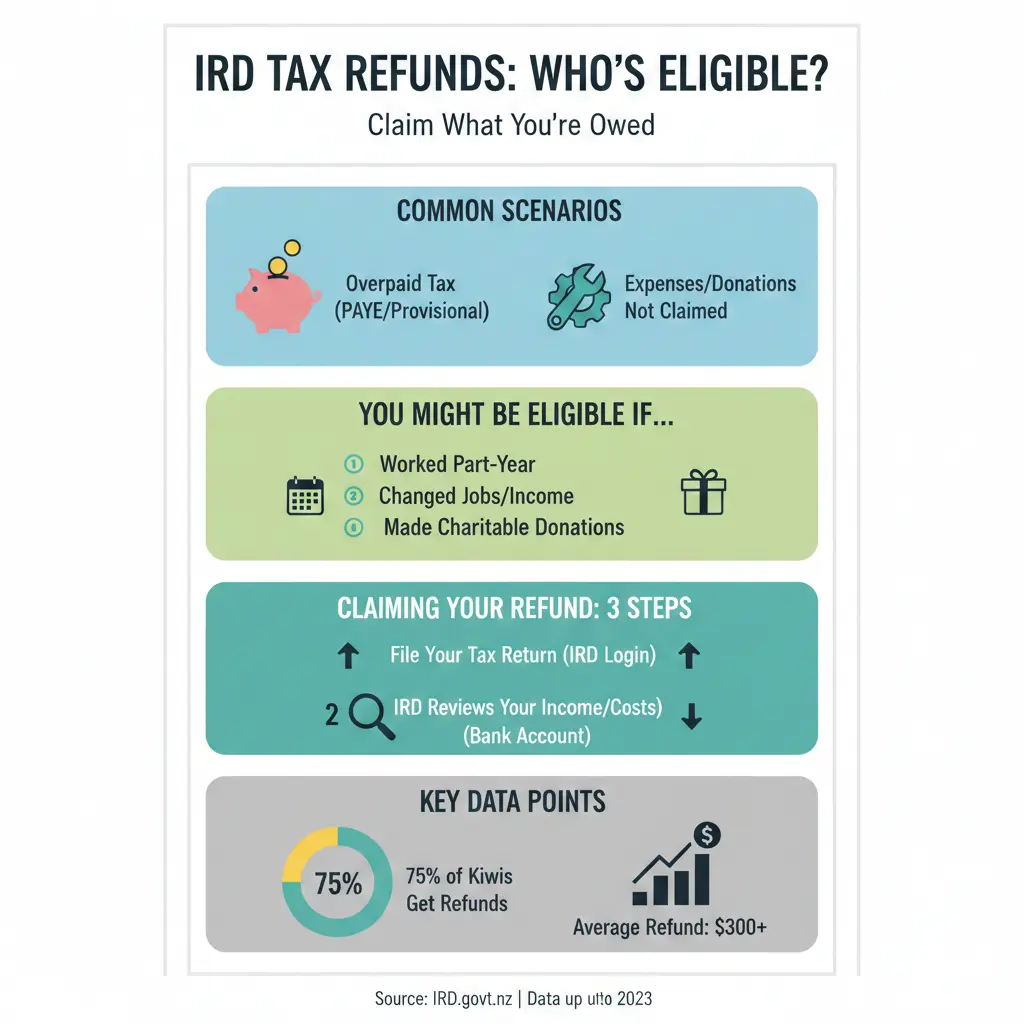
Not everyone needs to file a tax return, but if you're owed a refund, the IRD will usually process it automatically. You'll get an automatic refund if your income comes from:
- Employment (salary and wages)
- Investments (such as interest or dividends under $200 from bank deposits or savings)
- Employee share-scheme benefits where tax is already deducted
- Schedular payments
- Income-tested benefits
- Taxable Māori authority distributions
- New Zealand superannuation (NZ Super)
If you're self-employed or earn income from sources not listed above, you'll need to complete an individual tax return (IR3) to claim any refund you're owed.
How Much Might You Get Back?
The size of your tax refund depends on several factors:
- Your level of earnings
- How long you've worked during the tax year
- The type of work you've undertaken
- The tax already deducted from your wages
For example, if you've changed jobs during the year or worked part-time, you might have paid more tax than necessary at the higher rate. The IRD calculates your correct tax rate based on your actual annual income and refunds the difference.
How to Check If You're Owed a Refund
The easiest way to find out if you're due a refund is to log into myIR, the IRD's online platform. Here's what you'll need to do:
- Visit myir.ird.govt.nz
- Log in with your IRD number and password
- Check your tax assessment and refund status
- Verify your contact information is correct
- Ensure your bank account details are up to date
You can check for any tax refunds going back four years from the current tax financial year. If you don't have a myIR account, you can contact the IRD directly to set one up.
Update Your Details to Speed Things Up
Keeping your information current is crucial for getting your refund faster. Make sure the IRD has:
- Your correct email address
- Your current postal address
- Your active bank account details
If the IRD doesn't have your bank account information on file, they'll contact you through myIR to ask for it.
How the IRD Automatically Calculates Your Refund
Here's the good news: if your income comes from employment, benefits, or superannuation, you don't need to do anything special. The IRD automatically calculates and generates your tax return based on information they've gathered and the taxes you've already paid.
If you review the IRD's tax assessment as correct and have no additional information to disclose, your refund will be processed automatically. The IRD will deposit it directly into your bank account once they've processed your assessment.
What If the IRD Needs More Information?
Sometimes the IRD might ask for additional information before they can process your refund. If this happens, they won't be able to pay your refund until they've received it. To get your money as quickly as possible, stay on top of your communications through myIR and provide any requested information as soon as you can.
Timeline: When Will You Get Your Refund?
The New Zealand tax year runs from 1 April to 31 March. Here's what the typical timeline looks like:
- 31 March: Tax year ends
- May to July: IRD processes income tax assessments
- July: Most refunds are paid out
The IRD can generally process your tax assessment within 10 weeks. However, because they process returns on a rolling basis, not all Kiwis receive their refunds at the same time.
If your refund hasn't arrived by the end of July, it's worth contacting the IRD through myIR to check the status. Once the IRD pays your refund into your bank account, each bank has its own process to get the money to you—you should see it in your account within a few days.
Refunds for Those Who've Left New Zealand
If you've left New Zealand and are entitled to a refund, you can request early processing. Contact the IRD directly through myIR to provide your details and arrange payment to an overseas account.
Donation Tax Credits: An Often-Overlooked Refund
One refund many Kiwis don't realise they might be owed is a donation tax credit. If you've made donations to approved charities or organisations during the tax year, you could be eligible for a refund.
Donation tax credits work differently from other refunds—they can take up to 12 weeks to process. To claim this refund, you'll need to include details of your donations in your tax return or contact the IRD directly.
What If You Have a Tax Debt?
If you owe the IRD money, they may use your refund to pay off any debt you have with them. The IRD will let you know in a separate letter if this happens.
Similarly, if you're receiving Working for Families payments and have both a refund and a bill due, the IRD may use part or all of your refund to cover the bill. Common reasons for Working for Families bills include underestimating your income or not notifying the IRD of changes in circumstances.
Special Situations: When You Might Owe Tax Instead
Not everyone gets a refund—sometimes you might owe tax instead. You could receive a tax bill if:
- Your income changed during the year
- Some of your income wasn't taxed correctly (wrong tax code, incorrect resident withholding tax rate, or PIR too low)
- Your tax rate or PIR changed partway through the year
If you do owe tax, there are payment options available, including instalment arrangements so you can pay it off over time. If your tax bill is more than $5,000, you'll need to start paying provisional tax.
Filing Deadlines for 2026
If you're required to file a tax return, the main deadline for the 2026 tax year is 7 July 2026. This applies to most individuals who need to file, particularly those who are self-employed or have income from sources requiring a manual return.
If you can't meet the deadline, you can apply for an extension of time until 31 August.
Getting Your Refund Faster: Top Tips
Want to speed up the process? Here's what you can do:
- Keep your details current: Update your email, postal address, and bank account in myIR
- Respond promptly: If the IRD asks for information, provide it straight away
- File on time: If you're self-employed, file your return by the deadline
- Check myIR regularly: Monitor your tax assessment and refund status throughout the year
- Use the right tax code: Make sure your employer has your correct tax code to minimise overpayment
Next Steps: Claim Your Refund Today
If you think you're owed a tax refund, don't leave money on the table. Log into myIR today to check your status, update your details, and see what's owed to you. For most Kiwis, the process is automatic and straightforward—the IRD will handle the heavy lifting once you've ensured your information is correct.
If you're self-employed or have complex tax situations, consider speaking with a tax adviser or accountant to ensure you're claiming everything you're entitled to. The investment in professional advice often pays for itself through refunds and tax savings.
Remember, you can check for refunds going back four years, so if you haven't checked in a while, it's worth a look. Your money is waiting—all you need to do is claim it.
Frequently Asked Questions
Sources & References
-
1
How to Claim a Tax Refund - 2024 & 2025 Guide — www.moneyhub.co.nz
-
2
Getting a tax refund — www.govt.nz
-
3
Current processing times — www.ird.govt.nz
-
4
Refunds and tax bills — www.ird.govt.nz
-
5
Timelines at the end of the tax year — www.ird.govt.nz
-
6
NZ Tax Return Filing Deadline – IRD Issues Warning Ahead of 2026 Cut-off — www.artbeat.org.nz
-
7
New Zealand - Individual - Tax administration — taxsummaries.pwc.com
Related Articles

Small Business Tax Guide: What NZ Freelancers Need to Know
Freelancing in New Zealand offers the freedom to be your own boss, but it comes with the responsibility of handling your own taxes. Whether you're a graphic designer in Auckland, a consultant in Welli...

Tax Refund Secrets: How to Claim Every Dollar from the IRD This Year
Ever felt like the IRD owes you money but you're not sure how to get it back? You're not alone—many Kiwis leave hundreds of dollars on the table each year simply because they don't know the tax refund...

Best Accountant for NZ Property Investors
Owning rental properties in New Zealand can build serious wealth, but navigating the tax rules often feels like a minefield. The right accountant doesn't just file your returns—they spot deductions, s...
NZ Tax System Basics: PAYE GST and More
Ever wondered why your paycheck shrinks more than expected, or how that 15% added to your coffee bill funds our roads and hospitals? You're not alone—navigating the NZ tax system basics like PAYE, GST...