Best Accountant for NZ Property Investors

Owning rental properties in New Zealand can build serious wealth, but navigating the tax rules often feels like a minefield. The right accountant doesn't just file your returns—they spot deductions, s...
Sarah covers personal finance, tax, and KiwiSaver topics for Lifetimes NZ. She focuses on making money management straightforward and practical for everyday Kiwis.
Owning rental properties in New Zealand can build serious wealth, but navigating the tax rules often feels like a minefield. The right accountant doesn't just file your returns—they spot deductions, structure your investments smartly, and keep you ahead of IRD changes, potentially saving you thousands each year.
For Kiwi property investors, choosing the best accountant for NZ property investors means finding specialists who understand our unique market, from Auckland's hot spots to regional growth areas. In 2026, with interest deductibility rules phasing back in and bright-line test tweaks, expert advice is non-negotiable.
Why Property Investors Need a Specialist Accountant
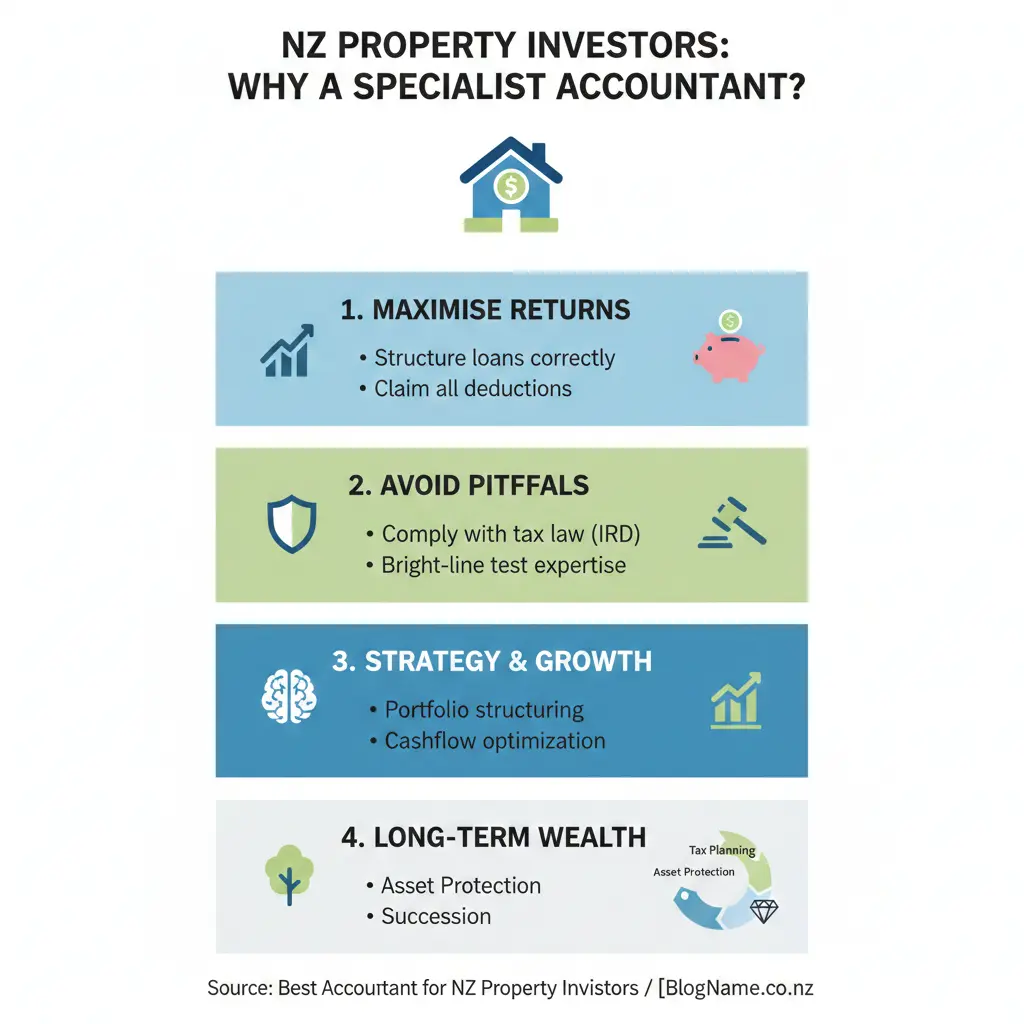
General accountants handle basics, but property pros dive deep into rental-specific rules. They maximise deductions like repairs, insurance, and council rates while ensuring compliance with IRD's rental income guidelines. A top firm can identify savings worth 2-5 times their fee through savvy strategies.
Key reasons to pick a property-focused accountant:
- Tax efficiency: Optimise for ring-fencing rules, where losses from one rental can't offset others.
- Structuring advice: Decide between personal names, LTCs (Look-Through Companies), or trusts for asset protection and tax minimisation.
- Compliance mastery: Handle bright-line test (now 2 years for most properties) and mixed-use rules for holiday homes.
- Cashflow tools: Provisional tax planning and Xero setup for real-time tracking.
In Auckland, where property values soar, specialists like those reviewing home offices or chattels depreciation are gold. Christchurch investors benefit from pros eyeing regional incentives.
Top Accountants for NZ Property Investors in 2026
We've scoured reviews, client feedback, and services to highlight standout firms. These are tailored for Kiwis with 1-20+ rentals, from beginners to portfolio builders.
Gilligan Rowe & Associates (GRA)
GRA leads as NZ's largest property accounting firm, with over 8,000 clients and 100 staff in Newmarket. They've never lost an IRD challenge, thanks to founder Matthew Gilligan's decades of experience and books like Property 101 and Tax Structures 101.
Services include portfolio building, tax efficiency, trusts, and education seminars. Ideal for serious investors scaling up nationwide, including Christchurch hotspots.
Lighthouse Accounting
This Auckland-based arm of Lighthouse Financial Services shines with fixed fees from $800-$5,000 + GST—no hourly surprises. They specialise in property tax, trusts, and proactive planning like provisional tax reviews.
Perfect for investors with 1-5 rentals wanting transparent budgeting and deduction hunts. Their client docs show deep knowledge of interest deductibility and chattels.
ABA Chartered Accountants
Auckland specialists making rental accounting simple. They handle residential/commercial returns, IRD liaison, and Xero training. Great for buy-and-hold, development, or trading investors seeking clear financial reports.
PKF Withers Tsang
Focused on maximising tax benefits and cashflow for portfolio growth. Expert in property tax strategies and asset protection—Mark Withers is a life member of Auckland Property Investors' Association.
Other Strong Contenders
- Lifetime Property Accounting: Nearly 20 years specialising in tax, structuring, and high-level advice. Ross reviews ownership to save thousands long-term.
- Martin Davidson & Associates: Residential experts for NZ/Aus properties, with rave reviews for easy reports and advice.
- SOM Accounting: Fixed-fee rental pros with proactive reminders and full deduction reviews.
| Firm | Best For | Key Feature | Fee Style |
|---|---|---|---|
| GRA | Large portfolios | IRD win rate, education | Custom |
| Lighthouse | 1-5 rentals | Fixed fees $800-$5k | Fixed |
| ABA | Development/trading | Xero support | Custom |
| PKF Withers | Portfolio growth | Asset protection | Custom |
How to Choose the Best Accountant for Your Property Portfolio
Match your needs: Solo landlords suit fixed-fee cloud specialists; multi-property owners need structuring whizzes. Ask these questions:
- What's your experience with rental tax rules like ring-fencing?
- Can you show property-specific savings examples?
- Do you use Xero/MYOB for real-time access?
- How do you handle IRD audits?
- What's your fee structure—fixed or hourly?
Check NZICA or CA ANZ membership for credibility. Auckland firms dominate, but many serve nationwide remotely. For regional Kiwis, Christchurch's Jane Jackman at Nexia offers 30+ years on depreciation and strategies.
Key Tax Tips from Top Property Accountants
Even before hiring, action these 2026 essentials:
- Track everything: Use apps for expenses—repairs are deductible, improvements aren't.
- Bright-line test: Gains on resales within 2 years (10 years for companies) are taxable.
- Interest deductibility: Phasing to 100% by 2026 for existing loans—structure wisely.
- Depreciation: Claim on chattels like carpets; get fresh valuations.
- LTCs vs Trusts: LTCs pass losses through; trusts protect assets—get advice.
"The right property accountant often identifies deductions worth 2-5 times their annual fee."
Pro tip: Set up separate bank accounts per property for clean records. Review annually with your accountant for KiwiSaver integration or ACC levies on rentals.
Next Steps to Secure Your Property Accounting
Don't leave tax to chance—book free chats with 2-3 top firms today. Start with GRA for scale, Lighthouse for affordability. Gather your records, note your property count and goals, and ask about 2026 rates. Pair with IRD's myIR portal for seamless filing. Your portfolio's future depends on it—act now for end-of-year peace.
Disclaimer: This is general info, not advice. Consult a qualified accountant or tax advisor for your situation. Rates current as of 2026; check ird.govt.nz for updates.
Frequently Asked Questions
Sources & References
-
1
Accountants for Property Investors - ABA Chartered Accountants — www.aba.org.nz
-
2
Top 5 Property Accountants in New Zealand [2026] - Opes Partners — www.opespartners.co.nz
- 3
-
4
Lighthouse Accounting Review - MoneyHub NZ — www.moneyhub.co.nz
-
5
Best Accountants in Auckland - MoneyHub NZ — www.moneyhub.co.nz
-
6
Martin Davidson & Associates: Accounting, Trust, Tax — www.martindavidson.co.nz
-
7
Lifetime Property Accounting — www.lifetime.co.nz
- 8
-
9
Rental Property Accountant NZ – SOM Accounting — somaccounting.co.nz
-
10
Accounting Essentials for Property Investors - Pathfinder Solutions — www.pathfindersolutions.co.nz
Related Articles

Small Business Tax Guide: What NZ Freelancers Need to Know
Freelancing in New Zealand offers the freedom to be your own boss, but it comes with the responsibility of handling your own taxes. Whether you're a graphic designer in Auckland, a consultant in Welli...

Tax Refund Secrets: How to Claim Every Dollar from the IRD This Year
Ever felt like the IRD owes you money but you're not sure how to get it back? You're not alone—many Kiwis leave hundreds of dollars on the table each year simply because they don't know the tax refund...
NZ Tax System Basics: PAYE GST and More
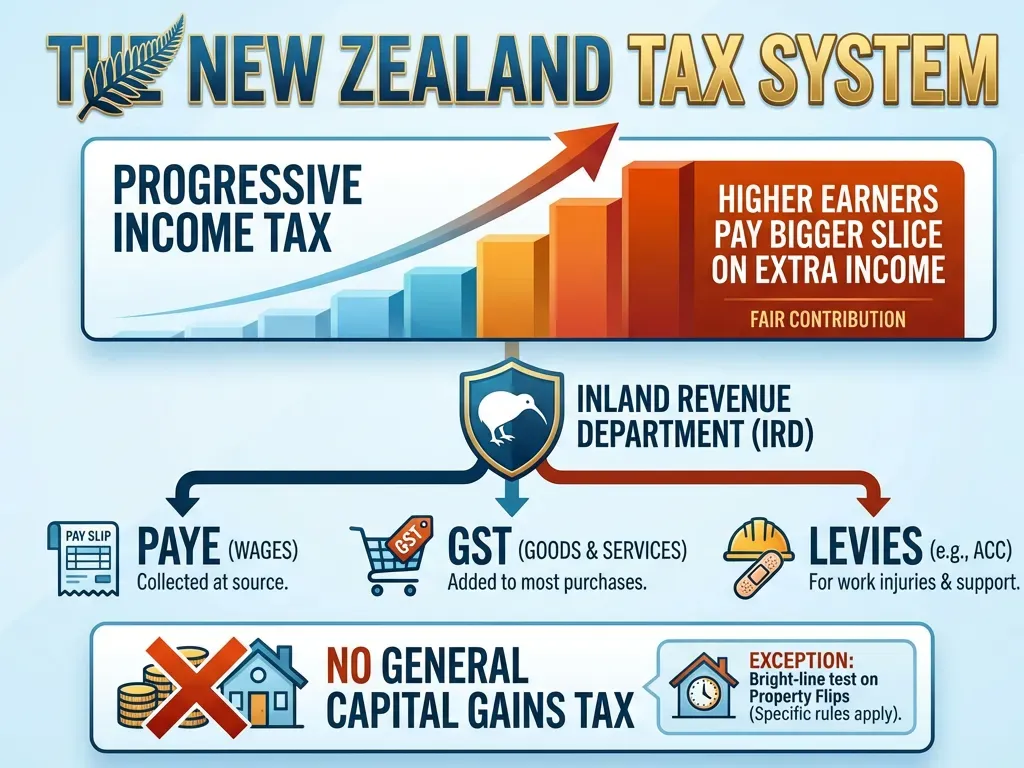
Ever wondered why your paycheck shrinks more than expected, or how that 15% added to your coffee bill funds our roads and hospitals? You're not alone—navigating the NZ tax system basics like PAYE, GST...

IRD Refunds and Tax Returns: How to Claim What You're Owed
If you've been paying tax in New Zealand, you might be owed money back. The Inland Revenue Department (IRD) processes thousands of refunds every year, and the good news is that for most Kiwis, claimin...