Tax Refund Secrets: How to Claim Every Dollar from the IRD This Year

Ever felt like the IRD owes you money but you're not sure how to get it back? You're not alone—many Kiwis leave hundreds of dollars on the table each year simply because they don't know the tax refund...
The Lifetimes NZ editorial team curates, fact-checks, and updates guides on personal finance, property, health, immigration, legal, business, and lifestyle topics relevant to Lifetimes NZ readers. Articles are produced with AI assistance and reviewed by the editorial team before publication.
Ever felt like the IRD owes you money but you're not sure how to get it back? You're not alone—many Kiwis leave hundreds of dollars on the table each year simply because they don't know the tax refund secrets that could put cash straight back into their pockets. With the 2026 tax year wrapping up, it's time to uncover how to claim every dollar you're entitled to from Inland Revenue.
In this guide, we'll walk you through the automatic refund process, common pitfalls, and step-by-step actions to maximise your return. Whether you're a wage earner, side-hustler, or investor, these tips are tailored for New Zealanders looking to navigate the system smartly.
Understanding Tax Refunds in New Zealand
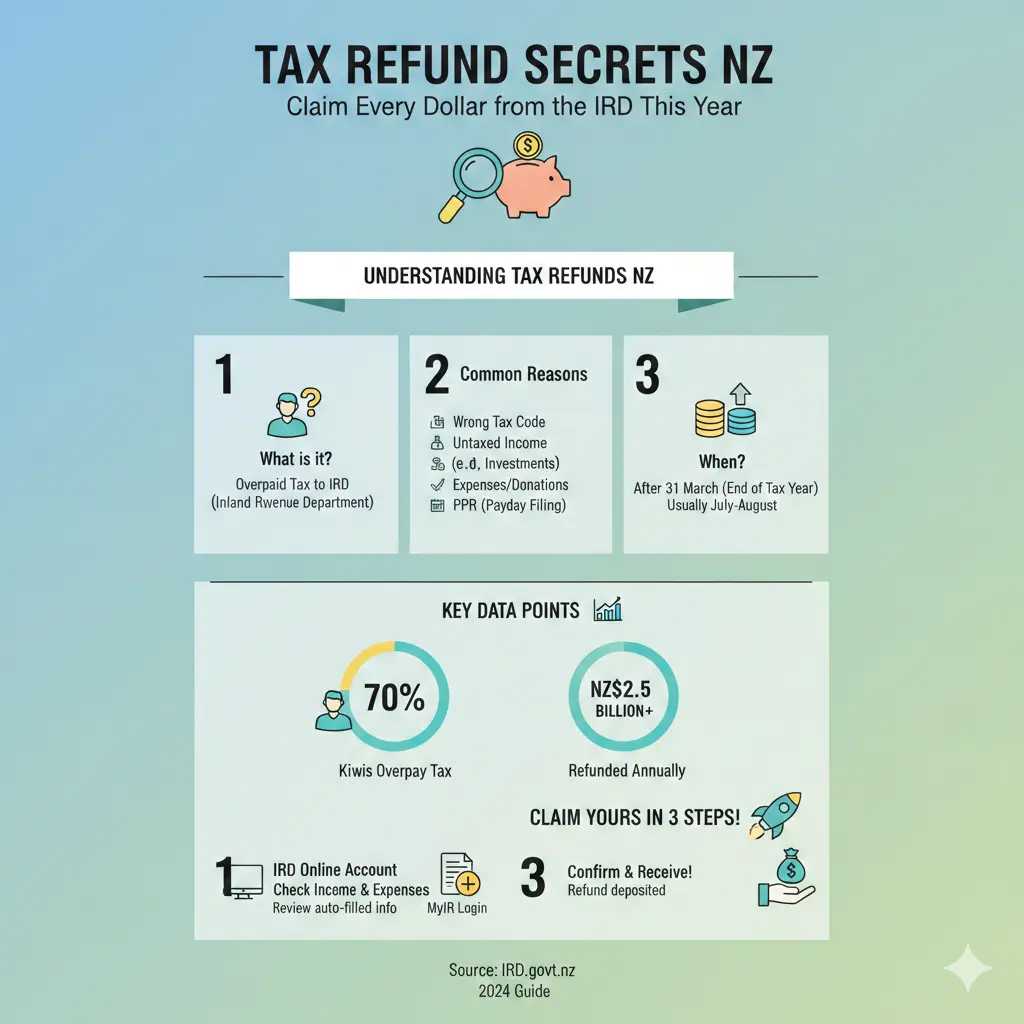
Tax refunds happen when you've overpaid tax throughout the year, often due to PAYE deductions on your salary exceeding your actual tax liability after credits and deductions. For most Kiwis, this is automatic if your income comes from standard sources like employment, interest or dividends under $200, schedular payments, income-tested benefits, or New Zealand Superannuation. The IRD calculates this during their end-of-year assessments, typically processing from May to July.
But not everyone qualifies for hands-off treatment. If you're self-employed or have income outside those categories—like rental properties or overseas earnings—you'll need to file an IR3 individual tax return by 7 July 2026 (or request an extension). Get it wrong, and you could miss out or face penalties.
Who Gets Automatic Refunds?
- Salary and wage earners with PAYE deducted.
- Investors with low-yield interest/dividends.
- Beneficiaries on income-tested payments.
- NZ Super recipients.
- Those with employee share schemes or Māori authority distributions.
If your situation doesn't match, log into myIR to check and file what's needed.
Step-by-Step: How to Check and Claim Your Refund
Don't wait for a letter—proactive Kiwis act now. Here's your actionable checklist for 2026.
Step 1: Register and Log into myIR
First, ensure you're set up in myIR, the IRD's online portal. If not, register using your IRD number and personal details. Activate via SMS code or by calling 0800 227 770. Once in, head to "More Details" > "Earnings Information" to see taxes paid versus owed.
Step 2: Verify Your Details
Update your contact info, email, postal address, and—crucially—your bank account. Refunds go straight to the account on file, and IRD won't pay without it. Nominate a New Zealand bank or building society account for direct credit; it's the fastest way.
"The fastest and safest way to get any refund is to have it direct credited to your New Zealand bank account."
Step 3: Request Your Personal Tax Summary (PTS)
Mid-May, request your PTS via myIR. This triggers an accurate tax calculation considering all income sources. Confirm it mid-July, and expect your refund within 5 business days.
Step 4: File an IR3 if Required
For non-automatic cases, request an IR3 form through myIR by 7 July 2026. Include details like bank account (Question 8), and attach forms like IR215 for income adjustments if needed. Transfer totals from your Statement of Income (SOI) and calculate total tax deducted.
Pro Tip: If you've got debt with IRD, your refund might offset it first. They'll notify you separately.
Common Reasons You're Owed a Refund—and How to Maximise It
Overpayments are rife. Here's why Kiwis get refunds and secrets to claim more.
1. Wrong Tax Code or PIR
Used the wrong secondary tax code? Or your Prescribed Investor Rate (PIR) for KiwiSaver/portfolio investments was too low? These mismatches lead to excess tax deducted. Check your codes via myIR and adjust for next year.
2. Multiple Jobs or Partial Year Work
Had two jobs? Worked part-year (e.g., arrived/left NZ mid-year)? Or earned under $48,000? You likely overpaid as each employer deducts at source without considering total income.
3. Investment Over-Taxation
Interest/dividends taxed at source might exceed your final rate. IRD refunds the difference automatically for small amounts, but verify in myIR.
4. Donations and Other Credits
Forgot donations? Use form IR215 to claim back excess tax on adjusted income. Working for Families overpayments can also trigger refunds, unless offset by bills from income changes.
| Scenario | Potential Refund Trigger | Action |
|---|---|---|
| Multiple jobs | Duplicate PAYE | PTS via myIR |
| Wrong PIR | Investment over-tax | Update PIR |
| Part-year resident | >$200 other income | File IR3 |
| Donations | Tax credits | IR215 form |
2026 Processing Changes: What Kiwis Need to Know
Heads up—from April 2026, IRD introduces new standards extending refund timelines. While amounts aren't changing, expect delays beyond the usual 10 weeks. IRD processes on a rolling basis from May-July, but not everyone gets paid simultaneously. Track via myIR and contact them if over 10 weeks.
Keep details current to speed things up—outdated info is a top delay cause.
Practical Tips to Avoid Missing Out
- Double-check myIR weekly from April for assessment notices.
- Nominate your bank account early—direct credit beats cheques.
- If self-employed, provisional tax kicks in over $5,000 owed; plan ahead.
- Update for family changes (e.g., separations) to avoid Working for Families bills eating refunds.
- Use the tax year end (31 March) to gather records now.
Real Kiwi example: Sarah, a part-time barista with investment income, discovered a $450 refund via PTS after her PIR changed. Simple myIR login unlocked it.
Next Steps: Claim Your Dollars Today
Log into myIR right now—check for refunds, update details, and request your PTS. File any IR3 promptly to hit deadlines. For complex cases (e.g., rentals, FIFs), consult a tax advisor. Remember, this isn't advice—seek professional help for your situation via ird.govt.nz or an accountant.
By following these tax refund secrets, you'll ensure the IRD pays you every dollar owed this year. Kia kaha, Kiwis—your money awaits!
Frequently Asked Questions
Sources & References
-
1
Getting a tax refund | New Zealand Government — www.govt.nz
-
2
How to Claim a Tax Refund - 2024 & 2025 Guide - MoneyHub NZ — www.moneyhub.co.nz
-
3
Tax Refunds In New Zealand — kiwieducation.com
-
4
IR3G 2025 - Individual income tax return guide — www.ird.govt.nz
-
5
Refunds and tax bills - Inland Revenue — www.ird.govt.nz
-
6
Goodbye to Quick Tax Refunds: IRD Processing Times Shift in 2026 — www.artbeat.org.nz
Related Articles

Small Business Tax Guide: What NZ Freelancers Need to Know
Freelancing in New Zealand offers the freedom to be your own boss, but it comes with the responsibility of handling your own taxes. Whether you're a graphic designer in Auckland, a consultant in Welli...

Best Accountant for NZ Property Investors
Owning rental properties in New Zealand can build serious wealth, but navigating the tax rules often feels like a minefield. The right accountant doesn't just file your returns—they spot deductions, s...
NZ Tax System Basics: PAYE GST and More
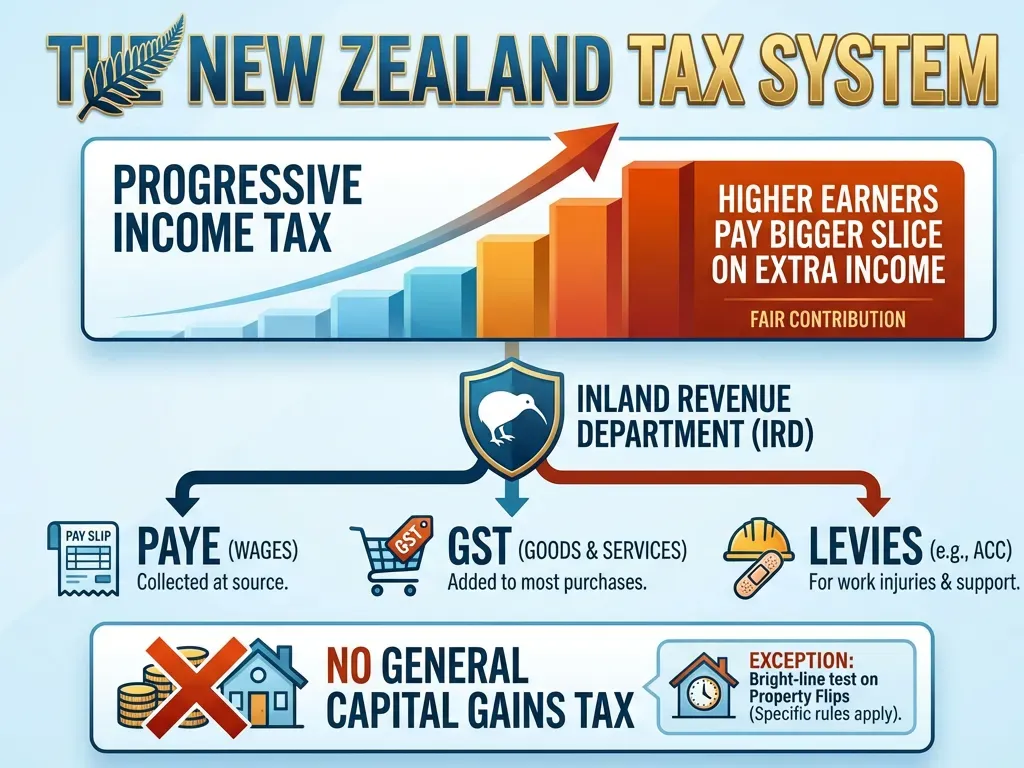
Ever wondered why your paycheck shrinks more than expected, or how that 15% added to your coffee bill funds our roads and hospitals? You're not alone—navigating the NZ tax system basics like PAYE, GST...
IRD Refunds and Tax Returns: How to Claim What You're Owed
If you've been paying tax in New Zealand, you might be owed money back. The Inland Revenue Department (IRD) processes thousands of refunds every year, and the good news is that for most Kiwis, claimin...