Foreign Income Tax NZ: Reporting Overseas Earnings

If you're earning money from overseas sources while living in New Zealand, the Inland Revenue Department (IRD) expects you to report it. Whether you're receiving rental income from a property abroad,...
Sarah covers personal finance, tax, and KiwiSaver topics for Lifetimes NZ. She focuses on making money management straightforward and practical for everyday Kiwis.
If you're earning money from overseas sources while living in New Zealand, the Inland Revenue Department (IRD) expects you to report it. Whether you're receiving rental income from a property abroad, dividends from international investments, or salary from an overseas employer, understanding your tax obligations is essential. Getting it right means avoiding penalties and potentially claiming valuable tax credits. Here's what you need to know about reporting foreign income in New Zealand.
Why You Must Report Overseas Income
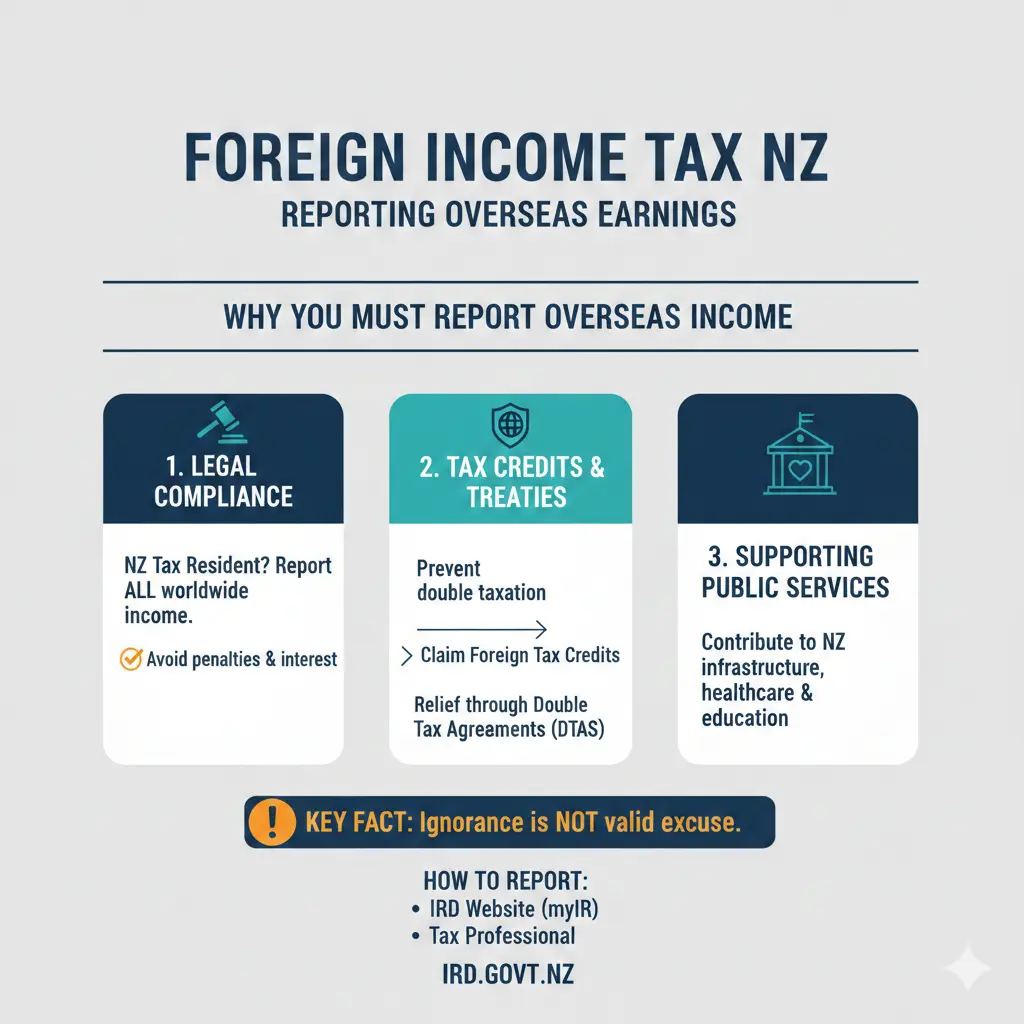
As a New Zealand tax resident, you're taxed on your worldwide income. This means any money you earn from overseas sources is subject to New Zealand income tax, regardless of where it was earned or whether tax was already paid in another country. The IRD takes this seriously, so it's crucial to declare all foreign income on your tax return.
The good news? New Zealand has a foreign tax credit system that recognises tax you've already paid overseas. This prevents you from being taxed twice on the same income, though you'll need to claim it correctly to benefit.
The IR1261 Form: Your Overseas Income Summary
From the 2023 tax year onwards, you must file an Overseas Income Summary (IR1261 form) alongside your individual tax return if you have overseas income. This form is specifically designed to help the IRD track and process your foreign earnings accurately.
What Information You'll Need to Provide
When completing your IR1261, you'll need to tell the IRD:
- The type of income you earned (for example, rental, dividends, salary, or interest)
- The amount of each income type earned
- The overseas jurisdiction (country or territory) where you earned the income
- The amount of any foreign tax credits you're claiming
You can complete the IR1261 in several ways: through your myIR account, via your tax software provider, or by downloading it directly from the IRD website. Make sure to label any supporting documents clearly and attach them to your return or send them as a web message through myIR.
How to Report Different Types of Overseas Income
General Overseas Income
Most types of foreign income follow the same reporting process. You'll report the total income less any allowable expenses. For example, if you're earning rental income from an overseas property, you can deduct legitimate expenses like maintenance, property management fees, and mortgage interest before reporting the net income to the IRD.
Foreign Investment Fund (FIF) Income
If you're invested in foreign investment funds, the reporting is slightly different. You can break down FIF income by jurisdiction, or you can include all FIF income under the jurisdiction 'overseas'. If your tax software doesn't include 'overseas' as an option, you can use 'XX' or 'unknown jurisdiction'.
If you're receiving income from multiple FIFs, you'll need to provide a supporting report breaking down the income and tax credit amount for each fund. Reports from your investment adviser are acceptable.
Overseas Residential Rental Property
There's an important exception here. Unlike other overseas income, you should not include your overseas residential rental income in the 'Total overseas income' box or in your IR1261 form. Instead, add it to the 'Residential income' section in your main Income Tax Return (IR3).
However, any foreign tax credits you claim on this rental income must be reported in the total overseas tax paid box and included in your IR1261 as 'rental' income type for the relevant jurisdiction.
Understanding Foreign Tax Credits
One of the most valuable aspects of New Zealand's tax system for expats and foreign income earners is the foreign tax credit. If you've already paid tax on your overseas income in another country, you can claim a credit against your New Zealand tax liability.
You must report any overseas tax credits you earn on income. For each type of income and jurisdiction, provide the amount of tax credits being claimed. If you're claiming tax credits from multiple sources on a single type of income, you can provide details in a supporting document.
The IRD provides detailed guidance on calculating foreign tax credits through interpretation statement IS 21/09 on their tax technical website, which is worth reviewing if you have complex overseas tax situations.
Converting Overseas Currency to NZ Dollars
When reporting overseas income, you'll need to convert foreign currency amounts to New Zealand dollars. The IRD has specific rules about which exchange rates to use, so it's important to get this right. Keep records of the exchange rates you've used, as you may need to justify them if the IRD queries your return.
Filing Your Tax Return: Key Dates for 2026
If you had untaxed or overseas income during the 2025–26 tax year (1 April 2025 to 31 March 2026), you must file an IR3 (Individual Tax Return) by 7 July 2026. This is a firm deadline unless you're using a registered tax agent, in which case you may be eligible for an automatic extension.
You can file your return online through myIR, or work with a tax agent or accountant to prepare and lodge it on your behalf.
Tips for Getting It Right
To ensure your overseas income is reported correctly and smoothly:
- Keep detailed records: Hold onto all documentation related to your overseas income, including statements, tax certificates, and proof of tax paid overseas.
- Organise by jurisdiction: Group your income and expenses by country to make completion of the IR1261 easier.
- Calculate net income: Only report total income less allowable expenses, not gross figures.
- Don't miss tax credits: If you've paid tax overseas, claim every dollar of foreign tax credit you're entitled to.
- Use supporting documents: The IRD welcomes clear, well-organised supporting documents that explain complex income situations.
- File early: Don't wait until the last minute. Filing early gives you time to address any issues the IRD might raise.
Next Steps
If you're earning overseas income, start by gathering all your documentation—income statements, tax certificates, and records of expenses. Then, log into your myIR account and familiarise yourself with the IR1261 form. If your situation is complex (for example, if you have multiple sources of foreign income or significant foreign tax credits to claim), consider engaging a tax agent or accountant who specialises in overseas income. They can ensure you're compliant with the IRD's requirements and help you claim every tax credit you're entitled to.
Remember, the IRD takes overseas income seriously, but they also want to make sure you're not paying more tax than necessary. Getting it right from the start means peace of mind and potentially significant tax savings through proper use of foreign tax credits.
Frequently Asked Questions
Sources & References
-
1
Reporting your overseas income — Inland Revenue — www.ird.govt.nz
-
2
U.S. Expat Taxes in New Zealand: Income Tax Guide & NZ Tax Rates — www.taxesforexpats.com
-
3
Expatriate tax — New Zealand — Grant Thornton International — www.grantthornton.global
-
4
New Zealand tax residence — KPMG — assets.kpmg.com
Useful Tools
Related Articles

Industry Bodies and Professional Associations NZ
Whether you're launching a business, advancing your career, or navigating financial regulations, industry bodies and professional associations in New Zealand offer invaluable support. These organisati...

Emergency Benefit NZ: When You Have No Other Options
When you're struggling financially and don't qualify for other benefits, the Emergency Benefit might be your lifeline. It's a discretionary payment designed for Kiwis in genuine hardship who've exhaus...

Unpaid Internships NZ: Are They Legal?
Unpaid internships are a common pathway for students and graduates to gain work experience in New Zealand, but there's often confusion about whether they're actually legal. The short answer is: unpaid...

Estate Administration NZ: Managing Someone's Affairs After Death
Losing a loved one is one of life's toughest challenges, and stepping in to manage their estate can feel overwhelming. In New Zealand, estate administration—the process of handling someone's affairs a...