Trusts and Tax Planning in NZ

Imagine safeguarding your family's home from unexpected claims while smartly minimising your tax bill—all legally and within New Zealand's rules. For many Kiwis, trusts and tax planning in NZ offer a...
The Lifetimes NZ editorial team curates, fact-checks, and updates guides on personal finance, property, health, immigration, legal, business, and lifestyle topics relevant to Lifetimes NZ readers. Articles are produced with AI assistance and reviewed by the editorial team before publication.
Imagine safeguarding your family's home from unexpected claims while smartly minimising your tax bill—all legally and within New Zealand's rules. For many Kiwis, trusts and tax planning in NZ offer a powerful way to achieve just that, especially amid rising costs and evolving IRD requirements in 2026.
With property prices stabilising in Auckland and rural areas like Pukekohe seeing steady demand, more families are turning to trusts for protection and efficiency.Trusts and tax planning in NZ isn't just for the wealthy; it's a practical tool for everyday Kiwis looking to secure their future. But recent changes, like the 39% trustee tax rate, mean you need to know the ins and outs to make it work for you. Let's dive into how trusts operate, their tax implications, and steps to get started.
What is a Trust and Why Use One in New Zealand?
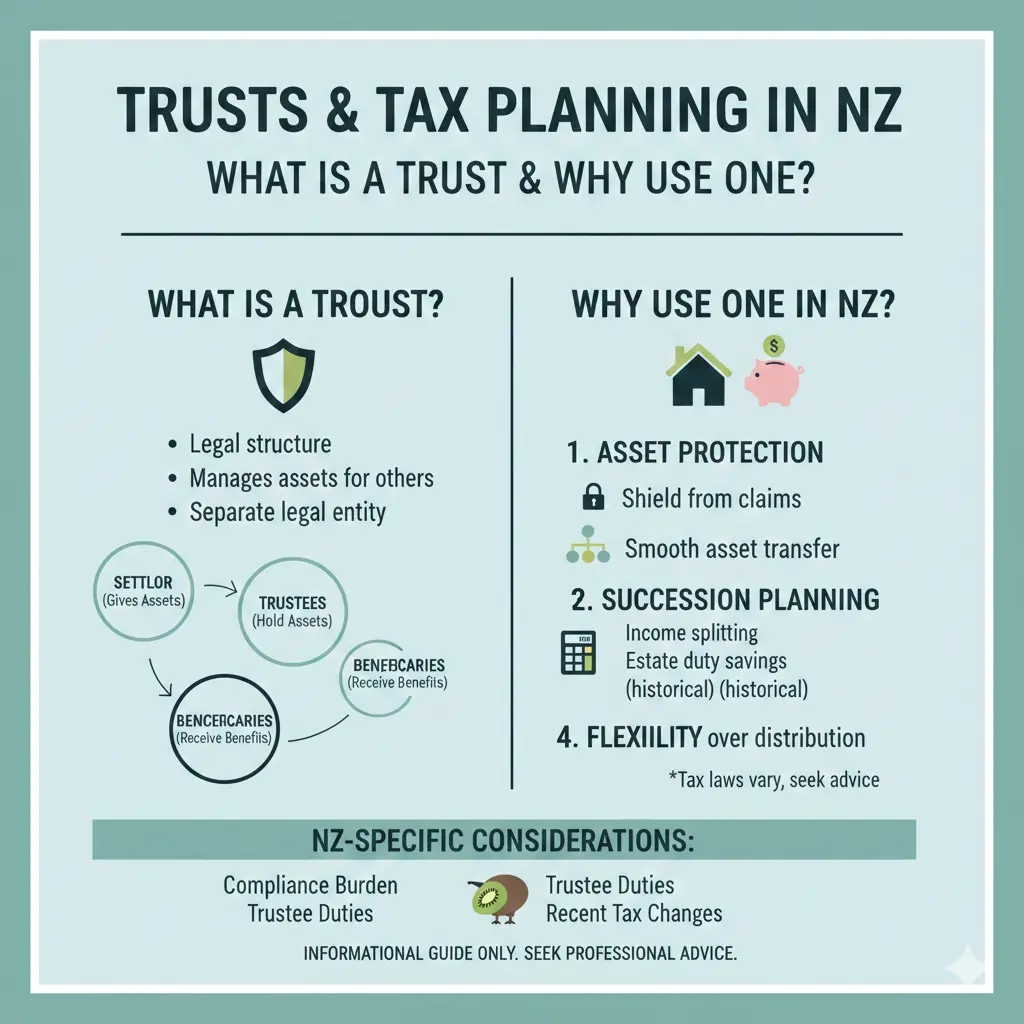
A trust is a legal arrangement where trustees hold and manage assets for the benefit of beneficiaries, governed by the Trusts Act 2019. This Act modernised trust law, clarifying trustee duties, beneficiary rights, and record-keeping obligations.Trusts and tax planning in NZ go hand-in-hand because trusts can distribute income to lower-taxed family members, protect assets from relationship property claims, and plan for inheritance—without estate duty, as New Zealand has none.
Key Benefits for Kiwis
- Asset Protection: Shield your family home or business from creditors, separations, or accidents. For instance, a Pukekohe farmer can transfer rural land into a trust to safeguard it.
- Tax Optimisation: Distribute income to beneficiaries in lower brackets, reducing overall tax—though personal services income can't be split this way.
- Estate Planning: Ensure assets pass smoothly to future generations, with flexibility for changing family needs.
- Flexibility: Tailor the trust deed to your situation, from protecting KiwiSaver gains to managing investments.
Despite the 39% trustee rate hike from 1 April 2024, trusts remain valuable for income splitting and protection, provided you comply with IRD rules.
Trust Taxation in New Zealand: The 2026 Landscape
Understanding trusts and tax planning in NZ starts with taxation. Trusts file annual IRD returns with financial statements, settlements, and distribution details—unless exempt. Trustee income not distributed to beneficiaries is taxed at 39% for the entire amount if over $10,000 net (post-expenses).
Trustee Income Tax Rules
From the 2024/25 tax year, the trustee rate rose from 33% to 39% to stop tax savings from accumulating income in trusts instead of distributing to 39% taxpayers. Key points:
- De Minimis Trusts: If net trustee income is $10,000 or less, it's taxed at 33%—a concession to avoid over-taxation.
- No Partial Relief: Exceed $10,000, and all trustee income hits 39%, not just the excess.
- Exceptions: Estates (33% for year of death + three years), disabled beneficiary trusts (33%), energy consumer trusts, and legacy superannuation funds stay at 33%.
For foreign trusts (NZFTs), they're tax-exempt if settlor and beneficiaries are non-residents, though NZ-sourced income is taxable.
Beneficiary Income and Distributions
Beneficiaries pay tax on distributed income at their personal rates—often lower than 39%—making distribution a key tax planning strategy. Watch the minor beneficiary rule: Distributions over $1,000 to under-16s from related-party trusts are taxed at 39%.
| Tax Scenario | Rate Applied | Example |
|---|---|---|
| Trustee income > $10k undistributed | 39% | $15k profit: All taxed at 39% (~$5,850 tax) |
| De minimis trust (< $10k) | 33% | $9k profit: Taxed at 33% (~$2,970) |
| Distributed to adult beneficiary (30% bracket) | Beneficiary's rate (30%) | $15k to 30% earner: ~$4,500 tax (saves vs 39%) |
| Minor beneficiary > $1k | 39% | $2k to child: Taxed at 39% (~$780) |
This table shows why strategic distributions matter for trusts and tax planning in NZ.
Recent Changes and Compliance
The Budget 2023 change aligned trustee rates with top individual rates, curbing avoidance. The Trusts Act 2019 added duties like providing info to beneficiaries and keeping records. From 1 April 2026, compliance simplifications may ease visitor tax rules, but core trust filing remains. Always register with IRD and review annually—non-compliance risks penalties.
Setting Up a Trust: Step-by-Step Guide for 2026
Ready to explore trusts and tax planning in NZ? Follow these steps, but consult a lawyer and accountant first.
- Define Purpose: Asset protection? Tax savings? E.g., protect a business from ACC claims.
- Choose Trustees: Reliable family or professionals—avoid mismanagement.
- Identify Beneficiaries: Spouse, kids, even future generations.
- Select Assets: Home, investments (seek tax advice on depreciables). Transfer via gift or sale.
- Draft Deed: Lawyer ensures Trusts Act compliance.
- IRD Registration: Get an IRD number; file returns.
- Manage Ongoing: Annual reviews, distributions, records.
Costs? Expect $2,000–$5,000 setup, plus annual accounting fees. In Pukekohe or Auckland, local lawyers like those at Arnet Law can tailor it.
Practical Tax Planning Strategies with Trusts
Maxmise benefits:
- Distribute Wisely: To 10.5%–33% bracket beneficiaries for savings.
- De Minimis Planning: Keep trustee income under $10k via distributions.
- Asset Choices: Non-depreciable like property; avoid personal services income.
- Review Post-39%: Wind up unfit trusts or restructure.
- Combine with KiwiSaver/Super: Protect retirement funds.
Auckland investors might transfer rentals; farmers, land. But get specialist advice—DIY risks IRD scrutiny.
Common Pitfalls to Avoid
- Poor Trustees: Choose capable ones to meet fiduciary duties.
- Ignoring Tax Rate: Accumulating income now costs 39%.
- Bad Assets: Mortgaged properties complicate transfers.
- No Reviews: 125-year rule limits duration; check fit for 2026.
- Skipping Pros: Lawyers ensure compliance.
Next Steps for Smart Tax Planning
Don't leave your assets exposed—start with a free consultation from a trust lawyer or accountant specialising in NZ tax. Review existing trusts against 2026 rules, calculate potential savings via distributions, and register with IRD if needed. Tools like IRD's myIR portal simplify filing. Remember, while trusts offer real benefits, they're not for everyone; professional advice tailors them to your situation.
Disclaimer: This is general info, not advice. Consult a qualified advisor for your circumstances. Tax laws change—verify with IRD.
Frequently Asked Questions
Sources & References
-
1
New Tax Rules for Trusts: What You Should Know — ebp.co.nz
-
2
Why use a trust following the trustee tax rate increase? - Bell Gully — www.bellgully.com
-
3
How to Set Up a Family Trust in New Zealand: A 2026 Guide — www.arnetlaw.co.nz
-
4
Is Your Family Trust Still Fit for Purpose in 2026? - Shanahans Law — www.shanahanslaw.co.nz
-
5
Setting Up a Trust In New Zealand - ABA Chartered Accountants — www.aba.org.nz
-
6
Private Wealth 2025 - Chambers Global Practice Guides — practiceguides.chambers.com
-
7
Five reasons why New Zealand Foreign Trusts are attractive — www.hawksford.com
-
8
Taxation (Annual Rates for 2025–26, Compliance Simplification) - IRD — www.taxpolicy.ird.govt.nz
Related Articles

Small Business Tax Guide: What NZ Freelancers Need to Know
Freelancing in New Zealand offers the freedom to be your own boss, but it comes with the responsibility of handling your own taxes. Whether you're a graphic designer in Auckland, a consultant in Welli...

Tax Refund Secrets: How to Claim Every Dollar from the IRD This Year
Ever felt like the IRD owes you money but you're not sure how to get it back? You're not alone—many Kiwis leave hundreds of dollars on the table each year simply because they don't know the tax refund...

Best Accountant for NZ Property Investors
Owning rental properties in New Zealand can build serious wealth, but navigating the tax rules often feels like a minefield. The right accountant doesn't just file your returns—they spot deductions, s...
NZ Tax System Basics: PAYE GST and More
Ever wondered why your paycheck shrinks more than expected, or how that 15% added to your coffee bill funds our roads and hospitals? You're not alone—navigating the NZ tax system basics like PAYE, GST...