Investment Property Accounting NZ: Record-Keeping Guide

Investing in New Zealand property can build serious wealth, but getting the accounting wrong risks IRD penalties, lost deductions, and audit headaches. This guide breaks down essential record-keeping...
Sarah covers personal finance, tax, and KiwiSaver topics for Lifetimes NZ. She focuses on making money management straightforward and practical for everyday Kiwis.
Investing in New Zealand property can build serious wealth, but getting the accounting wrong risks IRD penalties, lost deductions, and audit headaches. This guide breaks down essential record-keeping for investment property accounting NZ, helping Kiwi landlords stay compliant and maximise returns in 2026.
What Counts as Investment Property in New Zealand?
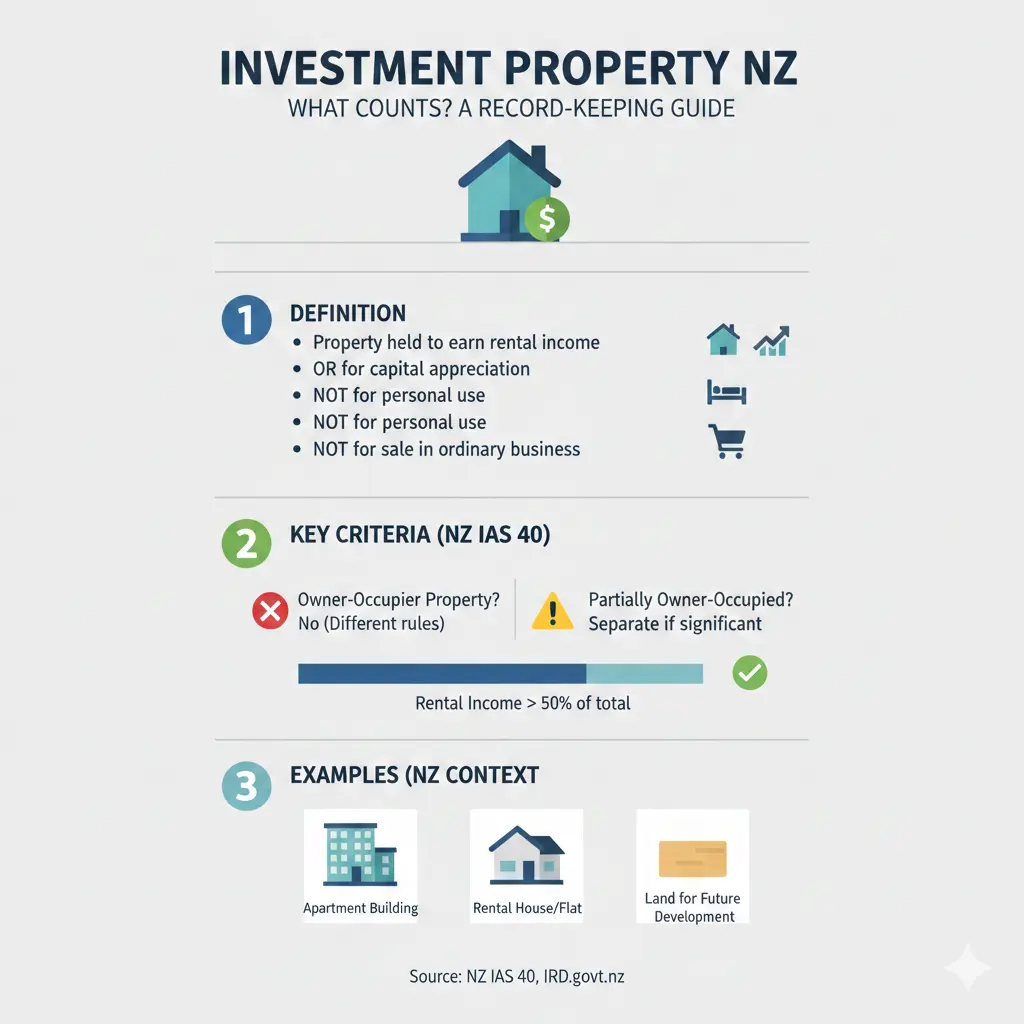
Under PBE IPSAS 16, investment property is land or a building—or part of a building or both—held to earn rentals or for capital appreciation, rather than for use in production or supply of goods, administrative purposes, or sale in the ordinary course of business.
For most Kiwi investors, this means rental homes, flats, or commercial spaces you don't occupy yourself. If you're leasing to a related entity but it's owner-occupied from the group's view, it might still qualify as investment property in your individual statements. Always classify correctly to apply the right accounting model: fair value or cost.
Fair Value vs Cost Model: Which to Choose?
You can pick the fair value model or cost model for all your investment properties backing liabilities, but consistency matters. Fair value requires regular valuations reflecting market conditions, excluding future capital expenditure. Cost model depreciates the asset over time.
Switching models? Treat it as a change in accounting policy, not an estimate. For 2026, with property markets stabilising post-interest rate hikes, fair value might better capture appreciation—but consult your accountant.
Why Record-Keeping Matters for Kiwi Property Investors
The IRD demands meticulous records to claim deductions, calculate taxable income, and prove expenses. Keep everything for seven years from the tax return filing date—digital cloud backups are ideal for easy IRD audits.
Poor records mean denied deductions on interest, repairs, or rates, potentially costing thousands. Plus, under NZ IFRS updates, disclose material accounting policies clearly in financial statements. Get it right, and you'll sleep easy while building equity.
Essential Records to Keep for Investment Property Accounting NZ
Maintain a dedicated system—spreadsheets, apps like Xero, or your accountant's portal—for these must-haves:
- Bank statements for all rental accounts, showing income and payments.
- Invoices and receipts for every expense: repairs, maintenance, council rates, insurance.
- Loan statements detailing interest (deductible, but track principal separately).
- Depreciation schedules for chattels like appliances (use IRD's schedules; buildings depreciated at 1.5-3% typically).
- Vehicle logbooks or mileage logs if claiming travel to the property.
- Home office calculations if managing rentals from home (proportion of costs based on space used).
- Tenant agreements, rent receipts, and correspondence.
- Property management reports if using an agency.
- Insurance policies and premium invoices.
- Purchase/sale docs: agreements, valuations, settlement statements for capital gains tracking.
- Valuation reports if using fair value model.
Digital Tools for Streamlined Record-Keeping
Go paperless with Xero or MYOB, integrated with bank feeds for auto-categorisation. For 2026, AI-powered apps flag deductible expenses instantly. Link to Google Drive for seven-year storage—IRD accepts digital if readable and secure.
Pro tip: Tag files by property and year (e.g., "AucklandRental_2026_Repairs") for quick audits.
Tax Deductions: What You Can Claim in 2026
Property investors claim expenses reducing taxable rental income. Key 2026 deductibles include:
- Interest on loans: Fully deductible since phase-out ended; track via statements.
- Repairs and maintenance: Immediate fixes (not improvements).
- Rates and insurance: Body corporate fees too.
- Property management fees: 7-10% of rent typical.
- Accounting and legal fees: Tax return prep, financial statements.
- Travel: Logbook method or 76c/km (2026 rate).
- Depreciation: Chattels yes; buildings limited post-2011 rules.
Bright-line test applies: sell within 10 years (or 5 for new builds), pay tax on gains at your marginal rate. Use records to calculate adjusted market value.
"Accounting fees for the preparation of accounts are fully deductible. This includes annual tax return preparation and rental property financial statements."
Disclaimer: Tax rules change; seek advice from an IRD-registered accountant or tax advisor for your situation.
Handling Leases and Valuations
For leases, distinguish operating vs finance. Investment property under operating lease? Measure at fair value if chosen. Lessees account for finance lease interests at cost initially.
Valuations: Annual for fair value model, by registered valuer. Reflect expected cash flows, add back lease liabilities if net valuation. No future capex in fair value.
Reclassifications and Sales
Shifting to owner-use? Reclassify to PPE. Planning sale? Keep as investment property until derecognised—no inventory shift unless developing. Held for sale? Follow PBE IFRS 5.
Common Pitfalls in Investment Property Accounting NZ
- Mixing personal and rental bank accounts—use separate ones.
- Forgetting seven-year retention—IRD fines up to $50,000 for non-compliance.
- Claiming improvements as repairs (e.g., new roof = capitalise).
- Ignoring GST if registered (claim on purchases, charge on rent).
- Not tracking bright-line for gains.
Avoid audits by preparing full financial statements annually, especially if multiple properties.
Practical Tips for Kiwi Landlords in 2026
Here's actionable advice:
- Segregate records per property in folders.
- Monthly reconciliations: match bank to ledger.
- Budget for accounting: fixed-fee returns from specialists save time.
- Use KiwiSaver for deposits but track separately—30% LVR for investments ($180k on $600k property).
- Review annually: adjust for NZ IFRS 18's operating/investing categories.
- Outsource if scaling: firms handle IR3 returns, statements.
Next Steps for Compliant Record-Keeping
Start today: set up a Xero file, gather 2025-2026 docs, and book a rental property accountant. Use IRD's myIR portal for returns. For complex portfolios, consider Affinity Accounting or similar for cash flow analysis. Stay ahead—accurate records mean bigger deductions and peace of mind.
Always consult a qualified professional for personalised financial advice. Tax laws can change, and this guide uses 2026 information.
Frequently Asked Questions
Sources & References
-
1
PBE IPSAS 16 - Investment Property (PDF) — www.xrb.govt.nz
- 2
-
3
Every Tax Deduction Property Investors Can Claim — www.moneyhub.co.nz
-
4
Accounting Update 2025 for For-Profit Entities (PDF) — assets.kpmg.com
-
5
NZ Property Investment (2025): A Step-by-Step Guide — www.opespartners.co.nz
-
6
Rental Property Accountant NZ | Fixed-Fee Tax Returns — somaccounting.co.nz
-
7
Rental Property Accountant NZ | Fixed-Fee Tax Returns — somaccounting.co.nz
-
8
Time to Invest? Why 2026 Could Be a Smart Year for NZ SMEs — www.affinityaccounting.co.nz
Related Articles

Industry Bodies and Professional Associations NZ
Whether you're launching a business, advancing your career, or navigating financial regulations, industry bodies and professional associations in New Zealand offer invaluable support. These organisati...

Emergency Benefit NZ: When You Have No Other Options
When you're struggling financially and don't qualify for other benefits, the Emergency Benefit might be your lifeline. It's a discretionary payment designed for Kiwis in genuine hardship who've exhaus...

Unpaid Internships NZ: Are They Legal?
Unpaid internships are a common pathway for students and graduates to gain work experience in New Zealand, but there's often confusion about whether they're actually legal. The short answer is: unpaid...

Estate Administration NZ: Managing Someone's Affairs After Death
Losing a loved one is one of life's toughest challenges, and stepping in to manage their estate can feel overwhelming. In New Zealand, estate administration—the process of handling someone's affairs a...