ACC Cover for Sports Injuries: What Athletes Should Know

Picture this: you're powering through a weekend rugby match in Wellington, tackling with the ferocity of an All Black, when a crunching collision leaves you sidelined with a torn ACL. The pain is bad...
The Lifetimes NZ editorial team curates, fact-checks, and updates guides on personal finance, property, health, immigration, legal, business, and lifestyle topics relevant to Lifetimes NZ readers. Articles are produced with AI assistance and reviewed by the editorial team before publication.
Picture this: you're powering through a weekend rugby match in Wellington, tackling with the ferocity of an All Black, when a crunching collision leaves you sidelined with a torn ACL. The pain is bad enough, but the worry about mounting medical bills and lost wages? That's where ACC steps in as New Zealand's safety net for sports injuries.
ACC (Accident Compensation Corporation) covers Kiwis for accidental injuries, including those from sports like rugby, netball, football, and even weekend tramps gone wrong.ACC Cover for Sports Injuries ensures athletes don't face financial ruin from sudden mishaps, funding everything from physio sessions to weekly compensation.What athletes should know is that timely claims and understanding coverage limits can make all the difference in getting back on the field faster.
In 2025, sports and recreation injuries drove thousands of claims, contributing to ACC's $8.23 billion annual spend on treatments, rehab, and compensation. With costs up $4.57 billion from a decade ago, ACC's 2025/26 turnaround plan focuses on efficient recovery to keep the scheme sustainable for all of us. This guide breaks down everything you need to know about ACC cover for sports injuries, tailored for Kiwi athletes from amateur touch players to elite competitors.
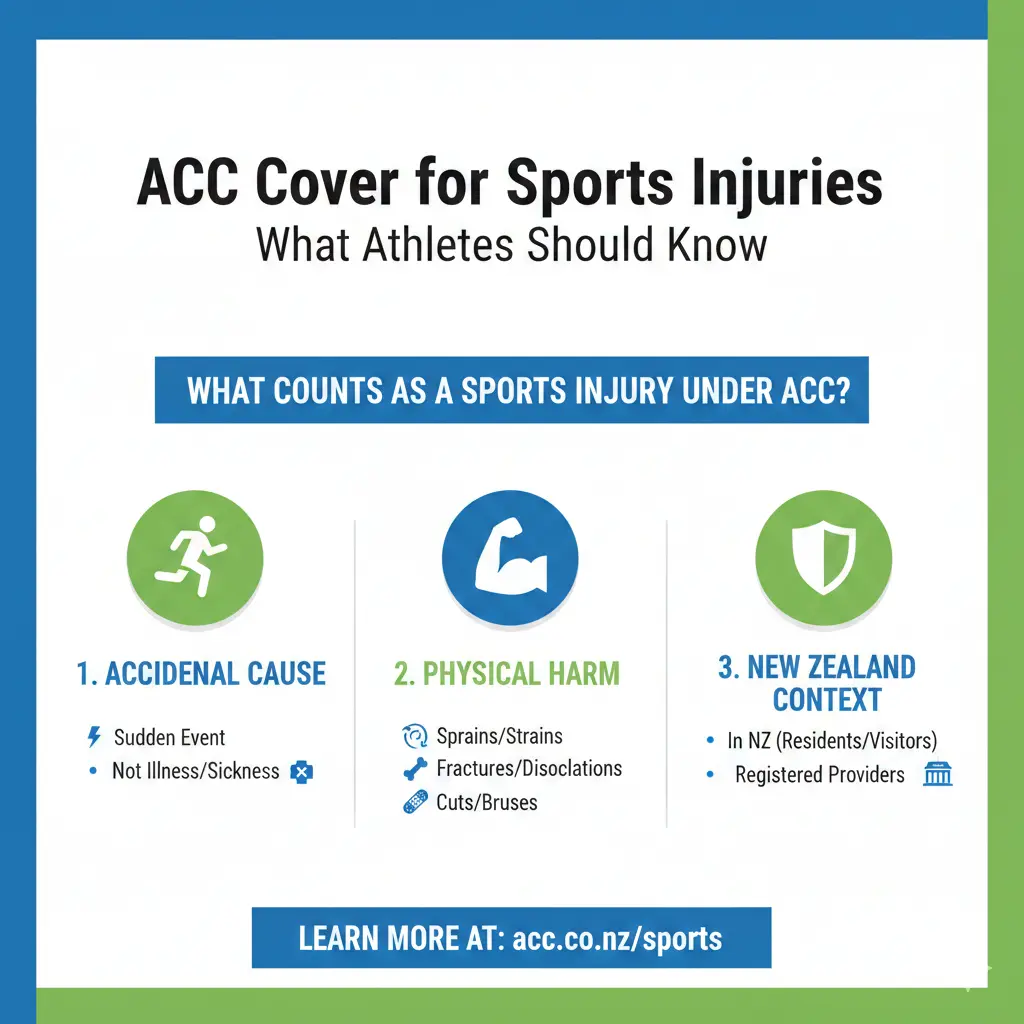
What Counts as a Sports Injury Under ACC?
ACC defines a covered injury as physical harm from a sudden, identifiable event—not gradual wear and tear or illnesses. Sports injuries qualify if they're accidental, like sprained ankles from netball pivots, concussions in rugby scrums, or fractures from mountain bike crashes.
Common Sports Injuries Covered by ACC
- Sprains and strains: Think twisted knees in soccer or hamstring pulls in athletics—ACC funds physio and bracing.
- Fractures and dislocations: Broken collarbones from rugby tackles or dislocated shoulders in surfing wipeouts.
- Concussions and head injuries: Increasingly common in contact sports, with ACC covering assessments and rehab.
- Treatment injuries: If surgery for a sports sprain goes awry, ACC may cover the fallout.
Real Kiwi example: A tradie footballer in Christchurch who ruptures his Achilles during a local league game gets ACC-funded surgery, crutches, and home help while recovering.
What Sports Injuries Are NOT Covered?
ACC won't cover overuse injuries like runner's knee from gradual training buildup, shin splints, or stress fractures without a specific incident. Age-related issues like arthritis flare-ups, sunburn from a cricket day out, or hernias aren't eligible unless linked to a workplace accident. Mental health strains from sports pressure alone? No coverage unless tied to a physical accident.
If your injury stems from criminal assault during a sports event, it might qualify. Overseas sports trips? Covered if you maintain a permanent NZ home.
How to Make an ACC Claim for Your Sports Injury
Don't wait—lodge your claim within 7 days for fastest processing, though there's no strict deadline. Your GP, physio, or sports trainer can submit it online via MyACC or their provider portal.
Step-by-Step Claim Process
- See a provider immediately: Get assessed; they'll code your injury (e.g., "S73.3 - Quadriceps strain") and file the claim.
- Register on MyACC: Create an account at acc.co.nz/myacc to track your claim status.
- Provide details: Date, time, location (e.g., "Auckland Domain netball court"), and how it happened.
- Await approval: ACC reviews within days; if declined, appeal via their review process.
Pro tip: Keep receipts for any out-of-pocket costs like initial strapping—ACC reimburses approved expenses.
What Does ACC Cover for Sports Injuries?
Once approved, ACC's no-fault scheme kicks in with comprehensive support, no excess or premiums for personal claims (though we all pay levies via tax and petrol).
Treatment and Medical Costs
- GP visits, x-rays, MRIs, and specialist consults—fully funded.
- Surgery and hospital stays for repairs like ligament reconstructions.
- Physio, chiropractic, and massage—up to approved sessions (e.g., 20+ for serious ACL tears).
- Aids like moon boots, knee braces, or wheelchairs.
Weekly Compensation for Lost Income
If your sports injury sidelines you from work, ACC pays 80% of your pre-injury earnings, capped at $124,053 annually in 2026 (about $2,385 weekly max). Self-employed athletes? Opt for CoverPlus Extra to lock in stable earnings history—ideal for fluctuating coaching gigs.
Example: A part-time barista and weekend warrior in Dunedin earns $1,200 weekly pre-injury. ACC compensates $960/week during recovery.
Rehab and Social Support
- Home help for chores if you're laid up.
- Transport to appointments (kilometre rates apply).
- Childcare if needed to attend physio.
- Counselling for injury-related trauma.
For permanent impairment, like ongoing knee instability post-rupture, claim a lump-sum payment (up to $280,000+ based on Whole Person Impairment rating).
2026 Updates: ACC's Turnaround Plan and What It Means for Athletes
ACC's 2025/26 turnaround targets faster rehab, especially for sprains/strains that drag on. They're aiming to exit 11,675 long-term claimants (mostly less serious cases) by June 2026, using specialist input for return-to-work pathways. This means quicker independence for athletes, but concerns linger about rushed exits—always push for proper rehab.
Spending hit $8.1 billion last year, up 65% in a decade, driven by rehab inflation and court expansions. ACC urges Kiwis to prevent injuries and actively recover to sustain the scheme.
Gaps in ACC Cover: When Private Insurance Makes Sense
ACC shines for accidents but ignores illnesses like heart attacks mid-marathon training. Income protection fills this, covering 75% of salary for any incapacity. For high-earners over ACC caps, trauma or life insurance adds lump sums for sports-related disabilities.
Self-employed? CoverPlus Extra helps, but private policies bridge levy gaps. Disclaimer: This isn't financial advice—consult a licensed adviser for your situation.
Practical Tips to Maximise Your ACC Sports Injury Cover
- Prevent claims: Warm up properly; use ACC's sports safety resources.
- Document everything: Photos of bruises, witness statements for disputed claims.
- Engage early: Attend all ACC-planned case conferences to avoid pathway shifts.
- Appeal denials: 30% succeed; use free Community Law Centres.
- Track levies: Athletes pay via income tax (1.47%) and activities (e.g., $1.651 per $100 earnings for motor sports).
For elite athletes, combine ACC with Sport NZ grants or high-performance funding.
Next Steps: Get Back in the Game Smarter
Whether you're nursing a netball niggle or recovering from a surf skull, ACC Cover for Sports Injuries has your back—but knowing the rules maximises support. Lodge claims promptly, follow rehab plans, and consider private top-ups for full protection. Check MyACC today, chat with your physio, and play safe. For personalised advice, contact ACC at 0800 101 996 or a financial adviser. Stay strong, Kiwis—your recovery fuels our nation's sporting spirit.
Disclaimer: This article provides general information only. Tax, ACC, and insurance rules change; seek professional advice from an authorised adviser or ACC for your circumstances. Rates current as of 2026.
Frequently Asked Questions
Sources & References
-
1
ACC and Injury Coverage — What You Need to Know - Way Finders — www.wayfinders.org.nz
- 2
-
3
ACC vs Private Insurance: What's the Difference? - Lifetimes NZ — www.lifetimes.co.nz
-
4
ACC Claims Statistics 2025 - 2.3 Million Injuries Explained — www.moneyhub.co.nz
-
5
What is ACC and How Can They Help You? - Massey Waitakere Physio — masseywaitakerephysio.co.nz
-
6
Overview of the ACC scheme - Community Law — communitylaw.org.nz
- 7
-
8
Sport and recreation injury statistics - ACC — www.acc.co.nz
Related Articles

Working Multiple Jobs NZ: Tax and Legal Considerations
Juggling multiple jobs can boost your income, but it's crucial to understand the tax implications and legal requirements that come with working more than one role in Aotearoa. Whether you're a contrac...

Name Changes NZ: Legal Process and Costs
Considering a fresh start with a new name? Whether it's after marriage, divorce, or simply embracing a personal transformation, changing your name in New Zealand is straightforward but requires follow...

Holiday Home Tax Rules NZ: Private Use and Rental
Own a bach in Coromandel or a holiday home in Queenstown? You're not alone—many Kiwis cherish these escapes, but renting them out while enjoying personal use can trip you up on tax rules. Getting the...

Industry Bodies and Professional Associations NZ
Whether you're launching a business, advancing your career, or navigating financial regulations, industry bodies and professional associations in New Zealand offer invaluable support. These organisati...