Tenancy Law Changes 2025: What Renters Need to Know

If you're renting in New Zealand, the tenancy law changes kicking in from early 2025 could reshape your rights and responsibilities as a tenant. These updates to the Residential Tenancies Act (RTA) br...
The Lifetimes NZ editorial team curates, fact-checks, and updates guides on personal finance, property, health, immigration, legal, business, and lifestyle topics relevant to Lifetimes NZ readers. Articles are produced with AI assistance and reviewed by the editorial team before publication.
If you're renting in New Zealand, the tenancy law changes kicking in from early 2025 could reshape your rights and responsibilities as a tenant. These updates to the Residential Tenancies Act (RTA) bring back flexibility for landlords while giving renters like you more mobility and protections in key areas—here's what you need to know to stay ahead.
Overview of the 2025 Tenancy Law Changes
The Residential Tenancies Amendment Act 2024, passed into law late last year, introduces phased changes starting from 30 January 2025. Aimed at balancing the rental market, these reforms roll back some 2020 restrictions, modernise processes, and add new rules for pets and family violence. For Kiwi renters, this means shorter notice periods to move out, but also the return of 'no cause' terminations by landlords.
Changes roll out in stages:
- 30 January 2025: Termination rules and notice periods.
- 20 March 2025: Efficiency tweaks like electronic notices and Tribunal decisions.
- Late 2025 (TBC): Pet bonds and requests.
These apply only to new notices or agreements post-effective dates—existing ones stay under old rules. Check Tenancy Services for guidance tailored to your situation.
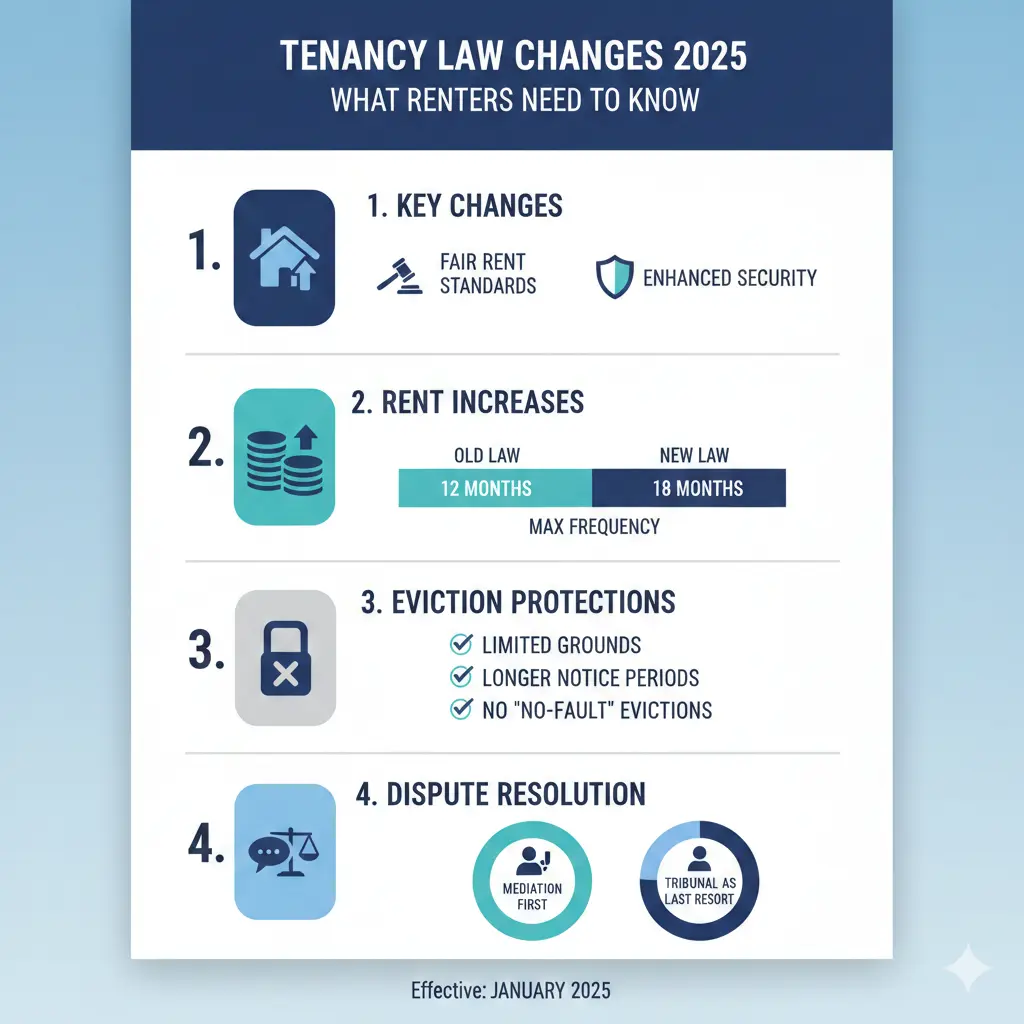
Key Changes to Tenancy Terminations
Termination rules are the biggest shift, giving landlords more options while easing tenant exits.
No Cause Terminations Return for Landlords
From 30 January 2025, landlords can end periodic tenancies with 90 days' notice—no reason needed. This 'no cause' termination was removed in 2020 but is now reinstated to boost rental supply. It only applies to notices issued on or after that date; prior notices follow old rules.
Practical tip: If you get a 90-day no cause notice, review it carefully. You can challenge it at the Tenancy Tribunal if it feels retaliatory—now with up to 42 days to apply, extended from 21, and on broader grounds like rent increases or repairs requests.
Shorter Notice for Specific Landlord Grounds
Landlords can now give just 42 days' notice (down from 90) for:
- Landlord or family needing it as principal residence for 90+ days starting within 90 days of termination.
- Property required for landlord's employee/contractor (if tenancy agreement specifies this use).
- Unconditional sale requiring vacant possession.
These apply to notices from 30 January 2025.
Tenants Gain Mobility with 21 Days' Notice
You can now end a periodic tenancy with 21 days' notice, reduced from 28—perfect if life's throwing curveballs like a new job in Wellington or Auckland. This gives renters more flexibility in our tight market.
Fixed-Term Tenancies: What Happens at the End?
Fixed-terms automatically convert to periodic unless someone gives notice 21-90 days before expiry or you both agree otherwise (e.g., renew fixed-term). For existing fixed-terms, a 90-day transition applies—changes hit from 1 May 2025.
Actionable advice: Mark your calendar 90 days before your fixed-term ends. Discuss with your landlord early to avoid surprises.
Modernising Tenancy Processes from March 2025
Electronic Notices and Documents
From 20 March 2025, send and receive tenancy notices via email or messaging—gone are the days of posted letters getting lost. This speeds things up for bond refunds, repairs, or inspections.
Streamlined Tenancy Tribunal
The Tribunal can now decide most cases on papers alone—no hearing needed unless it's termination, access, or boarding houses. They’ll consider your preferences. Plus, consolidated claims for one landlord's multiple properties jump to $100,000 per tenancy (from $100,000 total).
Bonds are fully online now too, making lodgements and refunds quicker.
New Rules for Smoking, Pets, and Family Violence
Indoor Smoking Bans Allowed
From March 2025, tenancy agreements can ban indoor smoking outright—enforceable in Tribunal. Outdoor bans are okay if they don't breach quiet enjoyment rights.
Pet Rules Incoming Late 2025
Tenants can request pets; landlords have limited refusal grounds and can charge a pet bond (separate from standard bond). Exact date set by Order in Council—likely Q4 2025. Until then, current pet rules apply.
Tip for pet owners: Get requests in writing now. Prepare for pet bonds by budgeting extra.
Expanded Family Violence Protections
If your child or dependent faces family violence, you can exit the tenancy with 2 days' notice—building on your own rights. Contact police or refuges for support; Tenancy Services has resources.
Retaliatory Terminations: Stronger Tenant Defences
Challenge landlord terminations as retaliatory within 42 days (up from 21) if linked to complaints about repairs, rent hikes, or Tenancy Services contact—now up to 12 months lookback. Evidence like emails strengthens your Tribunal case.
Practical Tips for Renters in 2026
Navigating these changes? Here's how:
- Review your tenancy agreement: Check for smoking clauses or pet mentions. Update digitally if needed.
- Track notice dates: Use apps or calendars for 21/42/90-day periods. Save all comms electronically.
- Lodge bonds online: Via Tenancy Services portal for faster refunds.
- Know Tribunal options: Apply online for disputes; most resolve without hearings.
- Seek free advice: Call Tenancy Services (0800 836 262) or visit tenancy.govt.nz. Community Law Centres offer Kiwi-specific help.
- Budget for pets: Factor in potential bonds come late 2025.
In cities like Christchurch or Dunedin, where rentals are competitive, these rules could mean more turnover—be ready to hunt for new places if no cause notice hits.
Next Steps for Kiwi Renters
Stay informed: Bookmark tenancy.govt.nz for updates and templates. Chat with your landlord about upcoming changes, document everything, and know your rights. If issues arise, hit the Tribunal early—most cases wrap quickly. These reforms aim for fairer rentals, so use them to secure stable housing in Aotearoa.
Frequently Asked Questions
Sources & References
-
1
Key updates to residential tenancies in 2025 - Jackson Russell — jacksonrussell.co.nz
-
2
Tenant Rights in 2025: Key Changes You Need to Understand - News — rwsilverdale.co.nz
-
3
Changes to encourage more rental homes passed into law — www.beehive.govt.nz
-
4
Key Changes to Residential Tenancies in 2025 - Duncan Cotterill — duncancotterill.com
-
5
Changes to tenancy terminations now in force — www.tenancy.govt.nz
-
6
Tenancy law changes: information for landlords - ANZ — www.anz.co.nz
-
7
What changes landlords and tenants can expect in 2025 - Wise Move — www.wisemove.co.nz
-
8
Tenancy law changes — www.tenancy.govt.nz
Related Articles

The Ultimate Rental Inspection Checklist for NZ Tenants
Moving into a rental in New Zealand can feel like a big step, but nothing prepares you quite like acing that first property inspection—or preparing for the regular ones that follow. As a tenant, knowi...

Healthy Homes Standards: A Guide for NZ Landlords & Renters
If you're renting or managing a property in Aotearoa, you've probably heard about the Healthy Homes Standards. These legal requirements aren't just bureaucratic boxes to tick—they're designed to ensur...

Renter's Rights in New Zealand: Know Your Protections
Imagine signing a lease only to face unexpected repairs, unfair rent hikes, or eviction threats—that's the reality too many Kiwis have faced. But with the Renters' Rights in New Zealand evolving throu...

Healthy Homes Standards: What Your Rental Must Have
If you're renting out a property in New Zealand or hunting for a healthier home, the Healthy Homes Standards are non-negotiable. These rules ensure every rental is warm, dry, and safe, protecting tena...