Renter's Rights in New Zealand: Know Your Protections

Imagine signing a lease only to face unexpected repairs, unfair rent hikes, or eviction threats—that's the reality too many Kiwis have faced. But with the Renters' Rights in New Zealand evolving throu...
James writes about the New Zealand property market, renting, home ownership, and housing costs. He breaks down complex property topics into practical advice for renters and buyers.
Imagine signing a lease only to face unexpected repairs, unfair rent hikes, or eviction threats—that's the reality too many Kiwis have faced. But with the Renters' Rights in New Zealand evolving through recent amendments, you're better protected than ever. Knowing your rights under the Residential Tenancies Act 1986 means you can rent confidently, hold landlords accountable, and avoid common pitfalls.
Whether you're a first-time renter in Auckland's bustling flats or a family in Christchurch suburbs, this guide breaks down your protections, responsibilities, and practical steps. We'll cover everything from pet policies to ending tenancies, using the latest 2026 updates so you stay one step ahead.
Understanding the Residential Tenancies Act 1986
The Residential Tenancies Act 1986 (the Act) is the cornerstone of renter's rights in New Zealand. It outlines clear rules for landlords and tenants, ensuring fair treatment for everyone involved. Recent changes via the Residential Tenancies Amendment Act 2024, passed on 17 December 2024, have strengthened tenant protections while balancing landlord needs.
Key principles include:
- Landlords must provide a safe, habitable home.
- Tenants have security of tenure with limits on arbitrary evictions.
- Disputes go through the free Tenancy Tribunal for quick resolutions.
If issues arise, contact Tenancy Services at tenancy.govt.nz—they're your first port of call for advice.
Recent Law Changes Impacting Renters
From 30 January 2025, major updates took effect, making renting fairer. Fixed-term tenancies now automatically roll into periodic ones unless proper notice is given 21-90 days before expiry—no more surprise endings without cause.
Periodic tenancies got a revamp too: tenants can end with 21 days' notice, while landlords need 90 days for no-cause terminations or 42 days for specific reasons like selling or family use. Retaliatory evictions are banned—if you report repairs and get a termination notice, apply to the Tenancy Tribunal within 12 months to challenge it, potentially winning exemplary damages.
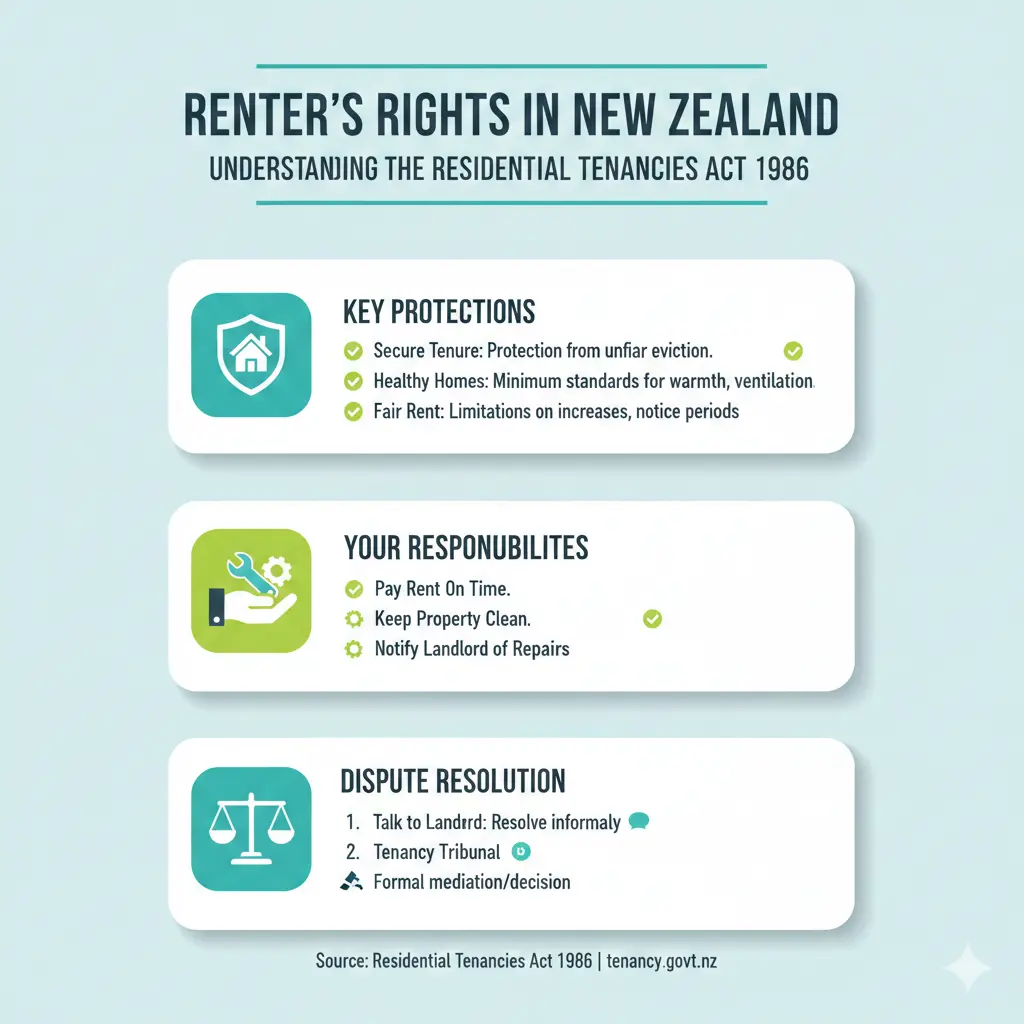
Your Key Renter's Rights in New Zealand
As a tenant, you're entitled to a property that's healthy, secure, and respected. Here's what the law guarantees.
Right to a Habitable Home
Landlords must maintain the property in a reasonable state, fixing issues like leaks, heating, or mould promptly. Report problems immediately in writing—don't withhold rent, as that's illegal.
Under healthy homes standards (in force since 2019), rentals need adequate ventilation, insulation, heating, and draught stopping. Check compliance via the free online tool at tenancy.govt.nz/healthy-homes.
Pet Policies: Good News for Pet Lovers
Once pet consent rules activate, you can keep a pet if your tenancy agreement allows or with landlord consent. Landlords can only refuse on reasonable grounds, like property damage risks.
Expect these perks:
- Landlords may charge a pet bond up to 2 weeks' rent (only one at a time).
- You're liable for pet damage beyond fair wear and tear.
- Reasonable conditions, like no cats in carpeted flats, are okay.
Tip: Get consent in writing and document your pet's good behaviour to build a case.
Rent Increases and Payments
Rent can only rise once every 12 months with 60 days' written notice (updated from earlier rules). Challenge excessive hikes at the Tenancy Tribunal—they'll assess market rates.
Pay on time to avoid arrears issues. If you're struggling, talk to your landlord early or contact WINZ for accommodation supplements.
Ending a Tenancy Safely
Family violence provisions let you (or dependants) exit with just 2 days' notice and evidence, no penalties. For general moves:
- Periodic: 21 days' notice from you.
- Fixed-term: Mutual agreement or 21-90 days' notice to avoid auto-renewal.
Landlords can't evict without cause post-2025 changes—no more easy 'no-fault' endings.
Tenant Responsibilities: Keeping It Fair
Rights come with duties. Meet these to avoid disputes:
- Pay rent on time.
- Keep the place clean and report damage ASAP.
- Pay utilities like power and internet.
- Use for residential purposes only.
- Don't damage, disturb neighbours, or alter without permission.
Boarding house tenants have extras like shared space rules—check specifics at tenancy.govt.nz.
Handling Repairs and Maintenance
Minor fixes (under $100, like a dripping tap) are yours if caused by you. Major ones? Landlord's job. Track everything via email or the Tenancy Services app.
Dealing with Common Rental Disputes
Bonds are held by Tenancy Services—claim yours back at move-out with a joint inspection. For unhealthy homes or illegal clauses, apply to the Tribunal online; it's free and decisions are binding.
Retaliation protection: If a landlord ups rent or terminates after your repair request, that's challengeable within 12 months.
Boarding Houses and Special Cases
Boarders get similar rights but with 28 days' notice for endings. Maximum occupants are capped in agreements.
Practical Tips for Kiwi Renters
Stay protected with these steps:
- Inspect thoroughly: Note issues on the tenancy agreement at start—photos help.
- Document everything: Emails for repair requests, rent receipts.
- Know your bond: Lodge it via tenancy.govt.nz within 23 working days.
- Seek free advice: Call Tenancy Services at 0800 836 262.
- Prepare for moves: Give proper notice and clean up to reclaim your bond.
In Auckland's tight market, consider community law centres for low-cost help.
Next Steps to Secure Your Rights
Download the official tenancy agreement from tenancy.govt.nz, snapshot your rental before moving in, and bookmark the site for updates. If trouble brews, hit the Tribunal early—most cases resolve fast. Renting in New Zealand is safer in 2026; arm yourself with knowledge for stress-free living. For personalised advice, chat with Tenancy Services today.
Frequently Asked Questions
Sources & References
- 1
-
2
Tenancy law changes, Residential Tenancies Amendment Act 2024 — www.tenancy.govt.nz
-
3
Your rights and responsibilities - Tenancy — www.tenancy.govt.nz
-
4
How economic and regulatory shifts shaped property management in 2026 — www.propertybrokers.co.nz
Related Articles

The Ultimate Rental Inspection Checklist for NZ Tenants
Moving into a rental in New Zealand can feel like a big step, but nothing prepares you quite like acing that first property inspection—or preparing for the regular ones that follow. As a tenant, knowi...

Healthy Homes Standards: A Guide for NZ Landlords & Renters
If you're renting or managing a property in Aotearoa, you've probably heard about the Healthy Homes Standards. These legal requirements aren't just bureaucratic boxes to tick—they're designed to ensur...

Tenancy Law Changes 2025: What Renters Need to Know
If you're renting in New Zealand, the tenancy law changes kicking in from early 2025 could reshape your rights and responsibilities as a tenant. These updates to the Residential Tenancies Act (RTA) br...

Healthy Homes Standards: What Your Rental Must Have
If you're renting out a property in New Zealand or hunting for a healthier home, the Healthy Homes Standards are non-negotiable. These rules ensure every rental is warm, dry, and safe, protecting tena...