Solar Panels NZ: Costs Savings and Payback Period
Imagine slashing your power bill by over $1,000 a year while powering your home with clean, free energy from the sun. For Kiwis facing rising electricity prices, solar panels NZ offer a practical path...
Sarah covers personal finance, tax, and KiwiSaver topics for Lifetimes NZ. She focuses on making money management straightforward and practical for everyday Kiwis.
Imagine slashing your power bill by over $1,000 a year while powering your home with clean, free energy from the sun. For Kiwis facing rising electricity prices, solar panels NZ offer a practical path to real savings, with payback periods shortening thanks to falling panel costs and smart financing options. In 2026, going solar isn't a luxury—it's a savvy financial move that puts you in control of your energy future.
Why Solar Panels Are Booming in New Zealand
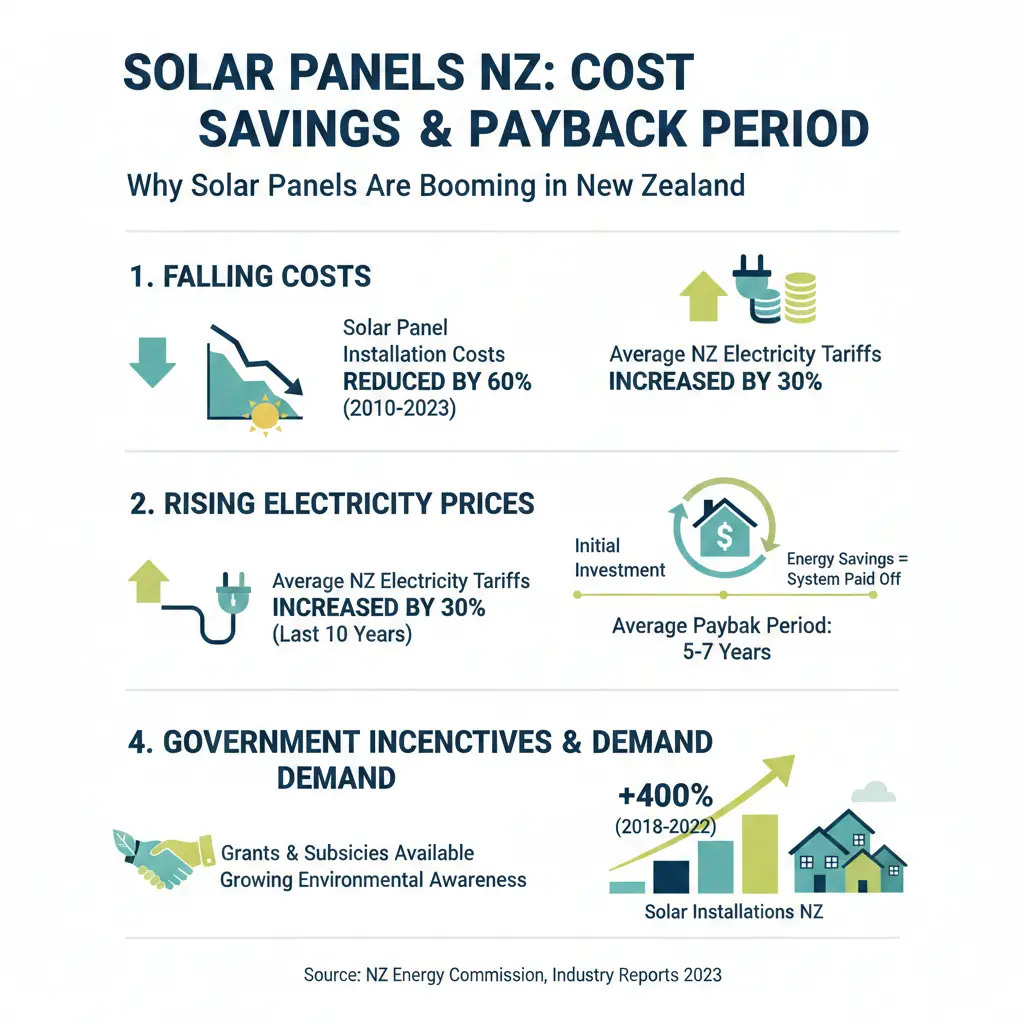
New Zealand's sunny climate and high electricity costs make solar an ideal fit for Kiwi homes. With global panel prices dropping, solar is now the cheapest electricity option for many households, outpacing traditional grid power. Adoption is accelerating, driven by energy shortages and the need to cut emissions without relying on failed projects like carbon capture at Kapuni.
Households with all-electric appliances, including EVs, stand to benefit most. A typical 3-person home uses around 8,000–10,000 kWh annually, and solar can cover 50–80% of that, delivering substantial bill reductions no matter where you live—from Auckland's cloudy winters to Nelson's endless summer days.
The Push for Flexible Energy Pricing
From mid-2026, big electricity retailers (those with over 5% market share) must offer time-of-use (TOU) tariffs, rewarding solar owners who export power during peak daytime hours. This shift could save NZ billions by smoothing demand, with rooftop solar playing a key role in household flexibility. Pair it with batteries, and you'll maximise self-use while earning credits for excess generation.
Solar Panels NZ: Breaking Down the Costs in 2026
Upfront costs have fallen, but they vary by system size, quality, and add-ons like batteries. Expect to pay for high-efficiency panels, inverters, installation, and compliance with NZ standards (AS/NZS 5033).
Typical System Prices
For a small-to-medium setup suited to most Kiwi homes:
| System Size | Panels | Cost (incl. GST & install) |
|---|---|---|
| 3 kW | 7–8 | $8,500 |
| 5 kW | 12 | $11,500 |
| 10 kW | 24 | $20,000 |
Batteries add $5,000–$15,000, depending on capacity (e.g., 5–20 kWh). A 5 kW system with 10 kWh battery runs about $21,500. Skip the battery initially for the fastest payback—add it later as prices drop further.
- North Island premium: Higher output in Auckland/Wellington means better value per dollar.
- South Island considerations: Fewer peak sun hours, so size up slightly for Dunedin or Christchurch homes.
- EV owners: Opt for 6–8 kW to charge during the day and avoid evening peaks.
Hidden Costs and Savings Tips
Factor in council consents ($200–500), scaffolding for multi-storey homes, and a 10-year inverter replacement ($2,000–4,000). Shop around—get 3+ quotes from SEANZ-accredited installers to avoid low-ball offers with cheap imports.
Pro tip: Bundle with insulation or heat pumps for bigger financing perks (more below).
Government and Bank Support: Making Solar Affordable
No direct cash rebates like Australia's $2,000–$3,000 handouts, but NZ's low-interest loans beat rebates by spreading costs over time. These green top-ups turn solar into a no-brainer for homeowners with equity.
Top Green Loan Options in 2026
- ASB Better Homes Top Up: Up to $80,000 at fixed rates for 3 years. Ideal for full solar + battery installs.
- BNZ Green Home Loan Top-Up: Up to $80,000 with 1% p.a. fixed for 3 years—covers solar, EVs, and heating.
- Westpac Greater Choices: Up to $50,000 interest-free for 5 years. No establishment fees.
- Kiwibank Sustainable Energy Loan: Up to $2,000 over 4 years for smaller systems (existing customers only).
These loans often require 20% home equity and quotes, but they beat personal loans' higher rates. Check IRD for tax perks if you're self-employed.
Business Owners: Claim 20% Instant Tax Deduction
From May 2025, businesses can deduct 20% of new solar asset costs immediately via IRD's Investment Boost—stackable with depreciation. For a $20,000 commercial system, that's $4,000 back in year one, slashing payback to under 4 years. Visit IRD's page for eligibility.
Savings from Solar Panels: Real Numbers for Kiwi Households
Solar saves by generating free power (self-use) and export credits (buy-back). The average home saves $1,000+ annually, with $100–$150 monthly drops common.
How Savings Work
- Self-consumption: Use solar during the day (hot water, appliances) to avoid retail rates of $0.30–$0.40/kWh.
- Buy-back rates: Export excess at $0.10–$0.20/kWh (retail $0.35/kWh means self-use saves triple).
- TOU tariffs (2026+): Charge batteries cheap at night, export high-value daytime power.
A 5 kW system produces 6,500 kWh/year, covering 65% of a typical home's needs and saving $1,200+ at $0.35/kWh.
Solar without a battery generally gives the best returns.
Regional Savings Examples
- Auckland (4.5 sun hours/day): $1,400/year on a 5 kW system.
- Wellington (windy but sunny): $1,100/year.
- Christchurch: $1,000/year—still beats rising grid prices.
Payback Period: When Solar Pays for Itself
Payback is when cumulative savings + exports equal your costs. In NZ, it's 5–8 years for most homes, faster with loans and self-use.
Key Factors Influencing Payback
- System size vs. usage: Match output to your 8,000–12,000 kWh/year—oversize for exports.
- Sun hours: 4–5 daily in most regions.
- Self-use rate: Aim for 50–70% with timers/shifters.
- Buy-back: $0.15/kWh average; TOU boosts to $0.25+.
- Financing: 1% loans extend payback but cut monthly outgoings vs. power bills.
Payback Calculator Example
5 kW system: $11,500 cost. 6,500 kWh/year at $0.35 retail/$0.15 export, 60% self-use = $1,300 savings/year. Payback: ~9 years. With battery + TOU: 6 years.
Post-payback: 15–25 years of free power (panels last 25+ years, 80–90% output).
Maximise Your Solar Investment: Practical Tips
- Get a free solar assessment from SEANZ members.
- Install south-facing? No—north-facing at 30° tilt for max output.
- Monitor via apps to optimise usage.
- Future-proof: Add battery-ready inverters.
- Renters: Push for landlord incentives or community solar.
For low-income households, check EECA resources or WINZ energy grants.
Next Steps: Power Up Your Home Today
Ready to cut costs and go green? Start with a site assessment, compare 3 quotes, and explore green loans. Use EECA's savings calculator, then contact banks like BNZ or Westpac. Solar panels NZ deliver reliable savings—act now before prices climb further. Consult a financial advisor or SEANZ installer to tailor to your whare. This isn't just investment; it's energy freedom for your family.
Disclaimer: This is general info. Seek professional financial and installation advice for your situation. Rates current as of 2026; check providers for updates.
Frequently Asked Questions
Sources & References
-
1
2026 Government Subsidy For Solar Power NZ: What Support Is Available — solarrepublic.co.nz
-
2
Breaking down home solar costs and savings | EECA — www.eeca.govt.nz
- 3
-
4
Big Energy Retailers to Face New Rules: What It Means for Solar Customers — www.solarhubpacific.com
- 5
-
6
NZ Solar Buy-Back Rates Explained — insurspy.co.nz
-
7
How Solar Pay-back in New Zealand Works — hikosolar.co.nz
Related Articles

Industry Bodies and Professional Associations NZ
Whether you're launching a business, advancing your career, or navigating financial regulations, industry bodies and professional associations in New Zealand offer invaluable support. These organisati...

Emergency Benefit NZ: When You Have No Other Options
When you're struggling financially and don't qualify for other benefits, the Emergency Benefit might be your lifeline. It's a discretionary payment designed for Kiwis in genuine hardship who've exhaus...

Unpaid Internships NZ: Are They Legal?
Unpaid internships are a common pathway for students and graduates to gain work experience in New Zealand, but there's often confusion about whether they're actually legal. The short answer is: unpaid...

Estate Administration NZ: Managing Someone's Affairs After Death
Losing a loved one is one of life's toughest challenges, and stepping in to manage their estate can feel overwhelming. In New Zealand, estate administration—the process of handling someone's affairs a...