The Hidden Costs of Credit Cards: How to Escape the NZ Debt Trap

Ever swiped your credit card for a quick coffee or online shop, only to watch the balance creep up month after month? You're not alone—many Kiwis are caught in a subtle debt trap fuelled by credit car...
Sarah covers personal finance, tax, and KiwiSaver topics for Lifetimes NZ. She focuses on making money management straightforward and practical for everyday Kiwis.
Ever swiped your credit card for a quick coffee or online shop, only to watch the balance creep up month after month? You're not alone—many Kiwis are caught in a subtle debt trap fuelled by credit cards' hidden costs. With interest rates hovering around 20% and sneaky fees adding up fast, it's time to uncover these traps and map your escape route tailored to New Zealand life.
What Are the Hidden Costs Lurking on Your Credit Card?
Credit cards seem convenient, but they come loaded with costs that can quietly erode your budget. Beyond the obvious interest, there are fees and charges that many overlook until it's too late.
Annual Fees and Monthly Charges
Most credit cards charge an annual fee, typically ranging from $0 for basic cards to over $200 for premium ones with rewards. Even "no-fee" cards might introduce monthly charges if you dip into extras like travel insurance. In New Zealand, these fees are upfront in your card agreement, but they hit your statement without fail, compounding your debt if unpaid.
Interest Rates: The Silent Killer
Credit card interest in NZ averages 19-23% p.a., calculated daily on unpaid balances. Miss a minimum payment, and that latte could cost you $5 in interest alone by month's end. Cash advances rack up even higher rates, often 25%+, with no interest-free period. According to the Commerce Commission, these rates make credit cards one of the priciest borrowing options for Kiwis.
Overlimit and Late Payment Fees
Exceed your limit? Expect a $10-30 overlimit fee per statement. Late payments trigger similar charges, plus potential interest on the entire balance. With ACC levies and KiwiSaver contributions already straining budgets, these fees can push households deeper into the red.
Foreign Transaction and Cash Advance Fees
Planning a trip or grabbing cash abroad? Foreign transaction fees sit at 2-3% per purchase, while cash advances add 3-5% upfront plus immediate interest. For Kiwi travellers, this can turn a Queenstown weekend getaway into a costly debt spiral.
Merchant Surcharges: A Changing Landscape
Until recently, businesses passed on card processing costs via surcharges up to 2-3%. Consumer NZ research shows over 25% of Kiwis faced hidden or unavoidable surcharges, with extremes like 25% at salons. But big changes are coming: the Commerce Commission has reduced interchange fees, saving businesses $90 million annually, dropping surcharges to around 1%. By May 2026, in-person surcharges on domestic Visa and Mastercard will be banned entirely, simplifying payments but highlighting why absorbing costs now matters.
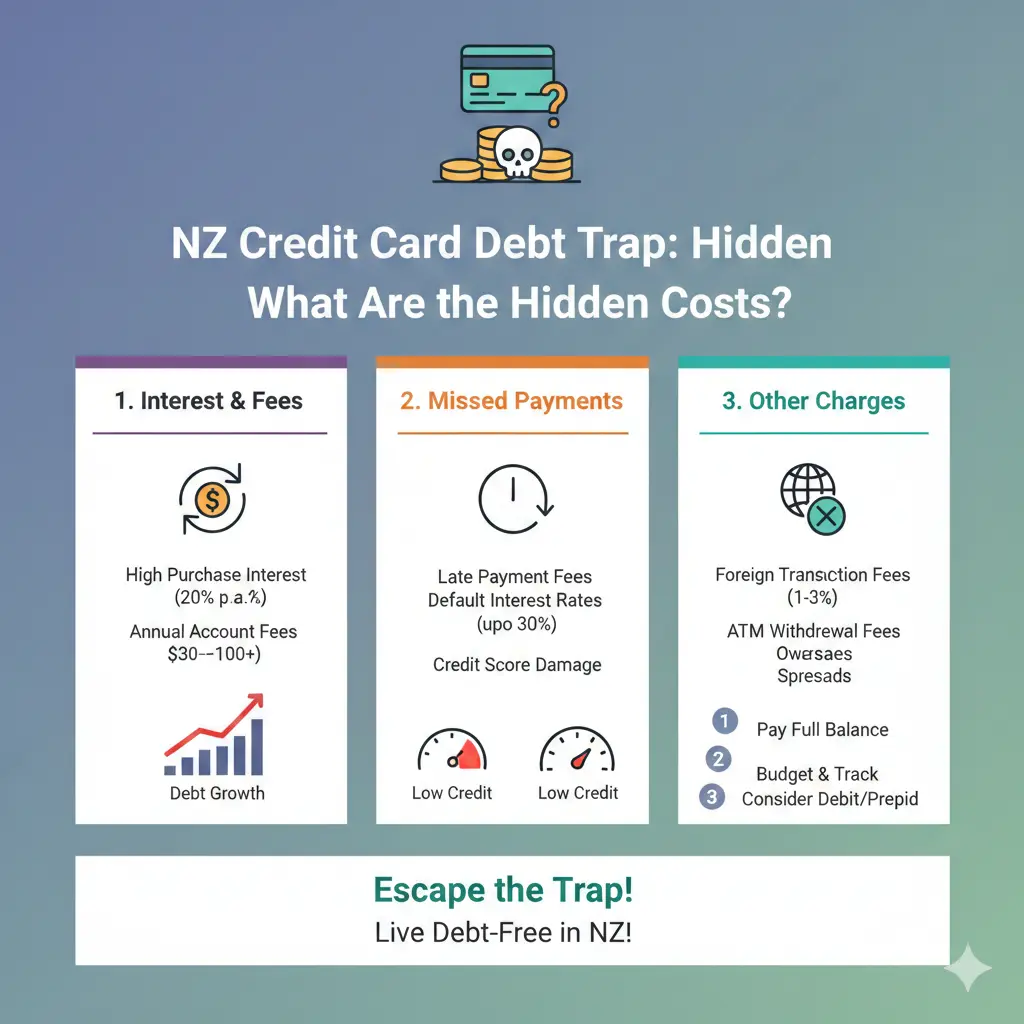
How Credit Card Debt Traps Kiwis in 2026
New Zealand's cost-of-living crunch—rising rents, grocery bills, and fuel prices—pushes many to rely on credit. But the trap snaps shut when minimum payments barely cover interest, leaving principal untouched. Stats NZ data indicates household debt hit record highs in 2025, with credit cards contributing significantly.
The Minimum Payment Myth
Paying just the minimum (usually 2.5-5% of balance) means 80-90% goes to interest. A $5,000 balance at 20% interest could take 20+ years to clear, costing $15,000+ in interest. Use the IRD's debt calculator or bank tools to see your timeline.
Balance Transfers Gone Wrong
0% intro offers sound great, but post-promo rates spike, and transfer fees (3-5%) add up. Many Kiwis roll debt without addressing spending habits, landing deeper in the hole.
Rewards vs Reality
Airpoints or Flybuys tempt spending, but redemption values often pale against interest. If you're carrying a balance, rewards become a costly illusion.
Signs You're in the NZ Credit Card Debt Trap
- You're only making minimum payments, watching balances grow.
- Fees appear more often than you'd like on statements.
- Credit limits are maxed, forcing reliance on multiple cards.
- Unexpected bills lead to cash advances or new purchases.
- Debt impacts KiwiSaver contributions or emergency savings.
Step-by-Step Guide: Escaping the Debt Trap
Breaking free requires strategy. Here's a practical plan for Kiwis, backed by local resources.
Step 1: Assess Your Situation
Download statements from your bank's app. List balances, interest rates, and fees. Tools like Sorted.org.nz's debt calculator give a clear picture. Contact WINZ if low-income support like emergency benefits applies.
Step 2: Stop the Bleeding
- Cancel unused cards to avoid temptation.
- Switch to debit for daily spends—especially with 2026's surcharge ban reducing card costs.
- Freeze cards in ice (literally) to curb impulse buys.
Step 3: Choose Your Payoff Strategy
Debt Snowball: Pay minimums on all, extra on smallest balance for quick wins.
Debt Avalanche: Target highest-interest first to save money. For a $10,000 debt at 20%, this could save $2,000+ in interest.
Step 4: Negotiate Better Terms
Call your bank—mention competitors' offers. Many waive fees or lower rates for loyal Kiwis. Balance transfers to 0% cards (watch fees) can buy time.
Step 5: Boost Income, Cut Costs
- Side hustle via Trade Me or local gigs.
- Review budget with MoneyHub or StudyLink tools if studying.
- Redirect KiwiSaver bonuses or tax refunds to debt.
Step 6: Seek Professional Help
If overwhelmed, contact free services like MoneyTalks (0800 345 123) or Citizens Advice Bureau. For insolvency, the Insolvency and Trustee Service offers no-interest overdraft alternatives. Avoid debt consolidators charging high fees.
Build an Emergency Fund
Aim for $1,000-3 months' expenses in a high-interest saver (rates ~5% in 2026). This prevents re-entering the trap.
2026 Updates: Surcharge Ban and Fee Cuts
The Commerce Commission's July 2025 final decision caps interchange fees further: in-person credit cards drop from 0.8% to 0.3%, saving small businesses $500/year on average. Online fees ease to 0.7%, but business cards remain uncapped. The May 2026 ban on in-person Visa/Mastercard surcharges means clearer pricing at checkouts—no more surprises. These changes lower merchant costs, potentially stabilising prices for consumers while you focus on debt freedom.
Preventing Future Debt Traps
Once clear, track spending with apps like PocketSmith. Max KiwiSaver for retirement security. Understand Credit Contracts and Consumer Finance Act (CCCFA) protections—lenders must disclose total costs clearly.
Take Control Today
Escaping the credit card debt trap starts with one statement review and a firm budget. Implement these steps, leverage 2026's payment reforms, and reach out to Kiwi resources like Sorted.org.nz. You're not alone—thousands of Kiwis regain financial freedom yearly. Track progress monthly, celebrate small wins, and build wealth for your future.
Frequently Asked Questions
Sources & References
-
1
No More Surcharges in New Zealand? What the 2026 Ban Means for Merchants — www.skyzer.co.nz
-
2
Card Payment Costs Are Dropping – Here's What That Means for Your Business — www.pathfindersolutions.co.nz
-
3
Surcharges Should Be Down and Out - Consumer NZ — www.consumer.org.nz
-
4
Lower Card Fees Could Put Money Back in Your Pocket | +MORE — plusmore.co.nz
-
5
Retail Payment System | Commerce Commission — www.comcom.govt.nz
Related Articles

The "No-Spend" Month: How One Kiwi Saved $2;000 in 30 Days
Imagine looking at your bank account at the end of the month and seeing an extra $2,000 staring back at you—all because you said "no" to impulse buys, takeaways, and those sneaky coffee runs. That's e...

How to Calculate Your Take-Home Pay with the NZ Salary Calculator
Ever wondered why your bank account doesn't match that shiny new job offer? You're not alone—many Kiwis scratch their heads over the gap between gross salary and actual take-home pay. With New Zealand...

Budgeting for Beginners: The "50/30/20 Rule" Adjusted for NZ Salaries
Struggling to make your Kiwi paycheck stretch further? You're not alone—many of us feel the pinch from rising rents, grocery bills, and that tempting flat white habit. But what if a simple rule could...

How to Travel the World on a NZ Salary
Ever dreamed of sipping cocktails on a Thai beach or exploring the ancient ruins of Machu Picchu, all while earning a solid Kiwi wage? With New Zealand's average monthly salary hitting 5,666 NZD in 20...